
















Executive Summary
- Battlefield assessment: Russia pressed on in the Myrnohrad sector while amassing troops in northern Pokrovsk. In the Zaporizhzhia sector, the Ukrainian military took advantage of a sudden Starlink outage to recapture several positions.
- Ukraine targets Russian surface-to-air missiles: Kyiv reported it has neutralized roughly 50 percent of Russia’s Pantsir-baseline short-to-medium-range air defenses.
- Foreign pilots in Ukraine: The Ukrainian Air Force formed a new F-16 squadron with assistance from experienced Dutch and American pilots.
- What to watch for: (1) Heightened Russian activity in Pokrovsk, (2) Ukrainian opportunism around Starlink disruptions, and (3) follow-on strikes against Russian Pantsir manufacturing sites in Tula.
1. Battlefield Assessment
Despite no strategic-level changes, last week’s operational tempo remained high, with Russia and Ukraine often waging more than two hundred tactical engagements per day.
Following a few weeks of relative calm, intense combat resumed in the Pokrovsk sector, which now accounts for one-fourth of the overall fighting. Russian forces concentrated their assaults on the belt of defenses north of the city.
The situation in Myrnohrad is also critical, with the likelihood of a Russian takeover there increasing. Huliaipole, Kramatorsk, Sloviansk, Kupiansk, Vovchansk, Kostiantynivka, Lyman, and Orikhiv also saw significant combat last week.
Visual evidence revealed Russia using Molnya drones to lay battlefield mines. Open-source indicators also suggested that Russia has been using Courier unmanned ground vehicles (UGVs) more widely, particularly in mined areas. Russia’s frequent UGV operations are a worrisome trend for Ukraine and its partners in the North Atlantic Treaty Organization.
At the tactical level, Ukrainian forces exploited a localized collapse in Russia’s connection to the Starlink satellite internet service to mount rapid, opportunistic assaults along multiple segments of the front lines. Field reporting indicates that Ukraine staged coordinated attacks in several sectors that forced Russian forward combat formations to withdraw. The most critical gains occurred in Zaporizhzhia Oblast. Ukrainian units forced Russian forces back across the tactically significant Haichur River, capturing ground Russia had held since late summer.
Ukrainian forces also continued to conduct deep strikes on targets in occupied areas of Ukraine and in Russia. Ukrainian FP-2 drones hit an Iskander missile storage facility in the occupied Crimean Peninsula. The Ukrainian company Fire Point, which also produces the Flamingo missile, designed the FP-2 loitering munition to be the backbone of Ukraine’s long-range salvos.
Still, one should not confuse Ukraine’s tactical achievements with strategic success. At the strategic level, the Russian military has maintained an offensive footing and continues to launch drone and missile strike packages against Ukraine’s energy infrastructure.
2. Ukraine Steps Up Its Campaign Against Russian Surface-to-Air Missiles
Ukraine’s campaign against Russian air defenses is growing more formidable every week. The Security Service of Ukraine (SBU) reported that Kyiv’s forces have neutralized roughly 50 percent of Russia’s Pantsir-baseline short-to-medium-range air defenses. This would constitute a strategic-level degradation of a core element of Russia’s layered air defense architecture, which serves as the country’s last line of defense against air strikes.
The Pantsir system occupies a critical niche in Russia’s defenses. It provides point defense for high-value assets and is among Russia’s most capable counters to Ukraine’s long-range unmanned strike platforms. The Pantsir reportedly costs $15 to $20 million per unit, placing Russia’s cumulative losses from Ukrainian strikes against the systems in the multi-billion-dollar range. This also makes the system a lucrative export. According to Ukrainian military intelligence, the North Korean regime has purchased the systems to protect Pyongyang.
Ukraine has continued to penetrate Russian airspace at distance and at scale. The SBU assesses that long-range strikes conducted in 2025 destroyed or disabled Russian air defense assets valued at approximately $4 billion. While independent verification of these claims remains limited, the purported scale aligns with observable trends in Russian air defense attrition.
The effect of Ukraine’s strikes is considerable. Reduced air defense density enables Ukraine to launch sustained attacks against military bases, logistics hubs, ammunition depots, airfields, and command infrastructure across Russian territory and occupied areas. This campaign is also preparing the battle space for an escalation in its long-range strikes: the attrition of Pantsir systems has forced Moscow to choose between protecting its front lines or its rear areas.
Officials from Russia’s defense industrial complex have previously described the Pantsir family as one of the country’s principal counters to Ukraine’s F-16 aircraft. Recent precedent offers a more nuanced picture, however. During the rule of Bashar al-Assad in Syria, the Israeli Air Force systematically degraded Russian-supplied Pantsir systems operated by the Syrian Arab Air Defense Force. Those campaigns underscored the qualitative edge of NATO-standard aircraft and tactics against Russian air defense assets.
In NATO operations, fourth-generation fighters such as the F-16 typically operate above the Pantsir’s optimal engagement envelope and employ standoff munitions. Ukraine, however, confronts a fundamentally different operational environment, in which Russia retains advantages in both combat aviation and integrated air defenses. To survive, Ukrainian aircraft are often compelled to fly brief, low-altitude sorties.
Russia’s advantage means that Ukrainian airpower suffers from vertical compression: a limited amount of aerial space in which its forces can effectively operate. Russia uses a variety of assets to achieve this effect, including Su-35 fighters and MiG-31BM interceptors armed with R-77-1 and R-37 long-range air-to-air missiles and S-400 surface-to-air missile systems supported by 48Ya6 Podlet-K1 radars.
Within this environment, Ukraine’s systematic strikes against Russian low- and mid-tier air defense systems become operationally significant. Degrading these layers is what military planners refer to as a shaping effort. The objective of Ukraine’s strikes against Russian Pantsirs is to reopen the lower-altitude bands of the airspace to Ukrainian assets.
If successful, this effort could expand the survivable maneuver space for manned aircraft and increase the viability of future Western-supplied platforms. In practical terms, systematically degrading Russian air defenses could help Ukraine’s airpower have a more meaningful effect on the war.
3. Ukraine Fields Foreign Pilots for Its F-16 Air-Warfare Deterrent
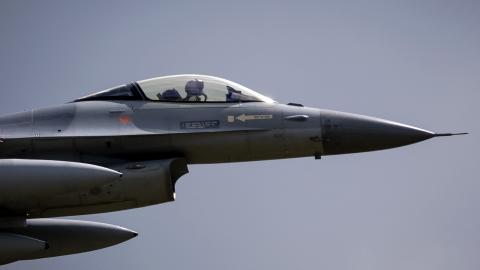
Ukraine has reportedly fielded a multinational F-16 squadron designed for immediate operational employment. The formation brings together Ukrainian pilots and a limited number of aviators from the United States and the Netherlands. This formation aims to accelerate Ukrainian proficiency on the F-16 platform while contributing to combat missions. Several of the Dutch and US pilots have extensive combat experience.
To further support Ukraine’s new squadron, the Netherlands announced it will transfer F-16 flight simulators to Ukraine to expand the country’s domestic training capacity. Dutch Defense Minister Ruben Brekelmans stated last week in Brussels that the Netherlands has recently provided Ukraine with hundreds of millions of euros in additional military assistance, including drones and ammunition, and will continue supporting Ukraine’s operation of the F-16 fleet by providing Kyiv with both equipment and training.
Ukraine’s new F-16 unit was established in recent weeks under Ukrainian Air Force authority and has already been tasked with the defense of Kyiv Oblast. According to press reporting, US participants in the new squadron previously have flown operational missions in Afghanistan, while Dutch aviators have trained through advanced air combat and interception programs. Collectively, they provide Ukraine with a new depth of experience in Western fourth-generation fighters.
Yet the US and Dutch pilots’ most consequential contribution is in their experience with high-precision targeting and reconnaissance systems, particularly the Lockheed Martin Sniper targeting pod. This technology has materially enhanced Ukraine’s ability to detect, identify, and engage fast-moving aerial threats in bad weather and low-visibility conditions. Ukrainian air crews have a baseline familiarity with such systems but lack the depth of training normally accumulated over years of NATO-standard service.
The new multinational team is closing this gap through continuous operational mentoring. The unit is reportedly intercepting cruise missiles and long-range strike drones on a near-daily basis, including Kalibr and Kh-101 missiles and Shahed-variant unmanned systems. Open-source visuals from Ukrainian combat operations have highlighted multiple engagements in which Kyiv’s F-16s, transferred by European NATO member states, have intercepted Russian Shahed drones.
4. What to Look for in the Coming Weeks
1. Ukraine’s worsening position in Pokrovsk. Russia has heightened its combat activity along the northern defenses of the long-embattled city. Ukrainian forces in Pokrovsk will likely face a challenging situation in the coming weeks.
2. Russia’s disconnection from Starlink could give Ukraine new targets. As recent developments in Zaporizhzhia have revealed, Ukrainian combat forces could seize opportunities to hit the Russian ranks when satellite internet connectivity is suddenly disrupted.
3. Ukrainian long-range strikes on Tula. Ukraine’s efforts to dismantle Russia’s Pantsir supply chain could soon focus on the Russian city of Tula. Ukrainian forces have previously targeted Pantsir production plants near the city. Should Kyiv continue to ramp up this campaign, a logical next step would be to hit the Tula compound again.