















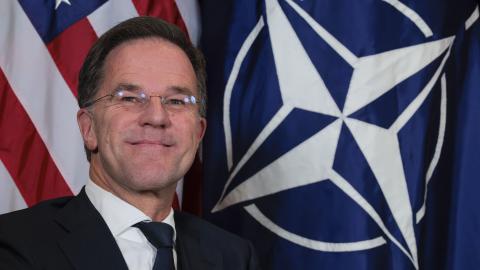
The World Economic Forum in Davos, Switzerland, last week highlighted an ongoing rift between the worldview of the US and that of its transatlantic partners in Europe. This time, the dispute centered on Greenland — specifically, America’s desire for greater access to and control over the territory. While tensions were high at times, it was NATO Secretary-General Mark Rutte who ultimately helped calm the situation and get transatlantic relations back on track.
Looking ahead, 2026 will be a pivotal year for NATO, with a major summit scheduled to take place less than six months from now in Ankara, Turkiye. To ensure the summit’s success, policymakers must begin shaping the agenda immediately. While the meeting may seem far off, in terms of statecraft and diplomacy, six months is very little time at all. Aligning the US and its European partners more closely will require early preparation, sustained engagement and political will on both sides of the Atlantic.
Getting the transatlantic relationship right carries significant economic implications — not only for North America and Europe, but for the global economy as well. Together, the two account for nearly half of the world’s gross domestic product. Europe and the US are each other’s largest export markets and each is responsible for trillions of dollars of investment in the other’s economy, supporting millions of jobs. When rifts emerge across the Atlantic, the consequences are felt well beyond security policy, with ripple effects across trade, investment and global growth.
As the alliance heads toward the July summit, four major issues are likely to dominate discussions. Policymakers would be wise to begin laying the groundwork now to ensure the meeting delivers tangible results rather than political friction.
The first issue, unsurprisingly given the recent focus on Greenland, is Arctic security. Just as Donald Trump has done more than any other US president to push NATO members to increase their defense spending, he has also done more than any predecessor to force the alliance to take the Arctic seriously. Until recently, NATO avoided even mentioning the region in its official documents, largely due to internal disagreements among Arctic allies over what role the alliance should play there.
With growing competition in the High North and with Trump’s renewed emphasis on Greenland’s strategic importance, Arctic security has been pushed near the top of NATO’s agenda for the first time. For this summer’s summit to proceed smoothly, allies should expect concrete deliverables related to NATO’s posture, presence and coordination in the Arctic.
The second issue likely to be raised concerns NATO’s relationship with the broader region — a matter of particular importance to the host country, Turkiye. While Turkiye has been an integral part of transatlantic security since joining NATO in the 1950s, Ankara also places increasing emphasis on security issues in the Black Sea region and the Middle East.
Notably, it was a Turkish initiative at the 2004 NATO Summit in Istanbul that led to the creation of the Istanbul Cooperation Initiative, which formalized NATO’s engagement with several Gulf states. Since then, the framework has provided a useful platform for high-level dialogue, though it has produced relatively few tangible outcomes in terms of shared security. With the political momentum that comes from hosting the summit, NATO should seize the opportunity to revamp, or at least reenergize, the Istanbul Cooperation Initiative and strengthen its relationships with key Gulf partners.
The third issue, and one that will no doubt be a top priority for Trump, will be the health of the alliance’s defense spending. Dating back to his first term in the White House, Trump has been among the most vocal US presidents in urging European allies to spend more on defense. At last year’s summit in The Hague, NATO took a historic step by agreeing to aim for defense spending of 5 percent of gross domestic product. This is three percentage points higher than the long-standing 2 percent benchmark. While this goal is not expected to be met until the early 2030s, there is little doubt that Trump will be closely monitoring progress in the meantime.
At present, only a handful of allies, primarily the Baltic states and Poland, come even close to meeting the 5 percent target. If Trump succeeds in working with Congress to pass his proposed $1.5 trillion defense budget, the US itself would reach that threshold. The faster European allies demonstrate meaningful progress toward this goal, the smoother alliance management is likely to be between the White House and European capitals.
The final issue, though unlikely to receive much public attention, will be discussed intensively behind closed doors: the war in Ukraine. Trump has made slow but steady progress in pushing Russia and Ukraine toward negotiations and NATO’s posture at the summit will depend heavily on how far diplomatic efforts have advanced by then. Trump has been clear that Ukrainian membership of NATO is off the table, meaning the alliance will need to find creative ways to remain engaged with Kyiv — strengthening cooperation and support without crossing political red lines set by Washington.
Despite occasional tensions in the transatlantic relationship, it is essential that both sides of the Atlantic continue to work together. Without a stable and secure Europe, the US economy would suffer, with knock-on effects for the global economy as well. As the Ankara summit approaches, NATO’s leaders have little time to waste. Managing differences across the Atlantic while delivering progress on security, spending and diplomacy will determine whether the alliance emerges stronger — or more divided — at a moment of growing geopolitical uncertainty.