


















When foreign state-backed investors increase their ownership in U.S. energy infrastructure, markets should pay attention—not as a geopolitical signal, but as a capital decision. These are bets placed after underwriting risk, duration, and return have been assessed. American investors should be asking why others are moving first.
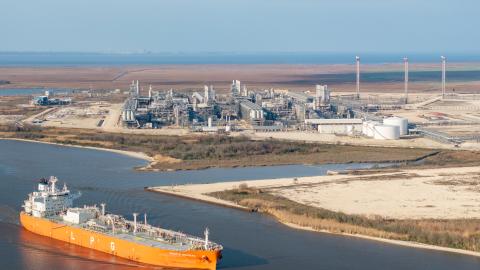
Last week, the Financial Times reported that Abu Dhabi National Oil Company, through its international investment arm XRG, increased its equity stake in the Rio Grande LNG. The deal added a 7.6% interest in the project’s second phase, on top of an 11.7% stake already held in Phase 1.The developer, NextDecade, expects the facility to reach up to 60 million tons per year once fully built. That would place it among the world’s largest liquefied natural gas export terminals. Construction is underway. Initial production is expected later this decade.
The significance of the transaction lies less in who bought the stake than in what it reveals about how different investors are pricing U.S. energy assets. Sovereign and infrastructure investors with long-dated liabilities continue to view American LNG as a durable cash-flow business with substantial value for investors. It is extremely important, as the market has tended to overlook traditional energy investments in fossil fuels.
That gap deserves attention.
To be clear, the LNG industry is far from speculative and should be seen as stable infrastructure assets. With over 4 billion people worldwide living in energy poverty, future demand for natural gas—still seen as a bridge fuel for decades to come—will continue to be seen as pivotal to the energy mix of countries like China, Japan, and India. In the medium to long term, permitting reform, improved construction discipline, and stronger counterparty balance sheets, will far outweigh short-term instability in commodity prices. When those conditions are credible, capital tends to follow.
Policy has shifted in ways that matter to financing. The US has lifted its LNG export pause. Environmental review timelines are being treated as binding rather than open-ended. Offshore leasing prospects have improved. Alaska’s gas resources are again part of serious investment discussions. Each of these changes reduces delay risk and improves the probability of reaching final investment decisions.
Capital markets deplore uncertainty. Uncertainty creates risk and adds costs in the capital stack, widening discount rates and required returns, pushing otherwise viable projects to the margin. Further reducing uncertainty in the face of constant demand will have the opposite effect. Foreign direct investment suggests many already recognize this benefit. The energy market should also see the upside of direct US investment.
Skeptics may point to an abundance of available LNG by citing new capacity under construction in the United States and Qatar. Near-term price volatility is real, and equity markets have reflected that concern. That said, global energy forecasts continue to predict increasing demand for natural gas, with little concern about peaking throughout mid-century. Thus, from a private equity performance standpoint, continuing to invest in LNG investment, as foreign investors have, is a stable long-term capital investment.
Demand fundamentals support this approach. Europe continues to prioritize supply diversification as it considers stable, longer-term baseload energy policies that do not rely on Russian gas. Even if the Russia-Ukraine War ends, Europe is unlikely to see Russia as a reliable energy supplier. In other words, the damage has been done.
In Asia, gas demand is growing as coal displacement proceeds somewhat unevenly. While 2025 represented the largest coal usage in history, outside of China it is natural gas that continues to gain momentum as a true bridge fuel as data centers and advanced computing are driving new baseload electricity demand that intermittent resources alone cannot meet. U.S. LNG remains competitive on cost, reliability, and contractual flexibility.
There is a clear tradeoff. Committing capital today means accepting near-term price risk in exchange for long-term position and stability. That trade favors patient capital with balance-sheet capacity. It also explains why sovereign and infrastructure investors are acting while others wait.
What stands out is not that foreign capital is investing in U.S. LNG. It is that some domestic institutions remain hesitant, despite improving policy clarity and strong long-cycle demand signals.
Large U.S. public pension funds, insurance general accounts, infrastructure-focused private equity, endowments, and bank-affiliated project finance desks routinely seek duration-matched, inflation-resilient assets. These projects meet that test.
Ultimately ownership matters. Timing matters. Capital that waits for perfect conditions rarely captures infrastructure premiums.
Global investors are already underwriting U.S. LNG on that basis. American capital can lead this market, or it can continue to watch from the sidelines while foreign investment sets the terms.