

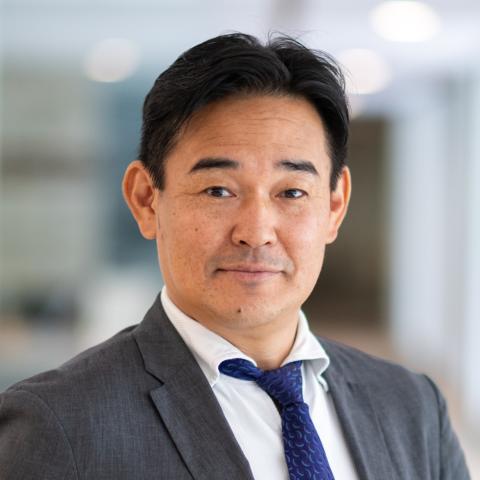



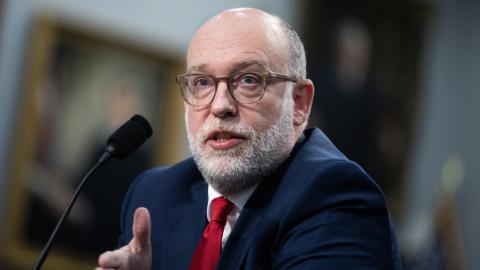


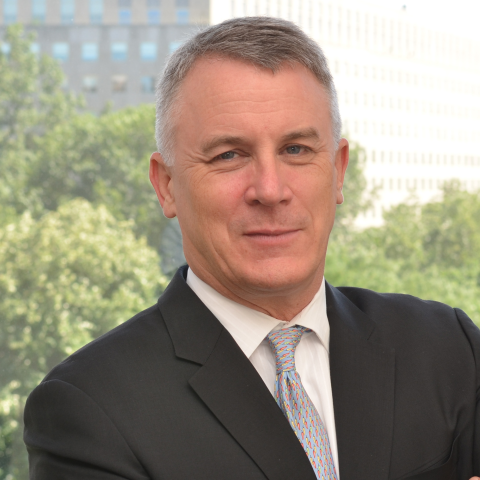
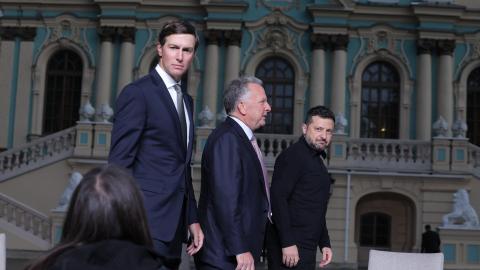
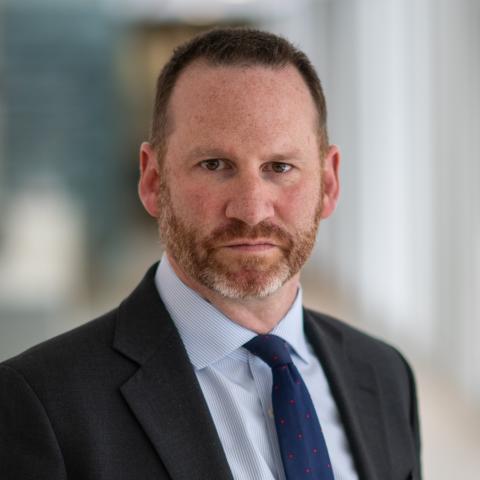
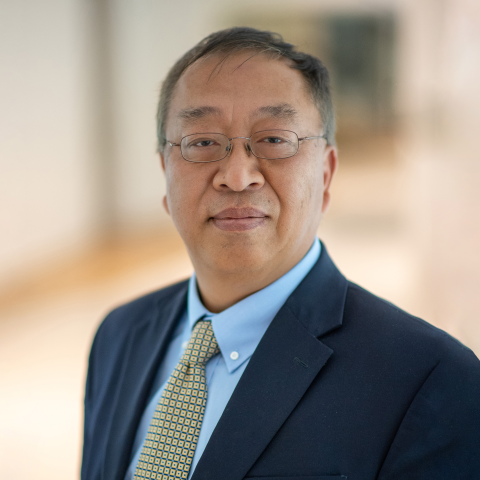
Michael Doran testified before the United States Helsinki Commission, along with two other witnesses, to examine the legacy of Russia’s support for the Bashar al-Assad regime, the feasibility of evicting Russia from Syria, and Moscow’s ability to resist efforts to diminish its influence in the region.
Written Testimony
View PDF
Thank you, Chairman Wicker, Co-Chairman Wilson, Ranking Members Whitehouse and Cohen, and distinguished members of the Helsinki Commission. It is an honor to testify before you today. The views I express are my own and do not represent the official position of the Hudson Institute.
Please allow me to make five points.
First, neglecting Syria comes naturally to Americans.
I began following Syria closely in 2005, when I served as Senior Director for the Near East and North Africa on the National Security Council. Meetings on Syria occurred every four or five months. They invariably ended without decisions. We reused the same memo again and again, changing only the opening paragraph. When our Syria director rotated out, the office joke was that we did not need a replacement. We could hand the job to the photocopy machine.
The Trump administration paid more attention to Syria, and that mattered. But the underlying pattern persists. The United States remains predisposed to treat Syria as an afterthought.
Second, America’s historic inattention to Syria combines with geography and history to make it the place where our adversaries concentrate their efforts against us.
Today, global politics is a contest between the United States and a revisionist axis led by China and including Russia, Iran, and North Korea. Syria is central to the power projection of Russia and Iran. It is the primary platform from which they challenge the American-led order in the Middle East.
For Russia, Syria is essential to its claim to great power status. It is Vladimir Putin’s only military foothold outside the former Soviet space. Without Syria, Russia is a regional power.
The connection runs through Crimea. Sevastopol, seized in 2014, is home to Russia’s Black Sea Fleet, which also functions as its Mediterranean fleet. The maritime link from Sevastopol to Tartus enables Russian power projection into the Mediterranean. Tartus then became the platform for Russian expansion into Libya and Africa.
Syria is the hinge. Break the Russian bridgehead there, and you break Russia’s ability to project power beyond its near abroad.
Third, Syria was not merely valuable terrain for Russia. It was the birthplace of modern Russian power projection.
Many of the capabilities Russia now deploys against Ukraine were first developed in Syria. From 2015 to 2024, Syria functioned as a live fire laboratory. Russian pilots, commanders, and planners rotated through the conflict. They tested long-range precision strikes, joint operations, and coordination with regional actors. The experience reshaped Russian doctrine, force development, and institutional confidence.
Syria also forged the Russian-Iranian military partnership. Russian airpower combined with Iranian ground forces and proxies to preserve the Assad regime. That cooperation built trust and interoperability. It later enabled Iran to supply drones to Russia for use in Ukraine. The tactics refined through that partnership are now inflicting serious damage on Ukrainian defenses.
In Syria, Russia and Iran pursued a deliberate strategy of destroying cities. Beyond the humanitarian catastrophe, this drove refugees into Europe, creating political strain among our allies and weakening alliance cohesion. Moscow and Tehran weaponized the humanitarian crisis they created.
Because the Obama administration chose not to contest the joint Russian-Iranian intervention in Syria, it effectively forced Turkey and Israel to seek their own separate accommodations with Russia. When Russia invaded Ukraine, the Biden administration was surprised to find that not only Ankara and Jerusalem, but none of America’s Middle Eastern allies, were as willing to pressure Moscow as expected. American policy had compelled them to accommodate Russia on their borders.
Syria also incubated the Wagner Group's hybrid model of power. Armed force secured access to resources, which were converted into revenue through shell companies and sanctions evasion. That model became the template for Wagner’s expansion into Africa. To be sure, the independent Wagner Group no longer exists in its original form. Restructured and subsumed under direct Kremlin control, it has now become, primarily, the Africa Corps. Nevertheless, the Wagner model endures. Russia still blends armed intervention with economic exploitation and influence operations across Africa and beyond.
The broader lesson is clear. The end of the Cold War erased Russia’s position in the Middle East. For two decades, Moscow was largely out of the region. The Obama administration believed Russia could be brought back as a stakeholder rather than confronted as a rival. It hoped cooperation in Syria would support a concert among major powers. That assumption was wrong.
Fourth, Russia no longer determines Syria’s trajectory, but it has not been pushed out.
Russia retains the Khmeimim airbase and the Tartus naval facility, its only military footholds beyond the former Soviet space. Syrian leaders have expelled Iran and treat Russia pragmatically. Syria’s armed forces still depend on Russian equipment. That dependence sustains Russian influence and preserves Moscow’s ability to reassert itself once pressures ease elsewhere.
The central question for the United States is whether Syria becomes a renewed platform for Russian leverage or a durable barrier against it. Active policy can shape that outcome.
Fifth, the greatest test ahead is whether Syria emerges united and anchored in the American order or fractures into contested ground for our adversaries.
The rivalry between Turkey and Israel is the most dangerous fault line. Turkey backs the current Syrian leadership with military support, political cover, and economic ties. Israel views expanding Turkish influence near its northern border as a direct threat.
If Syria fragments along sectarian or ethnic lines, it becomes contested terrain where Ankara and Jerusalem maneuver against each other, raising the risk of escalation. Fragmentation would also hand Russia a new opening.
The Alawite community remains concentrated along the coast near Latakia and Tartus, close to Russia’s remaining bases. Russia, which hosts Assad in exile and retains deep ties to the former regime, could position itself as their patron. By presenting itself as a protector of vulnerable minorities, Moscow could reestablish political leverage over Tartus and Khmeimim and preserve a long-term foothold on the Mediterranean. This is the divide and rule strategy Russia perfected under Assad. A fractured Syria invites it back.
A unified Syria offers a different path. Our policy should be to support Syria’s emergence as a buffer state between Turkey and Israel. Neutral, minimally armed, and stable enough to prevent direct friction. Such a Syria would deny Russia exploitable seams and block the return of hostile powers.
Unity brings real challenges. Minorities must be protected. Extremist elements within Sharaa’s forces must be restrained. Turkish influence can be constructive, but it must be managed carefully to avoid alienating Israel. These problems are difficult but manageable through pressure on adversaries and pragmatic deal making among our friends. They do not require American troops.
We should not repeat the earlier mistake. Russia is again under strain today. Temporary weakness will not transform it into a responsible stakeholder. It creates incentives to regain leverage. Syria is one of the few places where it can. We have an opportunity to learn from experience and deny Russia that opening.
None of this is possible if we once again allow Syria to fade from view. Syria is now a proving ground for American leadership in this era of great power competition. If we act with focus and discipline, we can prevent fragmentation, deny Russia a path back in, and shape a regional order that constrains our adversaries and protects our allies.
Thank you for the honor of testifying before this Commission today.