












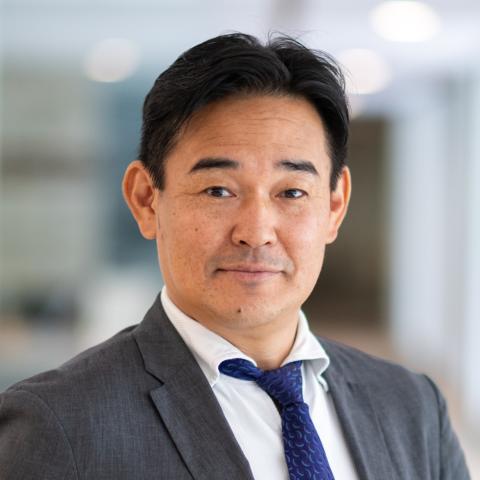


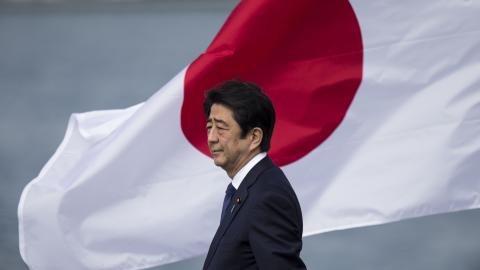
Miles Yu participated on a panel at the First Annual Shinzo Abe and Contemporary Japanese Studies Conference in Tokyo, Japan.
Written Speech
Ladies and gentlemen,
I do not speak Japanese, but I wholeheartedly agree with everything my distinguished fellow panelists have just said in Japanese.
It is a great honor to join you here in Tokyo to commemorate the extraordinary life and legacy of Prime Minister Shinzo Abe. I would like to thank the organizers for inviting me to participate in this important conference.
Many leaders leave behind accomplishments. A very small number leave behind ideas that continue to shape history long after they have left office. Prime Minister Abe belongs to that rare category.
History will remember him not simply as one of Japan's greatest postwar prime ministers, but as one of the principal architects of the strategic order that is emerging across the Indo-Pacific today.
This afternoon, I would like to explain why.
I will speak from the perspective of US-Japan relations because that is the area I know best. As some of you may know, during the first Trump administration, I served as the China policy adviser to Secretary of State Mike Pompeo. From that position, I had the privilege of witnessing firsthand the close cooperation between Washington and Tokyo during one of the most consequential periods in the history of the alliance.
Many people have asked why President Donald Trump and Prime Minister Abe developed such an exceptionally close relationship.
Some attribute it to their shared love of golf. Others point to the tragic fact that both became victims of political violence and therefore shared an uncommon personal bond.
There is some truth to both explanations. But I believe the real reason was much deeper.
President Trump and Prime Minister Abe saw the world through remarkably similar strategic lenses. They shared an understanding that the international order was entering a new era, one in which the rise of the Chinese Communist Party represented the defining geopolitical challenge of the twenty-first century.
That shared strategic vision became the foundation of one of the closest partnerships ever forged between an American president and a Japanese prime minister.
To appreciate the significance of that partnership, we must first understand the strategic environment they inherited.
For nearly eight decades after the Second World War, American grand strategy revolved around Europe. Beginning in the late 1960s, enormous military, diplomatic, and economic resources were also devoted to the Middle East.
The Asia-Pacific certainly mattered. The United States fought major wars in Korea and Vietnam and maintained extensive alliances throughout the region.
Yet despite its importance, Asia was never America's principal strategic theater.
That changed during the first Trump administration.
For the first time since 1945, the United States fundamentally reordered its strategic priorities. The center of gravity of American national security shifted from Europe and the Middle East to the Indo-Pacific.
This was not simply a policy adjustment. It was a strategic revolution.
Every great power confronts countless security challenges. The essential task of statecraft is deciding which challenge matters most.
The first Trump administration concluded that the Chinese Communist Party—not terrorism, not Russia, nor any regional crisis—represented the most significant long-term challenge to American security, prosperity, and global leadership.
That conclusion fundamentally changed the direction of American foreign policy.
Many of our closest allies initially found this difficult to understand. Across Europe, there was genuine concern that Washington was abandoning NATO and downgrading European security. Some believed the United States was underestimating Russia's threat to the West.
Our assessment was different.
Russia undoubtedly remains a dangerous power, but its economy is only a fraction of China's. Its industrial capacity is far smaller. Its technological base is more limited.
China presents an entirely different challenge. Among all of America's major adversaries—Russia, North Korea, Iran, Venezuela, and Cuba—China alone is deeply integrated into the global economy. It benefits from international trade, global finance, advanced technology, worldwide supply chains, and access to Western markets while simultaneously seeking to reshape the international order in ways favorable to authoritarian power.
No previous American strategic competitor has possessed that combination of economic strength, technological capability, industrial capacity, and global influence.
That is why we regarded the Chinese Communist Party as America's foremost long-term strategic challenge.
Many allies disagreed. Some questioned our judgment. Some openly opposed it.
Prime Minister Abe did not.
He immediately understood both the necessity and the strategic logic of America's reorientation toward the Indo-Pacific.
Indeed, for quite some time, he stood almost alone among allied leaders in publicly supporting this historic shift.
That support did not arise from political convenience. It arose from strategic insight.
Prime Minister Abe had already recognized what many others had yet to see: that the balance of global power was changing and that democracies would have to adapt if they wished to preserve a free and open international order.
That shared understanding created an extraordinary level of trust between Washington and Tokyo.
It also explains why so many Americans who worked closely with Prime Minister Abe continue to admire—and deeply miss—his courage, judgment, and strategic vision.
But recognizing history is one thing. Changing history is another. Prime Minister Abe did both.
Transforming the Alliance
One of Prime Minister Abe's greatest achievements was the transformation of the US-Japan alliance itself.
For decades, the alliance had been largely understood as an arrangement in which the United States guaranteed Japan's security while Japan provided indispensable bases and logistical support.
It was an extraordinarily successful partnership.
But Prime Minister Abe understood that the strategic environment had changed. The alliance had to change as well.
Under his leadership, Japan and the United States revised the Guidelines for Japan-US Defense Cooperation in 2015.
Although the revision appeared technical, its implications were revolutionary.
For the first time, the alliance moved beyond the narrow objective of defending Japan alone. It became an instrument for preserving regional—and increasingly global—security.
This marked the evolution of the alliance from a primarily defensive arrangement into a genuine strategic partnership.
Japan was no longer simply a nation to be defended. It became a nation prepared to help defend the regional order itself.
Today, that transformation underpins cooperation across the Indo-Pacific, from the East China Sea to the Taiwan Strait and beyond.
Achieving such a profound change required exceptional political leadership.
Prime Minister Abe demonstrated remarkable strategic foresight abroad while simultaneously building domestic political consensus for reforms that many observers had once considered impossible.
Closely connected to this achievement was another historic milestone: Japan's recognition of the right to exercise collective self-defense.
This may prove to be one of the most consequential security reforms in Japan's postwar history.
For decades, constitutional interpretations sharply limited Japan's ability to assist even its closest allies under attack.
Prime Minister Abe understood that this interpretation no longer reflected strategic reality.
In today's interconnected security environment, Japan's defense cannot be separated from the defense of its democratic partners. Peace is preserved collectively. Security is achieved collectively. Freedom is defended collectively.
Under carefully defined circumstances, Japan accepted the responsibility to exercise collective self-defense alongside its allies.
That doctrinal change fundamentally altered the character of the alliance.
Japan became not merely America's protected ally, but one of America's indispensable strategic partners.
And this was only the beginning.
The next step in Prime Minister Abe's vision would prove even more consequential—not only for Japan and the United States, but for the entire Indo-Pacific region.
That contribution was the concept of a Free and Open Indo-Pacific.
Today, the phrase has become so familiar that we sometimes forget how revolutionary it was when Prime Minister Abe first articulated it.
During the first Trump administration, we devoted considerable effort to developing a coherent strategic framework for addressing the challenge posed by the Chinese Communist Party. We knew that America's strategic priorities had changed, but we were still searching for a conceptual framework capable of explaining that change—not only to ourselves, but also to our allies and partners.
Prime Minister Abe supplied that framework. The brilliance of the Free and Open Indo-Pacific lay in its simplicity.
It recognized that the Indian and Pacific Oceans are not separate strategic theaters. They form a single geopolitical space connected by maritime commerce, energy flows, military power, and the shared interests of democratic nations.
That insight transformed strategic thinking.
The Trump administration quickly embraced the concept as the organizing principle of American policy in Asia. Soon afterward, many of our allies—including Australia, India, ASEAN partners, and eventually NATO—began to use the same framework.
Its influence extended beyond diplomatic language.
Recognizing the strategic significance of Prime Minister Abe's vision, the United States renamed the US Pacific Command as the US Indo-Pacific Command. Although the command's geographic area of responsibility remained essentially unchanged, the new name reflected an entirely different way of thinking about regional security.
Prime Minister Abe understood something that many policymakers had not yet fully appreciated.
The future of Asia would not be determined by any single nation acting alone. It would depend upon a community of free nations working together to preserve a rules-based international order.
That idea has become one of the defining principles of Indo-Pacific strategy.
The Quad: Building a New Security Architecture
Prime Minister Abe's next great innovation was even more ambitious.
He envisioned a new form of security cooperation among the region's leading democracies—the Quadrilateral Security Dialogue, now universally known as the Quad.
To understand why the Quad matters, one must first understand the structure of America's alliance system.
The United States possesses the world's most extensive network of alliances.
Yet those alliances have historically taken two very different forms.
In Europe, the United States helped build NATO, a genuine multilateral collective-defense alliance founded on the principle that an attack against one member is an attack against all.
The Indo-Pacific evolved differently.
Here, America's alliances were constructed largely as a series of bilateral relationships. Washington maintained separate mutual defense treaties or agreements with Japan, South Korea, Australia, the Philippines, and Thailand, but those allies themselves had few formal security obligations toward one another.
This arrangement served the region well for decades, but it also created structural limitations.
Prime Minister Abe recognized those limitations long before most others. He understood that the strategic environment of the twenty-first century required greater coordination among democratic nations facing common challenges.
The Quad was his answer.
Although still a diplomatic rather than a military alliance, the Quad represents something historically significant.
For the first time, four major Indo-Pacific democracies began coordinating not merely through Washington, but directly with one another.
In many respects, the Quad represents the first step toward a more integrated regional security architecture. It is not an Asian NATO exactly, but it embodies the same underlying principle: that democracies are stronger when they act together multilaterally rather than separately or bilaterally.
I witnessed this transformation personally.
In October 2020, I accompanied Secretary of State Mike Pompeo to Tokyo for the Quad Foreign Ministers' Meeting, the final Quad ministerial of the first Trump Administration. Even then, it was clear that history was being made.
Looking back today, it is evident that Prime Minister Abe laid much of the intellectual foundation upon which today's Indo-Pacific security architecture continues to develop.
Trust: Abe's Greatest Diplomatic Asset
Strategy alone does not build alliances.
People do.
Prime Minister Abe understood this better than almost anyone.
He possessed many qualities that distinguished him as a statesman—intellectual clarity, political courage, and strategic vision—but one quality stood above the rest.
He inspired trust.
During his years in office, he worked closely with four American presidents: George W. Bush, Barack Obama, Donald Trump, and Joe Biden, who served as vice president under President Obama at the time.
These four leaders differed profoundly in temperament, political philosophy, and governing style.
Yet Prime Minister Abe earned the confidence and respect of each of them.
That is no ordinary achievement.
Throughout my years in government, I heard senior American officials describe him in remarkably similar terms.
They admired his sincerity. They respected his honesty. They appreciated his candor. Most importantly, they trusted him.
When Prime Minister Abe made a commitment, people believed he meant exactly what he said.
Anyone who has spent time negotiating internationally understands how rare such trust can be.
The contrast with senior officials of the Chinese Communist Party is striking. When dealing with CCP leaders, one is often left wondering not only what has been said, but what has been left unsaid. Every statement invites speculation about hidden motives or unspoken objectives. With China, trust becomes difficult.
Prime Minister Abe represented the opposite. His integrity made genuine strategic cooperation possible.
It is difficult to overstate the value of that quality in international affairs.
A Strategic Partner Washington Could Depend Upon
There was another reason Prime Minister Abe enjoyed such extraordinary respect in Washington.
As the world's leading power, the United States must constantly consider the global consequences of every major initiative it undertakes.
Sometimes it is more effective for trusted allies to take the first step.
When countries such as Japan, the United Kingdom, or Israel advance initiatives that serve common democratic interests, the United States is often able to support those efforts more effectively than if it had acted initially and alone.
Prime Minister Abe understood this dynamic perfectly. Nowhere was this more evident than on the issue of Taiwan.
Successive American administrations have sought to strengthen deterrence while avoiding unnecessary escalation with Beijing.
Prime Minister Abe nevertheless chose to say publicly what many strategic planners privately understood.
He declared that "a Taiwan contingency is a Japan contingency."
Those words fundamentally changed strategic thinking throughout the Indo-Pacific. They made unmistakably clear that Taiwan's security is not simply a cross-strait issue. It is central to the security of Japan. It is central to the credibility of the United States. And it is central to the preservation of a free and open Indo-Pacific.
Prime Minister Abe also repeatedly expressed Japan's gratitude for the extraordinary generosity shown by the people of Taiwan following the Great East Japan Earthquake of 2011.
He recognized that the friendship between Japan and Taiwan rests not merely upon shared strategic interests, but upon genuine affection between their peoples.
Among societies with deep historical connections to Japan, few have demonstrated greater goodwill toward Japan than Taiwan.
Prime Minister Abe understood both the strategic importance and the human significance of that relationship.
Looking Beyond the Burden of History
There is one final aspect of Prime Minister Abe's leadership that I deeply admire.
For decades, security cooperation in East Asia has often been constrained by historical grievances.
Too frequently, discussions about the future became captive to arguments about the past.
Prime Minister Abe understood those realities. Yet he refused to become imprisoned by history.
Rather than allowing historical disputes to define Japan's strategic options, he sought new partnerships based upon common interests and shared values.
His decision to strengthen relations with India was a masterstroke of strategic statecraft.
Unlike several of Japan's Asian neighbors, India carried no historical baggage in its relationship with Japan.
At the same time, both countries confronted the emergence of an increasingly powerful and assertive China.
Prime Minister Abe recognized that strategic convergence early.
Under his leadership, Japan and India built one of the most important democratic partnerships in Asia.
Today, that relationship has become another cornerstone of the Indo-Pacific order.
This was vintage Abe diplomacy: pragmatic, forward-looking, and anchored not in historical resentment, but in strategic opportunity.
Taken together, these achievements fundamentally changed the strategic landscape of the Indo-Pacific.
He transformed the US-Japan alliance.
He restored Japan's ability to exercise collective self-defense.
He articulated the vision of a Free and Open Indo-Pacific.
He laid the foundations of the Quad.
He elevated Taiwan to its rightful place in regional strategic thinking.
And he forged new democratic partnerships that continue to shape Asia today.
Great leaders respond to history. Extraordinary leaders reshape it.
Prime Minister Abe did exactly that.
His legacy belongs not only to Japan, but to every nation committed to freedom, peace, and the rule of law.
Thank you very much.
Q&A
Thank you for that thoughtful question.
Allow me to broaden the discussion by making one larger observation.
We often speak of "regional conflicts" as though they are geographically confined. I believe that way of thinking no longer reflects the strategic realities of the twenty-first century. In today's interconnected world, very few conflicts remain regional for long. Their consequences quickly become global.
Consider North Korea. It is not simply a Northeast Asian problem. Its nuclear weapons, missile programs, cyber operations, and proliferation activities affect security far beyond the Korean Peninsula.
The same is true in the Middle East. A conflict in Gaza, despite its limited geography, reverberates across global energy markets, international diplomacy, migration, and the broader strategic balance.
Russia's invasion of Ukraine offers another example. Although the fighting is concentrated in one part of Europe, its consequences have reshaped global food supplies, energy markets, defense policies, and the international security environment.
Taiwan should be understood in exactly the same way.
Taiwan is not merely a cross-Strait issue. It is not simply a concern for China, Japan, or the United States. It is one of the defining questions confronting the international order.
If a prosperous democracy of 23 million people can be annexed by force without meaningful resistance from the international community, every authoritarian regime will draw the same conclusion: aggression works.
History teaches us that successful aggression rarely ends with its first victory.
It encourages the next one.
China shares land borders with fourteen countries—more than any other nation in the world. Since the founding of the People's Republic, Beijing has had territorial disputes or military confrontations with nearly all of them at one time or another. The Taiwan Strait, therefore, cannot be viewed in isolation. If coercion succeeds there, it is unlikely to stop there.
The consequences would extend to the East China Sea, the South China Sea, the Himalayas, and beyond.
That is why I have long argued that Taiwan is not simply a regional issue. It is a test of whether the postwar international order still possesses the will to defend its own principles.
Prime Minister Abe understood this earlier than almost anyone.
His response was not merely to advocate stronger deterrence. He recognized that deterrence ultimately depends upon stronger alliances.
He understood that while the US-Japan alliance would remain the cornerstone of Japan's security, America's expectations of its allies were changing. Washington increasingly expected capable allies to assume greater responsibility for their own defense and to contribute more actively to regional stability.
Prime Minister Abe welcomed that evolution. He understood that a stronger Japan would make the alliance stronger.
The United States has never wanted dependent allies. It has always valued capable allies.
Israel provides a useful example. It enjoys one of America's closest security relationships, yet it also maintains the military capability to defend itself. American support enhances Israel's strength, but it does not substitute for Israel's own determination and capacity.
Prime Minister Abe envisioned the same future for Japan.
He believed that Japan should become a nation capable of making meaningful contributions to international peace and security—not because others demanded it, but because Japan itself recognized that its own security depended upon the preservation of a stable international order.
Under his leadership—and through the efforts of those who have continued many of his reforms—Japan has undergone one of the most significant strategic transformations in its postwar history.
It has become more confident. More capable. More outward-looking.
Just as importantly, Japan has expanded its strategic horizons.
Prime Minister Abe understood that Japan's security cannot be separated from developments elsewhere in the world. That understanding explains his efforts to strengthen cooperation not only with the United States, Australia, and India, but also with Europe and NATO.
Some of those initiatives have advanced more rapidly than others. Political differences among allies are inevitable. Yet the strategic direction he established remains unmistakable.
Perhaps his greatest achievement was not institutional. It was intellectual.
He changed the way Japan—and increasingly the democratic world—thinks about security.
For much of the postwar period, Japan understandably viewed peace as something to be preserved primarily through restraint.
Prime Minister Abe added another essential insight.
Peace must also be protected. It requires strength. It requires preparedness. And above all, it requires cooperation among free nations.
That philosophy lies at the heart of the Quad.
The Quad is more than a diplomatic forum. It is a community of like-minded democracies united by shared values and shared strategic interests. In English, we often speak of a "coalition of the willing"—countries prepared to act because they recognize both a common challenge and a common responsibility.
That, I believe, is one of Prime Minister Abe's greatest contributions. He helped move Japan beyond seeing itself simply as a beneficiary of international security toward seeing itself as a provider of international security.
That transformation continues to shape strategic thinking not only in Tokyo, but also in Washington, Canberra, New Delhi, and throughout the Indo-Pacific.
History will remember Prime Minister Abe not simply as one of Japan's greatest leaders. It will remember him as one of the architects of the Indo-Pacific order now taking shape before our eyes.
His institutions will evolve. His policies will be refined. But the strategic principles he championed—a Free and Open Indo-Pacific, stronger democratic alliances, collective security, and the defense of freedom through cooperation—will endure.
For that, Japan can be proud. And for that, all who value liberty owe him a lasting debt.
Again, thank you very much for having me here.