
















President George W. Bush convened the first Group of 20 leaders’ summit to tackle the 2008 global financial crisis. Yet as economic and political turmoil has gripped the world in recent years, the forum has all too often occupied the sidelines.
President Donald Trump, who will host the next summit in Miami this December, wants to bring the format back to its core mission. To advance this agenda, his administration is promoting a key ally, a nation that is not yet a permanent member of the G-20 but punches far above its weight in Europe: Poland.
Poland has shaken off the constraints of its Soviet past to become one of the world’s most impressive success stories. Over the past two decades, the country’s economy has doubled in size. With a gross domestic product that exceeds $1 trillion, Poland is set to become the 20th-largest economy in the world in 2028 and is sixth largest in the European Union.
This year, the European Commission expects the country’s economy to grow by 3.5 percent, while neighboring Germany is set to grow by only 0.6 percent.
Poland still faces challenges, however. Its GDP per capita is below the E.U. average. The country is still climbing the economic ladder and must invest more in high-tech sectors. Polish enterprises “are not sufficiently integrated into high-value innovation chains,” notes a recent European Commission report.
But in a Europe often maligned for its sluggish pace of innovation, Poland is a poster child for growth, free-market principles and a democratic political framework. As Trump reorients the G-20 toward its original task of unleashing economic expansion, he is pushing for the country to gain permanent membership in the flagging forum. Poland’s success “is proof that a focus on the future” pays off, Secretary of State Marco Rubio said in December, before proclaiming that Poland should “assume its rightful place in the G-20.”
Trump has diagnosed what ails the G-20. Its leaders’ summits have often become public-relations events at which a hosting government signals its virtue by promoting an agenda that would be more at home in a nongovernmental organization. Issues such as fighting global poverty and promoting global health have become central to the summits of recent years and have yielded few real-world impacts.
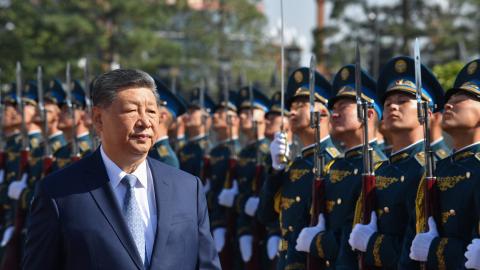
Legitimate questions remain about whether G-20 summits can achieve substantial progress with China and Russia attending. Beijing and Moscow have made diminishing American power their strategic priority and view international relations as a zero-sum game.
Yet even without substantial consensus, the G-20 format has its benefits. Except for China and Russia, almost all the forum’s participants are allies or partners of the United States. The G-20 can help manage tensions with Moscow and Beijing while projecting a broad, U.S.-led consensus among nations dedicated to maintaining a “free and open” world order.
In that spirit, Trump has set an agenda for the Miami summit that is focused on “driving economic growth, unleashing innovation, and strengthening partnerships that benefit American workers, businesses, and allies.” Trump’s vision of economic prosperity — removing regulatory burdens to unleash investment, unlocking affordable and secure energy supply chains, and pioneering innovation in artificial intelligence and emerging technologies — has the potential to unite at least most of the G-20 and generate tailwinds that can create the “new golden age” the president has promised.
Poland can help the Trump administration achieve these goals in three key ways.
First, while the big economies of Western Europe suffer under the weight of bloated welfare states and low innovation horizons, Poland is focused on economic growth. Warsaw is driven by a new generation of entrepreneurs eager to find opportunities in a changing environment.
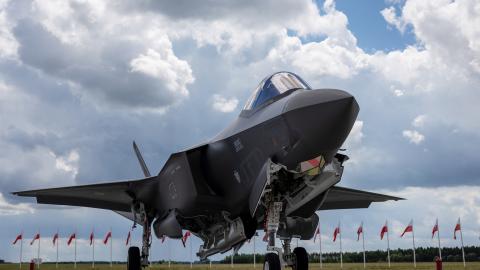
Second, Poland is a star in defense. The country has become one of the most ambitious members of NATO, overshadowing many of the alliance’s longest-standing members. Warsaw already spends 4.7 percent of its GDP on defense and devotes nearly 56 percent of its defense budget to equipment, more than any other NATO member. Poland has become indispensable to the alliance, has contributed greatly to European stability and has helped project the strength to deter Russia.
Third, Poland’s permanent membership in the G-20 would ensure that Central Europe is finally represented in the club. The region has become an economic powerhouse, and Poland, given its size and outlook, is a natural leader. In the Declaration of the Three Seas Summit issued in Dubrovnik, Croatia, in April, the leaders of the region welcomed the consolidation of transatlantic ties and Poland’s participation in the G-20.
As this year’s G-20 host, the U.S. has invited Poland to take a seat at the table that Washington has denied to South Africa, an official member of the club whose economy has atrophied due to widespread corruption and government intervention.
Poland’s permanent inclusion in the G-20 would not be a gift to Warsaw but a reflection of its well-earned status among the world’s leading economies. Poland is the ally Trump needs to pull the G-20 back from its worst instincts.