












Helping Ukraine Prepare for Another Winter of Russian Air Strikes
President Volodymyr Zelenskyy warned in April that “Ukraine must enter the next winter fully prepared.” The United States and other Western countries should take his message seriously and work with Kyiv to strengthen Ukraine’s air defenses and reduce the humanitarian impact of Russian air strikes now, before winter arrives.
Last winter was harsh for Ukrainians. Large-scale Russian air strikes routinely struck major population centers and specifically targeted civilian infrastructure, such as the electrical grid. Deep, widespread blackouts caused major interruptions to heat and water supplies, and impaired the operation of hospitals, schools, and industry.
While the Ukrainian military has strengthened the country’s defenses, Kyiv needs help to improve air-defense capabilities and mitigate the impact of successful Russian strikes.
Strengthening Ukraine’s Air Defenses
Air defense remains one of Ukraine’s most urgent military requirements. On some nights, Ukraine faces attacks involving hundreds of drones alongside dozens of cruise, ballistic, and hypersonic missiles. Ukrainian forces have demonstrated an unmatched ability to counter unmanned aerial systems and have effectively intercepted Russian cruise missiles, including with F-16s. Ballistic and hypersonic missiles, however, remain a much greater challenge.
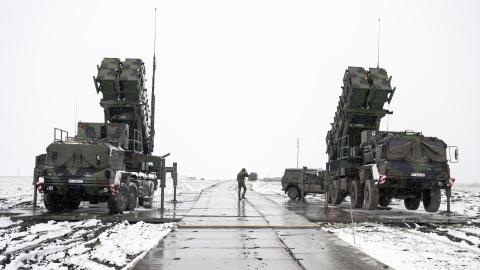
The most effective defense against these threats is the PAC-3 (Patriot Advanced Capability 3) interceptor fired from the MIM-104 Patriot air-defense system. Unfortunately, available stockpiles remain limited. Several steps should be taken:
- The United States should expedite the licensing process for Ukraine to manufacture the PAC-3 interceptor. The Biden administration declined to grant such a license. At the recent North Atlantic Treaty Organization summit in Ankara, Turkey, however, President Donald Trump agreed to move forward with this approach. Given the extraordinary circumstances, Washington should now accelerate the licensing, technology transfer, and production process. Expanding production in Ukraine would strengthen the country’s defenses while also easing pressure on limited US production capacity.
- European countries with PAC-3 interceptors in storage should transfer them to Ukraine, particularly for the winter months. Keeping these interceptors in warehouses makes little strategic sense when they could be protecting Ukrainian cities and critical infrastructure. The defense of European airspace begins in Ukrainian skies.
- Ukraine’s Western partners should provide financial, technical, and industrial assistance to support Ukraine’s efforts to develop a domestic ballistic missile interceptor. This has been a stated Ukrainian objective. Developing such a capability will be an extremely complex undertaking and will likely require years, but early investment could shorten that timeline and strengthen Ukraine’s long-term self-sufficiency.
- The US and its allies need to tighten export controls and close procurement loopholes that allow Western-made components to reach Russia’s defense industry. More than four years into the war, Western electronic components continue to be found in Russian missiles and drones. Reducing this flow should remain a high priority.
Mitigating the Impact of Russian Air Strikes
Even with stronger air defenses, Ukraine’s partners should recognize that no realistic level of military assistance will completely shield the country from Russian attacks. All of Ukrainian society is at war. Additional efforts are therefore necessary to reduce the humanitarian and economic consequences of strikes on critical infrastructure.
Winter temperatures across Ukraine can be severe. In Kyiv, overnight temperatures in Fahrenheit frequently fall into the teens and occasionally below zero. In northeastern cities such as Kharkiv and Sumy, temperatures can fall even lower. Repair crews often work in these extreme conditions while facing the constant threat of renewed air strikes. Restoring damaged infrastructure requires specialized equipment, trained personnel, and a reliable supply of spare parts.
Several practical steps should be taken now to prepare for the coming winter:
- The US and its allies should establish a dedicated task force to work with Ukrainian officials at the national and local levels. Its purpose should be to identify priority requirements for equipment, training, technical expertise, and spare parts necessary to restore the electrical grid following attacks.
- The allies should help equip first responders and utility crews for sustained winter operations. Utility workers who repair damaged power infrastructure often operate in subfreezing temperatures while facing the constant threat of Russian double-tap strikes that deliberately target emergency responders arriving after an initial attack. The US and its allies should provide specialized cold-weather clothing, appropriate personal protective equipment, armored or protected utility vehicles where feasible, insulated bucket trucks and cranes, and other specialized equipment necessary to operate safely in these hazardous conditions. Additional support should include mobile substations and transformer trailers that can rapidly replace destroyed electrical infrastructure and restore power while permanent repairs are underway.
- Ukraine’s partners should immediately begin identifying and purchasing critical spare parts for Ukraine’s Soviet-era electrical infrastructure. Because much of Ukraine’s power grid dates to the Soviet period, replacement components are often most readily available in countries that inherited similar infrastructure. Fortunately, in many cases, these are the same countries in Central and Eastern Europe that strongly support Ukraine and are now members of the European Union and the North Atlantic Treaty Organization, or countries in the Caucasus and Central Asia that are willing to support Ukraine in this humanitarian effort. The US and its allies should purchase these components now and pre-position them at secure locations throughout Ukraine before winter begins.
- Western governments should expand the pre-positioning of essential humanitarian supplies, including generators, fuel, portable heaters, cold-weather clothing, and emergency shelter equipment. These supplies should reinforce Ukraine’s existing network of Points of Invincibility—facilities that provide heat, electricity, internet access, charging stations, and basic assistance during prolonged blackouts. Close coordination with local authorities will be essential to ensure that these centers are properly equipped, supplied, and accessible to affected communities.
Ukraine and the West cannot wait until temperatures fall to prepare for winter. By strengthening Ukraine’s air defenses and improving its ability to withstand attacks on critical infrastructure, the United States and its allies can reduce civilian suffering, strengthen Ukraine’s resilience, and deny Russia one of its most effective tools of coercion.