










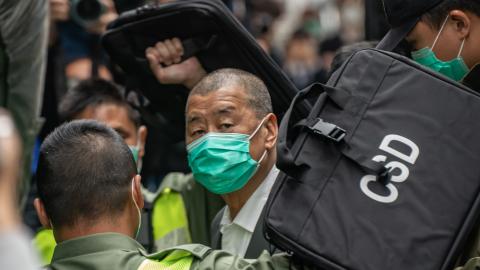
Jimmy Lai, the 78-year-old founder of pro-democracy newspaper Apple Daily and champion for freedom in Hong Kong, was unjustly convicted by Hong Kong courts on all three charges he faced, including two under the National Security Law.
He pleaded “not guilty” on all counts. Lai’s sentencing is forthcoming, but given his age, he is likely to face the equivalent of life imprisonment—if not an actual sentence of life in prison. This is a gross miscarriage of justice and yet another sign that Hong Kong is no longer materially different than Beijing.
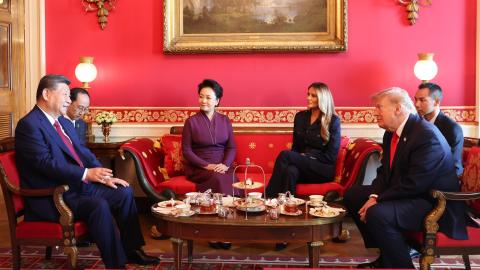
Given these latest convictions, the U.S. must act. Jimmy Lai has already caught the attention of President Donald Trump, who said that he raised Lai’s case with Xi Jinping when the two leaders met on the sidelines of the Asia-Pacific Economic Cooperation forum in South Korea earlier this year. But Washington needs a sustained effort keep the attention on human rights violations across China and push back against extrajudicial overreach by Hong Kong and Beijing, especially in the lead-up to Trump’s next meeting with Xi, slated to take place in April 2026.
Congress and the executive branch should consider the following steps:
- The U.S. government must continue to press for the release of Lai and other high-profile political prisoners in Hong Kong. Brave champions of the pro-democracy movement like Joshua Wong, Chow Hantung, and Lee Cheuk-yan also remain behind bars. Prior to 2019, Hong Kong had no political prisoners, but in the aftermath of pro-democracy protests, the city-state has at times had more than 1900 political prisoners. Greater advocacy from Congress and the executive branch is needed to secure their freedom—particularly at this critical moment when attention is on their cause. American officials should raise the cases of Jimmy Lai and other high-profile political prisoners in Hong Kong in every meeting with Chinese counterparts.
- The U.S. should sanction Hong Kong prosecutors and judges. Senators Dan Sullivan (R-AK), John Curtis (R-UT), and Jeff Merkley (D-OR) reintroduced the Hong Kong Judicial Sanctions in the 119th Congress. The act calls on the Department of the Treasury to sanction nearly 50 prosecutors and judges. Individuals identified in the act have played a critical role in undermining the rule of law in Hong Kong, including by using the legal system to target pro-democracy advocates like Lai, and others. Treasury technically already has the authority to sanction individuals and entities in Hong Kong. But passing the act would make it difficult for the executive branch to turn a blind eye to continued declines in fundamental freedoms in Hong Kong.
- Congress should redouble its commitment to defending freedom in Hong Kong. Representative John Moolenaar (R-MI), the chair of the House Select Committee on the CCP, and Representative Raja Krishnamoorthi (D-IL), the committee’s ranking member, recently introduced a resolution calling for December 8, Jimmy Lai’s birthday, to be known as “Jimmy Lai Day.” Passage of this resolution would send a clear signal that Congress is watching as the Hong Kong authorities further persecute Lai. The resolution should be followed by action on other critical legislative priorities related to Hong Kong, including action to discredit and disband the Hong Kong Economic and Trade Offices.
Jimmy Lai has been in solitary confinement for 23 out of every 24 hours a day for the nearly five years he has already been behind bars. As a result, his health has deteriorated substantially. Urgent action is needed to ensure that he and others in Hong Kong who stand on the side of freedom do not spend the rest of their lives in prison. U.S. leadership has the potential to signal to Hong Kong authorities that there are consequences for undermining the rule of law. The U.S. should act now to pushback against Beijing and signal support for freedom in Hong Kong.