















For those with pre-existing ethical or policy reservations about President Donald Trump, the National Defence Strategy adds fuel to the fire. Released last November, the National Security Strategy was the manifesto document that divided the world into regions.
The just-released NDS builds on the NSS and identifies the western hemisphere as America’s primary region of interest. The document diminishes notions such as the rules-based order and focuses at least as much on the shortfalls of allies as threats posed by adversaries.
For Australians, there are two key questions. First, and read alongside the NSS, what does the NDS reveal about Trump’s actual view of the world? And second, what does the NDS mean for Australian security and defence policy and spending?
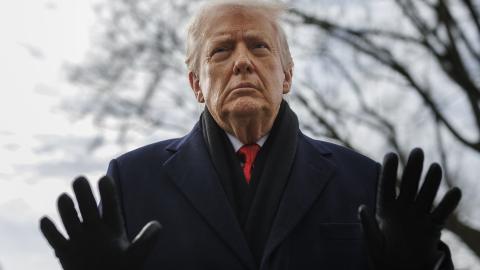
In speaking to several of Trump’s personal advisers throughout 2025, one assessment offered by several of them was that the president does not believe there is any distinction between his rough and tumble commercial experiences on the one hand, and what matters and works in domestic and foreign policy on the other.
In Trump’s view, security policy is something diplomats and administrators have artificially constructed as a distinct field to justify their existence. In the world of real estate, laws and regulations operate in parallel to negotiation, coercion, and the acquisition and use of leverage. Those able to see an opportunity and ruthless enough to exploit it are the ones who will succeed, whether in a commercial, domestic policy, or foreign policy setting.
Let’s give this a theoretical underpinning, even if Trump is unlikely to do so himself. To understand how he thinks about rules and order, go back to political science and read Thomas Hobbes’ Leviathan. Power is defined in only materialist terms – that is, military, economic and technological prowess. Rules and laws do exist, including the rules-based international order. But it is the powerful who make up the rules and create order, while the rest abide by these unless they are themselves powerful enough to challenge it.
This is why the NSS and NDS are obsessed with the US recapturing its material primacy and dominance in its part of the world, which is what it calls its western hemisphere. Without the US reasserting primacy and dominance in this region, this administration believes that America will gradually lose the ability to define or change the rules applied to itself and others.
It is also the reason why the administration goes out of its way to criticise and ridicule Western European countries for supposedly woke and progressive policies that undermine their own material power and leave them in a poorer position to defend themselves against Russia.
As one of Trump’s staff frequently reminds me, the European Union has a GDP approximately 10 times that of Russia. The latter is a European problem that ought to be handled by Europe rather than the US. This is why anxiety that the US will gradually draw down its commitments to NATO is justified.
AUKUS will be used to increase pressure for us to commit to a defence budget closer to Trump’s magical mark of 5 per cent of GDP.
Why does Trump not see Russia as his problem? Because he does not separate the world into ideological blocs. This is a clear shortcoming, as authoritarian revisionist powers such as Russia and China do have an us-versus-them framework. It is also because Russia is not seen as materially large and powerful enough to fundamentally threaten the US.
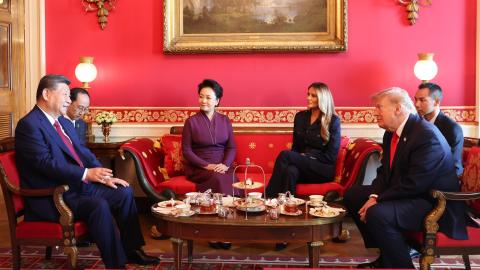
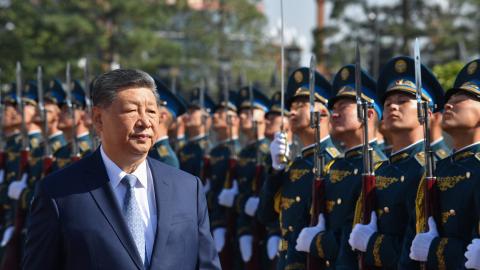
For Trump, China is unique due to its material size and power. China hawks are unhappy because Trump does not see the China challenge in ideological terms and is not inherently critical of Xi Jinping playing the power game. Neither does the NDS refer to the US seeking to contain or reduce Chinese power.
Even so, America’s western hemispheric core area of interest extends to the First Island Chain – spanning Japan, Taiwan and the Philippines – even if a secure homeland is the highest priority. The NDS speaks of a strategy of denial rather than dominance.
This means that the US intends to have sufficient military might to ensure China cannot take Taiwan by force nor turn the South China Sea into a militarised Chinese lake. It is on this basis that Trump will offer “strategic stability” and peace with China. This will not be acceptable to Xi Jinping, which is also why China doves are unhappy with Trump, as the US-China rivalry has not abated.
What does this mean for regional allies? North Korea is primarily seen as a South Korean problem, except when it comes to nuclear weapons. Seoul must spend much more to achieve conventional deterrence of Pyongyang.
But when it comes to China, the situation is very different. Even if Asian allies were to significantly increase their defence spending, they would still need American power to deter Beijing. Trump is realistic about that, as he is about China being the only true material challenger to the US. Australia is not mentioned in the NDS, but this should not be read as a free pass to continue doing the minimum on defence.
Our location offers America geostrategic depth and creative options to both deter and fight a hypothetical war. But this still needs immediate additional investment in both our own capabilities and those that can support US forces – for example, bases in Western Australia as part of the Submarine Rotational Force – West initiative. This is why AUKUS was praised by Trump. The agreement will be used to increase pressure for us to commit to a defence budget closer to Trump’s magical mark of 5 per cent of GDP.