













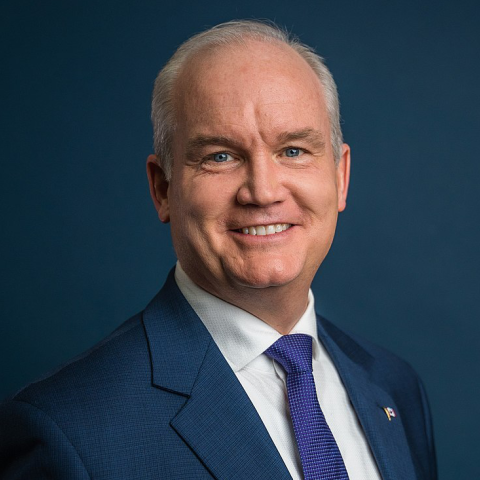
For my party—the Conservative Party of Canada—2025 was an annus horribilis. We suffered a string of strategic missteps, failed to break through to voters on the issues that dominated the national conversation, and paid the price in both public confidence and political momentum. I won’t revisit every episode here, but we must acknowledge the reality of a very difficult year and learn from it.
It’s important to acknowledge that Conservatives set the agenda on most of the critical issues facing Canada. From working with Alberta to get Canadian energy to market, to a focus on sovereignty in the Arctic, to a more serious approach to trade negotiations with the Americans, to the cost-of-living crisis facing Canadian households, Conservatives have generally been the first to point out the issues on the horizon facing the country and our place in the world.
Setting the national agenda is an important part of the role for the opposition in a parliamentary democracy. The next step for the opposition needs to be overcoming the barriers that prevent us from winning a general election, so that Conservatives can be trusted by Canadians to govern and effect change ourselves.
I know, on a personal level, how challenging it can be to lead the federal Conservative Party in a country where being “conservative” means different things to different people depending on their background and where they live. It is also extra challenging in this new age of social media polarization, where algorithms create a blend of news and entertainment that only seems to harden people’s views. To some of these social media groups, compromise has become a dirty word, and that makes it even more difficult to reach swing voters.
I was not able to effectively maintain the balance of keeping all parts of the conservative base satisfied alongside gaining the trust of more swing voters who decide elections. I tried hard to find the right balance—particularly on health measures during the unique challenges of the pandemic—but ultimately, I was not successful and lost the confidence of a majority of the caucus.
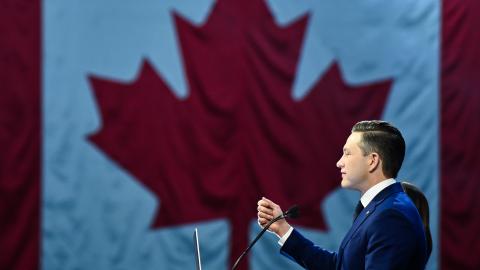
I am on the record saying that Pierre Poilievre should remain the leader of the Conservatives and be given a second opportunity to win an election. I know the pressures on him and his family, and I respect their service to the country. But as a leader, he needs to be introspective and courageous enough to overcome the adversity of the last year and learn from it. Political leaders have the dual priorities of focusing on what is best for their country or province and what is best for them politically to win the next election. In this age of polarization, however, it is critical that a leader understand that those priorities come in that exact order. Country first. Winning elections second.
With this in mind, I have just one piece of advice for my former colleagues as they begin to tackle those dual priorities in 2026. I would remind them that this advice is worth the price they are paying for it. Nothing.
Here it is: Channel Teddy Roosevelt.
It may sound strange that I am asking Canada’s Conservatives to follow the lead of an American president at this time of deep tensions with our neighbour to the south. You might think that someone like me, who deeply admires Sir Robert Borden, would choose a quote from him to start the year. Or that I would find an old chestnut from Sir Winston Churchill to meet the moment we are in.
That is not the case. We are living in hard times that may get even more difficult in the years to come. We need our elected officials to be strong. We need them to be fearless. We also need them to be examples of conviction and character. Roosevelt fits that mould to a tee. He overcame tragedy and disability in his youth to become a pillar a strength for his country and the world. He advocated for living a life of strenuous activity, personal challenge, and moral purpose that I believe can be a touchstone for us in this age of anxiety and polarization.
For the last century, politicians in the Western world have felt a kinship with a speech Roosevelt delivered at the Sorbonne in France, in 1910, shortly after his time as American president. “Citizenship in a Republic” was a lengthy speech on citizenship delivered by the former leader of one great republic to an audience comprised of civic leaders from another. It has become one of the most famous political speeches ever given because of a short excerpt within it, known as “The Man in the Arena.”
Politicians love this passage because it tells them to ignore the critics and to get back up when they have stumbled or fallen short. The section speaks to the nobility of service and the need to strive to do great things despite the setbacks that come with leadership. “The Man in the Arena” has always had great meaning to me, and I have looked to it for inspiration many times. Perhaps the most meaningful time I heard these words was when they were recited by Scott Brison, in his touching eulogy to the late Jim Flaherty in the House of Commons, after Flaherty’s sudden passing in April 2014.
It is the prelude to the most well-known portion of the “The Man in the Arena” that I believe is most helpful to the Conservative caucus as they embark on a year to move past the setbacks of 2025.
The poorest way to face life is to face it with a sneer. There are many men who feel a kind of twisted pride in cynicism; there are many who confine themselves to criticism of the way others do what they themselves dare not even attempt. There is no more unhealthy being, no man less worthy of respect, than he who either really holds, or feigns to hold, an attitude of sneering disbelief toward all that is great and lofty, whether in achievement or in that noble effort which, even if it fails, comes second to achievement.
Being the official opposition in the House of Commons means that we have come second to the party that will govern. We have given a noble effort but have come up short again and again. This is incredibly frustrating. I know this myself on a deep, personal level. It does not mean, however, that this frustration should lead to the role of opposition being approached with a constant sneer or with some form of angry patriotism.
The leader of the opposition must always project an unwavering faith in the country and its people, alongside a visible optimism about its future. Don’t only point out where things are broken but offer the peace of mind that comes with repair and improvement. This is especially true when the country is facing pressures on our unity and our sovereignty from forces that are both external and internal.
I had such respect for Premier Danielle Smith recently when she defended Canada and the recent energy agreement Alberta signed with Ottawa despite the heckles and boos from her own supporters in the room. That type of leadership embodies the Rooseveltian spirit the party needs at this moment.
There is a lot to be optimistic about for the country despite our challenges. There is also a lot to be optimistic about when it comes to the Conservative Party. Younger voters are more open to voting Conservative than ever before. Union members are identifying as conservative and voting that way in greater numbers than ever before. The party is polling at consistently high levels and has organization and representation in almost every part of the country.
Years ago, I wrote about how hard it is to go from government to opposition as a politician. The famous adage that “the worst day in government is better than the best day in opposition” does ring true. For me, it was the tone change that I felt so difficult to balance as someone who is generally very optimistic. My wife and my friends from outside politics would often ask me why I seemed so angry as a member of Parliament or when running for leader.
The truth is it’s hard not to seem angry and cynical when you are always pointing out how the other man stumbles. You are in a job that requires you to oppose. This challenge is even more daunting now that most of the national agenda is being set by voices on social media, but it means it is even more important for elected officials to get the balance between criticism and optimism right.