




















Politics, Progress, and the Constitutional Order is a collection of the late Robert Faulkner’s essays edited by Robert Bartlett, which represent the wide range of Faulkner’s scholarship. We shall not pretend to be able to compass his range. Rather, we intend to show why Faulkner should be read by everyone concerned about the preservation of American liberalism. The authors of this piece were his students, one from his first years at Boston College and the other from his last years. He never changed. He always sought the truth and admired nobility. His scholarship rested upon these personal qualities.
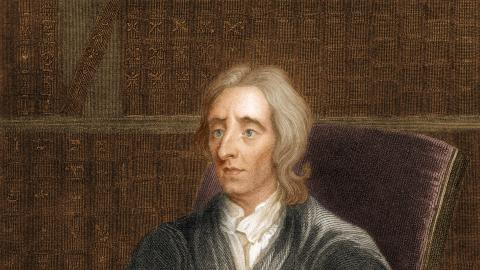
Faulkner wished to understand the relationship between political philosophy and political action. His studies pointed to the two men upon whom the entire success of liberal politics rests, John Locke and George Washington. John Locke is a particularly significant thinker. Faulkner credits him with being “the first liberal democrat.” “Locke [is] not merely planner but inducer of democratic revolution: that is the most difficult of Locke’s teaching[s] to convey. The Second Treatise in fact exhibits a subtle rhetoric of varying appeals and varying institutional formulations, precisely to bring about the liberal movement and the one liberal constitution.” Yet how is it that subtle rhetoric achieves the most successful democratic revolution in all Western history? How did Locke prepare a political audience for both his subtlety and his democracy?
Faulkner finds the answer to this question in Locke’s First Treatise. He departs from the usual scholarly appraisal that regards this treatise as “philosophically obsolete.” In contrast, Faulkner agrees with his teacher Leo Strauss that Locke was one of the great philosophers of the Enlightenment. Yet he “‘felt’ that the possibility of a mysterious deity was itself impossible to refute.” Liberalism then owes some of its character to the impossibility of this refutation. It is the First Treatise that bridges the largest gap between the subtlety of Locke’s deepest philosophical considerations and his consequent popular political recommendations.
According to Faulkner, Locke founded a new political religion, the one religion necessary for a liberal government. It is the religion of enlightenment. The fundamental religious reform is indicated in the Letter Concerning Toleration “that begins by calling ‘Toleration,’ not faith in Jesus, the Characteristic Mark of the True Church.’” Superficially it seems that Locke is merely altering Protestantism to be more acquisitive. In fact, the Treatise attacks the reasonableness of all religion heretofore. Unenlightened religion, even and perhaps especially Christianity, is a version of filial piety. Since the old religions do not stand upon reason, they must derive their authority from the authority of what is oldest, the earliest father. “The most scathing attack in either Treatise focuses on the supposition of paternal superiority, on philosophical defenses of this superiority as natural, and its manifestations in ‘religion,’ even in ‘Holy Writ.’”
The source of religion is the family. Before the reform of politics, there must be a reform of the family and a weakening of the authority of the father. Locke argues that “Fathers do not give to children ‘life and Being,’” because God or nature does; or if fathers do, they do not intend the benefit, because they are moved merely by “present Appetite;” or if nature plays a part, it is not for a higher good, but only out of lust.” Fathers cannot borrow their authority from nature. Indeed, they cannot borrow from nature their authority for following a higher good. It is not clear that nature contains a higher good. If it does, it does not seem to have impressed that good upon human nature. At first glance liberalism does not address the question of the higher good. Religious tolerance puts the question aside.
In Faulkner’s view, Francis Bacon’s thought is a necessary precondition to Locke’s political philosophy. Bacon explicitly reforms natural science. “The visionary promise of the New Atlantis is power limited only by possibility: a science for the ‘effecting of all things possible.’ The work culminates in a picture of new powers over nature for human benefit, a picture of benevolence that is nevertheless on a dark background.” The new science seems to exacerbate the question of the higher good since “the power of science culminates in a secret power, a power for scientists over the minds of men generally, and for other men over the minds of scientists.” Does this mean that Locke’s liberalism is a veneer over the tyranny of Baconian natural science?
Faulkner seems to supply evidence of Locke’s dependence upon Bacon. We have already remarked that one of the deepest levels of Enlightenment philosophy involves the inability to refute the miraculous claims of the Bible. This inability to resolve the theological-political problem meant that all political doctrines based on reason were hypothetical. “The Second Treatise, accordingly, seems to be the social and political project that follows upon these new standards of reasoning. It is an essay, an attempt, in an old and still familiar sense of the word ‘essay.’ It seems an attempt at a man-made system that provides for human necessities and weakens human longings for a divine provider.”
Of equal importance is Bacon’s revision of the motives for philosophizing. “For Bacon’s new understanding involves separating a concern for fame from considerations of justice, and honor, and connecting it instead to enduring influence. Fame is the point, not honor or even glory, and not justice.” We might protest immediately that the Second Treatise extensively considers questions of justice. Nevertheless, the new motive is an enduring influence which by itself produces in the supremely talented an impetus toward political projects. The new political philosophy counters the theological-political problem with an experiment. An experiment in political justice need not be motivated by love of justice. Indeed, too great a love for justice in a political founder might abridge the longevity of the project. The value of justice is measured by the endurance of the system designed. When employed, the Aristotelian virtues, for example, are merely instruments of policy.
Faulkner meets Bacon on his own grounds and thereby reveals a weakness in the liberal project: the shakiness of its foundations and the need for political genius. Whatever Locke’s hope, liberalism as an enduring project depends upon the work of a second man, George Washington. The fundamental question then is whether one of the “things possible,” mentioned by Bacon, is to arrange by art the souls of superior humans. No doubt education has its effects. It had its effects on Bacon and Locke, but they freed themselves from their educations to a great degree. Bacon tacitly acknowledges his dependence on a kind of natural fortune. In New Atlantis, the most prominent ritual is the Feast of the Family. This celebration is awarded to a man who lives “to see thirty persons descended of his body alive together, and all above three years old.” The narrator of the New Atlantis provides the fact that if this family includes a member of the scientific institute (Salomon’s House) directing the elements of society, he merits special recognition and sits with the father whom the feast celebrates. It seems that the birth of a prospective member of the House of Salomon cannot be engineered. It is less likely that those able to maintain the scientific state through centuries can be manufactured. Exactly what the new science requires is novel genius. This reliance on a mysterious nature is akin to the reliance on a mysterious God.
Faulkner’s chapter on Washington begins by quoting a man who appears to be the complete disciple of John Locke. In his first address as president of the United States, George Washington proclaims: “The preservation of the sacred fire of liberty, and the destiny of the Republican model of Government, are justly considered as deeply, perhaps as finally, staked on the experiment entrusted to the hands of the American people.’” Faulkner begins his list of Washington’s contributions to American liberal democracy with his championing of religious tolerance before listing the founding of the American constitutional order. This reflects the Lockean priority in the two Treatises of Government. Yet Washington was not merely a talented disciple. Faulkner lauds him:
To see such superior powers of soul subordinated to the limited powers of free government, to see such unequal powers in the cause of equal rights, to see such an immense passion for command commanded by such devotion to honor and justice—was inspiring to those who knew Washington. It is inspiring now. The example of Washington makes credible not only constitutionalism but also human greatness.
American liberal government, which protects the right to liberty for all its citizens, does not provide the nation with statesmen endowed with greatness. Locke’s thought emphasizes constitutionalism, which seems to remove the need for individual greatness. Why then the need for a Washington?
Faulkner acknowledges John Marshall as the authoritative interpreter of the life and political career of Washington. Marshall not only knew Washington, but he belonged to the same tribe, men of genius and superior character. Marshall contradicts the twentieth-century scholar Douglass Adair, who adopts a both-ways version of the motivations of the American founders. According to Adair, they both retained the traditional notion of virtue and vice and were motivated by the Baconian love of fame. Bacon more consistently gave up the traditional notion. In contrast, Marshall “wished to combine the cause of equal rights with rather gentlemanly or aristocratic ethics. There are signs that Marshall was seriously worried about the disappearance of the morality of character and its replacement by the morality of liberal causes and of success.”
Washington is one of Marshall’s examples of someone who has true political virtue. For Marshall, “Washington exemplified the real distinction, which forever exists, ‘between wisdom and cunning. His immense powers of judgment were themselves subject to ‘ends’ that were ‘always upright’ and ‘means’ that were ‘always pure.’ Wisdom is not ambition’s instrument, but its guide in selecting what a just understanding of duty requires.” Ambition did not tempt Washington. We note that the quotation that leads Faulkner’s chapter on Washington speaks of “the preservation of the sacred fire of liberty.” The manifestation of liberty is a divine gift, and the founding of the American republic is a preservation.
Marshall contrasts Benedict Arnold’s false pride with Washington’s. Arnold was the leader in the capture of the forts at Ticonderoga and Crown Point, but he “lacked principle and correctness in peace. Marshall wrote: he lorded it in luxury without the fortune to support the show. Arnold’s was a ‘false pride.’” This exorbitance led him to steal from public funds, which resulted in court marshal. In revenge he tried to perpetrate the treasonous ruin on the new republic for which he is famous. It is evident then that the Baconian love of fame is likely to produce men of talent who wish to gain fame by any means. Destroyers of liberty are more likely to be animated by love of fame than the patriots of a free republic. “For a country’s sake, for liberty’s sake, patriotism is needed in the ardent and honorable, especially when loyalty may be unaccompanied by pride. … Some such mixture of popular patriotism and honorable character, together with capacious judgment, was what Marshall found in Washington and his own soul.”
Faulkner shows that the preservation of liberalism, thus its longevity, cannot depend upon the passions that liberalism may spawn. Rather, longevity relies on a variety of traditional virtues. As a consequence of a contradiction within itself, liberalism requires two founders. Modern liberalism depends upon ancient nobility. The American founding required Washington’s greatness, and his spirit was an unpredictable concatenation of virtues. Liberalism does not produce great statesmen equal to the crises that a liberal nation will encounter—yet it may allow them to exercise their virtue to its highest degree.
Robert Faulkner’s essays, as collected in Politics, Progress, and the Constitutional Order, reveal the foundations of the American regime, and our indebtedness not only to Enlightenment philosophy, but to the extraordinary genius, character, and self-restraint of George Washington. Robert Faulkner’s scholarly virtues permitted him to appreciate the benefits of liberalism and Washington’s greatness.