











A slow but steady economic divorce is playing out between the United States and the People’s Republic of China. Whether politicians refer to it as “decoupling” or “derisking,” the mood in Washington is set on reducing America’s economic exposure to Beijing. President Donald Trump set this tone during his first term, and President Joe Biden largely continued the project. During his second term in office, however, Trump has accelerated efforts to insulate strategic sectors from the predations of the Chinese Communist Party (CCP), particularly after Beijing imposed export controls on critical minerals to America in 2025.
That wasn’t the first time the country put global supply chains at risk: China infamously threatened in the midst of the COVID-19 pandemic to throttle pharmaceutical exports to the United States, which would have crippled the American medical system. After Australia called for an investigation into the origins of COVID, the CCP retaliated by effectively cutting off beef, barley, wine, timber, and other imports from Canberra. When Lithuania elevated Taiwan’s de facto diplomatic presence in 2022, Beijing responded by cutting off trade with Vilnius and pressuring other European countries to do the same. In October 2025, Beijing blocked Nexperia, a Dutch semiconductor company, from accessing legacy chips, temporarily throwing the European automobile market into chaos.
Normal trading partners do not behave this way. But the CCP is not normal. Despite the economic reforms advanced by Deng Xiaoping and his predecessors, there are still no truly private companies in China. All answer to the CCP, which sets economic priorities based primarily on geopolitical ambition. Billionaires like Jack Ma have learned the hard way that wealth is weak insulation from the party’s primacy.
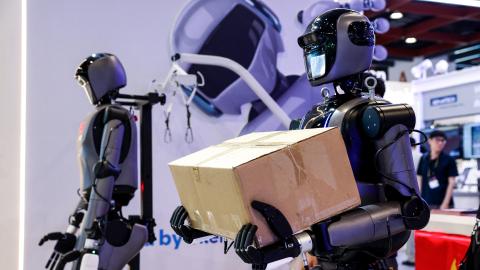
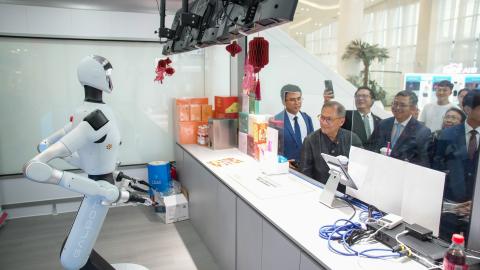
Yet, Washington has long treated this abnormal government as a key trade partner. At the turn of the century, the Clinton administration and a majority of Congress elected to welcome Beijing into the global economy. The gamble was simple: bring Beijing into the global economy, and free trade would make China politically free. It was a convenient argument for those who stood to profit from normalizing trade relations with a Communist regime. It also turned out to be incorrect. Trading with China has not liberalized the CCP. Instead, Beijing leverages trade, investment, and economic engagement to export authoritarianism around the world. Xi’s Belt and Road Initiative embodies this effort, as does the party’s work to diffuse high-tech surveillance and censorship abroad. Moreover, Beijing’s totalitarian vision for AI will not be confined to China’s borders, as some governments have reportedly expressed interest in Chinese-developed “law enforcement” robots.
America’s gamble with China failed on policy grounds, but it was a winning issue politically. By many accounts, Americans have benefited from this gamble.
In the first five years after Beijing entered the World Trade Organization (WTO), cheap Chinese-manufactured goods reduced the U.S. manufacturing price index by nearly 8 percent. A separate study concluded that the CPI in 2017 “would have been 27 percent higher” if the share of American imports from China had remained at pre-WTO levels. Bringing Beijing into the global economy has undoubtedly improved the standard of living of the vast majority of Americans.
Opponents of a revamped China policy may be tempted to invoke this record. They may also claim that nations that trade together stay together, much like Norman Angell posited in the years before what became known as “the war to end all wars.” In 1909 Angell published The Great Illusion, in which he argued that the gains from global commerce made any resort to armed conflict irrational. So confident was Angell in this thesis that he boldly declared in 1914, months before World War I began, “There will never be another war between European powers.” Two world wars within the first half of the 20th century disproved Angell’s optimism and exposed the dangers of projecting one’s concept of rationality onto a foreign government.
If the 20th century debunked any reliable link between trade and peace, the 21st century has demonstrated an even more alarming trend: how adversarial regimes can weaponize commerce to threaten international security. Consider Beijing’s unrivaled scale of intellectual property theft, which former FBI Director Christopher Wray described in 2020 as “one of the largest transfers of wealth in human history.”
I will never forget the moment I realized the national security implications of this transfer. While I was serving as a legislative assistant for Sen. Ted Cruz in 2018, the president of an internationally recognized cancer research center visited the Senate and warned me that the CCP was stealing advanced radiology research from his institution. Beijing’s intent was not to cure cancer, but to examine the possibility of immunizing its population against radiation poisoning in the event of nuclear war.
By this measure alone, the United States cannot afford to maintain normal trade relations with China. Xi Jinping has made clear that he is no capitalist, and he has no love for the United States. Like any good Marxist, he disdains free trade. Like any good Leninist, he has a plan to crush it. Consider these words from Xi’s 2013 address to members of the CCP’s Central Committee:
Some people think that communism can be aspired to but never reached, or even think that it cannot be hoped for, cannot be envisioned, and is a complete illusion. … Facts have repeatedly told us that Marx and Engels’ analysis of the basic contradiction of capitalist society is not outdated, nor is the historical materialist view that capitalism will inevitably perish and socialism will inevitably triumph outdated. This is the irreversible overall trend of social and historical development, but the road is winding. The ultimate demise of capitalism, and the ultimate triumph of socialism, will inevitably be a long historical process.
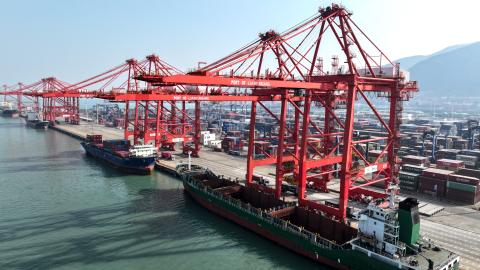
In the face of this ideological focus and resolve, can America afford to stand up to the CCP economically? Put differently, to quote former Rep. Mike Gallagher, are we willing to stop funding our own destruction? Let us hope so, for the United States cannot afford to allow Chinese predatory pricing to hollow out industries critical to our national security. Washington cannot risk allowing Beijing to pre-position kill-switches that could be exploited in a moment of crisis. For example, solar inverters made by Chinese companies Huawei or Sungrow could be weaponized to target the power grid, and CCP-controlled software in ZPMC cranes could be leveraged to halt maritime traffic into U.S. ports. Nor can Washington abide the moral stain of underwriting Beijing’s gross violations of human rights by purchasing goods made with slave labor—the very sin at the center of our own civil war.
Policymakers in Washington have adopted a patchwork of policy tools to mitigate these threats, ranging from export controls to sanctions and tariffs. Like all matters of public policy, these instruments are imperfect and rife with trade-offs. Prohibiting advanced AI chip exports to Beijing reduces revenues for U.S. companies, but it also hobbles the ability of the People’s Liberation Army to leverage American technology to train to kill U.S. servicemembers. Sanctioning companies complicit in the CCP’s genocide of Uyghurs may complicate supply chains for certain goods, but the lives and dignity of Uyghurs are more important than reduced prices for solar panels and tomatoes. If targeted and coordinated with allies and partners, tariffs can help insulate key economic sectors in free countries from Beijing’s predatory economic practices.
This debate is quintessentially American, for our nation has always sought to escape scarcity and evade trade-offs. Alexis de Tocqueville clocked these tendencies in the 19th century when he observed that Americans are “so hasty in grasping at all within [their] reach, that one would suppose he was constantly afraid of not living long enough to enjoy them. He clutches everything, he holds nothing fast, but soon loosens his grasp to pursue fresh gratifications.” A century later, Czech dissident (and later president) Václav Havel warned that “the general unwillingness of consumption-oriented people to sacrifice some material certainties for the sake of their own spiritual and moral integrity” was a version of totalitarianism that plagued Western democracies.
Those who deny the need to decouple from China should read Tocqueville and Havel—and if not them, Milton Friedman. The “free lunch myth,” according to Friedman, is “the belief that, somehow or other, government can spend money at nobody’s expense.” Someone always pays. And America will likely pay a premium as elected officials seek to insulate their constituents from exposure to Xi’s self-proclaimed socialist designs.
But Friedman also spoke of freedom’s fragility: “The natural state of mankind is misery and tyranny. … The most important thing … to remember is the importance of strengthening the foundations of freedom.” By that, Friedman meant keeping government limited and appreciating the connection between free markets and free people.
How can trade with a totalitarian regime that weaponizes it be free? How can private companies in a democracy trust the intentions of party-controlled entities across the world? Ignoring these questions violates Friedman’s axiom and risks repeating Washington’s mistake at the turn of the century. We cannot have it all. A democracy cannot trade with a communist state and hope to remain competitive or free.