Caption
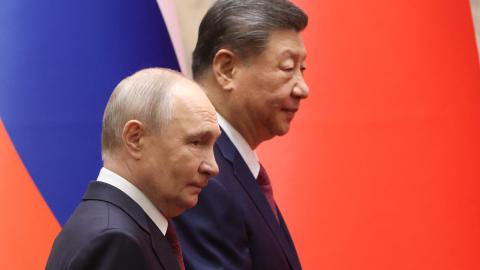
Russian President Vladimir Putin and Chinese President Xi Jinping enter the hall during a signing ceremony on May 20, 2026, in Beijing, China. (Getty Images)


1015 15th Street, N.W., 6th Floor
Washington, DC 20005

When the Supreme Court handed down its long-awaited decision in Citizens United v. Federal Election Commission on January 21, President Barack Obama warned that it gave a "green light to a new stampede of special interest money in our politics. It is a major victory for big oil, Wall Street banks, health insurance companies and the other powerful interests that marshal their power every day in Washington to drown out the voice of everyday Americans." Other observers claimed that the decision simply opened the door for greater participation by a wider variety of parties in the exercise of their First Amendment rights.
However clear its implications for business corporations and unions, though, a more difficult question is, what bearing does Citizens United have on nonprofits? While 501(c)(4) organizations (of which Citizens United is one) clearly benefit from the enlargement of permitted electoral activities, is it likely that similar latitude will soon follow for 501(c)(3) nonprofits? Should nonprofits push back against the enlargement of corporate prerogatives, push forward for the expansion of their own prerogatives, or some combination of these activities?
On Tuesday, February 16, Hudson Institute's Bradley Center, along with the Alliance for Justice (AFJ), the Center for Lobbying in the Public Interest (CLPI), and OMB Watch, brought together a panel of experts to discuss these and other questions. The Bradley Center's William Schambra moderated the discussion.
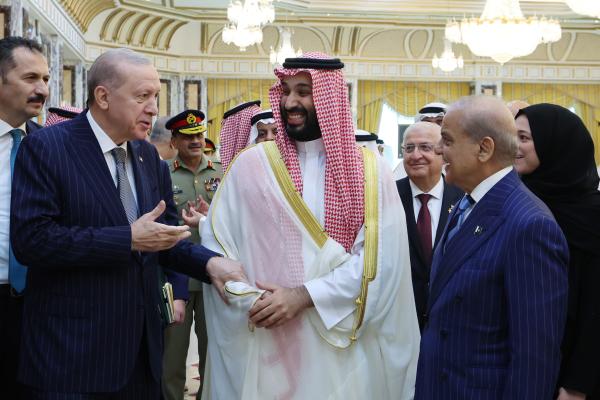
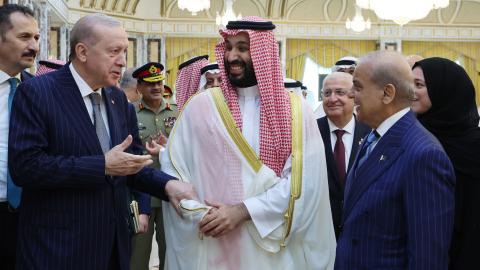
Join Hudson Institute Senior Fellow Ken Moriyasu for a panel with Chaim Martin, Israel’s minister of economic affairs to the United States; Aslı Aydıntaşbaş of the Brookings Institution; Soner Cagaptay of the Washington Institute; and Director of the Center for Peace and Security in the Middle East Michael Doran as they examine the logic behind each framework and what their rivalry means for US policy.
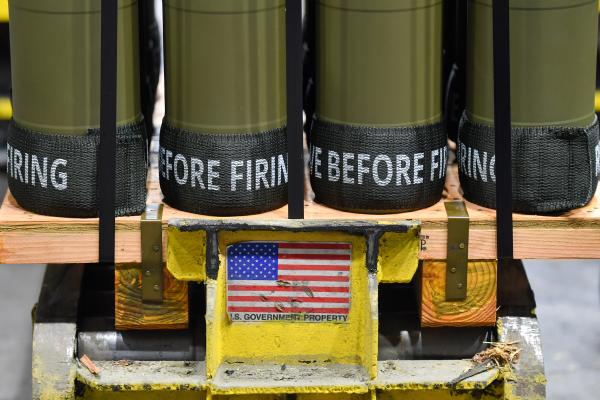
Join Hudson Institute for a discussion of how the US can build a more resilient and flexible energetics base—one that can meet sustained demand while accelerating the development and fielding of new capabilities.
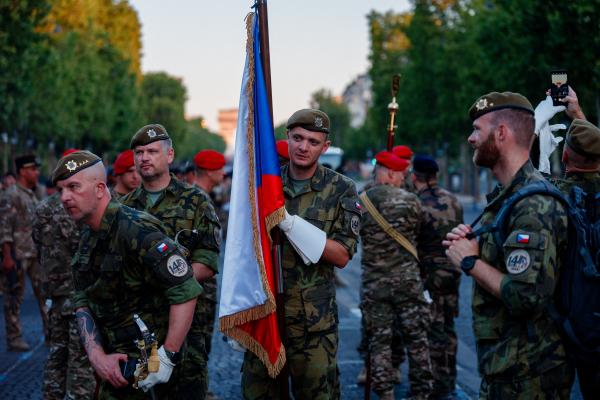
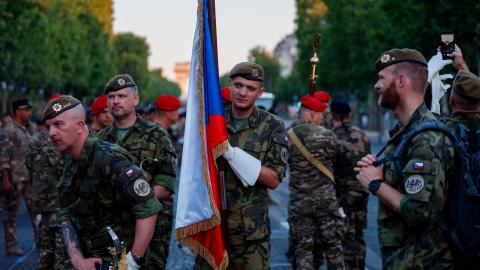
Hudson welcomes Karel Řehka, former chief of the General Staff of the Czech Armed Forces, to discuss the changing security environment in Europe and its implications for the Czech Republic, the North Atlantic Treaty Organization, and the transatlantic alliance.