

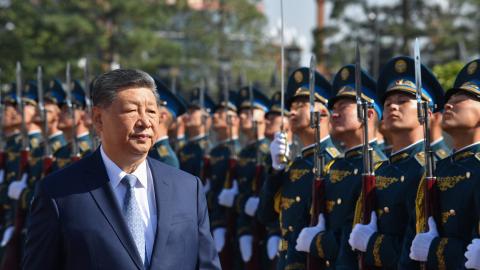
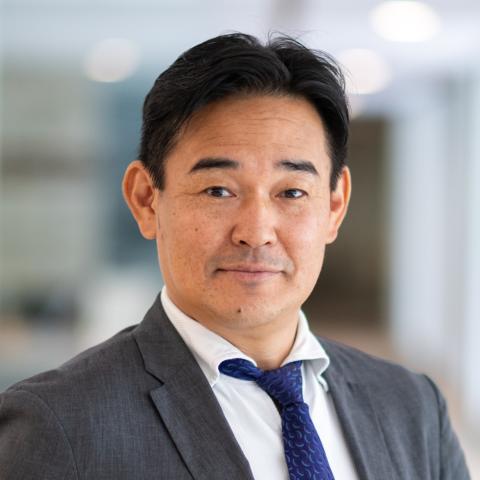

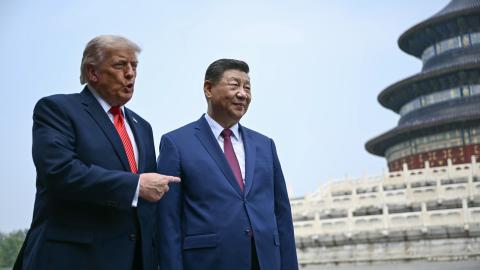








In this week’s episode of China Insider, Miles Yu tracks the backlash over statements made by Japanese Prime Minister Sanae Takaichi on Japan’s defense policy regarding Taiwan, and what motivates Beijing’s unique outrage. Second, Miles follows up on the Kuomintang (KMT) party elections last month in Taiwan, during which former KMT lawmaker Cheng Li-wun took over party leadership, and unpacks what this means for the party’s platform moving forward. Lastly, Miles comments on recent political analysis from the New York Times addressing the duality of the Chinese state—one that appears outwardly strong, but faces internal struggles and that may tell us a different story from the perspective of individual Chinese citizens.
China Insider is a weekly podcast project from Hudson Institute’s China Center, hosted by China Center Director and Senior Fellow, Dr. Miles Yu, who provides weekly news that mainstream American outlets often miss, as well as in-depth commentary and analysis on the China challenge and the free world’s future.
Episode Transcript
This transcription is automatically generated and edited lightly for accuracy. Please excuse any errors.
Miles Yu:
Welcome to China Insider, a podcast from the Hudson Institute's China Center. I am Miles Yu, Senior Fellow and Director of the China Center. Join me each week for our analysis of the major events concerning China, China threats, and their implications to the US and beyond.
Colin Tessier-Kay:
It is Tuesday, November 18th and we have three topics this week. First, we track the backlash over statements made by Japanese Prime Minister Sanae Takaichi regarding Japan's defense policy toward Taiwan and what is motivating Beijing's outrage. Second, we follow up on last month's KMT party elections in Taiwan that saw Cheng Li-wun (鄭麗文) take over as Party Chairperson and what this means for the KMT party platform moving forward. Lastly, we comment on a recent analysis addressing the duality of the Chinese state, one that appears strong from the outside, but internal matters may tell us a different story from the perspective of individual Chinese citizens. Miles, great to be with you again this week.
Miles Yu:
Nice to be with you, Colin.
Colin Tessier-Kay:
So up first this week, Beijing is in an outrage over Japanese prime Minister Sanae Takaichi's latest comments on Taiwan, who explicitly told lawmakers last week that a Chinese attack on Taiwan could force a military response from Tokyo. While Takaichi is known for her hard line conservative politics, this comment is still more of a first for a sitting Japanese prime minister. And naturally these comments were not well received in Beijing and have since caused a bit of a row between the two sides. Miles, can you start us off here with some background on the escalating tensions and what about these comments in particular have caused such an uproar in Beijing?
Miles Yu:
China is very easy to get outraged, that's basically a pattern. But this time, the context is different. Number one is [that it is] the Japanese prime minister [making these remarks], which is a country of significance in that part of the world. Japan and China have some historical grievances toward each other, but that was over 80 years ago. Japan has transformed itself completely under the tutelage of the United States. We occupied Japan for more than eight years and we literally imposed the constitution on the Japanese. The Japanese [have] embraced peace, embraced prosperity, embraced [international cooperation and] are a solid member of the international community. That's why China doesn't want to see Japan for [what it] is. China [has] always tried to create a false narrative that today's Japan and Japan before 1945 are no different. That is kind of ridiculous. It's silly. It's so easy to see through.
Number two, I think much more substantially is that Prime Minister Takaichi framed this China threat in a completely different and also significant way. That is, she basically deviated away completely from the prevailing [global] narrative, promoted by China by the way, that [the] Taiwan and China dispute is a matter of sovereignty. Is Taiwan part of China's internal affairs or not? Is the Taiwan issue totally China’s business? She never mentioned that. Her argument was solely grounded in cold, realistic calculation. She said, you know what, in addition to the altruistic assistance Japan and all democracies should provide Taiwan to defend its sovereignty and independence, Japan's tough stance on China, as she mentioned in the Japanese parliament, is grounded in [its] geographic proximity to [the] China threat. China's taking of Taiwan would [pose] a very serious military [and] geostrategic [threat] to Japanese defense. She said the closest Japanese island is 70 miles away from Taiwan. If Taiwan is taken by Communist China, that means China will control the southern part of the Japanese flank, [posing] a serious national security threat to Japan. So for self-defense purposes, Japan has to be really vigilant and has to consider the use of arms to defend Taiwan, not just for Taiwan's sake, but also for [Japan’s] sake. She's saying, essentially, that the defense of Taiwan is no longer a rhetorical imperative, but a national security imperative based upon the self-interest of Japan in addition to this altruistic motive.
That's why China freaked out, and that actually will help reframe the entire international discourse on China. The United States should follow [this]. Most of the issues in [the] Indo-Pacific are initiated by the Japanese. Washington is a superpower, but we actually follow Japan's examples [in the region]. For example, the whole idea of a “Free and Open Indo- Pacific” was Prime Minister Abe’s idea. [It has] now morphed into a doctrine and we fully embrace that. And the whole idea of QUAD dialogue was created by the Japanese government under Prime Minister Abe's leadership. We follow that. We [have] become a staunch supporter of that. So now you have this [so-called] Takaichi doctrine, I would say, and that's actually very significant in this case.
Colin Tessier-Kay:
She's certainly not wrong with that assessment and certainly [what’s] going to be required of Japan in such an instance. To put this all into context, only in the last few weeks were we talking about the latest APEC summit sideline meeting between PM Takaichi and Xi Jinping that promised stability between the two countries. And now we're in the midst of escalating tensions in China-Japan relations with Chinese officials lobbing threats at the Japanese prime minister, calling her an “evil witch” and a Chinese diplomat in Japan even going as far as to say “the dirty neck that sticks itself in must be cut off.” Since then, both countries have recalled their ambassadors and China has issued advisories against travel to Japan. So Miles, I'm curious, where does this diplomatic development go from here? It's not the first time Beijing has responded to comments made by foreign countries regarding Taiwan, but the number of bellicose statements made across the Chinese government from various officials gives a much more violent impression. Will tensions ease with time or does this signal a new development in China-Japan relations that might have some lasting effect?
Miles Yu:
Well, this indicates different modes of diplomacy, right? I mean, we can hardly call the Chinese response a diplomatic move because in addition to the confrontation between tyranny versus freedom, we have [seen] a different layer of the eternal theme of China's interaction with the outside world. That is, between civilization and barbarism. When the Japanese prime minister says something in the interest of her own country, the Chinese diplomat openly says [that] China should behead her. And that is actually endorsed by this entire state apparatus in Beijing. And now you're talking about this kind of very barbaric threat, and it [is] not good for the image of China [and] is not very good for China as a whole. And I think if you look at the way the Chinese diplomats deliver their wolf warrior messages to the world, you know they were forced. I mean, for example, the Chinese ambassador to Japan, when he delivered the tough message towards the Japanese government, he said, I'm following the order from my own government to tell you this is. He basically tried to cover up his own personal feelings in a very clever way.
Now, having said that, there is a phrase that the Chinese government has avoided using for the first time in many, many years. That is, the Chinese government has refrained significantly from using the phrase that the Japanese government’s actions or words have hurt the feelings of 1.4 billion Chinese people. The reason [is] very simple: the Chinese people are not with the Chinese government. When [the CCP has said] that every time in recent years, they have an enormous negative response from the Chinese people themselves. [The Chinese people] ridiculed the Chinese foreign ministry, they ridiculed the Chinese government's position. Now in this case, the Chinese government can only discourage Chinese tourists from going to Japan. They didn't say we banned them as they normally do, [this is] because they cannot stop them.
Just [over] a month ago, China had a national holiday week from October 1st to October 7th. The whole week is a Chinese holiday, [but] the number one tourist destination for Chinese [citizens] was Japan. In one week, 5 million Chinese [citizens] went to Japan. So [the Chinese government] cannot ban them. They're going to go to Thailand first, then they go to Japan because Chinese tourists love to go to Japan. There's also a very curious thing to send you a very indirect signal of Chinese people's disapproval of the Chinese government's tough stance on Japan. This week, a Japanese cartoon movie opened up in China and now has become a national sensation. The theaters all across China filled up. So clearly, the Chinese people use this as a way to express their disenchantment with the Chinese government’s wolf warrior stance. This just backfired [for the CCP]. And I think some of the wolf warriors are talking about reissuing the embargo of the rare earth [exports] against Japan as they did in 2010. If they do that this time around, [it] is going to cause international outrage, the degree of intensity [which] we have probably never seen [before]. This is basically how China weaponizes its economic power. It [uses its] monopoly on certain aspects of the supply chain to bully neighbors to fulfill its own geopolitical ideological games. And this basically is the reason why the Chinese economy in a free trading global system is a cancer because [it is] completely controlled by the communist government for its own interests.
Colin Tessier-Kay:
Let's wrap [up] this topic with some discussion on Taiwan specifically because I'm curious where the Taiwanese government stands in all of this, and at least what's developed over the past week here. Have there been any public statements from Taiwanese officials or even closed door communications perhaps to the Japanese government? And how does Taiwan feel about the escalation intentions between China and Japan?
Miles Yu:
The Taiwanese government of course feels some kind of affinity for what the Japanese have to endure from the Chinese government. The Taiwanese government has been enduring this kind of suffering and tirade of verbal attacks from China almost on a weekly basis. So now the Japanese government is not immune from that either. The Japanese people and Taiwanese people are very, very close. When China announced its policy of discouraging Chinese tourists from going to Japan, the Taiwanese tourists signed up to [go to] all these very major tourist spots and went to Japan for vacation to support the Japanese economy. By the way, the Chinese airlines, which are controlled by the Chinese government, have offered free cancellation for all the pre-booked tickets to Japan. And we'll see how many people actually would cancel [their trips], I doubt it's going to be substantial.
The side effect of that is when Chinese tourists flood into Japan, it's good for the tourist industry, but also causes a headache for Japanese society because Chinese tourists are not really well behaved in many cases. They see a monkey somewhere in Nara or in Kyoto [and] they [want] to touch it, take pictures, and they like to do all kinds of very disrespectful [actions]. There's a lot of sentiment in Japan that says, you know what, when China bans Chinese tourists from coming to Japan, [that’s] probably good or [even saying] hallelujah. That's basically another layer of this irony. But I have to say this, even without this recent sad chapter over the issue of Taiwan, China's negative [perception] in Japan is the highest in the world. It has been bordering around 90% year after year. China has been an extremely negative country in the public mind in Japan. So with this recent spat, I think the number would jump significantly. Japanese people are very reserved, [they don’t easily] get angry. If over 90% of the Japanese population openly expresses disapproval of one neighboring country, this is very telling.
Colin Tessier-Kay:
Yeah, that's a significant amount of the population to harbor such opinions. And I think that's a great segway into our next topic today as we stay with Taiwan, but this time related to internal affairs.Taiwan's KMT party held elections last month for new leadership, which resulted in former lawmaker Cheng Li-wun (鄭麗文) winning the seat of Party Chairperson. Li-wun has been a controversial appointment to say the least, as she has been critical of high defense spending and envisions a lasting peace with neighboring China, warning against letting Taiwan become the sacrifice of geopolitics. So Miles, what has been the biggest shift in KMT politics under Li-wun’s direction, and what impact has it had on Taiwan's government?
Miles Yu:
The KMT basically represents the continuation of a mainland ethos that dates back to 1949 when the KMT government was defeated by the Chinese Communists. They brought to Taiwan the legacy of what they call the Republic of China. So for almost three decades, Taiwan and mainland China, [the] Republic of China and [the] People's Republic of China, were competing internationally for the right to represent China. Obviously by the mid 1970s, Taiwan lost that competition. The United Nations, including most countries in the world, recognized that China should be represented by the People's Republic of China. Ever since that, Taiwan began to develop its own sense of identity [and] awareness. The people in Taiwan say, if we cannot represent China, we're just going to represent Taiwan. That is basically the overall trend that's been going on today. Taiwan's sovereignty and sense of independence started from the mid-seventies and definitely had a big jump since the 1980s when Taiwan became democratic.
The KMT still wants to hang on to the old narrative that it represents China, that the People's Republic of China and Taiwan is only part of the Republic of China. Not only that, Mongolia should be part of China under [the KMT’s] official thinking. [This thinking is part of] an obsolete narrative. It's a time of the past. For a number of years, election after election, the KMT lost its ideological vitality. They need a new narrative. They cannot say, you know what, we're just Taiwanese, but they have to be Chinese. But if that's the case, do you have the guts to say the People's Republic of China is part of [the KMT]? Nobody has the guts to say that. So instead, the KMT basically has chosen a sort of very peculiar alternative. That is, they use this anti-independence rhetoric that says the growing inference of Taiwanese self-awareness of sovereignty [and] independence is treason.
Therefore, [they] translate that kind of narrative into policy, and that's basically what you got with Cheng Li-wun. Cheng Li-wun said that the DPP, the incumbent party ruling in Taiwan, is not really genuine because they only [are] part of China, [and the] KMT claims that the overall greater China should be under the KMT. But [Li-wun] does not have the guts to say, you know what, [the] People's Republic of China is also part of [the] Republic of China [and] Taiwan. This is why many of her [stances] look very tough, and look very clear, but it's all sort of an intensification of domestic politics. In other words, in order to attack the opposition, the incumbent DPP, the intensity of [the] dislike of domestic opposition has far outpaced her dislike of the Communist regime that [has] threatened to take you over altogether.
That's the problem. That's why she has taken several really, really controversial and also self-destructive measures since her chairmanship started. First of all, she [said] Vladimir Putin is not a dictator, she defended Putin. The reason why [is] because China says Vladimir Putin is not a dictator. So China, Beijing, and Moscow, they're together. So this is considered a really, really dumb move for her, but she sort of doubled down and that makes things worse. Secondly, she attended the controversial memorial service event that honored the victims of the “White Terror” under the former KMT rule under Chiang Kai-shek (蔣中正). One of the honored victims was a convicted Chinese Communist spy, a gentleman by the name of Wu Shi (吴石). If she goes there to pay tribute to people like that, then that is outrageous for [the] people in Taiwan. So that's why I'm not challenging her motive, but at least from a PR point of view, this is really, really dumb. Another thing is she said, you know what, the incumbent's policy of building up Taiwanese self-defense is provocative. Therefore, she's vigorously opposing defense spending in Taiwan to enhance Taiwanese self-defense. Now, to be fair to her, this is not her position. This is the entire KMT’s position. She said [that] if Taiwan builds-up self-defense capabilities, you're going to provoke China to attack Taiwan. You know what that is called, Colin? It's called appeasement, if not capitulation, right? To go along with that, she has to follow the rhetoric that the United States is the instigator of instability in the Taiwan Strait. That's because Taiwan has been played like a little chess piece in the overall geopolitical struggle between China and the United States. This is total nonsense. That's why I think she is in an untenable situation, and I don't know how long she can go on with this kind of narrative. KMT needs new blood, but KMT needs new blood of wisdom and self-respect. You cannot have somebody that is going to energize the base by delivering the wrong message.
Colin Tessier-Kay:
Yeah, and I think we saw that in the latest recall elections, even though the KMT members were able to retain their seats, the demographics of who supports which party right now in Taiwan [is stark]. Certainly, the more elderly populations are favoring the KMT and the younger populations are trending more towards the DPP. But in the elections for the KMT leadership last month, just to put a little bit more of this in context, Li-wun defeated former Taipei mayor Hau Lung-pin (郝龍斌), who was seen as more of the establishment candidate, like you were mentioning, Miles, with more than 50% of the vote, despite less than 40% party member participation in the election. So by virtue, claims from Hau’s camp raised concerns over election interference from China and investigations from Taiwan's National Security Bureau found a significant increase in social media-based propaganda during the election period. All of this to say, Miles, begs the question, how significant of an impact did the Chinese interference make in the election results here? And I guess from Beijing's perspective, how did they feel about Li-wun's role in the KMT? Did they find a new benefactor on their behalf?
Miles Yu:
Well, first of all, when Cheng Li-wun was elected, Xi Jinping was among the first to send a congratulations note to her. And she responded with the same warm message. That is not really what [the] Taiwanese people want to see. However, you mentioned this election. Taiwan in many ways is very similar to the United States in a sense that all politics are local and the local elections are very telling. You say, the United States [has a] gerrymandering problem. Taiwan's gerrymandering is far worse than ours. So the KMT and DPP have their own preferred districts, and that's why local elections are very exciting. I'm not saying that's because the kind of power balance right now is not entirely gerrymandering, but pretty much. The northern part of Taiwan, which is kind of the center of demography and industry and economy is more or less leaning toward the KMT side due to decades of build-up.
The southern part is more of the grassroots, more local Taiwanese, right? So there are more for the DPP. You have this basic divide. All you have to contend [for] is for the people in the middle. Right now, the two sides have gone to the extreme in certain ways. That's why the middle is very important. This is very similar to what's going on in the United States. Thirdly, I would say though, despite all this divisiveness, all the gerrymandering going on, you do have some of the mega trends. Mega trends are number one, the overwhelming majority of Taiwanese people identify themselves as Taiwanese, not Chinese. The numbers [say it is] something like over 90%. The same way that people in Singapore, for example, [identify themselves as Singaporeans, not Chinese, despite that about 75% of the people in Singapore are ethnic Chinese.]
Taiwan is in a similar situation, even though they [are] ethnic Chinese, [about 95-96%] of Taiwanese are ethnic Chinese, but they [identify as] Taiwanese, not Chinese. Number two, the overwhelming majority of the people in Taiwan agree with the status quo. No independence declaration and no unification with China. Now, pay attention to what I [just] said, no independence declaration. That does not necessarily mean Taiwan has or has no independence. Taiwan for all practical purposes is an independent country, Taiwan has independence. The matter really boils down to whether you want to declare or not. The Taiwanese administrations from both sides have indicated very clearly there's no need for Taiwan to declare independence because Taiwan is already an independent country. Its name is Republic of China in Taiwan. So the narrative that somehow there is a growing independence movement in Taiwan is just [a] red herring played by the Chinese government to justify its military intervention. Because people want to maintain the status quo, [and] what is [the] status quo? It's very clear. [The] status quo is de facto independence, which has been going on for over eight decades now.
Colin Tessier-Kay:
And moving to our final topic today, the New York Times recently published a story titled “China Looks Strong, Life Here Tells a Different Story,” highlighting a misperception of foreign interpretation of China's strengths. One that outwardly portrays strength and resilience as the main competitor to US hegemonic power, but simultaneously hides a different story from within where the internal individual perspective may indicate more weakness and strength. Miles, can you walk us through this analysis and what is the duality of these two perceptions that the article mentions?
Miles Yu:
I'm usually not the person who sings praises for the New York Times, but I think they got this story right, and it's a very, very important one. If you are a China policy analyst in Washington DC or elsewhere, you normally focus on the strengths of the Chinese regime, the government, the missiles, the carriers, the spirited marches by the People’s Liberation Army’s soldiers. That's why the world has become vigilant, awakened by the China threat. On the other hand, very few people have recognized the number one threat to the Chinese Communist Party is not the United States, it is not Japan, it's not Taiwan, it's the Chinese people themselves. Because people inside China are in a totally different realm. They are separated from China’s outward strength.
And if you [are] like myself, [you] live on a daily basis in two worlds, the Chinese speaking world [and] the English speaking world, [and] you [can] see almost a dichotomy [between the two worlds]. In the English world, we know China is a menace, China is a threat, and [is] very strong and formidable. That's true. On the other hand, if you look at the Chinese media, Chinese internet, Chinese public sentiment, if you want to sense that, it's all gloom and doom. The Chinese economy is in shambles. Chinese leadership is deeply resented, Xi Jinping is a laughing stock on a daily basis, if not on a minute by minute basis, inside Chinese social media. And also you got millions and millions of Chinese people whose primary motive in life is to get out of China. If you have money in China, the first thing you want to do is to take [your] money out of China. If you have children, the number one mission for parents is how to figure out a way to send their children abroad. The population has lost, to a larger degree, its confidence in their own country ruled by a dictatorship.
The corruption is pervasive. That's why you see under corruption, people say, oh, Xi Jinping uses this as a political ploy to purify, to purge [his] political enemies. Definitely yes. But that doesn't necessarily deny the fundamental reality that the Chinese Communist system is a fundamentally corrupt one, and it weakens its outward image of strength. Look at the military purges, [and] also the purges of the most senior military industrial complex, because there is a lot of corruption going on and that really calls into question the reliability of the Chinese strength as it likes to portray to the world. Now, that does not necessarily mean the Chinese Communist Party is not a formidable adversary.
What I'm trying to say here is that the New York Times article actually touched upon a very fundamental point. That is, we have to combine these two aspects of that outward strength and inner weakness. Very few leaders in the West have seen that. We only see the outward strength. I mean, even Winston Churchill couldn't see that. [It took] somebody like Ronald Reagan to see that the evil empire as he coined it, was very weak inside. That's why he stuck to the Helsinki Accords. He supported the dissidents, the Sakharovs and Sharanskys, because these people could very easily rock the foundation of that bankrupt system. I hope we have more people in the West [that] see this aspect because like most totalitarian regimes, you do have people who rule under that monopoly, under [that dictatorship], who [actually] really sided with democracy and [the] civilized world.
Colin Tessier-Kay:
Well, I think that's a great place to leave it off for this week's conversation. Thank you as always to our listeners for joining us. And thank you, Miles, for today's discussions and insights. Looking forward to speaking with you again next week.
Miles Yu:
Okay, see you next week.