















Winston Churchill, one of the principal architects of the 1943 Cairo Declaration, understood something in 1955 that remains true today. Addressing the House of Commons on Feb. 1 of that year, he stated with unmistakable clarity:
“The Cairo Declaration of 1st December, 1943 … contained merely a statement of common purpose. Since it was made, a lot of things have happened. … The situation has changed. The problem of Formosa (Taiwan) has become an international problem in which a number of other nations are closely concerned. The question of future sovereignty of Formosa was left undetermined by the Japanese Peace Treaty (the San Francisco Treaty).
Churchill rejected the simplistic and false notion long embedded in Beijing’s propaganda that Taiwan was somehow a domestic matter for communist China. He insisted instead that Taiwan’s status was, by legal fact and geopolitical reality, an international issue.
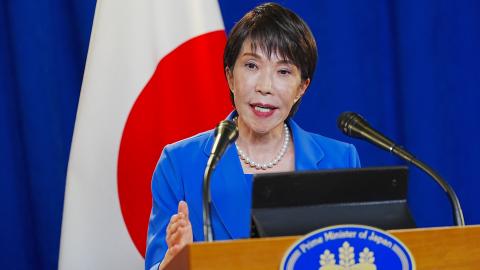
Seventy years later, the truth of Churchill’s position has not faded. It has been reaffirmed, not least by Japanese Prime Minister Sanae Takaichi’s recent comments underscoring Japan’s profound stake in Taiwan’s security. Beijing’s outrage at Tokyo’s entirely predictable position is performative; China is “shocked” only by what has always been obvious to the world: Taiwan’s future affects everyone.
China’s claim that Taiwan is a purely internal affair rings with the same hollow logic invoked by aggressors throughout history. North Korea once claimed legitimacy over South Korea, Nazi Germany declared sovereignty over the Sudetenland, and Russia today asserts the right to “reclaim” Ukraine. Cloaking expansionism in the language of “internal affairs,” historical destiny or ethnic kinship does not make it legitimate. It merely reveals the timeless grammar of aggression, a playbook the Chinese Communist Party has studied well.
As the newest U.S. National Security Strategy reaffirms, Taiwan’s security has long been integral to U.S. strategy. Even after the end of the Mutual Defense Treaty in 1980, Washington cemented its commitments through the Taiwan Relations Act and consistent presidential statements. For decades, American policy has rested on one principle: Neither side may use force to change the status quo. As Beijing accelerates military preparations, American leaders across administrations have repeatedly affirmed that the United States would oppose a CCP invasion. The credibility of U.S. alliances and deterrence in Asia hinges on Taipei’s survival.
Other Indo-Pacific democracies share this clarity. Japan and Australia have insisted that Taiwan’s safety is inseparable from their own. The Philippines, locked in confrontation with China in the South China Sea, has granted the United States crucial access to bases near the Bashi Channel. Former South Korean President Yoon Suk Yeol has stated plainly that Taiwan’s fate is a global concern.
Europe now sees the same connection. NATO leaders, EU diplomats and lawmakers from key member states have emphasized that Taiwan’s security affects Europe’s stability. Russia’s invasion of Ukraine awakened democracies to the dangers of authoritarian revisionism. Beijing’s claims over Taiwan rely on the same logic Moscow uses against Ukraine: history and ethnicity as a pretext for conquest.
To accept that logic in Asia after rejecting it in Europe would destroy any moral or strategic coherence.
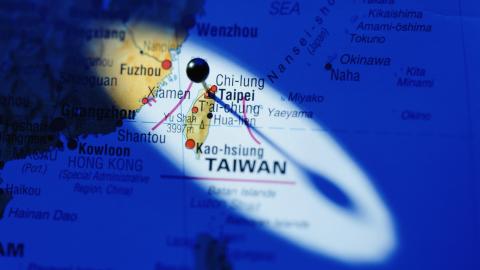
Beyond geopolitics lies a simple economic truth: Taiwan is indispensable. It dominates global semiconductor production and sits astride vital maritime routes connecting the Western Pacific to the rest of the world. If Beijing seized Taiwan, it would effectively control commercial traffic through the South China Sea, East China Sea, and Strait of Malacca — channels through which much of global trade flows.
Speaking for all Western European democracies, former EU foreign policy chief Josep Borrell captured the stakes succinctly: “Taiwan is clearly part of our geostrategic perimeter … because an action against Taiwan would be, in economic terms, extremely serious for us.”
The world cannot afford to let the center of global chip production fall under the control of an authoritarian regime seeking geopolitical leverage.
Ultimately, Taiwan’s significance extends far beyond territory or trade. It is a test of whether democratic nations can defend a fellow democracy against authoritarian coercion. Taiwan’s continued freedom affirms that the arc of East Asia bends toward democracy — from South Korea to the Philippines, from Mongolia to Taiwan itself. If Taiwan were to fall, it would embolden autocracies everywhere and dim the hopes of those in China who yearn for political rights.
Also, Taiwan can play a crucial role in changing communist China. For 76 years, the CCP has regarded Taiwan as a stubborn obstacle to its narrative of communist liberation, now disguised as national reunification. However, in the same decades, Taiwan has transformed itself from an authoritarian rule into one of Asia’s most vibrant democracies. This success is not merely symbolic; it demonstrates that Chinese-speaking societies can uphold modern democratic values, a reality the CCP finds existentially threatening. Taiwan’s freedom is a rebuke to Beijing’s claim that democracy is incompatible with Chinese culture.
This too renders a powerful argument for the truth: Taiwan is not just a regional issue but also an ideological one. Its democratic achievements inspire millions across the strait. Countless captive Chinese citizens are asking themselves a quiet question: If the Taiwanese people can freely choose their leaders, why can’t we? Taiwan’s existence challenges authoritarianism at its ideological core, and the CCP autocratic leadership is deeply frightened by Taiwan’s inspirational power.
Churchill saw in 1955 what remains painfully true: Taiwan’s status is an international matter because its future will shape the world’s. Beijing’s insistence that this is a “domestic issue” is not a statement of sovereignty but a strategy of aggression. The world must not mistake the CCP’s language of national reunification for the logic of conquest.
Defending Taiwan is not only about preserving one island’s freedom. It is also about defending the principle that free societies, large or small, cannot be sacrificed at the altar of authoritarian ambition. In standing with Taiwan, the world stands for its own security, prosperity and ideals.