








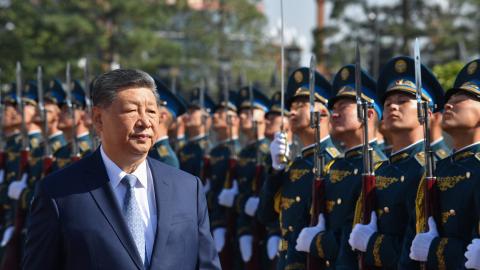



In this week’s episode of China Insider, Miles Yu covers the recent call between President Donald Trump and Xi Jinping on the topic of Taiwan, highlighting the importance of narrative dominance in the information warfare domain in cross-strait relations. Next, Miles looks into the catastrophic five-alarm fire in Hong Kong last week that resulted in at least 128 casualties, and the latest updates from the official investigation into what caused the apartment complex fire. Finally, Miles reviews Taiwan’s $40-billion supplementary defense spending package and how effective the investment will be at enhancing Taiwan’s security infrastructure and deterring asymmetric threats from China.
China Insider is a weekly podcast project from Hudson Institute’s China Center, hosted by China Center Director and Senior Fellow, Dr. Miles Yu, who provides weekly news that mainstream American outlets often miss, as well as in-depth commentary and analysis on the China challenge and the free world’s future.
Episode Transcript
This transcription is automatically generated and edited lightly for accuracy. Please excuse any errors.
Miles Yu:
Welcome to China Insider, a podcast from the Hudson Institute's China Center. I am Miles Yu, Senior Fellow and Director of the China Center. Join me each week for our analysis of the major events concerning China, China threats, and their implications to the US and beyond.
Colin Tessier-Kay:
It is Tuesday, December 2nd and we have three topics this week. First, we cover President Trump's recent call with Xi Jinping on Taiwan and highlight the importance of narrative dominance in the information warfare domain. Next we look into the tragic apartment fire in Hong Kong last week that resulted in at least 128 casualties and the latest from the investigation into what caused the catastrophic blaze. Finally, we review Taiwan's $40 billion supplementary defense spending package aimed to bolster the island's defense against China and how far these measures will go to expand Taiwan's security. Miles, great to be with you again this week.
Miles Yu:
Great to be with you again, Colin. We missed you last week and hope everything is good.
Colin Tessier-Kay:
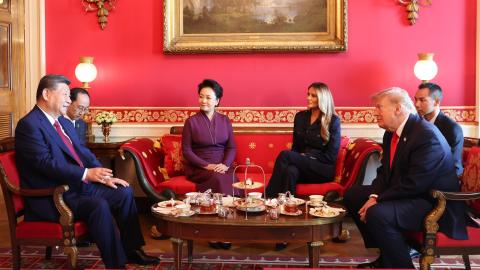
I appreciate that. I'm glad to be back and back in form here. So let's dive right in. Up first today, President Trump and President Xi Jinping connected on a call last Monday over issues related to Taiwan in the latest development in China's information campaign against Taiwan. During the call, Xi Jinping stressed his view that Taiwan must return to China while President Trump held firm to the US’s longstanding policy of strategic ambiguity, at least on the surface, choosing not to respond to Xi’s provocation directly. The two had met previously last month at the APEC Summit in South Korea over the ongoing US-China trade agreement where the topic of Taiwan didn't come up in discussion. Miles, walk us through what transpired on this call last week and where do things currently stand in the US-China discourse over Taiwan?
Miles Yu:
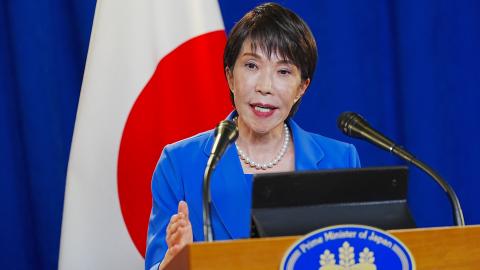
Well, I think Xi Jinping is really trying to create a major false narrative here related to Taiwan. Number one, he's trying to say [that the current] Japan-US-China relationship is still like [it was] 80 years ago during World War II where China and the United States were allies [and] Japan was the bad guy. This is just absolutely obsolete and it is old thinking that nobody's buying. Japan is a completely transformed country. China is the aggressor. That's why Xi Jinping tries to create a major narrative that is completely false. Today, Japan and the United States are allies and China is the bad guy. So Xi Jinping tried to reframe that. Number two, what really triggered Xi Jinping's call to Trump is the fact that [Japanese] Prime Minister Takaichi changed the perspective on the issue of Taiwan. That is, she does not recognize Taiwan's defense as just a matter of Chinese internal affairs.
Taiwan's defense is an international affair. As a matter of fact, Taiwan's defense is Japan's defense. That is a completely different [and] new paradigm of thinking [about the] Taiwan issue. That's why Xi Jinping sort of freaked out. I think Xi Jinping is basically trying to do this kind of a false narrative. Now why is this such a big deal? Because the narrative he's trying to create is facilitated by the disinformation campaign that centers on one very crucial element. That is, Xi Jinping asked Trump to tell the Japanese prime minister to tone down, to be more considerate to China. This is a false narrative and basically [the] Wall Street Journal published one piece to that effect. And the funny thing is, Trump reacted very angrily to the Wall Street Journal reporting, not directly refuting the particular angle of the Journal article, but just saying [that the] Wall Street Journal [is] just making trouble and this is not good.
Now of course, immediately Japan came out to deny [that] there was ever such an effort by President Trump to urge Prime Minister Takaichi to tone down her rhetoric on China. This basically is a false narrative and I think China loves that. To anybody who understands the very delicate trilateral dynamic of China, Japan and the United States, [this is] almost a routine. Every time a Chinese leader and a US president have some kind of meeting, the Japanese allies normally want to know what the heck's going on. So there is a certain kind of uncertainty. Now it is always a routine, a common practice for the United States to inform the Japanese government what's going on there. This is not an effort of President Trump urging Prime Minister Takaichi to tone down China. Rather, it is a part of the traditional practice of reaffirming the US-Japan alliance against a common enemy.
That's why every time a president of the United States visits China, normally [they] will always stop in Tokyo first to show that America's relationship with Japan is solid and the US-Japanese defense relationship is a cornerstone of the US Indo-Pacific strategy. This whole thing is about [China’s] disinformation campaign and it backfired and I think China looks very silly, particularly with Japanese [denying that] there is ever such a thing as President Trump urging Prime Minister Takaichi to tone down, to be considerate to China, and that never happened. That is a very, very important point. Now, let me just make one last point here, which is very important. The United States and China are two superpowers in this fierce fight for supremacy. China wants to replace the international order led by the United States with its own [brand] of governance. So anything that the United States government does [has] a direct risk of confronting China.
To do that, the president of the United States normally is very cautious [and] responsible. On the other hand, many American allies in the region can do a lot of things that the United States government would like to do, but cannot do without suffering a major consequence of direct confrontation between the two superpowers. For example, in the Middle East, [the] Israelis are very staunch friends of the United States. A lot of things Israelis want to do [are] things that the United States government wants to do but cannot do. That's why the tougher a regional ally like Japan, like Israel, like the UK [are] towards the common enemy of the United States, the better. And we encourage those acts, not openly, but normally it's the case. This falls into that kind of a perspective and domain. I don't think this is really an extraordinarily exceptional case where the US would deviate away from this traditional practice of reaffirming the US-Japan alliance.
Colin Tessier-Kay:
Yeah, who said there wasn't drama in international relations? But that's a really good point there that you made because we covered the fallout two weeks ago from Japanese Prime Minister Takaichi's comments regarding Japan's planned defense of Taiwan in the event of an invasion from China and the diplomatic conflict that has persisted since, which has kind of been the backdrop to this phone call. And in contrast to her statements, President Trump has, as you mentioned employed somewhat of a tact of strategic silence, if you will, which has seemingly left Xi frustrated that the US is not giving China the rhetorical assurances that he currently seeks while remaining well within the parameters of US policy on the matter. So Miles, I know we've talked about the policy of strategic ambiguity, at least in name before, but recognizing the reality of Taiwan's de facto independence in the current landscape. So I'm curious, what do you make of Trump's approach to this dialogue exchange with Xi and how do you compare the US approach to Taiwan between the first Trump administration and the current [one]?
Miles Yu:
Strategic silence is not the same as strategic ambiguity. United States policy toward Taiwan, toward Japan, toward China has never been ambiguous. I mean by strategic we normally mean military. The United States has never been ambiguous about our resolve to defend Taiwan militarily if China invades Taiwan. What is ambiguous though, is not strategic, not military, but diplomatic. Our policy toward Taiwan's international status is ambiguous. That's why we need this diplomatic clarity rather than military clarity because we already have military clarity. So that's point number one. Point number two is listen, we have some friends and allies in the region that can help the United States say what we would like to say. Particularly to the point about China's effort to malign Japan as if it were still ruled by militarists in the 1930s and 1940s. That's not the case. A very interesting embarrassment for the Chinese government's narrative is that Singapore’s Prime Minister said something very loud and very clearly in the international forum last week when China went ballistic against Japan by framing Japan falsely as if Japan today and Japan 80 years ago [are the same].
The Singapore prime minister said he hoped China or Japan will get along and Japan is [not] a bad guy. As a matter of fact, he pointed out very clearly and bluntly, Japan has the highest favorite rating among ASEAN countries, Southeast Asian countries. People trust Japan, people love Japan, people believe Japan is a country of good. That's why it's a force of good. That's why you have somebody like the Singapore prime minister, who usually is very pro-China, and comes out and says, hey listen, Japan is not a bad guy. Japan is most loved in Southeast Asia and that's something that's really meaningful. I think it's an embarrassment for Xi Jinping to even try this kind of old trick. I mean nobody's buying this.
Colin Tessier-Kay:
To round out this topic, let's include some discussion here from the Taiwanese perspective because obviously there are some Taiwanese who would prefer a stronger public stance from the United States on Taiwan's defense or at least stated reassurance of US commitment, but also appreciate the diplomatic tact of not unnecessarily escalating [tensions] based off of the recent issues between Japan and China. So Miles in all of this, where does Taiwan stand and how have government officials in Taipei responded to the Trump-Xi phone call?
Miles Yu:
I think if there is a kind of strategic silence that's from Taiwan. I don't think the word schadenfreude is appropriate here, but similar to that effect because once again, China, by its own behavior, has created more democracies that are in line with Taiwan's stance. So Taiwan is very happy to see that more and more governments are seeing China's misbehavior. I think this cognitive warfare is really, really malicious. China has never spared any efforts to do that kind of a disinformation campaign. This is a good example and I think it backfired very badly.
Colin Tessier-Kay:
Turning to our next topic today, a catastrophic fire broke out last Wednesday in an apartment complex in Hong Kong's Taipo District, resulting in the death of at least 128 people and over a hundred more either injured or missing. Authorities continue their investigation into the cause of the fire, but suspect a combination of variables led to the tragedy. Miles, can you start us off with some background as to what happened here last week and what officials currently believe caused the fire?
Miles Yu:
Well, this apartment complex is over 40 years old and badly needs renovation and maintenance renewal and that's where the problem is. I think there's a lack of regulation. There's also residential resistance to massive safety upgrades. This is basically an issue of governance. Now as you say, it's very tragic. I think as of today, I read that close to 130 people are confirmed dead and still close to 200 people are missing. So this is like a tragedy of great proportion and I think it is very sad for this to happen. Now, what's really interesting is that this has turned into a political crisis, not only for the government in Hong Kong but also for [the] government in Beijing as well because this served as a conduit for people in Hong Kong to unleash their disenchantment for the way Hong Kong has been governed by China in the last four or five years since China completely imposed a draconian security law on Hong Kong, getting rid of freedom and autonomy.
And you can see this, the disenchantment is [clearly palpable]. First of all, people were focusing on the causes of the fire. There is always an argument of whether it's bamboo scaffolding that caused it, or it is the flammable mesh net put on for all the buildings that became the cause of the fire. And that's basically the argument. China wants to push one argument over another, so does the Hong Kong government. But then, the issue really comes to one very important factor. That is, the suppliers of those flammable mesh nets covering all the buildings. It turned out all the suppliers came from mainland China. So now you have to really ask the question about the quality of China's construction materials. This is also a focus of this ventilation of the frustration and anger in Hong Kong. Now, there's also another issue which is very, very subtle, but is not really that invisible. That is, King Charles of the UK sent a very strong and sympathetic message which has reverberated throughout Hong Kong.
The reason why it's subtle is because England, of course, ruled Hong Kong for over 140 some years and didn't return Hong Kong back to China’s sovereign control until 1997. This moving note from King Charles of the UK definitely invoked some fond memories of [the] good old days. This is the subtle message that if Britain still ruled Hong Kong, [a] situation like this probably would not [have] happened. That's basically a very subversive message here. I think you can see that King Charles' note has been loudly reported and widely distributed in Hong Kong and beyond. What's really is sad is to see Hong Kong's chief executive, a gentleman by the name of John Lee [who] was handpicked by Xi Jinping to be the executive of Hong Kong, made a very public and rather disgusting speech in the aftermath of the fire in which he did not really say anything about the government’s role and how [the] government responded to the whole thing.
Rather, he spent a lot of time in speech praising Xi Jinping's brilliant leadership, thousands of miles away in Beijing. He talks like a party secretary of Hong Kong. That's why people were really sort of sad to see such a sharp contrast between [the] Hong Kong that enjoyed [a] high degree of autonomy only six, seven years ago [and the] Hong Kong today, which is a ruled by communist dictatorship whose sycophant executives pay tribute to the rulers in Beijing, rather than [spending time] focused on the suffering [their] own people. This is basically a very interesting incident. I think the investigation is ongoing and the rescue is still ongoing. We'll see, I think the political fallout will be much more serious in the weeks [and] months to come.
Colin Tessier-Kay:
Yeah, that's a great point and I really was going to ask you about that because to give some more context to that comparison, this has been Hong Kong's deadliest fire in 63 years according to public officials. Particularly due to the rapid expansion of the blaze through the apartment building complex itself, rising to I think a level five alarm in the span of a few hours since the hoses couldn't reach the higher levels of the building complex. Given what we know, Miles, the renovation materials and all these other factors could have played a large role here. I think three individuals from the state owned enterprise construction firm currently face manslaughter charges related to this event. I guess in the grand scheme of looking forward here from the rule of the Chinese government in Hong Kong, what are the lessons to be learned from this event and what is the current plan, if any, for policy reform given the shortcomings this tragic event has exposed?
Miles Yu:
Hong Kong is a tiny island that houses over 7 million people. It's really, really densely populated. As such, Hong Kong's solution to housing has always been building this concrete jungle [with] high rises all over the place. That really is a particular case that calls for tougher safety and compliance codes. I asked an architect friend of mine over the weekend and he told me those buildings have a design flaw. [The buildings are] all identical in design and the flaw is that somewhere between the kitchen and the bathroom area, at every level of these high rises, there's a gap and those gaps are connected. So in other words, you have the chimney effect. If one floor catches fire, even at the bottom, then the fire very quickly goes up through the whole building vertically because it's like a chimney. That's why you see this chimney effect and that the fire, the flame, very quickly devours the whole building. I think there should be some kind of a review on [that] safety design issue. Again, this building was built in the early 1980s I believe, and it's quite old and many of the buildings in Hong Kong are due for serious renovation and safety inspection. I think this is a good administrative urgency and that should be on top of the government's imperatives.
Colin Tessier-Kay:
Turning to our final topic today, we circle back on Taiwan as plans were announced to proceed with a $40 billion supplementary defense budget spending package to bolster island defense against a potential Chinese invasion. In the announcement, President Lai stated the importance of unilateral support, noting, “there is no room for compromise on national security” and further said, “national sovereignty and the core values of freedom and democracy are the very foundation of our nation.” This package comes on the heels of the latest development in Cross Strait tensions following Prime Minister Takaichi and President Trump's dialogues with President Xi. So Miles, walk us through this spending package. Where exactly will this money be going and what effect will this have on Taiwan's defense capabilities?
Miles Yu:
I think this is a very brilliant move on the part of President Lai. Here's the reason. Taiwan's biggest problem nowadays is not [that the ruling party of Taiwan] does not have the resolve. Taiwan's problem is domestic opposition led by the KMT. The KMT has control of the legislature. From the beginning of the Lai administration, the KMT led opposition coalition has steadfastly opposed spending on [Taiwan’s self-defense]. This is basically causing a major problem. Every major defense budget proposal has been vetoed by the KMT led-legislature. This is a tragedy and this is very unwise in my view. So what President Lai is now doing is bypassing that procedure and saying, you know what, we need a defense supplemental, we need an additional $40 billion. And this time, the money is used for one purpose, one purpose only. That is, to buy important weapons from the United States.
This changes the dynamic completely because if KMT opposes this, it is not just a matter of KMT opposing the incumbent government of DPP. It is the KMT opposing the United States. [The] US now has a big stake in Taiwan's domestic politics. And the President Lai knows this would not really be good for the KMT because [the] KMT, despite its messaging against defense spending, does not have the guts to tell the United States to its face, you know what, we don't want to buy weapons from you. Because [this] will have a serious consequence. I think this is a brilliant move and I think this money will be used to buy necessary weapons. As a matter of fact, despite all the US-China talks, US weapons sales to Taiwan has never stopped. As a matter of fact, [it] has increased dramatically. I hope that trend will continue with this additional $40 billion.
I think the US government once again showed [its] commitment to Taiwan's defense. Keep in mind, Taiwan has money. Taiwan is one of the most successful countries economically [and] technologically in the world. But each time Congress approves money to aid democracies in trouble, usually it [comes in] a package of three. Congress usually gives, [not loans], money. This is just an outright aid to three countries: Ukraine, Israel, and Taiwan. This is basically [an] expression of a national resolve. And I think [this time], President Lai plays Taiwanese politics, and US politics, very wisely and kudos to him.
Colin Tessier-Kay:
Yeah, I'm glad you brought that up because the increased defense spending has been a principal focus of the Trump administration when it comes to Taiwan, seeking upwards of sometimes 5% of their GDP towards defense spending. One of the highlights of this package will be, like you mentioned, the weapon sales between the US and Taiwan, but also the investment into Taiwan's T Dome project, akin to Israel's Iron Dome and similar defense concepts employed globally. So along with this, intelligence and military analysis both suggest that while any potential Cross-Strait conflict would involve conventional kinetic capacities, China is likely to focus on asymmetric capabilities, such as those through drones and UAV strategies and applied AI technologies to disrupt and degrade Taiwan's digital defense infrastructure. So Miles, I'd love to get your perspective about where things currently stand in the deterrence equation, given the uncertainty around China's planned strategies with the defense package and factoring in the US and allied support. Does Taiwan more or less have all bases covered in this scenario? Or do you see some key openings that need to be bolstered?
Miles Yu:
I think Taiwan obviously, in comparison to China, is a small country geographically and militarily too. The Chinese [People’s Liberation Army] is many times bigger than Taiwan's. However, small countries have advantages too. China's a big country, [which] could also mean it's a target too big to be missed. It's very easy to strike China. I think the Japanese government knows this. About five, six years ago, Japan changed its defense posture from purely defense oriented to one that focused on developing [counterstrike] capabilities. This is a deterrence. If you say, you know what, if you strike Japan, I'm going to strike back. That's what Taiwan, I think, is doing, and Taiwan should be doing this if it has not done enough. Taiwan has to defend itself. Defense first, but also you have deterrence capabilities too.
I know the Taiwanese government is developing all kinds of anti-ship missiles and [estimates that its capabilities are increasing]. Keep in mind, Taiwan is one of the world's premier places for making drones, and Taiwan has a huge talent pool of techno talents [and] a lot of experts are in Taiwan. I think that Taiwan has a very powerful base of modern electronics, particularly chip making, of course. The issue is how to integrate the private industry, technological industry, with the Taiwanese national defense. I'm confident the Taiwanese government is going to do a great job, because the defense of Taiwan is not just a matter of one party versus another. It's really most people's desire. When people say we want to maintain the status quo in Taiwan, that basically means that we're going to defend ourselves. Status quo is de facto independence. We have been away from the Chinese Communist Party from the beginning. The Chinese Communist Party has never [ruled] in Taiwan, [not even] for one single day, not even [over] one square inch. That's why I think Taiwanese show its resolve to defend itself and it will definitely have US support and obviously it has gained Taiwan's pledge. Not only that, there is a coalition of willing [democracies in the region], particularly Japan, Australia, and the United States, in particular.
Colin Tessier-Kay:
Well, I think that's a great place to leave it off for this week's conversation. Thank you to our listeners for joining us again this week. And thank you Miles, as always, for lending us your expert insight and analysis on these critical issues. Looking forward to next week's discussion.
Miles Yu:
Alright, I'll see you next week.