Caption
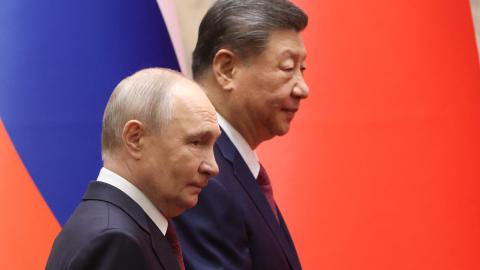
Russian President Vladimir Putin and Chinese President Xi Jinping enter the hall during a signing ceremony on May 20, 2026, in Beijing, China. (Getty Images)







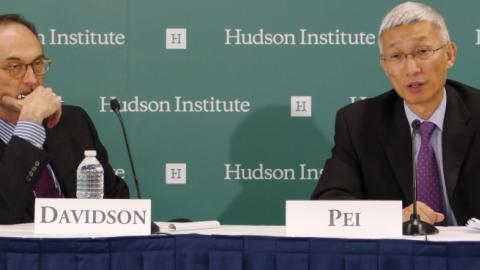
The unprecedented anti-corruption campaign launched by Communist Party Chief Xi Jinping in late 2012 shows, among other things, that a kleptocracy has taken root inside the Chinese state and economy. While the campaign has provided more detailed information on the scope and depth of corruption in China, the origins and characteristics of this new type of kleptocracy remain poorly understood.
 Using data collected from more than 100 corruption cases involving multiple party and government officials, Minxin Pei argues this kleptocracy originated two decades ago when elites in the Chinese party-state, private businesses, and organized crime colluded to loot state-owned assets. The effects of such looting and collusion go beyond the illicit enrichment of a small number of elites. Pei contends that they are the underlying forces causing the decay of key institutions in the Chinese party-state.
On November 21st, Hudson Kleptocracy Initiative (KI) hosted a discussion moderated by KI Executive Director Charles Davidson on the sources and implications of China’s kleptocracy.
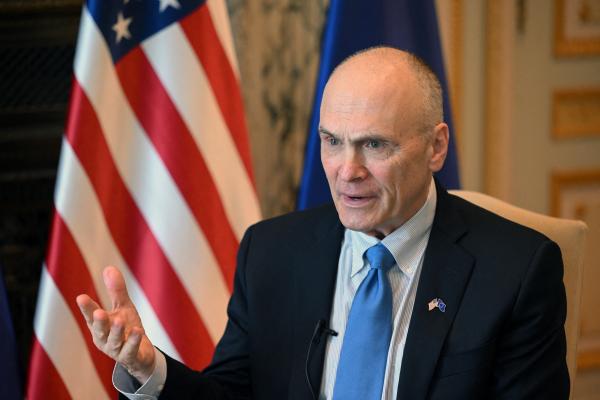
Join Hudson Institute for a conversation with US Ambassador to the EU Andrew Puzder and Senior Fellow Harold Furchtgott-Roth on America’s interests in reducing the harmful effects of CS3D and CSRD.

Join Hudson Institute for a conversation with Lazarus, founder of Lazarus Consulting and former speechwriter to the Commander of the US Southern Command.


Join Hudson Institute for a conversation with the author on the eve of the book’s release. Babb, Director of The Promised Land Project at the Macdonald-Laurier Institute and an associate fellow at the Institute for National Security Studies in Tel Aviv, will discuss the book’s central argument and the practical ways Jews and non-Jews alike can embrace Zionist ideas in their lives.


Join Hudson Institute Senior Fellow Ludovic Hood for a panel with David Wurmser of the Jerusalem Center for Security and Foreign Affairs; David Makovsky of the Washington Institute; and Senior Fellow and Director of the Center for Peace and Security in the Middle East, Michael Doran, as they discuss the state of the race and potential paths forward for the United States–Israel relationship.