21
March 2016
Past Event
China's Authoritarian Economic Model: Temporary Hiccup or in Terminal Decline?

China's Authoritarian Economic Model: Temporary Hiccup or in Terminal Decline?

Past Event
Hudson Institute, Washington, D.C. Headquarters
March 21, 2016
21
March 2016
Past Event

1201 Pennsylvania Avenue, N.W., Suite 400
Washington, DC 20004

Speakers:
Dr. John Lee

Senior Fellow, Hudson Institute & Adjunct Professor, Australian National University

Leland Miller

President, China Beige Book International

eric_brown
Eric B. Brown

Senior Fellow

During much of America’s protracted post-2007 recession and sluggish recovery, a dramatically different economic model appeared to be on the rise. “Capitalism with Chinese characteristics,” as Beijing’s ruling party styles it, is (and remains) to a large extent a classic command economy: a national policy narrowly focused on growth, centrally directed by officials unburdened by the need to win popular elections, administered on a day-to-day basis by a handpicked class of authoritarian technocrats, and rigorously imposed on the gigantic state-owned enterprises that dominate China’s key industrial, commercial, and financial sectors. And to a great many observers, at least until quite recently, it seemed to be working.

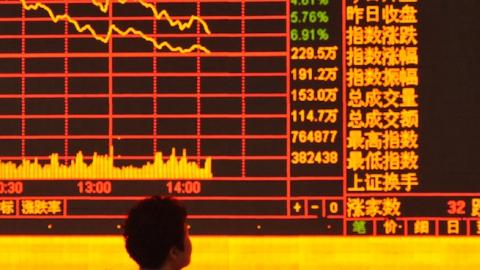
But not so much anymore. Hardly a day now goes by without another major report or independent assessment warning that China’s economy is in very deep trouble. Highly questionable, universally mistrusted official GDP figures; mounting debt; wasted investment on such a scale that it can no longer be ignored; serious production over-capacity; stock indices in free fall—so much uninterrupted bad news, in fact, that even at home, the economic stewardship of China’s Communist Party is suddenly being openly questioned and criticized.

All economies go through their ups and downs, of course. So the question becomes: Are we merely witnessing a temporary or cyclical slowdown in China after a long period of rapid growth? Or do current alarms signal and reveal a deeper, structural, and enduring problem with the country’s basic system of political economy? Is “capitalism with Chinese characteristics” still a plausible and attractive model for other developing countries? Or has it permanently (and justifiably) lost its allure as an alternative to more liberal systems of economic policy and general governance?

On March 21, Hudson Institute hosted a discussion about the near- and long-term viability of this authoritarian economic model with two leading experts on China's political-economy: Leland Miller, president of China Beige Book International, and Hudson Senior Fellow Dr. John Lee. Hudson Senior Fellow Eric Brown moderated the discussion.

Related Events
19
May 2026
In-Person Event | Invite Only
Environmental Agendas, Geopolitical Ends: Climate Policy and Great Power Competition
Featured Speakers:
Michael Doran
Zineb Riboua
Brenda Shaffer
Sam Cooper
Getty Images
19
May 2026
In-Person Event | Invite Only
Environmental Agendas, Geopolitical Ends: Climate Policy and Great Power Competition

To examine this emerging challenge, Senior Fellow Dr. Michael Doran will convene a conversation with Research Fellow Zineb Riboua, Professor Brenda Shaffer—Research Faculty Member at the US Naval Postgraduate School and Senior Fellow at the Atlantic Council—and Sam Cooper, an award-winning investigative journalist focusing on China-Canada relations.

Getty Images
Featured Speakers:
Michael Doran
Zineb Riboua
Brenda Shaffer
Sam Cooper
20
May 2026
In-Person Event | Invite Only
A Conversation with Under Secretary of State for Public Diplomacy of the United States, Sarah B. Rogers
Featured Speakers:
Sarah B. Rogers
Zineb Riboua
Eric Schmitt
Michael Doran
Getty Images
20
May 2026
In-Person Event | Invite Only
A Conversation with Under Secretary of State for Public Diplomacy of the United States, Sarah B. Rogers

Please join the Hudson Institute for a conversation with Under Secretary of State for Public Diplomacy Sarah B. Rogers and Hudson Research Fellow Zineb Riboua on how the United States is adapting its public diplomacy tools to advance its interests abroad, counter censorship, promote free speech, and leverage artificial intelligence to deliver more effective, targeted messaging.

Getty Images
Featured Speakers:
Sarah B. Rogers
Zineb Riboua
Eric Schmitt
Michael Doran
21
May 2026
In-Person Event | Hudson Institute
Georgia at a Geopolitical Crossroads: Iranian Influence and Strategic Competition
Featured Speakers:
Luke Coffey
Giorgi Kandelaki
John P. Walters
Congressman Joe Wilson
Ian McGinnity
Moderator:
Matthew Boyse
Tbilisi residents protest after the Georgian Dream government announced a suspension of negotiations on EU candidate status until 2028, as police detain demonstrators during a crackdown in the capital on November 28, 2025. (Photo by Sebastien Canaud/NurPhoto via Getty Images)

21
May 2026
In-Person Event | Hudson Institute
Georgia at a Geopolitical Crossroads: Iranian Influence and Strategic Competition
Tbilisi residents protest after the Georgian Dream government announced a suspension of negotiations on EU candidate status until 2028, as police detain demonstrators during a crackdown in the capital on November 28, 2025. (Photo by Sebastien Canaud/NurPhoto via Getty Images)

Featured Speakers:
Luke Coffey
Giorgi Kandelaki
John P. Walters
Congressman Joe Wilson
Ian McGinnity
Moderator:
Matthew Boyse
22
May 2026
Virtual Event | Online Only
The Western Hemisphere’s Energy Moment
Featured Speakers:
Daniel Batlle
Francisco Monaldi
Getty Images
22
May 2026
Virtual Event | Online Only
The Western Hemisphere’s Energy Moment

Join Hudson Institute as Adjunct Fellow Daniel Batlle interviews Francisco Monaldi, director of the Latin American Energy Program at Rice University’s Baker Institute for Public Policy and one of the foremost authorities on energy and political economy in the region, for a wide-ranging conversation on Latin America's energy future and what it means for the hemisphere and for US interests.

Getty Images
Featured Speakers:
Daniel Batlle
Francisco Monaldi