06
December 2017
Past Event
Obstacles to Press Freedom in Latin America: Three National Experiences

Obstacles to Press Freedom in Latin America: Three National Experiences

Past Event
Hudson Institute, Washington, D.C. Headquarters
December 06, 2017
Photojournalists raise their cameras as a protest against the closure of Argentine private news agency DYN in Buenos Aires, November 14, 2017 (EITAN ABRAMOVICH/AFP/Getty Images)
Caption
Photojournalists raise their cameras as a protest against the closure of Argentine private news agency DYN in Buenos Aires, November 14, 2017 (EITAN ABRAMOVICH/AFP/Getty Images)
06
December 2017
Past Event

1201 Pennsylvania Avenue, N.W., Suite 400
Washington, DC 20004

Speakers:
Ambassador Jaime Daremblum

Senior Fellow & Director, Center for Latin America, Hudson Institute

Armando González

Editor-in-Chief, La Nación (Costa Rica)

Hector Schamis

Columnist, El País (Madrid)

Gabriela Vivanco Salvador

Editorial Vice President, La Hora (Ecuador)

Freedom of the press, accessible to 13 percent of the world’s population, depends on several factors including reliable and robust coverage of political news, a clear division between the media and government, and legal protections for journalists.

After decades of improvement in the 1990s and early 2000s, freedom of the press in Latin America has declined in the last ten years, with journalists facing precarious security situations as well as government censorship and regulation in certain countries. Over the past 10 years, independent media outlets in Ecuador have come under direct attack by President Rafael Correa’s government, which has used legal, financial, and economic means to undermine media independence and financial stability. In Mexico, journalists experience serious safety concerns and 93 have been killed since 1994. In contrast, Costa Rica has provided legal protections to promote freedom of the press and was ranked sixth overall in the 2017 World Press Freedom Index.

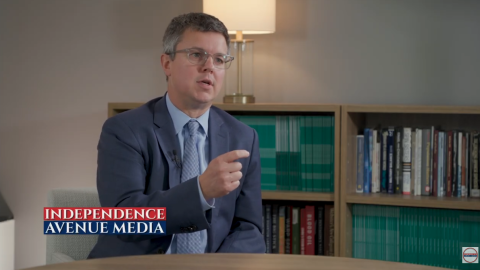
For a deeper look at conditions facing journalists in Latin America, Hudson Institute hosted a panel discussion on December 6 with leading members of the press from Ecuador, Argentina, and Costa Rica. Moderated by Hudson Senior Fellow Jaime Daremblum, the event featured Armando González, editor-in-chief of La Nación (Costa Rica); Hector Schamis, a weekly columnist for El País (Madrid); and Gabriela Vivanco Salvador, editorial vice president of La Hora (Ecuador).

To view Gabriela Vivanco Salvador's slides, click here.

Related Events
22
September 2026
In-Person Event | Hudson Institute
Colombia Recalibrates: Security, Stability, and the US Alliance
Featured Speakers:
Marcela Prieto Botero
Evan Ellis
Sergio Guzmán
Antonio Garrastazu
Daniel Batlle
Rubio
22
September 2026
In-Person Event | Hudson Institute
Colombia Recalibrates: Security, Stability, and the US Alliance

Join Hudson Institute for a panel that will examine how far de la Espriella can advance economic and security reforms without a legislative majority and how his approach will shape Colombia’s relations with the United States.

Rubio
Featured Speakers:
Marcela Prieto Botero
Evan Ellis
Sergio Guzmán
Antonio Garrastazu
Daniel Batlle
23
September 2026
In-Person Event | Hudson Institute
Tablet Magazine’s What Really Matters: A Live Episode at Hudson Institute
Featured Speakers:
Walter Russell Mead
Jeremy Stern
What really Matters
23
September 2026
In-Person Event | Hudson Institute
Tablet Magazine’s What Really Matters: A Live Episode at Hudson Institute

Join Hudson Institute and Tablet Magazine for an exclusive live recording of What Really Matters with Walter Russell Mead. Mead, the Ravenel B. Curry III Distinguished Fellow in Strategy and Statesmanship, and his cohost Jeremy Stern, editor in chief of Colossus, will bring their wide-ranging perspectives to help make sense of the news and understand the most consequential developments in American politics and world affairs.

What really Matters
Featured Speakers:
Walter Russell Mead
Jeremy Stern
23
September 2026
In-Person Event | Hudson Institute
Inertial Confinement Fusion Bolsters Strategic Deterrence
Featured Speakers:
Mark Herrmann
Keith LeChien
Rebeccah L. Heinrichs
Madelyn Creedon
engineers
23
September 2026
In-Person Event | Hudson Institute
Inertial Confinement Fusion Bolsters Strategic Deterrence

Join Hudson Institute’s Keystone Defense Initiative for a discussion of Inertial Confinement Fusion Is Key to America’s Nuclear Deterrent, a new memo authored by Senior Fellow Rebeccah Heinrichs and Former Principal Deputy Administrator of the National Nuclear Security Administration Madelyn Creedon.

engineers
Featured Speakers:
Mark Herrmann
Keith LeChien
Rebeccah L. Heinrichs
Madelyn Creedon
24
September 2026
In-Person Event | Hudson Institute
Ending Self-Imposed Scarcity: Expanding Defense Production with New Technology and Techniques
Featured Speakers:
Jeff Frankston
Andy Magliochetti
Rolf Ziesing
Bryan Clark
Nadia Schadlow
Jai Malik
drone
24
September 2026
In-Person Event | Hudson Institute
Ending Self-Imposed Scarcity: Expanding Defense Production with New Technology and Techniques

Join Hudson Institute for a discussion of how the DoW and industry are changing defense manufacturing for twenty-first century deterrence and combat.

drone
Featured Speakers:
Jeff Frankston
Andy Magliochetti
Rolf Ziesing
Bryan Clark
Nadia Schadlow
Jai Malik