01
February 2018
Past Event
The Strategic Significance of the South China Sea: American, Asian, and International Perspectives

The Strategic Significance of the South China Sea: American, Asian, and International Perspectives

Past Event
Hudson Institute, Washington, D.C. Headquarters
February 01, 2018
01
February 2018
Past Event

1201 Pennsylvania Avenue, N.W., Suite 400
Washington, DC 20004

Speakers:
Admiral Gary Roughead (Ret.)

Robert and Marion Oster Distinguished Military Fellow, Hoover Institution and former Chief of Naval Operations, U.S. Navy

Dr. Toshi Yoshihara

Senior Fellow, Center for Strategic and Budgetary Assessments

Vice Admiral Masanori Yoshida (Ret.)

Vice President, International Security Affairs, Sojitz Corporation of America and former officer in the Japanese Maritime Self-Defense Force

Vice Admiral Robert Thomas (Ret.)

Senior Research Fellow, Institute on Global Conflict and Cooperation, University of California, and former commander, U.S. 7th Fleet

Dr. Sally Paine

William S. Sims University Professor of Strategy & Policy, U.S. Naval War College

Dr. Ashley J. Tellis

Tata Chair for Strategic Affairs, Carnegie Endowment for International Peace

Dr. Arthur Herman

Senior Fellow, Hudson Institute

Dr. Andrew Krepinevich

Senior Fellow, Hudson Institute

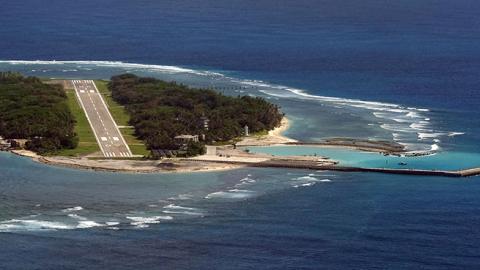
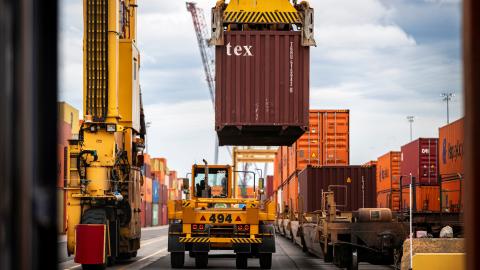
The islands and waterways that cover the South China Sea have long been at the center of territorial disputes among regional rivals. Today, however, the region is one of the most fiercely disputed waterways and hottest flashpoints in the world. Due in large part to the almost $3.5 trillion of maritime trade that flows through this international waterway, it has become an escalating source of confrontation between China and the United States.

On February 1st, Hudson Institute hosted a high-level symposium to discuss the new strategic significance of the South China Sea for Asian and American national interests. In particular, our speakers will examine the origins and geopolitical, economic, and military implications of China’s aggressive strategy in the South China Sea, and consider potential counter strategies that other nations, including the United States, might pursue to preserve and protect peace and stability throughout the region.


To view Dr. Yoshihara's slides, click here

To view Vice Admiral Yoshida's slides, click here

To view Vice Admiral Thomas' slides, click here

To view Dr. Paine's slides, click here

To view Dr. Herman's slides, click here

To view Dr. Krepinevich's slides, click here

Related Events
19
May 2026
In-Person Event | Invite Only
Environmental Agendas, Geopolitical Ends: Climate Policy and Great Power Competition
Featured Speakers:
Michael Doran
Zineb Riboua
Brenda Shaffer
Sam Cooper
Getty Images
19
May 2026
In-Person Event | Invite Only
Environmental Agendas, Geopolitical Ends: Climate Policy and Great Power Competition

To examine this emerging challenge, Senior Fellow Dr. Michael Doran will convene a conversation with Research Fellow Zineb Riboua, Professor Brenda Shaffer—Research Faculty Member at the US Naval Postgraduate School and Senior Fellow at the Atlantic Council—and Sam Cooper, an award-winning investigative journalist focusing on China-Canada relations.

Getty Images
Featured Speakers:
Michael Doran
Zineb Riboua
Brenda Shaffer
Sam Cooper
20
May 2026
In-Person Event | Invite Only
A Conversation with Under Secretary of State for Public Diplomacy of the United States Sarah B. Rogers
Featured Speakers:
Sarah B. Rogers
Zineb Riboua
Eric Schmitt
Michael Doran
Getty Images
20
May 2026
In-Person Event | Invite Only
A Conversation with Under Secretary of State for Public Diplomacy of the United States Sarah B. Rogers

Please join the Hudson Institute for a conversation with Under Secretary of State for Public Diplomacy Sarah B. Rogers and Hudson Research Fellow Zineb Riboua on how the United States is adapting its public diplomacy tools to advance its interests abroad, counter censorship, promote free speech, and leverage artificial intelligence to deliver more effective, targeted messaging.

Getty Images
Featured Speakers:
Sarah B. Rogers
Zineb Riboua
Eric Schmitt
Michael Doran
21
May 2026
In-Person Event | Hudson Institute
Georgia at a Geopolitical Crossroads: Iranian Influence and Strategic Competition
Featured Speakers:
Luke Coffey
Giorgi Kandelaki
John P. Walters
Congressman Joe Wilson
Ian McGinnity
Moderator:
Matthew Boyse
Tbilisi residents protest after the Georgian Dream government announced a suspension of negotiations on EU candidate status until 2028, as police detain demonstrators during a crackdown in the capital on November 28, 2025. (Photo by Sebastien Canaud/NurPhoto via Getty Images)

21
May 2026
In-Person Event | Hudson Institute
Georgia at a Geopolitical Crossroads: Iranian Influence and Strategic Competition
Tbilisi residents protest after the Georgian Dream government announced a suspension of negotiations on EU candidate status until 2028, as police detain demonstrators during a crackdown in the capital on November 28, 2025. (Photo by Sebastien Canaud/NurPhoto via Getty Images)
Featured Speakers:
Luke Coffey
Giorgi Kandelaki
John P. Walters
Congressman Joe Wilson
Ian McGinnity
Moderator:
Matthew Boyse
22
May 2026
Virtual Event | Online Only
The Western Hemisphere’s Energy Moment
Featured Speakers:
Daniel Batlle
Francisco Monaldi
Getty Images
22
May 2026
Virtual Event | Online Only
The Western Hemisphere’s Energy Moment

Join Hudson Institute as Adjunct Fellow Daniel Batlle interviews Francisco Monaldi, director of the Latin American Energy Program at Rice University’s Baker Institute for Public Policy and one of the foremost authorities on energy and political economy in the region, for a wide-ranging conversation on Latin America's energy future and what it means for the hemisphere and for US interests.

Getty Images
Featured Speakers:
Daniel Batlle
Francisco Monaldi