Caption
US sailors conduct routine maintenance on a jet blast deflector on the flight deck of the Nimitz-class aircraft carrier USS Nimitz on July 9, 2025. (US Navy)



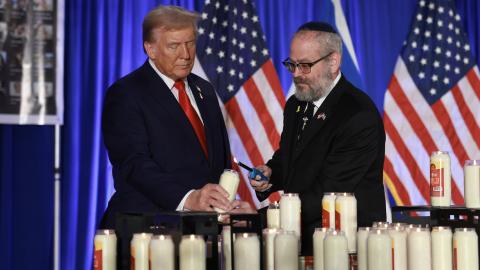
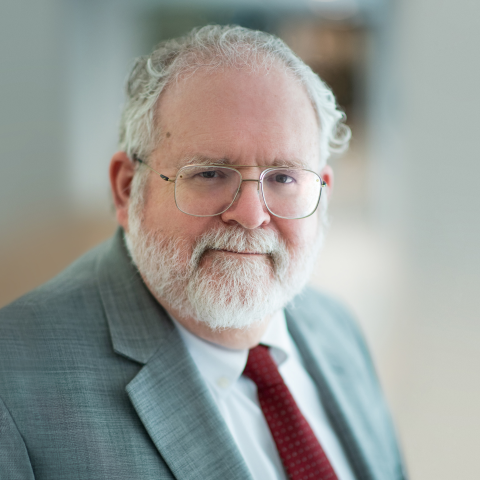
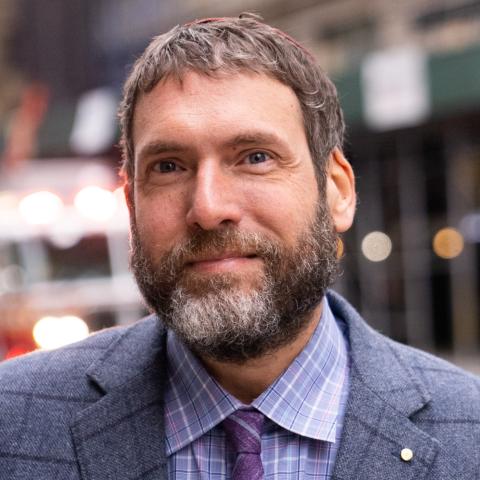
The Center for Peace and Security in the Middle East will host a conversation with Ambassador Rabbi Yehuda Kaploun, the United States special envoy to monitor and combat antisemitism. With Senior Fellow Michael Doran, the ambassador will discuss the Trump administration’s record in confronting the rise of antisemitism, including key achievements, ongoing priorities, and remaining challenges. Additionally, they will explore the importance of combating antisemitism for American efforts to support democratic resilience and manage the US alliance system.
Michael Doran:
Hi, good afternoon. I’m Mike Doran. I run the Middle East Center here at the Hudson Institute, and I’m also a senior fellow. And it’s my honor and pleasure to welcome the new special envoy for monitoring and combating antisemitism, Ambassador Rabbi Yehuda Kaploun. Welcome.
Ambassador Rabbi Yehuda Kaploun:
Thank you.
Michael Doran:
Thank you for coming. Ambassador Rabbi, that sends mixed signals. You’re clearly a man who moves between worlds that don’t always overlap, faith and diplomacy. I’ll say a few words about you to yourself, if you don’t mind.
Ambassador Rabbi Yehuda Kaploun:
Sure.
Michael Doran:
So, in addition to being a rabbi and an ambassador, you’re also an entrepreneur. You were the co-founder and president of RussKap Water, which helped pioneer technology that pulls drinking water from the air. Your next move after that is going to be to turn water into wine, but we’ll wait for that one.
Ambassador Rabbi Yehuda Kaploun:
They had a religion after they did that, right?
Michael Doran:
Maybe you don’t want to compete on that one.
Ambassador Rabbi Yehuda Kaploun:
I don’t.
Michael Doran:
You received a Nobel Peace Prize nomination for that. Before that, you worked with Elie Wiesel at a foundation that supported children with special needs. Rabbinic work runs in your family. You are the son and the grandson of rabbis. That means that your Passover Seders are really long, I think.
Ambassador Rabbi Yehuda Kaploun:
Generally, yes.
Michael Doran:
We’re very—
Ambassador Rabbi Yehuda Kaploun:
A lot of guests.
Michael Doran:
A lot of guests, but a lot of explanations, as well, I’m sure. We’re very fortunate to have you here. We really appreciate it. Please join me in welcoming—
Ambassador Rabbi Yehuda Kaploun:
Thank you.
Michael Doran:
Should I call you Ambassador or Rabbi?
Ambassador Rabbi Yehuda Kaploun:
It’s fine. Ambassador is fine.
Michael Doran:
Okay. Ambassador, you were just confirmed in December. Could you give us just an overview of what you see as the challenge before you and how you want to go attacking it? It’s a huge challenge.
Ambassador Rabbi Yehuda Kaploun:
As you just said, the challenge is definitely a huge challenge, and it’s a very daunting task. I think when you get into discussing and combating antisemitism globally, you find out that it’s easier to find a country that really doesn’t have antisemitism than . . . It’s a lot easier to search because if you start looking at the countries that antisemitism is prevalent, you’re going to find out that almost every country in the world is really out there, and there are a lot of difficulties in every country, even those that you would think would not have antisemitism.
So the task is a daunting task, but we are blessed that this administration has really made antisemitism a priority. And how to combat and deal with antisemitism is something that the president and the secretary of state have made it perfectly clear that this is one of the priorities of the administration, is holding people accountable. And it’s really a privilege and an honor to have been given this role. Although obviously, going through a Senate confirmation process in this climate is very difficult at the best of times, I am privileged and honored to take that role, but it is a daunting task.
Michael Doran:
Do you have any ideas as to why we have this global wave? I have to say, I’m not Jewish, but I spent my entire adult professional life surrounded by Jews, and so I’m not unaware of the issues. And I was shocked by what I saw. I remember arguing with a friend of mine, a Jewish friend, about whether antisemitism is always with us or not. And I pointed out the Madoff scandal and I said, “That was tailor-made for the antisemites, and there wasn’t any use of it.” And then a decade later, all of a sudden, you see it everywhere.
Ambassador Rabbi Yehuda Kaploun:
I think it’s a combination of what the internet and prevailing . . . We’re in a different society than we were 30, 40, 50 years ago. Things were more localized or able to be managed. There was a certain sense of time. To use a rabbinic term, there’s a line that we say in prayers that “people work quickly.” And there was a definition of that that a rabbi said-
Michael Doran:
Sorry, people worked quickly or work?
Ambassador Rabbi Yehuda Kaploun:
People work quickly—
Michael Doran:
People work quicker.
Ambassador Rabbi Yehuda Kaploun:
People work quickly. And the Hebrew translation of that can also use the term, “lost.” That from the quickness, you get lost. When we used to do business deals 30, 40, 50 years ago, even with a fact, the advent of a fax machine, right? So documents that were FedExed that took a week to work on a business deal and you focused only on that business deal, those days are over.
The amount of information that is disseminated, literally with the press and click of a button, you can be working on five deals in one day that 20 years ago would have taken you a year to complete. So everything is quicker. And you used to be able to work and verify and research something and come out that it’s true, not true. So for example, the New York Times puts out a picture and they say, “This is famine and a malnutrition child.” There’s something wrong with that when it’s a fake picture or the facts aren’t verified.
So, you have 50 million views for argument’s sake, but the apology will only get 100,000 views. So that level of factual misconduct, for lack of a better term, is prevalent today. And that’s part of the reason you have an increase. You don’t have that same level of people being responsible for what they’re saying, what they’re doing from the quickness. Also, because people are much more adept at using the internet to their advantage to highlight things that aren’t true and force it out there that it becomes the narrative. The norm is not the truth anymore, and that lends itself to a rise in antisemitism. The second part of that is basic ignorance and education.
We don’t teach our children reading, writing, and arithmetic. And if you’re looking on college campuses, the fact that you have to have remedial math on a college campus is something in some of the “finest institutions of government,” there’s a problem with our education system, but they’re not learning basic American history. The pride of being an American is missing. The lack of knowledge of American history is missing. And I think even within the Jewish framework, the lack of children understanding their history is missing. And because of that, it lends itself to people not ready to take on people who are just spewing mistruths.
Michael Doran:
I read your testimony at your confirmation hearing, and one of the lines jumped out at me, which is that you said that “antisemitism is anti-Americanism.” And I love that because we, here at Hudson, we strongly believe that. And sometimes when I talk to Jewish groups, and I say that, they get uncomfortable because they don’t like it being singled out like that. And they say that all forms of bigotry are anti-American, but I don’t agree with that. I think all forms of bigotry are un-American, but antisemitism is anti-American. And there’s a reason why our adversaries are pushing it all around the globe.
Ambassador Rabbi Yehuda Kaploun:
Well, I think if you take a look at those same people who chant death to Israel, the second line is usually death to America, first and foremost. So right off the bat, you have the same level of hatred or vitriol hatred for Israel as they do for America. They’re burning an American flag, they’re burning an Israeli flag. It makes no difference to them.
Michael Doran:
We’re sister countries.
Ambassador Rabbi Yehuda Kaploun:
So, we are sister countries. The second part is, it really is a lack of knowledge about the contributions of Jewish Americans to America, that people fled here for religious freedom. And from the early days of America, the founding fathers, religious liberty, the letters that George Washington sent to the synagogue and talked about religious freedom, that that’s something that this country stands for. So when you are going against the same groups that have the same values, Judeo-Christian values, you are anti-American because you’re going against what our founding fathers wanted for us.
Michael Doran:
So, let’s talk a little bit . . . Let’s actually go to basics for a second. And do you guys use in your office; do you use the IHRA definition of antisemitism?
Ambassador Rabbi Yehuda Kaploun:
Yes, we do, but the IHRA definition of antisemitism is a baseline. The greater question should be, why are only 45 countries’ participants in the IHRA definition of what antisemitism is? Because the reality is it’s a baseline for humanity. The Holocaust occurred. You can’t deny it, but you have people, even within this country, that are busy trying to deny the Holocaust.
Michael Doran:
Yeah.
Ambassador Rabbi Yehuda Kaploun:
And I think sometimes, again, I go back to ignorance, but it’s more so it’s an attempt to redefine history. And if you’re ignorant and you don’t know your history, and you’re looking for leadership or looking for an excuse for something that’s wrong in your life, then you’re going to look to hate. So I often say, I think the best argument right now in this country to combat antisemitism and combat Holocaust denial is you’re treading on the memories of every American soldier who fought tyranny, fought to liberate Europe from the Nazis, and liberated the death camps.
Their testimony, and the fact that General Eisenhower said that this day was going to happen, that people would come up and say that the Holocaust didn’t happen, the Jews weren’t being killed. He called it. He’s not a prophet, but he literally set out to document the atrocities that occurred so we could actually have the answers for these people who say the Holocaust didn’t occur.
Michael Doran:
It’s interesting that he understood from the moment . . . The minute they liberated the camps, he wanted to document it because he said they will deny this. So he was on top of it.
Ambassador Rabbi Yehuda Kaploun:
And I think he was probably looking at it from a perspective . . . I wasn’t there, but I think he looked at it from a perspective that the people who did the atrocities would try and deny it, not ever thinking that in America, we’d have to justify—
Michael Doran:
The Carlsons—
Ambassador Rabbi Yehuda Kaploun:
The Nick Fuentes, they’re not even worthy of a conversation; they would deny it.
Michael Doran:
Yeah. So, how do you understand the role of your office? And this is . . . The problem with antisemitism, I mean, it seems to me from when you’re trying to make policy against it, is that it’s everywhere and nowhere. It’s hard to identify the institution that you want to take down that will eliminate it. As you mentioned, it’s an education problem, but it’s extremely widespread. So how do you begin to get your hands around this as a concrete policy problem?
Ambassador Rabbi Yehuda Kaploun:
So, you start with the concrete policy that antisemitism isn’t tolerated by this administration, period. And this administration has a lot of tools at its disposal. And every office within the administration has really been tasked with finding the right ways and the correct ways of how they want to deal with countries. There are a couple of parts to this role. There’s the role that I wish that I never had, which is to read and react to a tragedy or things that occur. And I’m sorry, I thought it was . . .
Michael Doran:
I’m glad that’s you and not me.
Ambassador Rabbi Yehuda Kaploun:
So, I will share with you that if you want to know how the administration works together, that is Harmeet Dhillon, who’s working tirelessly on combating for civil rights and the administration’s policy on how they deal with universities. And I apologize for that.
Michael Doran:
It reminded me to turn mine off.
Ambassador Rabbi Yehuda Kaploun:
Well, it’s easier when it happens to someone else, right? So you have a part of reading and reacting. Something occurs and you have to react and you have to be part of the administration’s voice to what actually occurs. And that’s the part that you wish never exists because that usually means something very bad has happened. The second part is how do you affect policy and you use quiet diplomacy to get results.
And that, since I’ve been in this role, has been really something that I would say I’ve enjoyed being able to do, is the quiet effectiveness of effecting change with certain governments and certain policies of people who have said, “Oh, we’re not going to do something,” but yet with some gentle persuasion or maybe not so gentle persuasion, the power of the American government and representing the President of the United States.
And they realizing that these policies are not acceptable to the American government, to the secretary, or to the president, or to treasury, or to commerce, wherever it might be, does have an effect. So you’re able to effect certain changes. In the last four weeks, we’ve been able to quietly, and I don’t know, most of this doesn’t go out there, but Armenia has identified the willingness, signed a letter that they’re going to join IHRA.
Michael Doran:
Oh, nice.
Ambassador Rabbi Yehuda Kaploun:
Okay. You have, together with Ambassador Bill White, the government of Belgium has restored their funding for security for the Jewish day schools and Jewish synagogues. The BDS language in Ireland has been pulled through the efforts of Mike Huckabee, myself, the secretary, the president, and others.
You can effect change, and you can get the victories. And I think it all boils down to the first part of reading and reacting, which is part of the job. The second part is understanding who are really the bad actors or who are people that are saying, “Oh, we’re doing something,” and they’re really not doing anything or allowing this to be out there and be . . .
Ambassador Rabbi Yehuda Kaploun:
. . . Anything or allowing this to be out there and be promulgated throughout their system. But it boils down to the biggest battle that I think and the hardest job that I have is how you affect a change in education across the board by teaching people not to hate. And that’s the battle, but those are the victories that will mean the most because the demographic of a child who is 5 years old to 18 years old, they’re the ones that can be most affected by teaching them not to hate. So part of my job and my legacy that I will hope to have is you’ll never know about it, but the credit that you get for teaching someone not to hate or the attack that doesn’t happen, that’s my victory. So it’s somewhat, you’ll never know, but you know you have an effect.
Michael Doran:
Yeah. It’s like counterterrorism. You know the failures; you don’t know all the successes.
Ambassador Rabbi Yehuda Kaploun:
Correct.
Michael Doran:
So, one of the things that’s hard, I’ve experienced this in my own life, when talking to people who are antisemitic but don’t know it. There is the famous line, “Some of my best friends are Jewish,” but they have views that are views of Jewish cabals running everything, which don’t look to them like a prejudice against Jews. It looks to them like a rational understanding of how the world works. Do you have any ideas about how to go about attacking that?
Ambassador Rabbi Yehuda Kaploun:
Yeah. I do have a lot of ideas with that, but I think the first one boils down to, it’s again, education. People are so . . . They just don’t know, or they’re scared to ask the questions that . . . You’re always scared to ask the questions of something you really don’t know about, or that shows maybe a little level of ignorance that you don’t know this. So you may not know why Hasidic Jews do something, or you may not know that the customs are a reason why you see something, or in business why someone is vehemently opposed to doing something a specific way. And because of that, you tend to shy away from having to deal with it. So part of it is confront the questions head on. One of the things that we’re doing is spending—
[Audience interruption]
Ambassador Rabbi Yehuda Kaploun:
So let me share a little story before I entered the role. And I brought—
Michael Doran:
We paid her, by the way. We wanted a little controversy to . . .
Ambassador Rabbi Yehuda Kaploun:
In case someone was going to rest or think that they could take a nap.
Michael Doran:
I’m just sorry we didn’t have the lady from Code Pink. I forgot her name.
Ambassador Rabbi Yehuda Kaploun:
She usually followed me around for my confirmation hearings. She asked me my Indian name and I said it was Free the Hostages. But I’ll share with you a story. And in the business that I had, my business was creating drinking water from air. We actually had an agreement between Israel and Egypt to provide water to Gaza. The people who said no was UNRWA and Hamas because the water machines were going to be placed on the Egyptian side of the border, put through in a clear pipe so there could be no misunderstandings about what was going through that pipe. There would be about 100 to 150,000 gallons of water a day. The people who said no were Hamas and UNRWA. Ironic, isn’t it? So, when someone’s talking about Gaza, hunger, and what we do and what we don’t do, I think there’s a tremendous misconception. And that, again, boils back to what you said before. Perception is reality. So, these views of people pushing narratives that are totally not true, but are out there, allow people like that to have their ignorance come forth in full center.
[Audience interruption]
Michael Doran:
We got another one. Let’s see. Do we have any more? Any more of you? You want to raise your hand if you’re . . . We’ll get it all over at once. No? No. Okay.
Ambassador Rabbi Yehuda Kaploun:
So, it’s par for the course, and it comes with the territory, unfortunately.
Michael Doran:
I apologize. I’m sorry we didn’t weed them out—
Ambassador Rabbi Yehuda Kaploun:
You know what? The beauty of this country is you can hate me, but you have to protect me. So, they can say what they want to say. Again, it’s ignorance and a lack of facts. And by the way, the question that I asked a gentleman from the UN was, I did not see the UN in the role that they have; they didn’t bring food to any hostage, nor did they give medical attention to any hostage. So, part of the role was the UN, and they talk about how they want to be relevant, relevant means doing the roles that you’re given to do. The role that I have is to provide the President and the Secretary of State with what is going on globally to protect the Jewish nation. That’s the role that . . . The Jewish people around the globe in every country that they’re in. Again, it’s a daunting task that’s going to be everywhere you go.
Michael Doran:
Can I just point out that the ladies that we just escorted out are antisemitic because just for those watching who don’t know the IHRA definition, holding all Jews responsible for what’s happening in Gaza is a form of antisemitism.
Ambassador Rabbi Yehuda Kaploun:
And the second form of antisemitism is that if you’re only going to criticize Israel, but you’re not willing to criticize the slaughter of Christians in Nigeria, or you’re not willing to discuss the Chinese and the Uyghur situation, that’s also a form of antisemitism.
Michael Doran:
Or the slaughter of all the Iranians on the streets by their own regime.
Ambassador Rabbi Yehuda Kaploun:
So, a question that begs asking, is all these people that are out there on all the college campuses chanting From the River to the Sea, you have a whole country of people in the streets chanting for freedom, the right to live freely, and yet where are those protestors?
Michael Doran:
Yeah.
Ambassador Rabbi Yehuda Kaploun:
So, you lose all credibility. If someone was at every rally for a freedom of somebody, maybe you have to start listening or explaining, but it’s blatant hatred.
Michael Doran:
I suspect if we could speak to them, we’re not going to, and we ask them about their views, it would very quickly, as you mentioned before, move from Palestine to down with the United States and a whole host of other issues that come as a package.
Ambassador Rabbi Yehuda Kaploun:
It’s unfortunate because again, there are real leaders even within the Muslim community and the Islamic community who I’ve been privileged to deal with who really are trying to tackle this problem head on and they deserve a tremendous amount of credit. I mean, there was Sheikh Issa who did a historic visit to Auschwitz. There’s no Holocaust deniability for his circle of people because he was there, he saw it and he speaks about it. And I think more of that has to occur across the board.
Michael Doran:
Let’s talk about who are some of your strongest allies and opponents on the international stage. I don’t know if you want to talk about the opponents, but let’s talk about the allies.
Ambassador Rabbi Yehuda Kaploun:
Allies, you have countries that are really making sincere efforts in dealing with antisemitism. I think you have countries like Hungary, Romania to some . . . You have Albania, Armenia that are literally trying to educate their people to the history. A fact that I didn’t know even going into the administration, but I met with the foreign minister of Albania, and she mentioned that at the end of the war, there were more-
Michael Doran:
World War II.
Ambassador Rabbi Yehuda Kaploun:
World War II. There were more Jews living in Albania than at the beginning of the war. That was a fascinating fact for me. I didn’t know that.
Michael Doran:
Albanian history is a little hobby of mine.
Ambassador Rabbi Yehuda Kaploun:
Is it?
Michael Doran:
Yeah. Well, yeah, I’m interested in Ottoman history. The Albanians ran the Ottoman Empire at the end of the empire.
Ambassador Rabbi Yehuda Kaploun:
Turkey leaves a lot to be desired currently. Pakistan, again, a lot to be desired, but the historic Abraham Accords and the historic Gaza agreement, I believe, gives us a tremendous amount of opportunity to lower the rhetoric of hate globally. And there’s a certain amount to be said for prosperity for everybody helps lower the rhetoric of hate. But remember, you have 2,000 years of history. And you mentioned earlier on about is antisemitism there. Antisemitism is the world’s oldest hate. We have a prayer that we say on Passover that in every generation people stand to try to harm and hurt the Jewish nation, and God always saves us.
But it doesn’t mean that you don’t take the steps to protect yourself. The beauty of understanding that is yes, you’re going to have enemies, but we have learned that peace through strength and the President is one of the biggest advocates about that. Peace through strength is one of the most important things that occur. When America is strong, and as you see, Israel fighting a war on seven fronts, but I don’t think you’ll ever look at a beeper the same way again in your life. It requires tremendous ingenuity, but the partnership and the friendship that the President has with the state of Israel, of being there as a big brother, but also these are countries that are working hand in hand to provide better opportunities for the world, the technologies that have come out from Israel together and built together with Israel and American companies.
I believe there are so many Israeli companies that are now based in America manufacturing and doing things with actual meaningful changes. And in medicine, you talk about that. Stephen Hawkins like to say, “Oh, I don’t like Israel and I hate the Jews.” Great. If you really do-
Michael Doran:
Did he?
Ambassador Rabbi Yehuda Kaploun:
Yeah, he did.
Michael Doran:
Oh, really? I didn’t know that.
Ambassador Rabbi Yehuda Kaploun:
And the comment that was made that stuck with me was the equipment that you’re using to be able to say that was designed in Israel by a Jewish scientist. So the irony is you’re not even understanding the benefits, but you’re hating. That’s the ignorance that we are combating and the—
Michael Doran:
. . . He’s probably jealous of all the other scientists he was competing against.
Ambassador Rabbi Yehuda Kaploun:
Maybe. But that’s the ignorance part of it. People do not understand actual . . . It’s a desire to hate or maybe a deficiency in their own life because if people truly . . . And I tell people, my role as ambassador, I’m an ambassador for humanity. I will speak out when things are wrong in Nigeria because that’s the role that we have as human beings. All of us have that role to speak out. Yes, perhaps my role is elevated and I’m given a specific task, but all of us have that same role. We’re supposed to make the world a better place and be better human beings and hold people accountable to that. So that’s part of the education problem that I go back to education, education, education. I said it at the Senate hearings. That’s really what it boils down to. People are ignorant. If you want to say, “The Holocaust didn’t happen and I hate all Jews,” well, the first part of your sentence was a lie. Maybe the second part of the sentence is a lie too, because you just don’t know. Why? Why do you hate somebody? What makes somebody hate somebody?
Michael Doran:
Yeah. One of the strange things about, in my mind, I’ve always had my . . . I come from a philosemitic family, and for the longest time when I met anti-Semites, I couldn’t really believe it because there’s no experience they’ve had in their life of actual conflict with Jews. It’s all phantoms in their head and demons that they are imagining rather than a reality.
Ambassador Rabbi Yehuda Kaploun:
But unfortunately, the demons for them are their reality, and their reality is something we are forced to live with, and the Jewish community is forced to live with, and antisemitism grows because of this stuff.
Michael Doran:
Now, the internet, you mentioned that one of the reasons for the upsurge in antisemitism is the decline of traditional publications where there was some kind of a discipline and control over them, rise of the internet. And that of course gives our adversaries lots of opportunities to manipulate our discourse because the internet is so permeable. Is your office working on that, on the propaganda dimensions?
Ambassador Rabbi Yehuda Kaploun:
I would say our administration has made it very, very clear that free speech is the first thing, first and foremost in what we do. And again, hate is not good. Period. Hate is not good. You have a right to say whatever you want, but again, if you take a look at what Elon Musk did with X by having the location of people, just that one little nuance, the guy that was saying, “I’m coming back from a funeral of my neighbor’s child in Gaza,” and he was sitting in Poland or Indonesia . . .
Ambassador Rabbi Yehuda Kaploun:
. . . neighbor’s child in Gaza, and he was sitting in Poland or Indonesia, they’re in the credibility factor just automatically. Those are steps that the administration I think applauds. I don’t think they look to censor anybody.
Michael Doran:
But there are all kinds of ways that the Chinese, the Russians, the Iranians can use techniques to amplify voices artificially and to introduce themes that are not part of the natural American conversation. Does that fall in the purview of your office?
Ambassador Rabbi Yehuda Kaploun:
No. I think where it involves antisemitism, I think it falls in the purview, but it’s something that the administration and a lot of different groups within the administration work on, not just, so I’m not going to delve into too much of what goes on there with that. Except to really say that hate has no place in this country, and that’s something the administration and their officials view very, very seriously.
Michael Doran:
You mentioned some of the bright spots and allies working with you. Is there anyone you want to talk about that’s a particular concern to you?
Ambassador Rabbi Yehuda Kaploun:
I think England is a particular concern.
Michael Doran:
Really?
Ambassador Rabbi Yehuda Kaploun:
The rise of mass migration, the fact that yesterday someone was acquitted despite on video evidence of a British constable having their spine broken. A jury acquitted them, which means that it’s pervasive and prevalent. A country has the responsibility to protect their citizens. And if it’s not safe for somebody or they’re not doing it, then it’s something that the administration looks very closely. Bondi is the same thing. I mean, there were people on the watch list that were able to acquire weapons and effectuate a slaughter on the first night of Hanukkah, Festival of Light to bring light to the world. And yet at the same time, you see the good and the bad within the same religion. You had a Islamic attacker attacking people with hate, and he was taken down by an Islamic man who believed in protecting people. Same religion. So, you have to highlight and raise those people up that are the voices of what religion should be. No one should ever be killed in the name of religion. Nobody, and yet religion is one of the greatest causes of conflict. So that requires real leadership by real people to affect change.
Michael Doran:
I know you’re in the State Department and so your focus is going to be in foreign policy, but is there a role for you with regard to our universities and what we’re seeing on our campuses?
Ambassador Rabbi Yehuda Kaploun:
So first of all, I was involved with the President during the campaign, and something that he said early on is what was going on in college campuses was going to stop. And day one, there was an executive order that antisemitism was not tolerated. And safety and security of every student on campus to be able to study safely was a priority. And every step of this administration, from the Department of Justice, Department of Education, the fact that student visas, foreign visas are now being looked at, that’s something that the State Department is strongly involved with in removing those people who come to sow discord and not to learn.
You want to come and you want to be an asset to this country; we welcome you and we’ll do everything we can to make sure you’re successful. But if you’re coming to sow discord and you’re coming to just promote hate, and that’s your agenda, you don’t have a right to be in this country to do that. We don’t have to give you that right. And I think both the Secretary and the President and all senior staff and throughout the administration are taking a long, hard look.
You take a look at what the President has done with designating the Muslim Brotherhood as a terrorist organization. The fact that universities who have students are now on student visas are required to report when things occur so they can have their visa revoked. I think those are tangible steps that you can see where the State Department working together with the administration on many levels are able to affect a very positive change for people in this country to be safe on campus, to be educated on campus. And now that universities are going to have to say where they’re getting their funds from, I think people will be very, very surprised long term where all that information is going to lead.
Michael Doran:
Okay. Let’s turn to the audience and see if we have some audience questions, unless there’s something else that you’d like to add.
Ambassador Rabbi Yehuda Kaploun:
No, I’m more than ready to take questions. Hi.
Michael Doran:
Well, could you hold on one second? We’ll have a microphone.
Audience Member Gabby Deutch:
Thank you. My question is about—
Michael Doran:
Sorry, could you identify yourself?
Audience Member Gabby Deutch:
Sure, sorry. I’m Gabby Deutch with Jewish Insider. You mentioned England as a particular challenge and you talked about mass migration being part of that, and so I’m wondering how much you see immigration factoring into your work and talking about that as an issue. And if you’re in a conversation with a British politician or a diplomat, what’s your message about how they should address an issue that you believe stems from their immigration policies?
Ambassador Rabbi Yehuda Kaploun:
First of all, mass migration is a huge problem if people aren’t willing to abide by the law and order within that country. If I was in a conversation with a diplomat, I would say that their responsibility as diplomats as leaders is to provide safety and security for everybody to have religious freedom and protection. I think if you look at history 30 years ago, I think you didn’t see people having to go through security to walk into a synagogue. Just didn’t happen. Today, it’s the norm. Where are we in society that things. . . We’re accepting of things because it’s the norm. The norm should be humanity doesn’t need this, but yet it does.
Their responsibility as a diplomat in any of the foreign countries, the United States is watching closely. First of all, to protect the American citizens who have the right to worship freely, no matter what their faith is, as well as it’s the responsibility of every government to be able to make sure that people are able to worship freely and be safe walking the streets. To walk the street with a yarmulke in England, people are being attacked. That’s not okay. That’s something that has to be addressed and it has to be addressed by every government, whether it be France, whether it be England, whether it be Belgium. The rise in antisemitism, the antisemitism rhetoric has to be condemned from the top down. Leadership has to step up. Governments have to step up to do a better job.
Michael Doran:
Hillel Fratkin. Hillel, if you just wait one second, here comes the microphone.
Audience member Hillel Fradkin:
I’m impatient.
Michael Doran:
There we are.
Hillel Fradkin:
My name is Hillel Fradkin, I’m a senior fellow here at Hudson. And thank you for your remarks and-
Ambassador Rabbi Yehuda Kaploun:
Look young enough to be a junior fellow.
Audience Member Hillel Fradkin:
I may soon be. First of all, I want to say that I very much respect your taking on this task because it seems really very, very difficult. I wanted to get a little bit more clarity about how you see the balance of things. You’ve spoken about rhetoric and safety and the commitment of the administration to free speech. It does seem to me that from the outset that the safety issue is the one that has to be emphasized because that is a clear requirement of the government and it’s also a right of a citizen. Unfortunately we, for better or worse, we live in a country which values or guarantees free speech, so you’re just going to get people saying what they want to say. And it’s gotten worse, it seems to me, because facts don’t seem to matter very much, as you pointed out in a couple of examples you gave.
But this is where my question is. It’s long puzzled me how one responds to this, because it’s a little bit like being in the situation where a kind of classic joke, “So when did you stop beating your wife?” The assumption being you’re guilty until you prove yourself. And it never occurred to me, it was never clear to me just exactly how you can deal with that because so long as you engage with the person, there’s a kind of quasi-acceptance of the framework of the charge. And I was wondering, you probably have reflected on this a bit, if there’s any solution to that difficulty or you just have to take it.
Michael Doran:
Yeah, you can’t ignore them, but if you engage them, you kind of validate them.
Ambassador Rabbi Yehuda Kaploun:
So, I think there’s a certain. . . You’re absolutely correct that it’s a very, very difficult line. It really is. If you take a look at some of the things the administration has done by using the FACE Act to help safeguard the ability of people to go to synagogue or to a church to worship, that’s a very, very serious step that, something that people didn’t think. That’s the administration thinking outside the box using existing laws to help protect people. And that’s kudos to the Department of Justice, Pam Bondi, Harmeet Dhillon, incredible, incredible job. Again, it’s like what you said, but it’s almost like the person who kills their parents said to the court, “Have mercy. I’m an orphan.” It’s the same problem.
But again, I think safety is. . . You’re not going to change certain people from being who they are, but you have a right to protect the community from those people, and it’s yelling fire in a crowded theater. We have to do a better job of protecting everybody by safety. It’s going to be the safety, it’s not going to be the speech. And I think part of the problem is people give a platform, and they emphasize it sometimes by not going somewhere or not highlighting what somebody said and not giving them the air in the room, giving the fire to the air to breathe. Just ignore them. Somebody’s that stupid, sometimes just ignore. Don’t give them the platform that you’re going to highlight what they said across and elevate it. Sometimes just it’s not worth dealing with. They are who they are. They’re irrelevant. And the more people that make them irrelevant, they’re probably going to get a little louder and then have to fade into the sunset.
It’s not for everybody, but I know that a lot of times people want to say whatever they want to say about me. There’s plenty of influencers out there. They’re not worthy and they’re not part of my battle because they’re irrelevant. The more ignorant you want to speak about things that I’m saying that you don’t know the facts or you don’t know what’s being said or you want to cut and paste a seven-second line from a 30-second piece to get to what you want. Today with AI, you can make anybody say anything you want. In fact, even using today’s current events you have, they’re all worried about, they’re asking for proof of life, I believe, from Guthrie’s mother, but they said there’s so much video available from her online from the interviews that she did on TV that they don’t know what would be real or not. That’s a serious problem.
Technology today allows a platform for a lot of people to create the animosity, and it’s not always verified. It doesn’t say, “This is created by AI and it’s a spoof.” No, you’re getting it on the news media. You may think it’s fact, so that’s a battle.
And I think collectively, we all have to take a step back and say, “Do I believe this? Is this real? Or is this person relevant or worthy of my time?” Because a lot of times they’re just not. And by highlighting them, you’re giving them the space to breathe.
Audience Member Hillel Fradkin:
Mike, I have one more thing I wanted.
Michael Doran:
Okay.
Audience Member Hillel Fradkin:
This is just a historical note. You mentioned Eisenhower’s visit to the camps. It happens that Omar Bradley persuaded him he had to come to the camp, and he wasn’t initially inclined to do so, but when he got there, he was of course horrified. But his remarks on the occasion are interesting. It was ‘44, ‘45. We were almost near the end of the war, and he mentioned the fact that he spoke to the troops at the camp, the American troops there. And he said, “You’ve been reading in your newspaper people asking the question, why are we fighting?” It’s amazing at the end of four years of war, they were still asking that question, but they were apparently in American newspapers. And he said, “This is what you’re fighting against.” And that’s the main remark he made on the occasion. Then of course, he did insist that they document what the camp was.
Ambassador Rabbi Yehuda Kaploun:
I think also that it begs people to understand that two of the greatest leaders in the battle for morality in the world, Elie Wiesel and Chief Rabbi Lau, went through the Holocaust, did not have the benefit of growing up in a loving home, saw the worst horrors that existed, and yet the greatest voice probably in the 20th century was Elie Wiesel—
Ambassador Rabbi Yehuda Kaploun:
. . . voice probably in the 20th century was Elie Wiesel about combating hate, having the courage to speak up about the slaughter in Bosnia-Herzegovina or the famous Jack Hughes with world leaders.
Think about it for a second. We all grew up in loving homes, we all grew up in parents who teach us things, yet two of the greatest leaders who fought against hate across the board grew up witnessing murder every single day. And they’re our voice, voice of reason, voice of morality. And I think that behooves all of us to take a look that even in the worst of war, like I said, even the worst of the attack in Bondi, you saw something that was redeeming. The same thing applies. We all can do better and we have that responsibility to educate people to do better. Hold people accountable, but at the same time, it’s an education process. It’s not going to happen overnight.
But a teacher who . . . If you have school boards that are teaching hate, we have to do better as a country to stop that, or we have to hold countries accountable when their textbooks don’t teach the Holocaust. Basics, let’s get a basic human morality. And sometimes I wish . . . Like I said, there should be every country, the baseline for humanity is the IRA accords. And we’re far from getting every country on board.
Michael Doran:
In the back corner there, there’s a very intelligent-looking young woman.
Ambassador Rabbi Yehuda Kaploun:
Everyone in the back corners yelled at me so far, so if you don’t mind.
Audience member Zineb Riboua:
No Ambassador, we’re very honored to have you with us today. I’m Zineb Riboua. I’m a research fellow at the Center for Peace Security in the Middle East here at Hudson. And first of all, congratulations for all the work your administration has been doing in combating antisemitism. And I wanted to ask you about, there are different countries, but also different organizations that have been targeting Israelis, the ICC warrant against Netanyahu, but also attacking citizens who were part of the IDF, et cetera. And I wanted to know what the administration is thinking or doing regarding that.
Ambassador Rabbi Yehuda Kaploun:
Well, I think what they’re doing is kind of clear so far. I mean, they’ve sanctioned members of the court from the ICC. So, they’ve made it very clear that they’re really not recognized; we’re not a member. So we’ve made it very clear that it’s something that we definitely do not agree with, and we will fight them tooth and nail on every part of that. We don’t hold them relevant in that part of the discussion. We have blatant antisemitism. And we’ve called her out for that, and the ICC, Francesca Albanese, and the courts, both within the UN and the ICC. We’re going to hold people accountable for their hatred.
And it’s amazing that you can have an organization that’s geared for world peace, but 90 percent of their time, they’re busy not dealing with peace, they’re busy trying to condemn Israel for something. That’s not the purpose why the UN was created. And if you take a look at what this administration has done already, not just by stopping a lot of the USAID that was going sideways or NGOs or countries, just making a cottage industry of living off USAID, they’re now being held accountable.
And at the same time, holding the UN accountable that $570 million was taken out of their budget. Now all of a sudden, the UN is crying poverty. If we’re giving money and $25 billion goes into a tunnel infrastructure under Gaza, how’s that money well spent for the world? We see what hatred does. So again, holding people accountable is something that this administration is working very closely on.
Michael Doran:
You’re not going to yell at the ambassador, are you?
Audience Member Tsiporah Fried:
Not yet.
Michael Doran:
Okay.
Audience Member Tsiporah Fried:
Mr. Ambassador, it’s an honor to meet you. I’m Tsiporah Fried. I’m a senior fellow at Hudson visiting from France. So, my question would be about Europe, and it’s a very blunt one. So do you think Jews have a future in Europe?
Ambassador Rabbi Yehuda Kaploun:
To answer that question is going to say time will tell whether the governments are going to do what they need to do to provide safety and security. And I think that we’re at a stage where either way. Do countries and governments want to say that we value our citizens enough to protect them, or do they have to flee because we’re not protecting them? And it’s something the administration’s watching very, very closely.
But to give you an answer, I think only the future will tell that answer, but I think it’s on the government’s responsibilities, that answer will be in those individual countries, are the leaders willing to lead and provide safety and security for their citizens, for their Jewish citizens when it comes to antisemitism, for their Catholic citizens when it comes to Catholics or wherever it is? You have churches being burned, you have synagogues being burned.
This is not just a Jewish antisemitic problem; this is a problem across the line of enforcing your own laws, holding people accountable, and at the same time, protecting their citizens. So, time will tell, but it’s incumbent upon the government. The answers are going to be what the government does will give you the answer.
Michael Doran:
I think we got time for one more. You get the last question.
Audience Member Karen Barall:
Oh, great.
Michael Doran:
So make it a good one.
Audience Member Karen Barall:
I hope it’s a good one. I’m Karen Barall from the Louis D. Brandeis Center for Human Rights Under Law. First of all, I want to say, Rabbi Ambassador or Ambassador Rabbi, that I know you think a lot of people hate you, but we want to tell you that a lot of people also like you and thankful for everything you do. And we know that it’s very brave work that you’re doing and being in the front of antisemitism.
I wanted to ask you about foreign funding. You touched a little bit about that, and if you could reveal a little bit more and anything that the administration is planning on doing, it’s a good way to cut the head off the snake is to just stop where the source of the funding is coming from, but is that something that is possible, and what could you say about it?
Ambassador Rabbi Yehuda Kaploun:
I’m not going to wade too deeply into it, but I will say this, that the government, it’s not as if we’re not helping countries or groups or associations, but I think it’s going to be made very, very clear that those groups and associations that we’re helping certainly will be promoting America’s interests first, as well as the country that we’re helping, but that there will be . . . It’s not that we give you a blank check and go have a field day. It’s going to be very targeted, it’s going to be . . . It’s not that we’re stopping to help countries, but how we do it will be much more efficient.
And under the Secretary of State, he’s made it very, very clear that please, when you’re going to help a country, what’s the goal and what are the actual tangibles at the end? Transparency and accountability. How do you hold somebody accountable for what we’re doing? And what’s the result at the end of it? Did we get that result? Because all too often, the same group that did nothing would come back and get another check and do nothing the next year. That stops.
Michael Doran:
I may have misunderstood. Were you talking about our funding to other countries or countries' funding for antisemitic activities?
Audience Member Karen Barall:
The other way, yeah.
Ambassador Rabbi Yehuda Kaploun:
Oh, okay.
Audience Member Karen Barall:
It’s a good answer anyway.
Ambassador Rabbi Yehuda Kaploun:
Okay. But part of that is the transparency of universities and some of the actors who’ve been giving funding that are now people are taking a long, hard look and their responsibility now to account. Before, if you’re a business and you invest money into the United States of America, there’s all sorts of paperwork. If you were doing that on a college campus, that paperwork didn’t exist. It exists now.
So I think, again, this is still almost the end of the first year, beginning of the second, but now the first year policies are going to come into play in the second. Both, for argument’s sake, the tax benefits for people and they’re going to see more money, but at the same time, the accountability levels of people who are NGOs having to report sources of income or foreign sources of income or a college campus saying, “We got $25 million from China,” or, “$100 million from Qatar.” That for the first time is people are going to be held accountable.
So I think, again, with antisemitism, to say the word time, because I hate it, it’s something that you actually hate. You want results yesterday, but sometimes things do develop because the rules and regulations take time to happen.
I was in business. I think one of the greatest things about this administration on the side is that so many people are in business who have come into the administration. It’s not as usual bureaucracy as usual. It’s people holding people accountable. They don’t want to have six meanings of dialogue. It’s, does this work? Let’s go make it happen, and make it happen. But there still is the government, the big government. And I think it’s something that you’ll see transform over a period of time, but the people involved have this tremendous desire to affect the changes that are needed to, A, as the president says, to make the country great again, as Mike Waltz says in the UN, make the UN great again. These are things that we’re—
Michael Doran:
When was it great?
Ambassador Rabbi Yehuda Kaploun:
I think the inception of the UN was something that—
Michael Doran:
The idea, it’s a beautiful concept, it’s a beautiful idea.
Ambassador Rabbi Yehuda Kaploun:
The idea, the concept, is great, the concept was wonderful. So, the concept is eventually that we should get to a world that doesn’t have hatred, doesn’t have antisemitism, doesn’t have . . . That’s the dream. But every day, we have to take a step positive to get to that goal.
Are we there? We have miles and miles and miles to go, but we will get there, and we will make steps that will make people safer.
And I said success is measured, like you said, the attack that doesn’t happen or the things in counter-terrorism. The things that we do that we see in our office that are of immense benefit or that are long-term goals within the administration that will protect Jews and the world worldwide are something that’s very, very tangible. Maybe we won’t all know about it, but I can rest easy knowing that the goals that we’re setting out are going to be achieved.
Michael Doran:
Okay, on that positive note, let’s bring this to an end. Please join me in thanking the ambassador.
Ambassador Rabbi Yehuda Kaploun:
Thank you. Thank you very much.
Michael Doran:
Really good. Thank you very much.

Join Hudson Institute for remarks and a panel discussion on how the US, Japan, and Taiwan can collaborate to seize Physical AI’s opportunities.

Join Hudson Institute Asia-Pacific Security Chair Patrick M. Cronin for an expert panel featuring Lieutenant General (Ret.)In-bum Chun, Dr. Mira Rapp-Hooper, and Ankit Panda.


This forum will bring together American and Czech officials, defense experts, and industry leaders in Washington, DC.

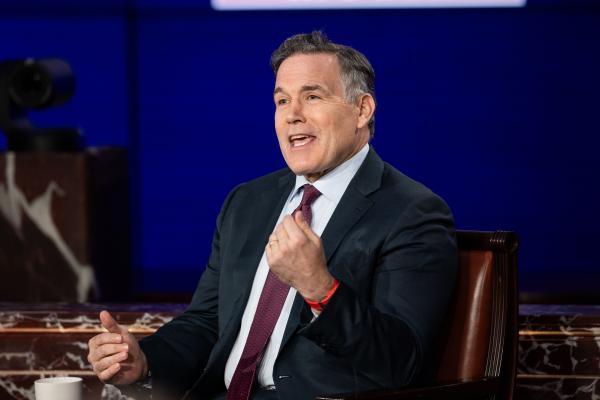
Join Senator Dave McCormick (R-PA), who recently visited Japan and Korea, and Distinguished Fellow Mike Gallagher for a fireside discussion on United States–China relations, the role of allies and partners in America’s Indo-Pacific strategy, and how the US can harness technology, industrial capacity, and allied strength to prevail in the defining strategic competition of our time.