Caption
US sailors conduct routine maintenance on a jet blast deflector on the flight deck of the Nimitz-class aircraft carrier USS Nimitz on July 9, 2025. (US Navy)


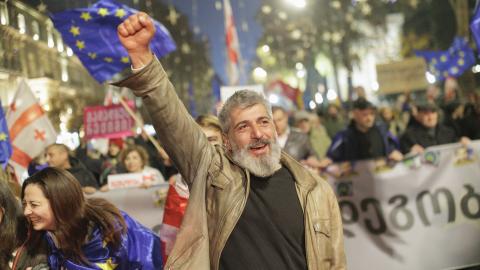
Not too long ago, Georgia was one of the United States’ most dependable strategic partners in the Black Sea region. Its commitment to Euro-Atlantic integration, substantial contributions to US-led missions in Iraq and Afghanistan, and cooperation on counterterrorism and energy transit made Georgia central to Washington’s regional strategy.
Today, however, Georgia is moving in a different direction. Led by the Georgian Dream party, the government has become more authoritarian while aligning more closely with US adversaries, particularly the Islamic Republic of Iran. In the aftermath of Operation Epic Fury, growing ties between Tbilisi and Tehran should be of particular concern to US policymakers. This activity directly threatens US national security interests in the South Caucasus, undermines Western influence, and strengthens a regime committed to exporting the ideology of the 1979 Islamic Revolution.
Join Hudson Institute for an event examining Iran’s expanding influence in Georgia and what it means for US interests in the region.
Listen on Spotify and Apple Podcasts.
Transcript
This transcription is automatically generated and edited lightly for accuracy. Please excuse any errors.
John P. Walters:
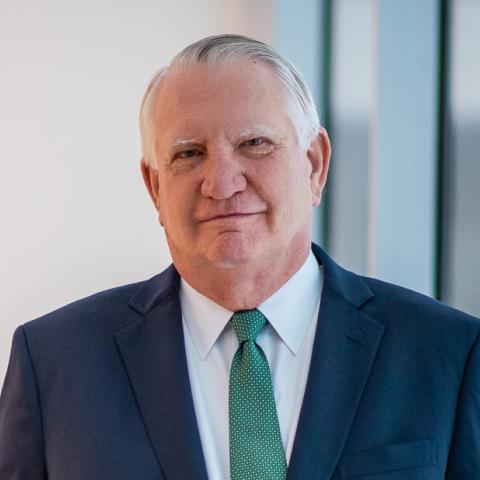
Welcome ladies and gentlemen to Hudson Institute. I’m John Walters, President and CEO. I want to thank all of you joining us here in the room and those that are joining us virtually online for being here for this discussion. I’m going to introduce Congressman Joe Wilson of South Carolina. There’ll be a panel subsequently after his remarks. We have copies of this report. Georgia’s Iranian turn available for those who want it. And for those who are joining us virtually, you can download it online, the Hudson website.
I could not be happier to have Congressman Wilson here. I want to say a couple things about my admiration for him. Not so long ago, the country of Georgia, some you don’t know, located in the South Caucus, is one of America’s most dependable strategic partners in the Black Sea region. It showed strong desire for NATO membership and a willingness to support the United States in some of its toughest fights, including Iraq and Afghanistan.
A friend of mine was serving in Iraq in 2008 in Wasit Province, which abuts Iran and he served with the Georgian regiment that was there fighting with us. He sent my daughter a picture. He took a picture of the regiment and he sent my daughter a picture that looked like they were wishing her a happy birthday. That regiment was pulled out suddenly to go back and fight for their own country. They had been in the alliance with us while they were under threat and they had to go back and defend their own country.
Today, however, pressed by Vladimir Putin, Georgia is moving in a different direction than it was back then, further away from Euro-Atlantic communities and closer to Moscow’s orbit. Moreover, the revisionist Georgia has cultivated a relationship with the Islamic Republic of Iran. Iran used Georgia as a platform to spread the ideology of its 1979 revolution and in some cases to recruit Georgians to conduct operations that undermine the United States, its interests, and its allies. Many of the details of this dangerous trend can be found in this report I just held up compiled by my colleagues at Hudson and one of the speakers at today’s panel.
Congressman Wilson has been one of the most important members of Congress to draw attention to this authoritarian threat led by Russia, led by Iran, and pinching and subverting Georgia. As a member of the Foreign Affairs Committee, he keenly understands the importance of global engagement, strong allies and weakened adversaries. There is no better person to speak about the growing Georgia and Iranian access.
I’d also like to say, I mentioned my daughter earlier, you try to teach your children right from wrong and to encourage them to have the strength and understanding to follow what is right. In this town, unfortunately, it’s somewhat rare to have a man like Congressman Wilson who understands, has a moral compass, and has the amazing courage to follow that compass even when he suffers the slings and arrows of political life. I guess I say I could not be more honored to introduce Congressman Wilson and have him make remarks.
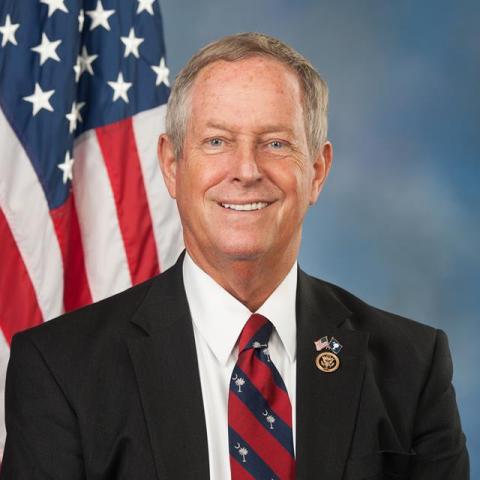
Congressman Joe Wilson:
Mr. President, and indeed friends of freedom who are here at the Hudson Institute, and friends of fair and free elections for the Republic of Georgia, I’m just so grateful to be here and I want to thank you for the opportunity to discuss how important it is the report that’s been received of Tehran’s influence on the current government, illegitimate government of Georgia. And what the Hudson Institute is special to me, our former governor, Governor Nikki Randhawa Haley, is one of your associates. And then my former colleague, Mike Gallagher, another superstar and what indication of how successful you are and how meaningful you are, the Hudson Institute promoting freedom around the world.
The mafia elect takeover of the Republic of Georgia by war criminal Putin’s fellow oligarch Ivanishvili has been devastating consequences for America, a strategic interest in the courageous people of Georgia who are vital and known to provide for stability, peace, and prosperity for the caucuses. The illegitimate Georgian Dream regime actually is coming from South Carolina. I understand something. Rigged elections in Georgia. Well, I’m talking about the rigged . . . We’re talking about the rigged elections in the Republic of Georgia. It can occur.
Okay. Keeping that in mind, these elections have indeed moved the Republican of Georgia away from being a partner of America, a very vital partner of America. And I’ve had four of my sons serve side by side with Georgian troops around the Middle East, Iraq, and Afghanistan. And you could always count on the Georgian troops. They were courageous, and what wonderful allies they should be for freedom and democracy in the world.
With that, we have always appreciated the work against the war criminal Putin to serve opposing the Chinese Communist Party and the regime in Tehran. And I’m grateful to be here to discuss Georgia’s drift sadly towards specifically the terrorist regime in Iran, which the illegitimate Georgian nightmare government continues to cozy up to and support.
For those who believe the US must work with the illegitimate Georgian Dream government, we should look honestly at Georgian Dream as it supports the terrorist regime of Tehran. In February 2026, the Georgian Dream foreign minister attended an Iranian embassy event celebrating the anniversary of the 1979 Iranian Revolution, which overturned the government to be replaced by a government that’s been at war and against Western civilization for 47 years, and now we’re recognizing that. Additionally, Tbilisi TV tower was illuminated in Iranian flag colors. I mean, how sick is that? A totalitarian dictatorship to be so honored.
Shortly after Operation Epic Fury began, and this is incredible too, a Georgian Dream government representative grotesquely and revealingly signed a condolence book at the Iranian Embassy mourning the dictator Khomeini and condemning American strikes on Iran, which were strikes against Iran having a nuclear bomb capability, but to mourn Khomeini in the very year that dictator Khomeini has killed 50,000 Iranian citizens, just it’s inconceivable, but how revealing the Georgian Dream government of their orientation.
Georgian Dream has helped Iran in the current war by allowing strategic Russian airlifters to transit its airspace on route two Iran, carrying supplies to help the Iranian regime and undermine President Trump who has been so successful in bringing other countries together. Who would ever imagine Armenia and Azerbaijan, President Aliyev and Prime Minister Pashinyan together in the Oval Office of the United States. Two former Soviet republics, that’s somewhat of an achievement. But what they’re doing is undermining the success in the caucuses.
Georgian Dream nightmare has also promoted Iranian charitable foundations, fostering loyalty to Iranian political theology and radicalizing Iran’s Shia community. Georgian state religious institutions have even welcomed the senior Iranian regime Ayatollahs who cheered, “Death to America.” Georgian nightmare has economically deepened ties with Iran leading to record trade of $322 million between the countries and slowly transforming Iran into a sanctions evasion hub. And this is in addition to the Chinese Communist Party assuming responsibility and taking control of the port on the Black Sea, which has other consequences to the countries of Central Asia where we have such an opportunity to be working with Turkmenistan, with Uzbekistan, with Kazakhstan. And the port that they’ve taken control is so critical for the rare earths and other exports that’d be coming from Central Asia to Western civilization.
Georgia’s strategic position on the board of Iran and the Russian Federation makes these pro Iranian activities even more dangerous and outrageous. And I’m really grateful in the House of Representatives that the MEGOBARI Act has been passed to impose sanctions on the illegitimate government of Georgia, Republic of Georgia. And you should be aware that the vote was terrific. Okay? It’s called 349-42. We would be really hard pressed to find any other vote in Congress today where 85 percent of the people agree, and the 85 percent of members of the US House of Representatives voted to sanction the illegitimate Georgian Dream government and called for fair and free elections. And so I’m very, very grateful for that.
Additionally, recently in the House Foreign Affairs Committee just last month, we passed an amendment prohibiting the recognition of the Georgian Dream government in Georgia as part of the State Department reauthorization.
And so over and over again, the American people stand with the people of Georgia, stand for fair and free elections. Hey, we want to resume the relationship the United States has had so warm with the people of Georgia. My visits to Tbilisi have just been so impressive, to see the people, to see how impressive and dynamic and courageous the people of Georgia are. And any way that we can back that up. And I want to thank again Hudson Institute for the vision of serving as every way to promote very and free elections in Georgia.
And also, I do have to put a tribute. I’ve been so impressed by President Salomé Zourabichvili. It’s her courage standing up for the people of Georgia over and over again. And so in every way, we truly believe God bless the Republic of Georgia. Thank you.
Matthew Boyse:
Okay. Okay. So, we’ll get started now. Thank you, Congressman, sir, for your . . . It’s reassuring and encouraging to know that there is such interest in Congress on this issue, not only in Georgia, but on all developments in the southern caucuses.
So now let’s drill down a bit more deeply into the developments in Georgia itself and into the report, which is outstanding and of course available in hard copy. Outside, it’s clearly very carefully researched and documented. It delivers a strong strategic message and is very relevant to the massive Iran problem. And it’s another reminder of how important Georgia is, the negative trends there in recent years, and the malign role that Iran plays everywhere and the need for the USG to focus more on that region.
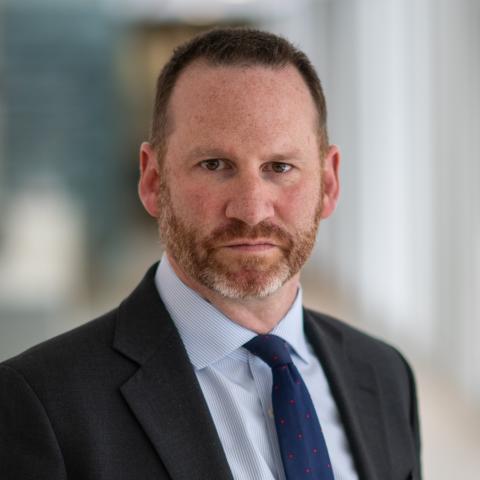
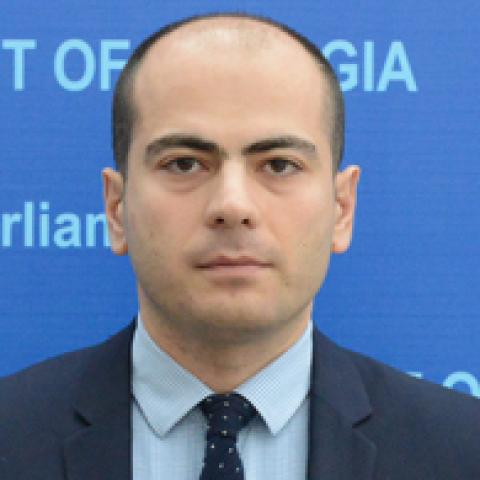
To help us make sense of these latest developments in Georgia, we have a terrific panel, a warm welcome to Ian McGinnity. McGinnity, an expert on the Southern Caucuses at the National Endowment for Democracy. A warm welcome also to Giorgi Kandelaki, not the famous Georgian Olympic boxer, but a former long-serving MP from Tbilisi who co-drafted the report with Hudson’s own Luke Coffey, senior fellow here at Center for Europe and Eurasia, who needs no introduction. Giorgi, by the way, also heads the Soviet Past Research Lab, a think tank in Tbilisi, which studies the Soviet totalitarian history. My name is Matt Boyse. I’m a senior fellow here at Hudson as well. Our panelists will open with a sort of three to five minutes of remarks each, after which we’ll move to the discussion and then there’ll be some time at the end for some Q&A.
So, Giorgi, you’re one of the . . . Take it away.
Giorgi Kandelaki:
Thank you. Thank you for this opportunity for hosting this event and of course interest in this topic. Many people have thought that Georgia slide away from the West and the United States, in particular it’s just about Russia. And the message of this report, one of the messages that I and Luke hope to put forth is that that is not the case, that this trajectory away from the civilized world has this Iranian dimension. That, for the last few years, the Islamic Republic of Iran has been able to find a comfortable environment in which it successfully built a formidable influence infrastructure, which consists of whole ecosystem of organizations that in this city or in other Western capitals are regarded as IRGC fronts that the IRGC uses for recruitment of individuals in various countries and then subsequently for operations against the United States in particular. This institute, well, entities—
Giorgi Kandelaki:
It’s in particular. This institute’s, well, entities include various, we call them fake Iranian NGOs, for example, Ahl Al-Bayt World Assembly that is also regarded as an IRGC front used for spotting or recruitment of students. It includes several charity foundations that are presenting themselves as charity foundations, but also have a similar reputation. It includes several religious organizations, and on top of all that, it includes a university. It’s called Al-Mustafa University that is sanctioned by both US and Canada for links with terrorism, for being used as a recruitment platform for the IRGC. And for you to understand what kind of organization it is, the Al-Mustafa University has three campuses in Georgia, and back in Iran, it’s a serious enterprise. Its annual budget is $100 million. It has got in its hierarchy officials that are on Interpol Red Notice. For example, one of such officials' names is Mohsen Rabbani, who is on Interpol Red Notice for masterminding an explosion of an Israeli embassy facility in Argentina and killing 88 people.
Recently, another official of this university has been exposed for masterminding an attempted murder of an Israeli ambassador in Mexico. So it’s these kind of people and this institution, the Al-Mustafa University has three campuses in Georgia. It holds events, conferences, alumni conferences. Officials of this university come to Georgia all the time. There are reverse delegations from Georgia. There is a flow of students from Georgia to come where the HQ of this university is. But also what I want to stress is that this dynamic of the surge in the scale of this influence and infrastructure has taken place in parallel and simultaneously with the persecution of the pro-Western players in our society.
And this is one of the points we start the report with. Georgia has had a reputation of being a committed, reliable US ally over the years throughout different governments, different administrations. And we actually mention at the beginning of the report a case in 2009, a well-known Iranian high-level arms dealer was arrested by Georgia and extradited to US And so we went from there, from that to this situation in which Georgia embraces Iranian influence infrastructure, which is used . . . And we have confirmed cases of this infrastructure being used for recruitment of individuals for operations against US One case is cited in the report. That’s the attempted murder of an eminent Iranian journalist in the United States, Masih Alinejad, who recently spoke in UN Security Council. Just before the operation against Iran started, she said, “I saw this assassin sent to kill me by Khamenei at my doorstep in Brooklyn.” So that assassin is from Dmanisi and is a Georgian citizen, but several other cases got published.
Luke Coffey:
He’s now in prison—
Giorgi Kandelaki:
He’s now in prison.
Luke Coffey:
. . . in the United States.
Giorgi Kandelaki:
He was convicted and is in New York prison. There were a few other cases that were confirmed after the report was actually published. Two Georgian citizens were arrested in Greece and charged by the Greek counterintelligence for spying on US naval assets. There are many other examples of this bad stuff, but the point we want to make is this is bad. This is very bad, and of course, it’s against Georgia’s own interest. This is something Georgian people do not like, but it’s clearly bad for the US national security interests, and there we have the convergence of interest for this trajectory to be reversed.
Again, this takes place in parallel. For example, Al-Mustafa University is flourishing while the Georgian government is cracking down on, as I said, various parts of the Georgian society, pro-American parts of the Georgian society, would it be civil society opposition, but also recently academia. For example, we have this cataclysmic higher education so-called reform in which Georgia’s most reputable public university, Ilia State University, is being cut by 97 percent in higher strength Georgian University International while Al-Mustafa University has three campuses and is flourishing.
Well, and a skeptic would say, “It doesn’t have accreditation, so Georgia doesn’t recognize the diploma.” Okay, but so what? It exists, and it thrives. Similarly there, civil society. So we have the repressive legislation, Russia-inspired legislation. If you get a grant from a reputable US foundation, for example, with audit and everything and international standards, by the laws that are in place, that’s six years in jail. Whereas the fake Iranian NGOs that are regarded, and rightly so, for being IRGC fronts are flourishing. I mean, it’s not like Iranian government has a grant program and you apply on their website and there is an audit, but they have their schemes. Some of these schemes are described in our report, but at the end of the day, these fake NGOs thrive while the Georgian civil society is in tatters. So that’s the context that perhaps I wanted to draw as an opener—
Matthew Boyse:
Before we go to Luke, though, can I just follow up? This is all attributable to the Georgia Dream period or these NGOs and these universities, did any of them begin during the pre-Georgian Dream period, or the trend line is substantially up? Or could you just talk about that just briefly?
Giorgi Kandelaki:
Sure. Some of these entities did exist for sure before, but the scale and the influence is not comparable. Some of them got sanctioned and became significant internationally later too. For example, Al-Mustafa University was sanctioned by the US Treasury in 2020 during Trump’s first administration.
Matthew Boyse:
There’ll be a lot more to talk about. Luke?
Luke Coffey:
Thanks. Thanks, Matt, for moderating this discussion. Before I dive in, on my take of the situation, I just want to share a quick personal story about how I met my brilliant, intelligent co-author, Giorgi. Giorgi is perhaps my first Georgian friend. Many don’t know this. But during 2008, during Russia’s invasion, I was a young staffer working not in Congress, but in the House of Commons. And I had this guy call up the member of parliament’s office, emailing, “I want to tell you about Georgia,” because my boss at the time was the shadow defense secretary and the election was on the horizon, and you very wisely thought we should try to influence the thinking now of the Conservative Party on this issue. And he reaches out and he was a grad student at the time at UCL, I think. And that’s how we started our friendship.
And I’ve always been concerned by Georgia’s recent shift towards Moscow’s orbit, but also I was recognizing other challenges too in the relationship with China, also with Iran. And I was speaking to a number of my Georgian friends and colleagues and one of them being Giorgi. And I said, “Hey, there’s almost no awareness in Washington about what is going on between Tehran and Tbilisi and what Iran is doing there. And I think this warrants a wider discussion, more awareness.” And that’s how we started the report and we worked hard on this report for several months, and just coincidentally, it was ready for publication around the time that the recent war with Iran started. So, it all converged and it became a topic of great interest, certainly in Georgia. Giorgi knows about that personally, but I think it has done a lot to advance the understanding and knowledge of what Iran is doing in Georgia today and how it impacts the United States.
I guess in simple terms, Iran is motivated by its desire to continue spreading its Islamic revolution from 1979. As enshrined in its constitution, it has an obligation to spread this revolution across certainly the Shia Muslim world. And they have a Shia Muslim population in Georgia that isn’t as fully integrated into society as they probably should be, and this is ripe picking for a group like the IRGC. This report is very detailed, and we give countless examples, but I want to reiterate and focus on one point that was mentioned by Giorgi and that’s the Al-Mustafa University. This was sanctioned under the first Trump administration. So, the fact that it still operates six or seven years later and Trump is now back in office, I think it’s quite telling that the Georgian Dream government isn’t taking this matter seriously.
If you go back to the original press release from the Department of Treasury on the sanctioning of Al-Mustafa, it says that, “It enables the IRGC intelligence operations by allowing its student body, which includes large numbers of foreign and American students, to serve as an international recruitment network.” It goes on to say that Al-Mustafa University was sanctioned, quote, “For having materially assisted, sponsored or provided financial, material or technological support for, or goods or services to, or in support of the IRGC Quds forces.” I mean, it doesn’t get clearer than that and you can go to Instagram and see where this university is holding events, ceremonies, everything else in Georgia. I think that is ridiculous.
So, what can the Georgian Dream do? What should the United States expect this government to do? Firstly, it needs to show that it wants to be America’s partner. I think the ball is very much in the Georgian Dream’s court right now, and they have this idea that they are the populist, the MAGA of Georgia, and nothing could be further from the truth. In fact, by allowing Iran to do what it is doing in Georgia today puts it completely at odds with President Trump’s worldview and America first policy. So the first thing they need to do is demonstrate, maybe just through quick wins through symbolism, that they’re serious about cracking down on this Iranian threat. You don’t have to go to the Iranian embassy to sign a condolence book. No one would miss you if you didn’t go there, but yet they choose to do stuff like this. When Iranian drones hit your-
Giorgi Kandelaki:
And did not attend the July 4 reception at the US embassy, for example.
Luke Coffey:
And the symbolism matters. When an Iranian drone strike wounds civilians in your neighbor, in this case Azerbaijan, and you release a statement condemning the drone strikes, mention that they came from the Islamic Republic of Iran. If you go to the foreign office press release in English, you can’t find the word Iran anywhere. It’s like the drones came from Mars or something. So the symbolism matters and that’s the quick way that the Georgian Dream can start sending the right signals to the Trump administration that it’s going to take this stuff seriously. But then I think we need to have a more visible crackdown on some of these networks that exist that are outlined in the report that Giorgi just mentioned, beyond symbolism, but in-practice, on-the-ground impact rolling up some of these networks, because this is not in America’s interests and it’s not in Georgia’s interests as well.
But I’ll tell you what is not the solution to Georgia’s problem. What is not the solution to Georgia’s problem is taking one of the authors of the report, bringing them in I think on a Sunday morning and interrogating them and threatening them with charges because, in chapter and verse with dozens of citations, publicly available information, you can see what Iran is doing in Georgia. Cracking down on authors doing research that are trying to highlight a problem is not the solution. So, I am a longtime supporter, lover, watcher of Georgia. I love the Georgian people, the culture, the food, the history. I wish I could say I love the language, but I’m not linguistically talented enough to make any claim to that. And it saddens me. It really saddens me to see the way Georgia has turned. And Georgia, in some form or another, has been on this earth for over 2,000 years. So, I’m not ready to throw away this good US-Georgia bilateral relationship that we’ve had since the ‘90s for just 10 or 12 or so really rough years with the Georgian Dream.
I know that the US-Georgia relationship will get back on track. The Georgian people will have their say. The Georgian Dream government won’t be around forever, and I look forward to when that time comes. But in the meantime, the Georgian Dream needs to be on notice that, of all US presidential administrations, this one is not going to tolerate the IRGC recruiting and running wild in their country. Thanks.
Matthew Boyse:
Ian, your intro statement.
Ian McGinnity:
Thank you very much. Well, first I just wanted to say thank you to Congressman Wilson for his leadership on this issue. It’s been hugely impactful. Thank you. Also, thank you to Hudson for such great cooperation and a great report, Luke and Giorgi. So Giorgi mentioned earlier, this contrast between these thriving Iranian networks in Georgia and the crackdown on civil society. And so, I want to drill down into that a little bit more.
So, I think I don’t need to do much scene setting. If you’re in this room, you probably understand the raft of repressive legislation that’s been passed by Georgian Dream over the past few years.
So, around this time last year we had the grants law and other forms of repressive legislation, the elevating of administrative charges to criminal charges for protestors. But before that we had the, so called foreign agents law. And in 2024, the Georgian Dream sent a parliamentary delegation here to Washington, and we met with them. And their explanation for the foreign agents law, so-called foreign agents law, was that it really was not about targeting US partners.
It was actually about going after Wahhabi and Iranian networks in Georgia. We were a little skeptical, to say the least, but regardless, we all know now that is not how it’s played out. While the IRGC cronies are flushed with cash, operating with impunity, recruiting Georgians for acts of international terrorism against the US and our allies, Civil Society, the political opposition, and media have been subsequently fined with egregious fines. They’ve been beaten on the streets. They’ve experienced pressure in many different forms, and they’ve been jailed.
By some metrics, I know the numbers shifts frequently, but by some metrics, Georgia has more political prisoners now per capita than Russia does. And that’s a very recent development, that’s within the past couple years here. And from those who were imprisoned during the initial crackdown, even the not super independent human rights ombudsman calculated that approximately two thirds of those who were imprisoned were systematically tortured as well.
This crackdown on civil society and the impunity with which the IRGC cronies operate, this is not an accident. This is not just the vicissitudes of fate. This is on purpose, this is Georgian Dream policy. And I think there is a question right now about US re-engagement with Georgia, and I expect we’ll know a little bit more about that in the near future, but I think it’s worth considering, if this administration is going to reengage, the history of duplicitousness with which Georgian Dream has treated the US as an ally or as a partner.
If you look at the past several years, Georgian Dream has spent tens and tens of millions of dollars feeding into their propaganda machines with anti-US narratives, false narratives. I think their argument now is that, well, this was simply during the Biden Administration, and things are different now. And I do think we’ve noticed in some of their external messaging, where they know we’ll be watching, the rhetoric has decreased.
However, in their internal messaging to their constituents, to Georgians, that rhetoric continues, and it’s continued well into this Trump Administration. And even this morning, we caught one of Georgian Dream’s top propagandists effectively undermining the US credibility, and I won’t go into specifics, but gravely insulting this current administration. It’s always baffling to me that they think we don’t know what they’re saying to Georgians. We do. So, as the US questions whether or not to re-engage, I think it is worthwhile to think about what US interests in Georgia look like now.
Historically, it’s been primarily based around intelligence cooperation on anti-terrorism. With everything we know now about Iranian influence in Georgia, how valid is this argument? How much do we trust intelligence cooperation when they are helping the Iranians flourish in Georgia?
Last thing I’ll mention is just about TRIPP, Trump Route for International Peace and Prosperity, which is a great initiative to effectuate peace between Armenia and Azerbaijan through commerce. It’s a bit of a reductive way to put it, but more or less, as well as leveling the playing field for US businesses in Georgia. Well, to do so, you need less of oligarchic influence. You need stronger rule of law and you need stability. And I think if you look at not only their cooperation with the Iranians, but the general state of democracy and rule of law in Georgia now, there are a lot of question marks there. I’ll stop.
Matthew Boyse:
Okay. So maybe what we’ll do is we’ll go one round of questions for our panelists, and then we’ll go to Q&A. So Giorgi, when we think about Georgia, we usually think about this in a Russian context, but then there’s also the Chinese dimension. And now there’s, of course, the Iranian dimension, which hasn’t been as widely known. So, how does the malign influence that each of these powers play in Georgia? Is there any intersection? How do they play off each other? Are there any synergies? Are they cooperating? Are they complementary, competitive, or mutually reinforcing? How would you describe the malign influence that each of these powers play, if there is any kind of nexus?
Giorgi Kandelaki:
Sure. That’s a great question. Their influences are complimentary, particularly one can say the Russian and Iranian influences, because Russia and Iran generally cooperate. They have a great track record of cooperation against the United States in particular. And in Georgia, we too have symptoms of that cooperation. For example, one sort of the dimension of this influencing infrastructure I did not mention but is extensively covered in our report is the pro-Iranian media organizations that are focused on our ethnic Azerbaijani minority.
But nevertheless, we have documented that some of these media organizations have extensively covered the Russian invasion of Ukraine on Russian terms, let’s say. And explicitly they’ve exercised editorial policies which would avoid the mentioning of the word war, for example, quoting Vladimir Putin very extensively and presenting increasingly Russian version of things. And at the end of the day, the context is simple. The strategic objective both of them share is to squeeze out US influence from that region.
That’s a noble, from their perspective, objective. And we have a lot of footprints all over the place of that cooperation, let’s say.
Matthew Boyse:
Okay. Luke, we’ve been talking about this. Both the United States and the EU, for example, have downgraded their relationship with Georgia, which is not surprising given some of the developments in the country over the last 10-ish years. But the question is that the right approach? I mean, when I worked front office of the State Department during Trump one, we didn’t give up on countries that were going in the wrong direction, but we instead we engage. We called it competing for positive influence. Now there are some strong reasons for reducing your engagement with a government like this, but then there are also other ways of going about this.
Should there be a return to the Trump one approach? Should the current approach be pursued? Should there be more naming and shaming, more difficult conversations behind closed doors? I mean, how could this be, this line be—
Luke Coffey:
I don’t think we could go back to the Trump one approach because the Georgia we’re dealing with today is just so much different from the Trump one approach. And I think right now the Trump administration has pursued the right policy, all things considered. The strategic agreement that was suspended by the Biden Administration between the US and Georgia remains suspended for the time being. We know that the State Department is working on a way to address the situation in Georgia, and this is an ongoing policy discussion taking place at State.
I think being very deliberate and cautious, and engaging with your eyes open, is the best way forward. Engaging where we can with civil society, I think, is important, because the Georgian people remain staunchly and largely pro-US, pro-Euro-Atlantic, engage on pragmatic issues where we can or we have to with the government, but we should make it clear that . . . Well, we know that this is a very transactional administration and they’re not going to be giving away things for free.
So, I think the US needs to be very clear on what we expect from the Georgian Dream government and then make sure that they follow through before we can really get that relationship back on track. And make no mistake about it. What Iran is doing in Georgia has a big impact on US national security, for a number of reasons.
Firstly, Iran’s involvement in Georgia expands its reach and depth into the South Caucuses, which is a region that’s becoming increasingly important, not only for Europe accessing alternative energies other than Russia, from the Caspian region and Central Asia, but also for strategic priorities of this administration, like the TRIPP, Trump Route for International Peace and Prosperity, whoever came up with that name probably got a promotion, but the TRIPP. And this is a priority for the administration. And you think Iran wants a Trump Route for International Peace and Prosperity, will literally be going along its border with Armenia and Iran?
Do you think Russia wants this? Absolutely not. So, what’s a way to make problems? Turn up heat elsewhere in the caucuses, and in this case, Georgia. It’s possible looking at what Georgia has done with Russia evading sanctions. The Iranians could be leaning on Georgia to assist in sanctions evasion and that sort of thing.
The IRGC presence on the ground in Georgia helps to normalize and socialize anti-American sentiment. Just one example of many, go to page 33 in the report, and you’ll see this crazy poster being carried on the streets in Georgia of President Trump with blood on his hands and with children all wounded-
Giorgi Kandelaki:
Stop killing children.
Luke Coffey:
Stop killing children. Such an anti-American message like that several years ago would have been unheard of in Georgia. This doesn’t help with US interests. And then it creates a fertile ground for intelligence recruitment, as we alluded to with the Al-Mustafa University is just one example, but why does this matter in the context of Georgia?
Well, Georgian citizens can travel more easily to the United States. They can travel more easily in the Schengen zone in Europe. This is why the Iranians are targeting these ethnic Azerbaijani Georgian citizens. And on the issue of the ethnicity here, Azerbaijanis, I meet with a lot of officials, and I speak privately to a lot of officials; they’re worried about what’s happening amongst the ethnic Azerbaijani population inside Georgia.
They don’t allow Al-Mustafa University to operate on their territory. They have very strict border controls on the land border with Georgia and Azerbaijan.
So this is a big concern, and I think that we have to address the situation very cautiously with the Georgian Dream, and I think perhaps a lot of things should be done privately, but we should also, I think at this point, make very publicly what we expect, so there’s no doubt amongst the Georgian people or the American public.
Matthew Boyse:
Ian, just as an expert on Georgian internal domestic politics, et cetera. There have been, what is it now, 565 consecutive days of protests, if my arithmetic is right, every day, which is a record in the world in terms of number of consecutive protests. There’s an enormous amount of pro-Western sentiment. Georgians want to be part of the global West, but there’s a regime that is going in a different direction. Is there any prospect for change at all? I mean, how does that look in terms of what circumstances could there be that might lead to a different course domestically?
Ian McGinnity:
Yeah, that’s a really good question and a really tough one, so thanks for that. So, okay, first of all, if you’re looking at Georgia in a vacuum, what opportunity is there for change with GD and the current composition of the political opposition? I mean, I think I would be very pessimistic for any chances of change.
We saw truly massive protests and not just Belsi-based, but all around Georgia, after GD walked back the EU session agreement. And I think the dissatisfaction among the Georgian populace with walking away from the EU, as well as frankly with high inflation, low economic opportunities, low wages, that still exists, but I think there is kind of not really a question right now within the political opposition or activists that some sort of change will come from street action. I think the protests are an important symbol at this point, but they do not serve to kind of, I think . . .
Ian McGinnity:
But they do not serve to, I think, enact change. Now, with a potential US engagement, as Luke was talking about, I think conditions for re-engagement have to involve a more liberalized domestic situation where the political opposition is not criminalized, where there’s electoral participation in political pluralism. And again, even if this administration demands that of Georgian Dream to liberalize in that way, I’m pretty skeptical that GD would be able to comply with that, or would want to.
Matthew Boyse:
Drew, I don’t want to end on a pessimistic note here, but we do have to, maybe looking at the clock, we do have to open the floor for Q&A, unless we want to do one more round. Are there questions, comments from the . . . John?
John P. Walters:
Thanks. You’ve talked about, and we’ve looked at the Russian influence on putting in a government which has reversed course on the progress that was being made, and allowing now an opening with Iran. Could you speculate, I know this is speculation, on what happens in Georgia if Russia gets stronger, and what happens in Georgia if Putin and his regime get weaker for Georgia? Is Russia the precondition for conditions improving in Georgia, or can Georgia push independently to change its own future?
Luke Coffey:
The Georgian former politician to the . . .
Giorgi Kandelaki:
That’s a great question. I think due to convergence of certain developments, it happens so that right now, US leverage over Georgia is at its maximum. It has not been at that level for quite some time. There are several reasons for that. The international isolation of Georgian Dream is one, and that really hurts, but also the fact that the United States used force in the broader region made it clear that the United States is back. Because prior to that, you had years of perception of US disengagement from the region, so that produced different optics with which Georgian Dream certainly recons, and that’s one, not the only, but one reason for their concerted effort and their enormous investment of effort to somehow figure out some kind of reset with the United States. In fact, we have every reason to believe that they are desperate for anything from the administration, for a handshake, for the optics of even the low-level meetings they’re presenting to the Georgian public as a full-scale reset, which is not the case right now of course.
So, I think that presents enormous opportunity to the United States, and perhaps it’s important for some people to have a full realization, a full appreciation of this significant leverage that exists right now in this town, and for the great potential that the timely exercise of this leverage can present.
Also on the Russian side, so that I don’t ignore this part of your question, luckily, we have a different dynamic right now on the battlefield, also in Russia with the long-range Ukrainian strikes, and so this perception of weakened Russia will hopefully also trickle down. It’s for the Georgian society, of course, to reverse this course, but appreciation of this circumstances by our friends is very important.
Matthew Boyse:
Lauren?
Audience Member Lauren Williamson:
Hi, Lauren Williamson. I’m with the Alexander Hamilton Society. It seems to me like we have to make the first move, and I’m wondering what incentives we can use to dissuade Georgian Dream from continuing to quarter on while being mindful of sanctions, and then what soft power incentives or tools that we can use to both encourage the opposition, and especially young people, while de-centering the current anti-US propaganda.
Matthew Boyse:
Anyone who’d like to take that?
Luke Coffey:
Yeah. Well, firstly, huge fan of the Alexander Hamilton Society, so it’s great to see you here. Thanks for coming. Yeah, I guess I still think the balls in Georgia’s court, the Georgia Dream Court, because they need to reach out and show to the Trump administration that they want to get the relationship back on track in a meaningful way. But also, I agree with you in that we need to be very clear with what we’re expecting and what the standards are. What do we consider success? What do we consider movement in the right direction? It’s not an artificially intelligence generated picture of a Trump Tower in Tbilisi. That’s not going to cut it. It needs to be something more substantial, obviously.
So we have to be clear. We should consider the possibility of expanding sanctions where applicable. Just last week, or maybe it was earlier this week, but recently, some US Special Forces did some military training with Georgia. I think we should revisit this sort of engagement. So we’re definitely not doing the same amount on the military to military level that we were in the past, but why should the Georgian Dream government be rewarded with the presence of US special forces for training or whatever, but yet the Georgian dream government allows Iran to do what it’s doing inside Georgia? To me, it just doesn’t make sense, and it completely bucks the trend of what . . . Now I’m straying. I’m doing a President Trump weave. I’m going to get back.
What Georgian Dream is doing bucks the trend in the South Caucasus. You have President Zelenskyy visiting Azerbaijan, visiting Armenia whose airspace is effectively controlled by the Russian Federation. You have Armenia and Azerbaijan sitting down and working out normalization and trip, but yet you still have Georgia focused on, well, I’m going to sign condolence books in the Iranian embassy and have the Iranian flag colors hoisted on the famous television tower, or illumination of the colors of the Iranian flag over Tbilisi. So I think we need to be clear. I think the ball’s in their court to make the changes, but perhaps you’re right, it’s in our court that we need to be clear on what we’re expecting.
Audience Member Sertaç Korkmaz:
Sertaç Korkmaz, former specialist in Turkish presidency. Regarding threats and the competition in the entire caucuses, the Iranian threat is not only the one single threat, also Russian influence. Anyway, it continues, but the other side of the Middle Corridor is China, and their investments in the whole corridor, and especially in Anaklia Port, it’s becoming significant. So, what would you like to say regarding the US-China competition in the international level, the future of the Middle Corridor, and how it will affect?
Luke Coffey:
Hoshkeldiness?
One of the attractions of the Middle Corridor is the fact that in many of the key parts of it, you’ve had less Chinese involvement than in other transit corridors around Eurasia or around the globe for that matter, especially at the hinge point in Azerbaijan where I think the Azerbaijanis take this pragmatic view that, “Well, if China, like any other country, wants to use our territory to transit, they can,” but they’re not funding the new port at Alat, they’re not funding key pipeline projects, so they keep it very much in house, and this is a choke point on the map that really physically keeps China out of the game.
Now one area that’s of concern, I know this is about Iran today and not China, but potential Chinese involvement at the proposed deep water port at Anaklia is of concern, certainly so, but the Middle Corridor is going to become . . . Well, it’s not going to become increasingly important. The Middle Corridor is important, and we saw this with the recent air strikes on Iran where commercial flights had to divert away from their more traditional routes through the South Caucasus, where you have a more reliance from Europe now on oil and gas coming from the Caspian region going through the South Caucasus, including Georgia, including Türkiye.
This matters, and Georgia is a key part of this Middle Corridor, and we have to make sure that Iranian influence or Russian influence for that matter doesn’t destabilize this Middle Corridor, because right now, this Middle Corridor is the only transit region on the Eurasian landmass that you can use to bypass both Iranian and Russian territory. So we’re physically bypassing Russia and Iranian territory. We need to make sure that we’re also blocking Iranian and Russian influence, malign influence along this corridor as well, and Georgia plays an important role in that.
Matthew Boyse:
One last question. Ma’am?
Audience member:
Hello panelist. I’m an intern at the Hudson Institute. My question is regarding the Iranian illicit financing and the shadow banking system that Iran runs in the region, and how do you think that the United States could counter that symbiotic nexus and the shadow banking system in that region? How effectively can the United States counter that?
Luke Coffey:
Very good question from Hudson intern, and I promise I didn’t place that with her.
Giorgi Kandelaki:
Yeah. Some of these practices are used to fund this whole enterprise. These entities, they’ve got buildings, employees. When you study in these educational establishments, you get paid. It’s not that the students pay. They get paid and food is provided, board is provided, and they give them scholarships and so forth, and so it costs a lot of money. That’s a lot of millions of dollars. They like dollars a lot. It’s always dollar cash of US currency to spread what, by the way, I forgot to mention, and you mentioned the attitude of Azerbaijan to what’s happening in this regard in Georgia, and there are a few reports in the Azerbaijani press which describe this tendency as poisoning of ethnic Azerbaijanis in Georgia with Hezbollah ideology. We didn’t mention Hezbollah, but Hezbollah is a word.
To mention by the way, the late Hassan Nasrallah was on the board of this Haliburt organization, so it’s directly related. And one of the symptoms of this whole dynamic has been eulogization of figures like Nasrallah or like Qasem Soleimani. People running around with Hassan Nasrallah t-shirts, that has never happened in Georgia before.
Now, many of these schemes are known, and they could be cracked down upon. In fact, we cite a couple of instances, I think one in 2019 when the Hawalas were closed, some cash was seized. It coincides time-wise with a visit of the then national security advisor in Trump’s first administration, John Bolton, but we haven’t heard of any such crackdowns ever since, whereas it is clear that the scope of this influence operation expanded ever since. So I think that provides circumstantial evidence that something is not right there and there is a room for improvement, to say the least.
Matthew Boyse:
Well, we’re already overtime now, so maybe should we wind up, and thank you all for your remarks and thank you all for coming.
Luke Coffey:
Thank you.
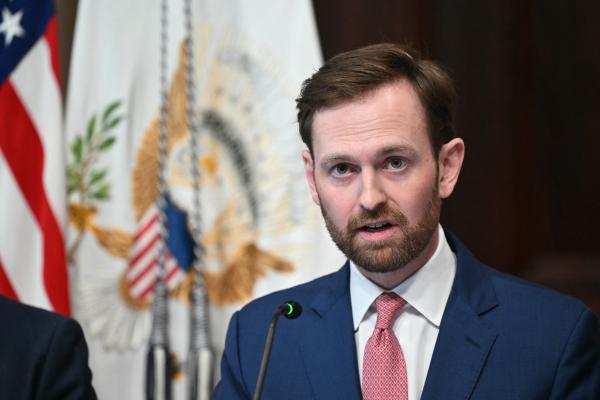
Join Hudson Institute for a discussion with Federal Trade Commission Chairman Andrew Ferguson and Senior Fellow Harold Furchtgott-Roth.
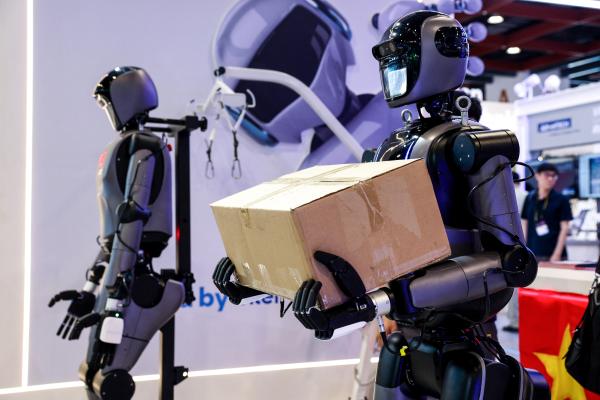
Join Hudson Institute for remarks and a panel discussion on how the US, Japan, and Taiwan can collaborate to seize Physical AI’s opportunities.

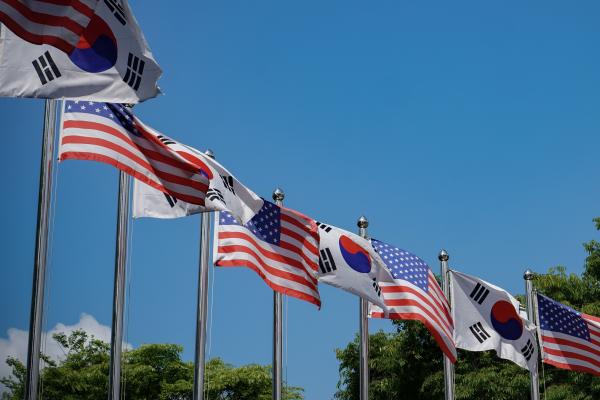
Join Hudson Institute Asia-Pacific Security Chair Patrick M. Cronin for an expert panel featuring Lieutenant General (Ret.)In-bum Chun, Dr. Mira Rapp-Hooper, and Ankit Panda.
This forum will bring together American and Czech officials, defense experts, and industry leaders in Washington, DC.