












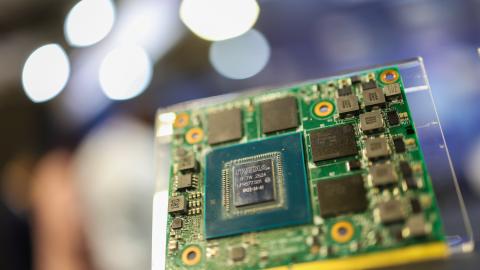
Neil Chilson’s op-ed (“AI Overwatch Act Would Help China,” May 27) makes two arguments in opposition to restricting high-end chip exports to China. First, these restrictions will make American companies less competitive globally, and second, the U.S. could lose in the artificial-intelligence race with China. Both arguments rest on a faulty premise that no meaningful trade-offs exist between national security and economic engagement with adversaries.
Export controls don’t seem to be materially harming Nvidia. In February, CEO Jensen Huang boasted that “computing demand is growing exponentially.” He called the company’s Blackwell chips “the king of inference today,” and predicted that the next line, Vera Rubin, would “extend that leadership even further.”