













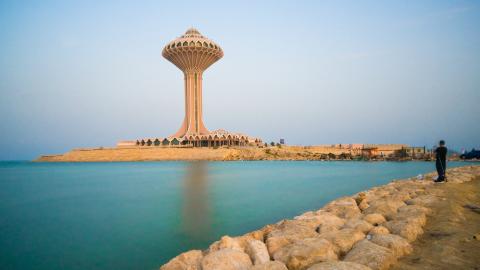
As the war with Iran evolves, a critical and underappreciated vulnerability is the Gulf’s dependence on desalinated water. In his latest report, Can Kasapoğlu warns that Tehran could exploit that weakness to coerce regional states and complicate US efforts to contain the conflict.
Energy Warfare and The Expansion of the Gulf Battlespace
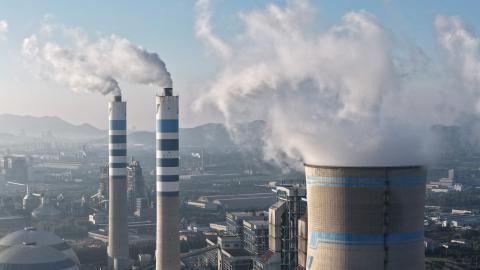
On March 18, the Israel Defense Forces struck upstream energy production facilities at Iran’s South Pars gas field. South Pars is not a peripheral asset—it sits at the core of Iran’s energy system and is the world’s largest natural gas field. It underpins roughly three-quarters of Iran’s domestic output.
Damage on this scale directly affects electricity generation and industrial output. It also undermines regime stability. In Iran, energy shortages are not technical issues; they are leverage points. In effect, the Epic Fury–Roaring Lion campaign is introducing a new dimension of political warfare. The focus is no longer solely on degrading the Islamic Revolutionary Guards Corps’ (IRGC) military capabilities. Instead, the campaign is now shifting toward shaping internal conditions within Iran—applying sustained pressure on the regime’s ability to provide services, govern, and uphold its already weakened social contract with a population under immense strain. Over the past twenty days without internet, for example, Iranian society has experienced Orwellian isolation from the rest of the world.
Tehran’s response expanded the scope of the conflict. Iranian drones and missiles struck energy infrastructure across the Gulf, including facilities connected to Qatar’s North Field—the geological twin of South Pars and a key global liquid natural gas (LNG) hub. The conflict escalated beyond bilateral exchanges. Iranian retaliation has grimly introduced systemic risk into an already unstable Middle East threat environment.
In the meantime, the United States Central Command conducted strikes against hardened Iranian anti-ship missile positions along the Strait of Hormuz. These strikes can either reflect the American effort to reopen the critical chokepoint for good or, in a low-probability and high-impact scenario, the prelude of an amphibious assault on the Kharg Island, particularly given recent American strikes on the military targets on the island. Kharg looms large as the nerve center of Iran’s economy and a hub of almost 90 percent of the country’s oil exports.
Energy markets responded swiftly to the chain of escalatory trends. Prices increased as upstream production and LNG infrastructure came under pressure. However, a more significant development underpins market volatility: water may shape the next phase of the conflict.
Marking the Hydro-Strategic Threat in the Gulf
When the political and military elite of the Islamic Republic assessed their strategic options after the United States and Israel began Operations Epic Fury and Roaring Lion, they calculated what few analysts anticipated: that the path to fracturing the coalition arrayed against Tehran ran not through Israel but through the Gulf Arab states. The IRGC, the regime’s praetorian deterrent, know they cannot defeat the American-led coalition militarily. Instead, they seek to raise the economic and diplomatic costs of the war sufficiently to break President Donald Trump’s will to continue waging it.
Iran has aimed almost half its long-range strikes at the United Arab Emirates. It hopes to weaken the resilience of America’s Gulf Arab allies. The Islamic Republic’s military strategy is designed to make a sustained US war effort politically unsustainable in Washington.
To achieve this, Iranian missile and drone forces might target a resource that is scarce and crucial in the Gulf Arab region: water. Iran has tried to close the Strait of Hormuz and struck oil and gas sites throughout the area. Oil markets dominate the strategic picture for now. Yet the vulnerability of desalination infrastructure is a different category of risk. Energy disruptions primarily trigger economic consequences by raising prices and constraining supply. Water disruption, by contrast, directly threatens daily survival in some of the world's most water-scarce states.
Desalination is the Gulf Arab nations’ primary way of providing drinkable water to their people. About 90 percent of Kuwait’s drinking water comes from desalination, as does 86 percent of Oman’s and around 70 percent of Saudi Arabia’s. As a result, any postwar settlement that ignores Iran’s ability to threaten the desalination infrastructure that allows the Gulf Arab nations to function leaves the region exposed to continued Iranian blackmail. From the Guards’ perspective, this asymmetry makes water infrastructure an attractive coercive lever even if oil remains the region’s most globally visible strategic commodity.
US intelligence agencies raised a red flag on this danger long before the current war began. A declassified Central Intelligence Agency assessment, approved for release in 2010, concluded that potable water had already become a strategic commodity across the Gulf Arab states. The region’s leaders view this resource as more vital to national survival than oil. The CIA report identified Iran as the greatest threat to the region’s desalination infrastructure and cautioned that more than 90 percent of the region’s drinkable water production depended on just 56 plants. Damaging these facilities could trigger consequences more severe than the loss of any other industry. Today’s battlefield shows the CIA’s warnings come to fruition. Thus far, Iran has already struck a desalination plant in Bahrain, marking a dangerous path ahead. The Islamic Republic, moreover, has threatened to continue widespread strikes against the Gulf’s water resources.
When it comes to water, geography makes the region even more vulnerable. This exposure cannot be engineered away. Desalination needs direct seawater intake, so plants are built along coastlines. That means nations must put critical infrastructure on narrow, low-lying coastal strips with little defensive depth. The Islamic Republic sees these strips as sitting ducks.
Militarily, desalination plants are classic soft-skin targets. They are sprawling facilities, not hardened structures. Moderate physical damage to pumps and intake systems can disable plants for long periods. Repairing complex, specialized equipment can take time. Oil supply fluctuations can be managed with reserves or price changes, but water scarcity cannot. When water is disrupted, the situation can quickly turn into a public health crisis.
Damaging desalination plants fits Iran’s likely operational playbook in any future conflict. The regime can rebuild its missile arsenal with support from China, North Korea, and Russia. Hardline elements supporting new Supreme Leader Mojtaba Khamenei will likely stay in power. The Islamic Republic may become a new North Korea of sorts: a military dictatorship with both the capability and will to threaten neighbors—especially their water facilities.
While Epic Fury aims to dismantle Iran’s drone and missile programs, the Revolutionary Guards’ economic blackmail can hold Gulf water supplies hostage. Washington must make clear that threats to Gulf Arab water are intolerable and will incur overwhelming consequences.
Previous diplomatic frameworks for dealing with Iran have focused almost exclusively on Tehran’s nuclear program, as the nuclear deal inked during the Obama presidency. In seeking to resolve the current conflict, Washington and its partners should realize that Iran does not need nuclear weapons to threaten the region’s military balance.