Caption
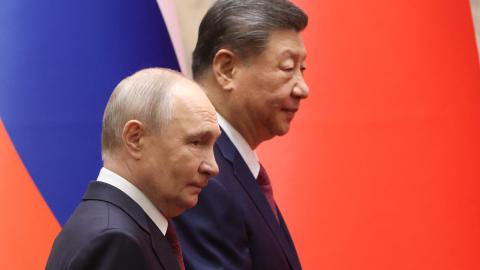
Russian President Vladimir Putin and Chinese President Xi Jinping enter the hall during a signing ceremony on May 20, 2026, in Beijing, China. (Getty Images)






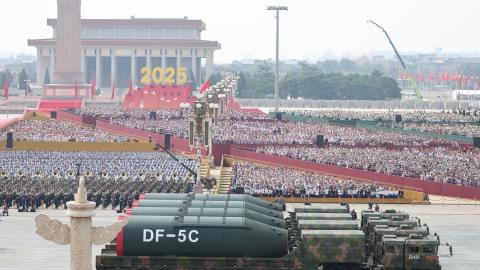
For the first time, the United States is preparing to deter two nuclear adversaries, Russia and China. In today's post-New START environment, US adversaries remain committed to weakening American resolve and undermining Washington’s commitment to its allies.
China is engaging in a historic expansion of its nuclear forces and has diversified its delivery systems across land, sea, and air. According to US Department of War estimates, China could possess up to 1,500 nuclear warheads by 2035.
Despite the costs associated with President Vladimir Putin’s ongoing war of aggression against Ukraine, Russia has continued to devote significant resources to modernizing its nuclear program.
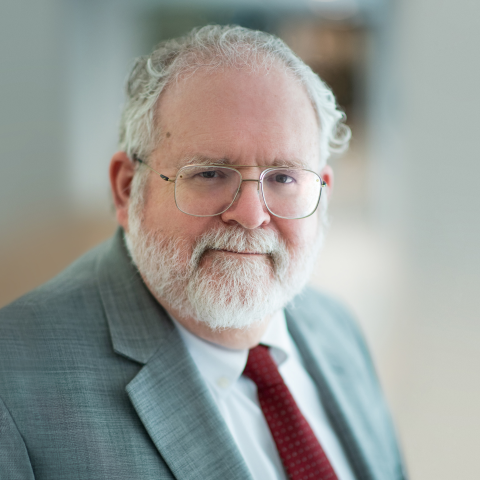
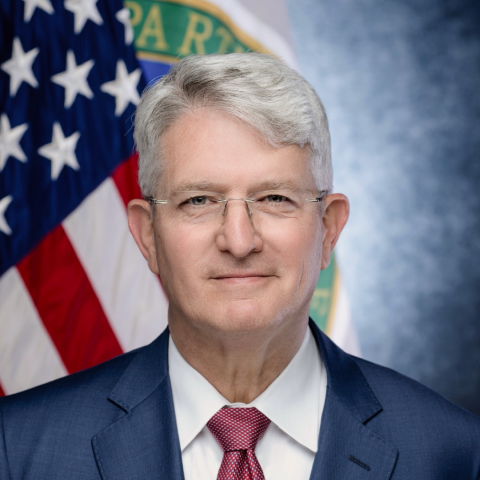
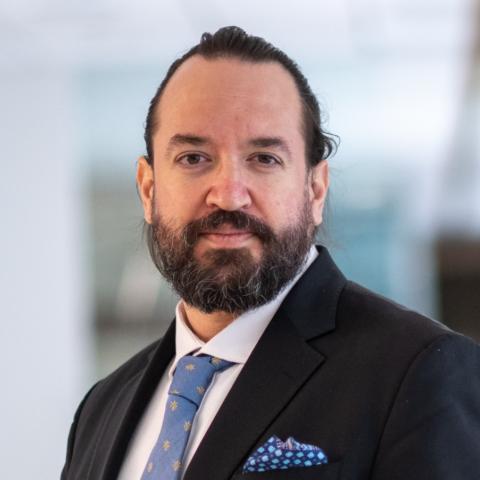
Join Senior Fellow and Keystone Defense Initiative Director Dr. Rebeccah Heinrichs and Administrator of the National Nuclear Security Administration Brandon Williams for a discussion on the administration's priorities in strengthening the US nuclear enterprise.
Listen on Spotify and Apple Podcasts.
Transcript
This transcription is automatically generated and edited lightly for accuracy. Please excuse any errors.
Joel Scanlon:
Good morning, everyone. Welcome to Hudson Institute. I’m Joel Scanlon, Executive Vice President here at Hudson. As the title of this event, Deterring Russia and China indicates, the strategic context before US policymakers today is to build and adapt the US deterrent posture to meet two nuclear peer adversaries, to reinforce credibility and manage shared risks in concert with our allies, to make the sustained investments in the American nuclear enterprise this environment unambiguously requires. And as Russia and China modernize and expand their nuclear arsenals, the architecture of agreements that once sought to bring stability to nuclear competition has withered or been undermined, with China showing little appetite to limit its nuclear ambitions.
Few people have better insight on these challenges than our guest this morning, Brandon Williams, administrator of the National Nuclear Security Administration under Secretary for Nuclear Security of the Department of Energy. He is responsible for the stewardship of America’s nuclear stockpile, the laboratory and production complex that sustains it, and a host of non-proliferation and arms control programs, all of which are critical to advancing US national security objectives.
Administrator Williams’ background is well-suited to the demands of his job. He was a nuclear submariner in the US Navy, serving on strategic deterrent patrols in the Pacific and responsible for operational readiness, nuclear weapon security, radiological controls, and command codes.
Following that naval service, he’s earned an MBA from Wharton, built a career in agribusiness technology and cybersecurity, and he has seen Washington up close from the other end of Pennsylvania Avenue as well, having served as a representative of New York’s 22nd Congressional District and Chair of the Energy Subcommittee on the House Science, Space, and Technology Committee.
All of this is fitting to host at Hudson Institute, home of Herman Kahn, a nuclear strategist who wrote books with titles like On Thermonuclear War and Thinking About the Unthinkable to force deeper and clearer thinking about the true requirements of deterrence and managing escalation.
After his remarks, Administrator Williams will be joined by my Hudson colleague, senior fellow and director of the Keystone Defense Initiative, Dr. Rebeccah Heinrichs, a tireless champion of a strong US defense base and nuclear enterprise.
And Rebeccah, of course, also served as a commissioner on the US Strategic Posture Commission. We look forward to that discussion, but first, please join me in welcoming Administrator Williams.
Brandon Williams:
Well, good morning, it’s good to be with you this morning. Thanks for having me here, and I’m honored to be part of the Hudson Institute program. In fact, I have spent, began, and now at this stage of my career on this exact issue of deterring Russia and China. Don’t want to break this. So, I was in Tiananmen Square during the protests of May of 1989, and right at the beginning of May saw those protests firsthand. I was a college student myself, and talked with a number of the student leaders there. I had no idea, of course, what would happen a month later.
I was not present for the crackdown but was shocked by that activity, and I would just tell all of you that I have no illusions about the Chinese Communist Party, and you shouldn’t either. That fall, I was a visiting student at Harvard studying Asian studies and Chinese studies, and I took a class on nuclear deterrence, just randomly. And later that fall made a commitment and decision to try to be accepted into the Navy’s nuclear power program.
As you mentioned, I did six strategic deterrent patrols on a Trident submarine. I have thousands of hours supervising the operation of nuclear power plants, qualified on two naval nuclear power plant designs. And as the strategic missile officer, I was serving the mission of deterrence. The National Nuclear Security Administration, the NNSA, by the way, often gets complimented on sending astronauts around the moon and asked why I might be reading your text messages and listening in on your phone calls. Those are other organizations, I just want to point that out. NNSA has 70,000 people, federal employees, but by mostly M&O contractors. We are a direct lineage of the Manhattan Project and the Atomic Energy Commission. That is the NNSA. I’m about two-thirds of the Department of Energy budget, and I would argue that NNSA is perhaps the greatest scientific and engineering organization in the history of mankind. And if you could see all the things that we do and are responsible for, it’d make you proud to be an American and regret being our adversary.
There are three words that I’ve brought since being sworn in and back in September into this role as administrator of the NNSA, and there are three words I would leave with you: deterrence, urgency and production.
Let’s talk about deterrence for a minute. Deterrence isn’t quite the same as it was during the Cold War, and Rebeccah, maybe we’ll get into that, but it does begin with our nuclear arsenal. I make weapons that deter our adversaries, reassure our allies, and protect the homeland. It doesn’t take a lot of imagination to know what those are, but there is another element to deterrence that is also very important.
Sometimes it’s called non-proliferation or counter-proliferation, but it’s really deterrence through denial and attribution, that we can deny our adversaries, whoever they may be or wherever they may be, access to materials that would lead them to produce a nuclear weapon. And as we get into the nuclear renaissance and the expansion of nuclear power, commercial, civilian nuclear power worldwide, these issues of non-proliferation and the actions of denial will only become more important.
And similarly, through attribution, if you think you can covertly conduct a nuclear strike of any kind against the United States or our allies, whether that’s an improvised nuclear device or a covert nuclear weapons program, or a dirty bomb or a radiological device, we have extraordinary forensic capabilities that we can identify those materials.
We can know their providence, their source, and tie it directly back to the actor, which is a fundamental principle of deterrence. Another leg of deterrence that I’m responsible for is the Naval Nuclear Propulsion Program, which is my background, Admiral Rickover’s program of naval reactors.
We make, design, and build the nuclear reactors and the fuel that powers our submarines and aircraft carriers. Not responsible for the whole submarine or the whole aircraft carrier, just the part that turns the propulsion. So, that is our deterrence mission. I want to talk about urgency just for a minute.
As you mentioned, we’re facing a two-peer nuclear adversary for the first time. I don’t know if there are any physicists or astrophysicists here, but if you’re familiar with the three-body problem, three things, three bodies of equal mass or relatively equal mass in a gravitational orbital dynamic will not find equilibrium.
There is no mathematical solution to that; there’s no steady state. The moon very predictably goes around the Earth; that’s a two-body problem. You throw in another moon into that system and it’s chaos, and it is not stable. I don’t think it has to be that way, but that is why we have so much urgency today. You have to look at what our adversaries are doing, because we can’t just aspirationally hope that we don’t need nuclear weapons. We have a nuclear deterrence precisely because of what our adversaries are doing. So, let’s look at them.
Russia, I would say active aggression of invading Ukraine is a pretty significant declaration of their intent and nature. They regularly make nuclear threats and threaten first use and tactical use of nuclear weapons as part of their campaign in Ukraine. We hear all those and I think we should take them seriously. And Russia is also testing a number of novel nuclear systems, if it’s Poseidon or Skyfall, or other things that they’re attempting to do, a lot of it to go around the New START Treaty, but mostly to try to upset the balance of deterrence established in the Cold War.
That’s Russia. China is urgently producing weapons and rapidly expanding its nuclear weapons enterprise, and there’s only one intent to do that. They are digging silos out in the desert for a land-based ICBM, they are testing submarine-launched ballistic missiles and fielding those capabilities, and they are rapidly expanding all of that capability. Guess what the Chinese do well. Manufacturing. And guess what they’re manufacturing. They are manufacturing nuclear weapons at an extraordinary pace. Iran, as everyone knows, is willing to risk its entire national sovereignty and existence in pursuit of a nuclear weapon. That is precisely what they’re doing. The best way to describe that is in the Manhattan Project, we had 3,000 scientists at Los Alamos and a few other places designing and building a nuclear weapon. We had 75,000 enriching uranium at Oak Ridge.
We had another 75,000 making plutonium at Hanford, 150,000 making fissile material, 3,000 making the bomb. What is the nature of a nuclear weapons program? It is making fissile material. That’s what it is. And the President is exactly right to go after the Iranian program, to go after their enrichment capability, and to truncate it. It is not about assembling a bomb; it’s about producing fissile material. That is a nuclear weapons program.
The DPRK, it was reported I think about six weeks ago that they are expanding their highly enriched uranium enrichment capability. Why would they be doing that if not expanding their own nuclear weapons program, and to what ends, and is that destabilizing? Look at what our adversaries are doing and then conclude what should the United States be doing in response? That is why everything that we’re doing in NNSA has the element of urgency.
And the third, I would just mention, is production. We’re not going to hurl terabytes of data and PDFs, and scientific studies at our adversaries. I make thermonuclear devices, thermonuclear weapons that have a range of yield in the hundreds of tons of TNT equivalent to the many hundreds of thousands of tons of TNT equivalent.
The massive ordinance penetrators, the conventional bombs used in Midnight Hammer, 11 tons approximately. 11 versus hundreds or hundreds of thousands. This is a huge asymmetric shift in warfare when you unleash the strong force of the atom. So, for many years, our nation, the last 30 years in many ways, our nation has treated our nuclear deterrence like a spare tire in the back of your trunk of your car. It is forgotten that it’s there, you hope you never have to use it. Got a lot of people in our society asking, “Why are we even hauling this weight around with us?”
Well, if you look at our adversaries, there’s a good reason. Under President Trump in his first term, and again in his second term, he is making the commitment to restore our ability to make nuclear weapons and restoring that enterprise, much of which we let languish since the end of the Cold War. So, production is a key theme.
So, in closing, I just want to talk about deterrence today versus during the Cold War. In the early 1960s, we had between 20 and 30 major production sites. Today we have eight, like Lawrence Livermore, Los Alamos, Nevada Test Site, et cetera. It was approximately 6 percent of our relative to the Department of Defense budget in the early 1960s. Today, it’s about 3 percent relative to the Department of War. The deterrent strategy in the early Cold War was really about mutual assured destruction.
You fire yours; we’re going to fire all ours. That’s the essence of deterrence. We are not returning to an arms race reminiscent of the Cold War. This is about keeping our adversaries off the escalation ladder and from the first use of nuclear weapons. And I would just say that the proliferation threat, as I mentioned, has never been greater, and again would tell you the three words: deterrence, urgency, and production. That is the mission of NNSA, and that’s why I’m proud to serve under President Trump at this historic time. So, thank you.
Rebeccah L. Heinrichs:
Either way. Great. That was a great opening set of remarks, and then my hope is to have a little bit of a conversation with two of us, and then we’ll turn it over to questions from the audience for the last 10 minutes, and we will close out here at 10:45. So, if you can just be ready when we get to the Q&A part. Administrator Williams, the NNSA has historically operated under the assumption of a primary nuclear, one nuclear peer. That’s how it is operated. And now that it, as you just eloquently laid out, we do have the two nuclear peer problems.
We have Russia and China. And China is in the midst of the strategic breakout is what Admiral Chas Richard described it. So, what does this institutionally mean for NNSA? How are you orienting the enterprise to ensure that the President, because these are the President’s weapons, how are you ensuring that the President has the capabilities that he has for this two-nuclear-peer problem?
Brandon Williams:
Sure. So, as I said, you have an absolute number problem. You have to be able to cover enough targets of your adversaries, the things that they value, just as they do cover the things, target the things that we value.
But again, I would say what I fear and what I’ve seen from the statements and behaviors of Russia and China is that they believe that they can use a small handful of theater or tactical nuclear weapons, smaller nuclear weapons to try to intimidate us, but it’s below the level that we would respond with a nuclear response, and that is hugely destabilizing.
And so, if our adversaries don’t believe that we can meet them, I call it prompt, precise, and proportional, that we can meet them in an equal way, it incentivizes some of that behavior. I’ll just give you two quick examples.
Putin, well, Russia said that they were considering using tactical nuclear weapons against Ukraine, but if you remember, Ukrainian forces occupied Kursk, which is in Russia. And they easily could have used a small nuclear weapon on Ukrainian forces on Russian soil. No red lines crossed for NATO response; they could have even called it a test, an atmospheric test. And what would the response of NATO have been? What would Germany have done?
How would they respond to a Russia that has demonstrated a willingness to use nuclear weapons? Same thing with China, maybe they would target a Japanese frigate out in the sea. No TV cameras, no burning buildings, no moms holding babies like you’ve seen with the Hiroshima footage, and yet they’ve made a declaration that they’re willing to use and cross the nuclear threshold. Would we evacuate Guam? Would we abandon the First Island Chain? Would we walk away from any perceived commitments that we have to Taiwan?
What would we do if they cross that threshold? That to me is the greatest danger.
Rebeccah L. Heinrichs:
I would agree, and you just said a couple of things that I would love to talk a little bit more about. You mentioned proportionality, and I think a lot of Americans misunderstand what we mean when we see proportionality in warfare, or in your line of work which is you want to ensure that the President has flexible and a menu of options that he might be able to respond with in order to convince the adversary to back down, to compel the adversary to back down in the event deterrence has failed. But when we talk about proportionality, we don’t mean necessarily tit-for-tat, but we are talking about a different kind of measurement. Can you explain for us a little bit about that functionality?
Brandon Williams:
Well, I often say, this is super nerdy, but D5 does not solve all problems. A Trident II D5 missile that now is deployed on our Trident submarines has multiple warheads of a variety of yields, let’s say. And it’s a hammer. It’s a big, big hammer. And maybe you don’t want to escalate, maybe if you’re trying to reestablish deterrence after they’ve crossed the threshold, you want something that signals to your adversary that you are just as serious, and again, it’s not tit-for-tat, but you are just as serious, you are just as capable, you can hurt them in the same way that they’re attempting to hurt or intimidate you. And that gives the President a lot more control and ability to pick choices that . . . The goal is to reestablish deterrence. Nobody wants a runaway escalation. And so, you have to have a flexible response, as you said, to be able to do that.
And that may or may not be as capable in our existing stockpile as we want, because we really were geared towards a one-peer adversary and a well-documented mutualist or destruction posture, but that’s not where we find ourselves today.
Rebeccah L. Heinrichs:
That’s great. Fundamentally, our first priority is to deter, and then if the adversary chooses to act aggressively against our interests, we want to have options to be able to compel the adversary to back down. And that might mean choosing a weapon that is more than what they just used against us, but is less than what it could be, so that they do not think they can out-escalate the United States. That’d be fair—
Brandon Williams:
A lot of that gets into employment strategy, and that is in the purview of the President and STRATCOM, which is the commander of US strategic forces. I just make the weapons, I just want them to have the right tool for the right policy. So, I wouldn’t stray too far into how we might implement that, but being flexible and having a wide array of tools in that kind of dangerous environment would be very important.
Rebeccah L. Heinrichs:
Your job is to make sure that those who would operate them have all the tools they need.
Brandon Williams:
Well, and you have to anticipate this a long time in advance. There’s no drive-through nuclear weapons store that I’m familiar with. It takes a huge enterprise to be able to design and manufacture these things, because we manufacture them as these . . . We make Ferraris better than anybody else in the world. We make really exquisite, incredibly performative nuclear weapons.
Rebeccah L. Heinrichs:
And you also just mentioned, it’s not just that there are two peers and you talked about the bigger weapons that the President may have to employ at some point, hopefully never. But then the other thing you mentioned is the way that Russia has been using its weapons, we’re no longer living in a New START Treaty environment, the New START Treaty has expired, but even whenever it was in place it didn’t cover all of Russia’s theater nuclear weapons.
Brandon Williams:
Certainly didn’t.
Rebeccah L. Heinrichs:
So, it’s an important thing I think to note. One of the things that we recommended in the Strategic Posture Commission was that NNSA needed more prominence. The Department of Energy basically needed to be treated like the Department of Energy was primarily what you do, and that because it is the national . . . That is, I believe, our country’s highest priority is exactly the work that you do. Do you think over the last year, the President’s second term, that it is getting the priority that . . . Even as there has been some reforms inside the Department of War, it seems to me that what you do is still a priority in funding and investment and resourcing. Is that your perception?
Brandon Williams:
If you look at the President’s budget request for FY27, he puts a very healthy number out there that demonstrates exactly what you’re saying, that he has prioritized nuclear deterrence. And if we could just get Congress to step up to that number, because the numbers coming out . . . By the way, the SASC and HASC, both are following the President’s lead. The Senate Armed Services Committee and the House Armed Services Committee, the authorizers, are signaling that they agree with the President. The appropriators are significantly less, in many cases almost 20 percent less, not quite 20, maybe 15 percent less than the President’s request in their current markups out of committee. I personally don’t think that signals a commitment to deterrence. It’s not a good signal to our adversaries that we’re not willing to spend the money right now, and I think that comes at a not a good time.
So, we’ll see where we get to in the budget process, but the President’s absolutely committed, and the authorizers are clearly committed. We just need to get the rest of Congress to say that this is a national urgent priority.
Rebeccah L. Heinrichs:
And that seems to be a pattern for Congress. The authorizers do a better job of getting us where we need to be, and it’s the appropriator—
Brandon Williams:
I was never an appropriator, so . . .
Rebeccah L. Heinrichs:
No, I’m more of an authorizer too.
Brandon Williams:
Yes. Yeah, same here.
Rebeccah L. Heinrichs:
So, I think one of the points that you made in one of your congressional testimonies was that NNSA will no longer be defined solely as a scientific stewardship organization, but an organization focused on weapons production and delivering real capabilities at speed to meet current and future DOW requirements.
One of the constant challenges I have found is that it is really hard, even when you have a committed president and committed administration, it’s really hard to make the Department of War go fast. It’s really hard to make certain components of the Department of Energy go fast. Is the NNSA going as fast as you think we need to? And can you tell us about how you are doing that to move from merely stewardship to production?
Brandon Williams:
So, in NNSA, we actually make something. It’s actually unique in the United States government that we actually have industrial capacity to make stuff, high explosives, tritium, highly enriched uranium, depleted uranium, plutonium, all of these different things. Electronics, very bespoke electronics, huge manufacturing capability. The only other manufacturer in the United States government actually is the treasury that prints money.
So, if you think about it they have inputs, and they have outputs, and it’s pallets of cash. We actually have to go make all of this material. I don’t go out to prime contractors like Lockheed Martin and others, and they make stuff for us. We make it and run it. And so, that is a necessity because what goes into our weapons is very unique bespoke materials that are not generally available or of commercial value, and that takes a long time to build. It takes a long time to build a class I nuclear facility to handle these materials.
So, President Trump in his first term understood the long lead time and started making historic investments in his first term, and you see that commitment and pattern that he’s following. But I’ve lost the question a little bit, but we are moving out urgently on production and that means that we have to overcome our own internal bureaucracy.
We have all kinds of safety standards that we observe. I have 500 days at sea in a steel tube never more than 100 feet away from an operating nuclear reactor, and you and I are getting more radiation right here right now than I got working on a nuclear submarine for 500 days. So we operate in a very, very safe way.
NNSA is always going to operate with nuclear materials in an extraordinarily safe way, but we’ve taken that and we’ve given it a culture that, well, if this is the safety standard, maybe we should be two or three times safer, which of course actually doesn’t add anything to the safety but it adds a huge amount to cost, time, those kinds of things.
So, we are renormalizing some of our own regulations and practices to make sure that we’re focused on production, and a lot of it is a cultural change. I’ll finish with this, but when I got in, I said, “Listen, I don’t want to hear any more about scientific studies. I want to hear about the metrics of production, utilization, throughput, cycle times, capacity, all of the things.”
I have a master’s in business from Wharton in finance and operations. I want to hear as if we are a production organization. And even that has been transformative, because you get what you measure. But as an administrator, the most powerful thing I can do is change the culture, and that’s why you hear this drumbeat of deterrence. If you cannot draw a direct line between what you’re working on and one of the six pillars of deterrence that you laid out in the Nuclear Posture Review, if you can’t draw a line between your work and one of those six pillars, you should be working at the post office. You’re in the wrong place. Nothing wrong with the post office, but we are on a deterrence mission.
Number two, urgency, and number three, production, the primacy of production. The culture inside of NNSA for a long time since we stopped producing things in the ‘90s, allowed the science mission to grow and grow and grow. And that’s what got funded, and that’s what got . . . culturally got clout within the organization. And I am right-sizing that, that we are prioritizing production. Science is enormously important, and we have tremendous scientific capability in NNSA, but it got way out of whack with my message production.
Rebeccah L. Heinrichs:
Well, it sounds like my next question is about another problem that NNSA has had is just having enough of the workforce, qualified scientists who can come and work for the enterprise. But it sounds to me like if you get an ethos that’s mission-oriented, mission-focused, that’s deterrence that I suspect, it’s kind of leading the witness here, that you have made some improvements on retaining and retention for the workforce.
Brandon Williams:
We have 70,000 employees in the NNSA, and less than 2,000 of them are Federal employees. The other 68,000 or so are M&O contractors, and they are patriots. And by the way, they’re not all scientists. There are a lot of technicians, a lot of tattoos, a lot of high school or high school graduates, or technical college, welders, electricians, all of these kinds of trades and skills, and they are incredibly patriotic in doing their job. And they want permission to serve, they want a mission to serve, and I think the production mission really lines people up. The deterrence message reminds people why what they do is important, even if they can’t talk about it with their families, that they know that it’s historically important that we deter our adversaries in this hour.
Rebeccah L. Heinrichs:
In October 2025, President Trump announced that the United States would resume nuclear weapons testing “on an equal basis.” Can you talk to us about what NNSA is doing to ensure that our stockpile is reliable, and how is our testing going so that you can certify to the President that he has a reliable stockpile?
Brandon Williams:
So, up until 1992, we had a steady cadence of nuclear detonations at the Nevada test site, all of them underground for the last . . . I think the last atmospheric test was maybe in the early ‘70s, if I’m not mistaken. And where we went and tested all different designs, materials, and approaches to design the most effective, safe, and capable nuclear weapons that we could. President George H. W. Bush signed the moratorium, said that we would not do that anymore, along with the rest of the world, which I think is very virtuous.
Some scientists had this crazy idea in 1992 that we could take all of our test data and put it into physics models, and have computers powerful enough to simulate what would be going on and to study and understand that.
That was science fiction in 1992. And so, we started buying the most powerful supercomputers available. NNSA has always been the number one customer of high-performance computing in the world. We have led that for the last 30-plus years. And today I have 4 of the 10 most powerful supercomputers in the world that are part of NNSA, including number one, El Capitan. And we exquisitely model what happens when you take a fissile material, surround it with explosives, and compress it. That’s an obvious simplification; there are a number of other steps and stages, but we understand those physics extraordinarily well. But a nuclear weapon isn’t just the physics; it’s all of the systems around it that make it work. It’s explosives, it's sensors, it’s materials, it’s all kinds of things. And we test those more than 1,000 times per year. We do detonations. We have this great machine at Lawrence Livermore called NIF, the National Ignition Facility, that you may know has produced a fusion yield around nine megajoules of energy.
But we take bits of our nuclear weapons, and we put it by the target of this humongous laser device and do these nuclear detonations, these fusion detonations right next to that material to make sure that material is going to operate exactly how we think it will in a nuclear weapon. And there’s more than 1,000 other components and tests and all kinds of things that we perform every year, this year, last year.
The most important thing about nuclear testing is that only the President can direct and decide that. It is entirely within his purview of whether we take another step and do explosive nuclear testing again. That is exclusively for him. But in the meantime, I am responsible for making sure that everything else around that performs flawlessly. And the most important thing is that our adversaries have absolutely no question about the efficacy of our weapons, and they should not have any doubt that our weapons work as advertised.
Rebeccah L. Heinrichs:
That was great. And I like how you would flag some of your answers as especially nerdy, considering the entire conversation. This probably falls under the nerdy—
Brandon Williams:
Pretty nerdy. If you’re a nerd, this is the right place. This is the best place in the world.
Rebeccah L. Heinrichs:
Right. So, I’m going to ask you another nerdy one, a sub-nerdy question within this, and that’s about inertial confinement fusion. This has been a focus of my research because of how important the Chinese treat it for nuclear work, and they’re treating it like an absolute priority to expand their nuclear weapons program. Can you just talk to us about how NNSA is thinking about inertial confinement fusion to ICF, and how is it part of how we’re thinking about our own enterprise and work we do at NNSA?
Brandon Williams:
Yeah. Fusion’s interesting because it’s hard to separate the potential of commercial fusion, electric power generation, the scientific interest in high-energy physics that you can produce through a fusion reaction.
I’ll talk about that a little bit, and then any sort of weaponization of fusion. And I would say that China’s primary interest is that they’re energy constrained as a country in terms of domestic energy sources other than coal and hydro.
And I think they have a very, very significant interest in being independent of that. And I think their hope is that there will be commercial fusion on the grid, and that’s part of that program. So, I would not separate that as one of their primary goals.
The second is the Chinese have only done like 50 nuclear explosions in their history. They were relatively late to the game, and there are a lot of questions about whether they’re actually crossing over the Test Ban Treaty thresholds in their decoupled testing. I believe that they are cheating essentially.
So, they are very interested to make sure that their nuclear weapons, that they learn, they try to catch up to us in knowledge. And I think their fusion efforts are on that, that they’re trying to develop high energy pulses of nuclear energy that gives them some insight into their own weapons design. In terms of weaponization, that’s pretty far out there in science fiction, in my opinion.
Rebeccah L. Heinrichs:
Great. All right, questions from the audience. Got one up front. Let’s couple them if we can. If you can just stand up and say . . . You don’t have to stand up. You can just say your name, where you’re . . . Right here in the front. Say your name and where you’re from. Yep, your association.
Audience Member Maria Razborova:
Good morning. My name is Maria Razborova, I am a rising junior at Georgetown School of Foreign Service. And my question is, given Putin’s nuclear signaling, his escalatory rhetoric, how does this strengthen or weaken, or change Washington’s perception of Russia’s nuclear deterrent capabilities?
Rebeccah L. Heinrichs:
And then we’ll take a second question here.
Brandon Williams:
Sure.
Rebeccah L. Heinrichs:
Yeah, go ahead.
Audience Member Sophia Peters:
Hi, Sophia Peters at Deloitte. I was wondering if you could say a little bit more about your vision for the production of a digitally connected nuclear enterprise, and how you’re prioritizing the digitization and balancing that with the production mandate, making sure it’s aligned.
Brandon Williams:
Sure. Russia has a very strong nuclear deterrent. They’re extremely capable, very smart. They never stopped producing nuclear weapons and modernizing their capability, as where we did stop and are now restarting that modernization. And so, the Russians have a very credible nuclear capability today. Nobody really doubts that whatsoever.
They have a huge number. What was not covered by New START is that they have thousands and thousands and thousands of intermediate-range tactical nuclear weapons that they deploy that can only reach Europe. And so, I would say that the Russian signaling around possibly using nuclear weapons I think is a signal of their weakness.
I think it’s a signal of their lack of conviction and confidence in their conventional forces against a much, much, much, much, much smaller Ukrainian, albeit backed by NATO, weapons. And so, that’s what concerns me is that they even feel compelled to use that kind of language and threaten in that way.
I think they’re hoping to rattle NATO and rattle some of the Western European countries to back off, and it’s clearly not working. And then, modernizing. So, deterrence has to work every hour of every day. There’s no deterrence holidays, it’s got to work all the time. And as we’re watching technology change very quickly, this is a little bit of a long-form answer if that’s okay.
If you go back to the 1950s and ‘60s, the Soviets built up an enormous conventional force in Eastern Europe, primarily T-34 tanks. And there was a lot of concern that we in the West did not have enough resources for a conventional fight with the Soviets in Europe.
And so, we made a declaratory policy that we will use nuclear weapons if we are faced with an overwhelming conventional force in Europe. That was actually a very shrewd financial decision, that we were going to go . . . It’s much cheaper to make nuclear weapons than it is to build 20,000 tanks or 50,000 tanks. It’s very different.
And so, we made that economic decision, turned out to be the right decision. Fast-forward to the 1980s, and the United States demonstrated that we had an overwhelming conventional capability, think of the first Desert Storm, and a technological superiority like with F-117 stealth fighters that no one else could match.
And we have lived in conventional overmatch for 40 years, where unquestioned. And so, the nuclear threat didn’t have to be at the front and center because nobody could match us on the battlefield in conventional arms. What we have seen in the last five years is an enormous shift in technology related to warfare.
Drones obviously come to mind, but then you have precision weapons that used to be restricted to us, that’s not true anymore . . . the proliferation of ballistic missiles and missile technologies, and you can’t underestimate what AI could do. And so, warfare is changing very quickly, led by technology in the last five years.
And so, the question is how do we maintain deterrence when our overwhelming conventional force and capability may have been eroded, particularly by the manufacturing capability of China? And then you start thinking, oh, let’s pull that spare tire out of the trunk and make sure that it’s in good working order, because God forbid we may need it, and at least we’re going to sleep better knowing that it’s ready. And that is where we are with our nuclear forces; we actually have to rethink them in a different way. And that means with this innovation, that we might have to produce nuclear weapons from concept to fielding in a much more compressed timeframe because our adversaries are developing capabilities that are threatening.
For example, can you interdict missiles on a ballistic trajectory? If you’ve been watching the news, I think we see that almost every night over Tel Aviv that that can happen.
And so, at what point does that make our ICBMs not a credible threat, and we have to have a new capability? Well, right now it takes us 10 to 15 years to go from identifying a need to fielding a new nuclear weapon. Well, I don’t think our adversaries are going to wait 10 or 15 years if they’re going to deploy something that negates our nuclear capabilities. And so, we’re going to have to do that in a much more compressed timeframe.
The only way to do that is having a fully digital production organization powered by artificial intelligence, and we’re demonstrating that. I’m going to spend $600 million on artificial intelligence this year inside my enterprise, and that’s only going to grow, and digital transformation and digital connectivity is absolutely critical to our next generation of nuclear weapons enterprise.
Rebeccah L. Heinrichs:
We are out of time, but I don’t want to leave without asking you one more question, because here at Hudson we really believe, all different researchers here, we all really believe that part of America’s strength against this growing authoritarian access is the allies that we have, and that if we can use their collective economies, collective defense capabilities, that we can deter what I think is a great threat, which is a major power war. And so, extended deterrence commitments to allies have recently come into question about whether or not the United States’ nuclear umbrella remains credible. So, what is NNSA’s role in just the piece, you only have a piece of this challenge, but ensuring up that confidence to our allies? We talked a lot about our confidence, make sure our adversaries know we have it, but what are you doing to think about making sure that our allies are confident in the credibility of our extended deterrent?
Brandon Williams:
I’m going to start with France and the UK, because they are tremendous allies in this extended deterrence, because they are very strong in their own right with their nuclear weapons program. And I meet with my counterparts there a couple times a year, and that coordination is extremely important for the United States, but also for our allies.
We are very close, of course, with Korea, with Japan, with Australia, and with NATO, that our commitment, our battlefield commitment for nuclear deterrence is ironclad, but how can I affect that? Well, if we are not producing new weapons, if we are not serious about maintaining and investing in our nuclear weapons enterprise, that’s not a great signal to our allies, and they may get nervous and start wondering whether they should have their own nuclear capability and that would be a huge proliferation problem.
I believe that the extended deterrence, the America’s nuclear umbrella has to be credible, and has to be credible beginning with production, that we are absolutely committed to maintaining the very best nuclear strategic forces of anywhere in the world, and that you’re better off working with us instead of going off on your own.
So, I think we’re making a lot of credibility. I think that begins with the President, and I think this president is extremely compelling as his commitment to our allies and to this common defense, and I think that gives a lot of surety to our allies in my opinion, particularly in regards to the nuclear umbrella.
Rebeccah L. Heinrichs:
And I think that’s a great answer. And one of the things I think you said that’s important to note is that our extended deterrent is actually one of our most powerful non-proliferation tools.
Brandon Williams:
It’s absolutely critical. I mean, if you care about non-proliferation really, then you want America to have an extremely capable nuclear deterrent capability. Those often are played against each other and I think that’s a fallacy.
Rebeccah L. Heinrichs:
Yeah, I agree. Well, Administrator Williams, we are thankful for your service, for all the work you do to lead the NNSA, and we’re thankful for your time here with us today. Please join me in thanking Under Secretary Brandon Williams.
Brandon Williams:
Grateful to be here.

The United States Congress will have a full defense agenda in the months ahead, with the National Defense Authorization Act, the reconciliation package, and a supplemental funding request on the docket. Join Hudson Institute for a conversation with Fellow Jeremy Hunt and Jimmy Byrn, the US Army’s chief legislative liaison and the service’s lead on Capitol Hill, on what this legislation could mean for the Army and how his office maintains its relationship with Congress.

Join Hudson Institute for a conversation with US Ambassador to the EU Andrew Puzder and Senior Fellow Harold Furchtgott-Roth on America’s interests in reducing the harmful effects of CS3D and CSRD.

Join Hudson Institute for a conversation with Lazarus, founder of Lazarus Consulting and former speechwriter to the Commander of the US Southern Command.


Join Hudson Institute for a conversation with the author on the eve of the book’s release. Babb, Director of The Promised Land Project at the Macdonald-Laurier Institute and an associate fellow at the Institute for National Security Studies in Tel Aviv, will discuss the book’s central argument and the practical ways Jews and non-Jews alike can embrace Zionist ideas in their lives.