Caption
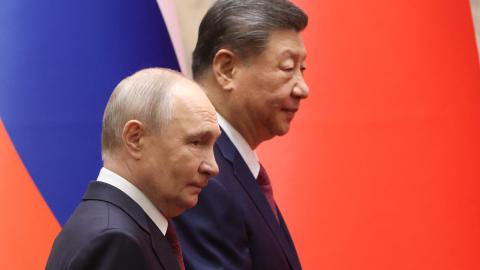
Russian President Vladimir Putin and Chinese President Xi Jinping enter the hall during a signing ceremony on May 20, 2026, in Beijing, China. (Getty Images)
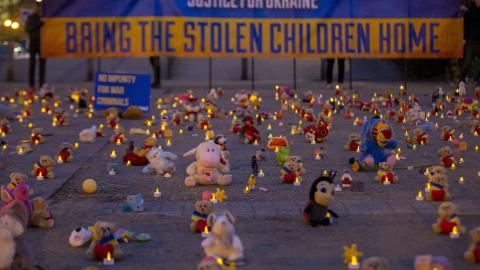
One of the most horrific consequences of Russia’s invasion of Ukraine has been Moscow’s illegal abduction of Ukrainian children. These children have not only been taken from their homeland and dispersed across the Russian Federation, but they are also being raised to forget their Ukrainian identity and, in some cases, taught to hate their native land.
Bring Kids Back UA is a Ukrainian humanitarian initiative launched by President Volodymyr Zelenskyy in 2023 to locate and return Ukrainian children forcibly deported or displaced by Russia. It serves as an umbrella organization, bringing together domestic and international efforts to rescue, return, and reintegrate these children.
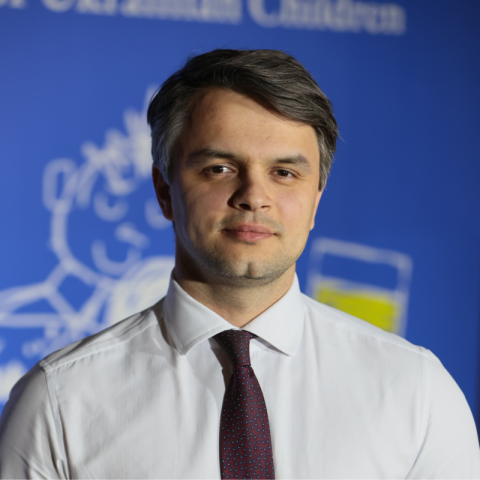
Please join Hudson Institute as it welcomes Maksym Maksymov, head of Bring Kids Back UA, to discuss his organization’s important work.
Listen on Spotify and Apple Podcasts.
Transcript
This transcription is automatically generated and edited lightly for accuracy. Please excuse any errors.
Luke Coffey:
Good afternoon. Welcome everyone to Hudson Institute. Thank you for those who are here in person. I want to also offer a welcome to those watching online across the world and also across the United States on C-SPAN.
Today, we have a very important event on a very important topic, saving Ukrainian children. Many people that follow the tragic war in Ukraine, Russia’s invasion of Ukraine, hear about the atrocities that were committed at places like Bucha, Mariupol, Irpin, but many may not be as well versed on the very sad and horrific issue of Ukrainian children being taken from their homeland and abducted and brought to the Russian Federation or taken from areas still under control by the Ukrainian forces and taken to Russian occupied regions of Ukraine.
As someone who is a father of two young children, I can’t imagine what it must be like to live knowing that your children are perhaps thousands of miles away in a foreign country, being taught to forget their heritage, their language, their homeland. So our guest today, Maksym Maksymov, who is the head of Bring Kids Back UA, is here to give us an update on the very important work, God’s work, that you are doing to help recover and bring back these children to their families and back to their homeland. Bring Back Kids UA is a Ukrainian humanitarian initiative that was launched by President Zelenskyy in 2023. Its mission is to locate and return Ukrainian children forcibly deported or displaced by Russia. It serves as an umbrella organization bringing together both domestic and international efforts to rescue, return, and reintegrate these children.
So Maksym, thank you so much for taking time out of your busy schedule here in Washington. We were speaking before, and it sounds like you’ve had a packed agenda while here. You’re here to talk about a very important issue.
But for those watching, what can you tell us about what the current situation is? What sort of numbers are we talking about? How many children have been taken? Where have they been taken from? Where do you think they’ve been brought to? Just a general overview of the situation.
Maksym Maksymov:
Sure. Thank you very much, Luke. Good afternoon to everyone here in person and everyone joining online, and thank you for the opportunity to speak about this matter today with all of you. Bring Kids Back has indeed been launched in 2023, almost three years ago, or actually three years ago now. And it unites the efforts of the government agencies, civil society organizations, and international partners to trace, return, and reintegrate Ukrainian kids that have been stolen by the Russian Federation.
Everyone wants to usually to ask about the numbers and the complexity of the situation that we have is that even speaking about the numbers is complicated. And I’ll explain now why. In general, Ukraine has verified more than 20,000 cases of forcible transfer or deportation, meaning that kids were either moved from Ukraine to Russia or moved against their will within the occupied territories. But these are the only numbers that we are aware of because the major challenge that we are facing is that Russia has never provided any information to Ukraine, to any other government on planet earth, or to any international organization. So in reality, only Russia knows how many children it has taken, but we operate with a number of more than 20,000.
They have made statements in the past, especially before the arrest warrants of the International Criminal Court, where they were still probably a little bit unaware of how it looks, what they have been doing. And among the statements that they did in 2023, the first one came from their child rights commissioner, Maria Lvova-Belova, who is also under arrest warrant. And she said in her report that Russia has welcomed 744,000 Ukrainian kids into Russia.
Luke Coffey:
744,000?
Maksym Maksymov:
That’s what they said. They could have been bragging because it was before the ICC. They could have manipulated the number as well, and we wouldn’t trust them at their face, but that’s what they said. And then there was a report of the Russian Federation to the United Nations Committee on the rights of the child where they admitted to have provided 46,000 Ukrainian kids with Russian passports. So, that’s the numbers that we operate.
In total, there is roughly 1.5, 1.6 million that have been of Ukrainian children that have been living within the territories that are currently occupied by the Russians, basically being under Russian control. But again, we operate with a number of roughly 20,000. Out of those 20,000, under the framework of the Bring Kids Back UA initiative that has been launched by President Zelenskyy, together with the government actors, with the civil society organizations and with support of international partners, including the US, we have managed to return 2,230 kids.
Those kids include the ones that have been taken to Russia, moved within the occupied territories, but also the ones that have been trapped within the occupied territories, unable to leave because you just can’t pack up your bags, and buy a ticket, and leave the occupied territory. There are many bureaucratic obstacles, challenges, et cetera. So these are the numbers that we are talking about.
And in terms of the current situation, I think what we are facing, and this is an increasingly difficult challenge, is that the war is entering its fifth year, and occupation cements on the ground. And the result of it is that the policies of indoctrination, of brainwashing, and militarization of Ukrainian children are being implemented within the occupied territories. So Russians often do not actually need to physically transfer the kids anymore because they can reprogram them on the spot. And that is probably the most major element of the evolving situation on the ground that we have been facing recently.
Luke Coffey:
Especially if they were five or six years old when the war started, and you look at the situation now, all they’ve really known or can remember is Russian occupation, Russian control. You mentioned, we do focus understandably and rightfully a lot on the children themselves, but what sort of interaction or engagement do you have with the parents, with the families who are left wondering what is happening, what is being done? Does your organization serve as a connection to the parents as well or is that another government body and you’re just solely focused on finding children and getting them
Maksym Maksymov:
Back? So both the good and the bad thing about Bring Kids Back UA is that it is a very much a multi-stakeholder effort. So we generally operate within five major streams of work. The first one being tracing and verification of data; the second one is implementing return pathways; third, reintegration and rehabilitation; four, accountability and five, strategic communications and advocacy.
And if you take any of those streams that I’ve just mentioned, there are dozens and dozens of actors within the government and civil society organizations that are doing something on this front. So when we speak about connecting to the families, the families that have whose children or relatives who know the children that have become the victims of the deportations or forcible transfers, there are multiple ways how they can submit this information either to the government or to civil society organizations. And once this is happening, there is a constant contact being maintained with them so that they’re updated of what efforts are being undertaken, whether that’s mediation or other streams of work to get them back to Ukraine.
Luke Coffey:
And what happens to these children in Russia or under Russian areas under Russian occupation? Practically, what are the Russians doing with these children as far as you know and as far as you can tell?
Maksym Maksymov:
So before I would go into the practicalities of what they’re actually doing, I think it’s important to understand why they’re doing what they’re doing. And here the main strategic objective that they have is to eradicate the Ukrainian identity of the entire generation, of the entire young generation. So making sure that young Ukrainian children, when they grow up, they convert into adult Russians. That’s the grand objective that the Russian Federation is pursuing. And unfortunately, they are executing this strategy rather methodically, and it includes three stages, isolation, reprogramming and deployment.
Luke Coffey:
Sorry, what’s the last one?
Maksym Maksymov:
Deployment.
Luke Coffey:
Okay.
Maksym Maksymov:
Isolation. First of all, children are isolated. They are cut off from friends, they are cut off from teachers, they’re cut off from family, and that leaves them disoriented without familiar support structures. And once that is happening, the dismantling of the identity begins.
Being Ukrainian becomes something to hide or something that is prosecuted. There are new documents, new guardians, and at the age of 14, an imposed Russian citizenship, all designed to sever the legal and emotional path back. And over time, this pressure intensifies and that results in the situation where children do not know who they are or where they belong.
And the third stage, when the identity is weakened already, militarization begins. Children enter state run programs where they are training with drones, learning how to use assault rifles and generally absorb wartime ideology within the various paramilitary structures operating within the occupied territories for youth. And after that, at the age of 18, that earlier imposed citizenship becomes the basis for conscription. So, the three stages and the arc of Russia’s design is isolate, reprogram, deploy.
Luke Coffey:
And have there been any confirmed cases, or have any abducted Ukrainian children that have been conscripted into the Russian military been captured or defected? Or have you been able to encounter anything like this?
Maksym Maksymov:
We haven’t managed to return any of the children that have gone into the whole militarization pipeline and ended in the Russian army, but there have been multiple, multiple documented cases of children that were not physically transferred. So they were not technically abducted. They were not moved from village A to town B, but they grew up in the occupation, which they were unable to leave.
And then as they were forced into this indoctrination and militarization basically pipeline, it could have been even in some cases their choice, because their identity is split, and they do not know what to believe. And then they’re told that, “You can do the good thing and enter the Russian army.” There are instances like that for sure. And even when the full-scale invasion broke out, there were specific, separate units that were formed entirely from the people who grew up in the occupation.
Luke Coffey:
And I think it’s important to put a very fine point on this issue. So just to make sure I understand you correctly, there are cases where children in the Russian-occupied regions are not removed or taken away, but they’re forbidden, they’re unlawfully essentially detained to remain under the Russian occupation. So I mean, in my opinion, that’s just almost just as bad as Russia removing them. If they don’t have the ability to rejoin family or to leave the occupied area, then they, as you just outlined, are very susceptible to the brainwashing and the education attempts by the Russian Federation.
Maksym Maksymov:
Absolutely. You are right. And this is something that we try to convey actors from Ukraine who work on this issue because a lot of focus and a lot of attention, including in the media, but not only there, is on the notion of the transfers, of the abductions. And if one would follow that logic, one would assume that the moment these 20,000 children return, the problem is solved. The reality, it isn’t, unfortunately.
Maksym Maksymov:
It’s the situation is far more complex, as you say, and much more nuanced. And as I said, you just can’t pack your things and leave the occupied territories. The occupied territories of Ukraine are one of the most repressed areas on planet earth currently because it always works like this with the empires. When they try to capture some territory, the policies that they introduce there are much worse than in the metropol.
Luke Coffey:
In this case, it’s not just the terrible acts against the children, but also the persecution of religious freedoms in the occupied regions. There’s a whole laundry list, a whole host of issues, violations of international law norms that Russia is undertaking in these occupied regions. Can you tell us a little bit about the reintegration process? So walk us through what the process is from maybe identifying a child, getting them back, and then reuniting them with their family and reintegrating them into Ukrainian society.
Maksym Maksymov:
All right, that’s—
Luke Coffey:
That’s perhaps a topic for a conference.
Maksym Maksymov:
Yes.
Luke Coffey:
Try to do it in two minutes.
Maksym Maksymov:
To be honest, I don’t think I can speak too much about the operational details of the returns.
Luke Coffey:
Okay, fair enough.
Maksym Maksymov:
There are two ways how these are done, and among them, there is one which is called mediation, where essentially there are third party actors who mediate between Russia and Ukraine on the list on the children profiles and in some time that results in children being returned to Ukraine. Among the mediators are the United States of America and the involvement of the US First Lady has been really important and very valued and that resulted in three dozen children returning to Ukraine, to their families, and to their communities.
The tracing part is very difficult in itself. Probably, I mean, naturally the returns are the most difficult part because Russia is not cooperating, right? But the tracing comes next because Russia has, as I’ve said that already, never engages in good faith on information exchange, and we do not have access to occupied territories so we often need to operate with indirect pieces of evidence, such as the statement of the Russian officials, social media posts, open source intelligence to complete the profiles and to make them actionable for the purposes of the return. So that is a very complicated stream of work.
I’m not saying that reintegration is easy. It’s not, but in the three years that Bring Kids Back has been operational, we’ve built a logic and a framework how these things are happening. So the moment the child crosses the border, within the next day or two once they can have a breather, they go to Children’s Rights Production Center in Kyiv where they are interviewed by a psychologist and law enforcement in a child-friendly environment.
And after that, what has been happening to them is the assessment of their needs because children come from different situations. Some have been in occupation for 10 years, some for three years, some have been moved, some have been victims of sexual violence. Someone went to school, someone was hiding at home. So situations are very different.
So the assessment of the needs is very individualized, but generally it covers a number of blocks such as psychological support. Is it needed or not? Usually, it’s needed. Is there a need for medical services? Is there a place to stay where the child would be placed, whether that’s his biological parents, extended family or family-based care? What about school? Does a child need catch-up classes or they can enroll directly? Which school would that be?
And usually there is a case manager, not usually, always. There is a case manager appointed to every single child who sort of facilitates that reintegration and rehabilitation and there is a multidisciplinary team that works on meeting those individual needs. So if there is, let’s say, the need for a medical procedure or an operation, then Ministry of Health would get involved. If there is a question of education, Ministry of Education. If there is a need for a psychologist, then local Ukrainian NGOs would take on that.
And in three months, these needs are being reassessed. A new plan is devised and then in a year it’s reassessed again. And usually, the pipeline for integration is roughly two years, but what we also see is that usually it’s not enough.
Luke Coffey:
Yeah. And as you said, I guess it depends on the personal circumstances of each child, but you seem to be committed for the long haul. If it needs to be longer than two years, then it’s longer than two years, I guess.
Maksym Maksymov:
Of course.
Luke Coffey:
Yeah. All right. So, you’re here in Washington. You already mentioned the important work that the First Lady is doing. What other support are you getting from different parts of US society? So, US government, the executive, legislator branch, civil society, faith-based organizations, where’s that support and interest coming from here in America?
Maksym Maksymov:
Fortunately, from the plethora of places, as I’ve already said, the First Lady of the United States obviously has elevated this issue politically, and that is in itself very important. And she has contributed directly to actual rescues of the kids. The State Department has just launched a new program a month ago that is aimed to support organizations that are working on tracing, returns and reintegration.
And I think they are to make the decision on the finalization of the program this month. And State Department has been very active on trying to identify the ways, how they can support the work of Ukraine on this. Congress is very active on this issue as well, and I think there is a common understanding across both parties, both. . . It’s also bicamerals that stealing children is not okay just to be diplomatic, and we’ve had a hearing at the Senate.
Luke Coffey:
At least there’s one issue that still unites the two political parties.
Maksym Maksymov:
Absolutely. That’s what we see. I don’t want to comment on other issues, but I can comment on this, and I definitely see that it does unite. And we’ve had a hearing at the Senate in December that was very well attended, and I think that hearing in itself has brought a new momentum. And we’ve also been hearing voices of support from the faith communities. There were public letters, public statements, and media engagement, because we feel that this issue is actually very dear to the people of the United States.
Luke Coffey:
So that hearing you mentioned, I think it was December, is that right?
Maksym Maksymov:
Mm-hmm.
Luke Coffey:
So, it’s been quite a few months ago now in front of the US Senate. Has anything changed since then? How has the situation evolved since that hearing?
Maksym Maksymov:
Well, first of all, 385 children returned since December. So that’s probably the main result.
Luke Coffey:
Of course.
Maksym Maksymov:
And that has been the testament to the tremendous work that so many teams in Ukraine are working on the ground on this issue, including the civil society organizations and the government. So that is probably the biggest achievement. I think when the First Lady of Ukraine Olena Zelenska was visiting Washington a couple of months ago, that was when the program was announced of the State Department. And I think that this program definitely has a potential to be instrumental and to increase the pace on how we can identify the kids, how we can trace the kids, how we can return the kids, and the quality of the services that we can provide to them upon return.
And also, apart from the United States and Ukraine, there are many friends and partners around the world for whom the return of the children stolen by Russia is an important topic. And we have the International Coalition for the Return of Ukrainian Children, which currently combines 50 members. And we’ve had a meeting in Brussels on May 11 on the level of ministers, which had 63 delegations, and we’ve achieved really strong outcomes there. There were practical contributions from various partners, including the UK, Canada, Norway and others on sanctions. And importantly, the sanctions packages that were announced were focused specifically for indoctrination and militarization of the kids, not that much on the transfers.
But also, there was practical support to Ukrainian actors when it comes to tracing, when it comes to reintegration and rehabilitation, only EU has announced a considerable program on strengthening Ukraine’s child protection system. So we’ve been busy, and a lot of friends that we have, both here and outside, they have been also trying to find new ways how we can move this issue forward and get to the results.
Luke Coffey:
From your experience, have the Russians tried using these children as pawns in negotiations? For example, when President Zelenskyy allowed Russia to hold its parade recently, there was also talk of a large-scale prisoner swap. But I read somewhere that Russia wanted to, instead of swapping prisoners of war, the Russians wanted to get their soldiers back and instead offer civilians, including children. I don’t know if this was reported accurately. But have you found a situation where Russia plays games with their custody of these children, where they try to extract concessions from Ukraine to release the children?
Maksym Maksymov:
You didn’t misread the quote of the president. He did indeed say that Russians have offered the exchange of Russian prisoners of war for Ukrainian children.
Luke Coffey:
It’s shocking. I mean, it’s just savage, isn’t it?
Maksym Maksymov:
It is. Can’t say that I’m too surprised, to be honest-
Luke Coffey:
Of course.
Maksym Maksymov:
. . . or shocked, but it is what it is. Of course, this was, I’ll try to reject it. That is unacceptable. And not only from the moral standpoint or from the ethical standpoint, why you can’t exchange children on prisoners of war. I think that is a very common-sense conclusion by anyone. But also, that would create very wrong incentives because if we go that way, then the Russians would be motivated to take more kids, to exchange them again for the prisoners of war, and I don’t think that that is the way or the path that we would want to go.
Luke Coffey:
No, understandably. So what do you need from your partners? What do you need more from the US government, from US civil society? I mean, there’ll be Americans all across the country watching this. What could your average American do if they just feel passionate or they feel moved to help out?
Maksym Maksymov:
I think the underlying question here is that Russians have been doing that because they felt that they won’t face any consequences, and they feel that there is impunity for these war crimes. And actually, these are not only war crimes. But the UN has recently confirmed that this is a crime against humanity, which in legal terms means that this crime is widespread and systematic, and it’s not random humanitarian decisions gone wrong.
I think because they feel impunity, that means that the pressure on them is not sufficient enough. I would say that the overarching thing that needs to be done is to increase that pressure, and to do that, everyone has a role to play, because to prompt some kind of action, you need attention. The more everyone speaks about it during advocacy visits, during events on their social media, this issue is on the agenda for the policymakers, for the decision makers. Without that, our work and the work of so many organizations in Ukraine would be very difficult.
So, the overarching request or ask, I would say, is keep talking about this, keep raising this issue on whatever platform you have, so that the pressure piles up. But then, if we move to let’s say the governments and what the governments can do, apart from political support, which is extremely important on this matter, but there are dozens and dozens of organizations in Ukraine and outside of Ukraine who can directly contribute to various work streams that we have been working on. Tracing, if your organization has the capacity to work with the databases, to do the data analysis, to do the tracing of the children, there is never too many tracing that can be done on this matter.
If we speak about the returns, their Ukrainian organizations have been doing tremendous work 24/7 for more than three years. And those organizations working in Kyiv and throughout the whole Ukraine and the occupied territories, they need support, and that is more of financial side. The more resources that they have, the more they can scale up their systems and the more people can be returned.
And if we speak about reintegration, the same. The children in Ukraine that have been returned from Russia or occupation they’re not all end up in Kyiv in the capital. They go to the whole country, to different regions and different communities. And for us, it is very important that they get the same quality of services and support wherever they go and that requires, again, investment into the system that we have.
So there are practical, tangible things that can be done by literally anyone, and I would encourage everyone to do that. But of course, raising awareness here, because people sometimes get skeptical of raising awareness for the purpose of raising awareness, but the way that this works is that without awareness, there will be no prompt us to act by so many actors. They are pushed to act because their constituents or the people that they know or their colleagues, they push for action. So, talking about this issue on whatever platform you have is I think that anyone can do.
Luke Coffey:
Absolutely. And for those watching online, it’s free to do. Tell your neighbor about what you’re learning today. Share a link to this event to get the word out. I’m going to go to the audience for questions in a second. So, if you have any questions or start thinking of some good questions now, I’ll call on you in a bit.
But I wanted to go back to a point about how you get the children back. You mentioned mediation. Are there any other ways that you can discuss, or do we have to leave it at mediation?
Maksym Maksymov:
There are other ways, but we’ll have to leave it at the mediation.
Luke Coffey:
Okay, I tried. As peace talk, I mean, I hate to call them peace talks at this point because there aren’t really any talks, but as President Trump’s efforts at diplomacy continue along, and God willing, there is a fair and just conclusion to this war that respects Ukraine’s sovereignty and territorial integrity and right of self-defense. What role do you hope, do you expect, do you foresee the issue of abducted and missing children playing in this? Can Ukraine ever really have a fair and just peace if it’s children, the most vulnerable people in society, remain under Russian control?
Maksym Maksymov:
No, no. There would be no just peace if Ukrainian children are left disappearing into the Russian administrative system, of course. And that has been consistently reinforced by. . . You can ask any Ukrainian on the street, would they consider this to be a just peace? And you would receive a very straightforward, unambiguous answer about that.
And I think the children are the most vulnerable, but there are also other groups of affected people in Ukraine who have been affected by Russia’s actions, the prisoners of war, that are undergoing inhumane treatment and torture on mass scale. There are thousands of civilians, like adults, who have been unlawfully detained either on fabricated charges or are held Incommunicado without a court or trial just hidden somewhere with no opportunities for a legal remedy. And there are children who are trapped again in Russia or under the Russian control.
And I think it has been reinforced on so many occasions by the leadership of Ukraine, the president, the government, that for Ukraine the issue of fight for our people is very important. And I would be very surprised if there wouldn’t be the hardest possible push to get the children back as well as prisoners of war and unlawfully detained civilians. The question of or the issue of how do you structure that process is definitely a complicated one, and I don’t think I have a ready-made big solution on how exactly this needs to be happening.
But there have been instances globally of somewhat similar situations and there is always most importantly international law that can guide everyone. If the process of resolution of this matter within the peace process is based on international law or international child protection standards, then that would lead to Ukrainian children returning to Ukraine. The question is, how do we get there?
Luke Coffey:
So if you have a question for Maksym, raise your hand. We have a microphone, and I would ask that you identify yourself in any relevant affiliation. Yes, in the front, a man who needs no introduction, president and CEO of Hudson Institute, John Walters.
John Walters:
Well, first of all, thank you for being here, and God bless you for what you’re doing. May you succeed in all regards.
I’d like to know if any international body or Ukraine, aside from Putin and the criminals around him, is there a register of the people who grab these children, are involved in the actual kidnapping and taking them out so that there’s a chance down the line to hold these people accountable? We like to talk about international law, but of course there is no law without enforcement sooner or later. So I’d like to know whether the infrastructure to pursue that is in place.
Luke Coffey:
Good question. So criminal cases, are they being built?
Maksym Maksymov:
They are. The prosecutor’s general office is working hard on building the cases, collecting evidence, and a significant number of people who were involved in transfers, in indoctrination, in militarization, in the brainwashing, they have been charged in Ukraine. So the evidence is there.
I know that the efforts are also being tried to prosecute them internationally, including the International Criminal Court. But also, there is this sanctions approach, and their people are sanctioned again for the whole chain of actions against Ukrainian children, whether that’s militarization or brainwashing or whatever are their actions. And there are registries, even in Ukraine, there is a registry of the deported enforcement transfer children that collects the data, but there is also publicly held database of all the people involved.
It’s called the Abductors of Children. It’s a public website, and you can just log in, and you can see the profile of a person, their photo, what they did, and which laws it violates. So the justice will be coming and will be served.
Luke Coffey:
Now I know that there have been some instances of those who committed war crimes in places like Bucha or other places around Ukraine, and I think some of these cases have been tried. The individuals in question have been captured, and they’ve been tried in a court of law. Do you know of any examples of Russians being captured and then being tried in Ukrainian courts over the issue of abducted children?
Maksym Maksymov:
I’m not entirely certain if there have been verdicts in courts because the last time I heard, the prosecutor’s general office is operating roughly 150,000 war crimes in their portfolio. And Thomas could correct me if I’m wrong, but I think more, more. So, this is the number that the prosecutor’s general office is working with.
Luke Coffey:
Wow.
Maksym Maksymov:
Not only on the children, obviously, right?
Luke Coffey:
Wow, yeah, yeah.
Maksym Maksymov:
But broader set. It’s including the environment, treatment of people, the bombardment of the cities, the electricity, so many things. But there have been a number, as I said, a number of charges, like the notices of the suspicion as they are under Ukrainian criminal law. And I’m sure that when the time will come, there will be verdicts and convictions for sure.
Luke Coffey:
Yeah, let’s hope. Any final questions from the audience? All right. Well, Maksym, any final thoughts from you? Any area you would like to address that perhaps I didn’t ask about or any other final words you would like to give to the audience about this very important issue?
Maksym Maksymov:
Well, since you asked, then of course, I think sometimes when we speak to different people out of Ukraine about this issue, we sometimes get this very condescending clap on the shoulder, and like, “Poor you. I wish there was something that we can do to help, but probably there isn’t, but good luck.”
But the reality is that there is actually things that you can do. As I’ve said, a lot of organizations in Ukraine are doing tremendous work on a daily basis, and if they get reinforced with what they’re doing, including the government, including the CSOs, including the expert community, if they are supported, then more can be done. We can find more kids, we can trace their whereabouts, we can return them back to Ukraine, and we can provide them with reintegration. So I think the testament of more than 2,000 children being returned despite absolute lack of cooperation from Russia is an evidence of that things are possible and just keep supporting Ukraine and keep supporting our efforts to bring the kids back.
Luke Coffey:
Well, you heard it. We got to do what we can, even though we’re thousands of miles away, to continue to raise this very important issue. Maksym, I want to thank you sincerely for coming to Hudson Institute for talking to us about this very important issue, and we wish you the best of luck with this very important work that you are doing. And you should know you always have a home here and you always have support for your endeavors.
So please join me in thanking Maksym for coming today. And I want to thank the audience for taking time to come and for those watching online or on C-SPAN. If you’re interested in learning more about what Hudson Institute does or learning more about our future public programming or research, you can check us out at hudson.org.
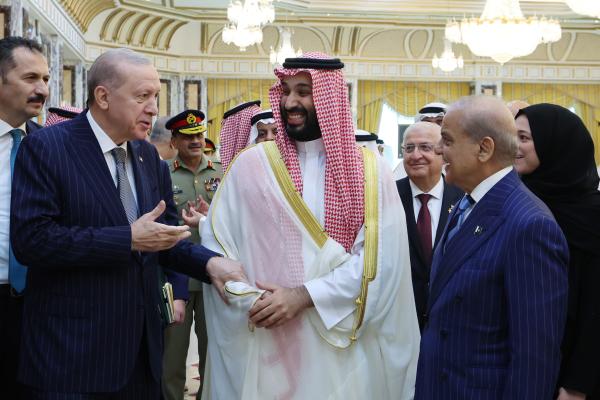
Join Hudson Institute Senior Fellow Ken Moriyasu for a panel with Chaim Martin, Israel’s minister of economic affairs to the United States; Aslı Aydıntaşbaş of the Brookings Institution; Soner Cagaptay of the Washington Institute; and Director of the Center for Peace and Security in the Middle East Michael Doran as they examine the logic behind each framework and what their rivalry means for US policy.
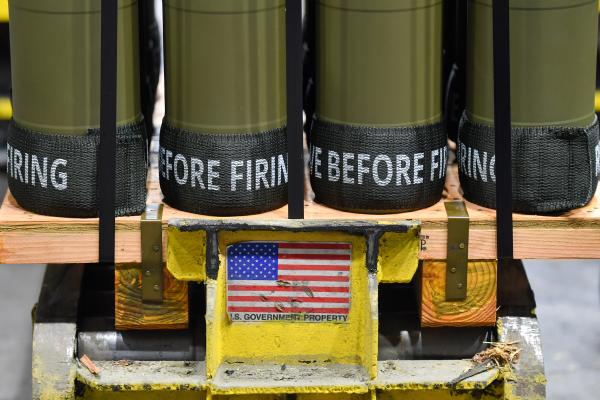
Join Hudson Institute for a discussion of how the US can build a more resilient and flexible energetics base—one that can meet sustained demand while accelerating the development and fielding of new capabilities.
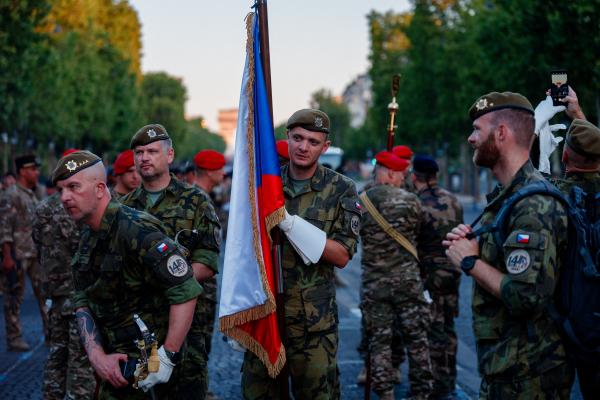
Hudson welcomes Karel Řehka, former chief of the General Staff of the Czech Armed Forces, to discuss the changing security environment in Europe and its implications for the Czech Republic, the North Atlantic Treaty Organization, and the transatlantic alliance.