















Abstract
Europe and the Indo-Pacific remain institutionally distinct theatres, yet they increasingly function as what this article terms unwilling connected theatres: operationally linked through shared capability pools, overlapping deterrence commitments and common industrial bottlenecks. This article argues that the central driver of cross-theatre interdependence is not deliberate adversary coordination but strategic simultaneity — the capacity for parallel crises to emerge from independent regional decisions, amplified by ongoing U.S. operational posture.
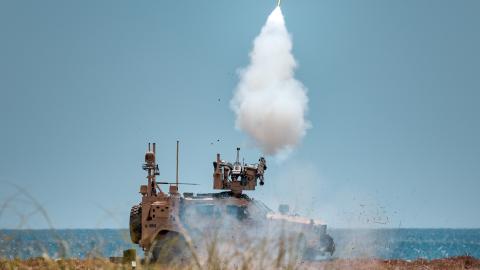
Under the one-war force planning construct that has shaped U.S. strategy since the 2018 National Defense Strategy, finite inventories of long-range precision-guided munitions and air and missile defence interceptors create direct trade-offs between regions. Shared production infrastructure — illustrated by these high-performance munition supply chains — means that expenditure in one theatre materially constrains availability in another. The article further cautions against the reflexive analogy between Ukraine and Taiwan, highlighting differences in geography, logistics vulnerability and the scale of Chinese intermediate-range missile threats.
A structural assessment of Royal Navy and French Navy force availability shows that European expeditionary contributions to a high-end Taiwan contingency would be modest and largely symbolic. The most valuable European role lies instead in sustaining deterrence in Europe and assuming greater responsibility in adjacent theatres. Three policy priorities follow: a calibrated division of labour that aligns alliance expectations with structural realities; institutionalised cross-theatre simultaneity exercises involving both regional and functional combatant commands; and distributed, multi-line defence industrial production across allied economies to build resilience for prolonged operations.