













Key Takeaways:
- Manage Competition, Don’t Try to Eliminate It: A realistic US strategy should focus on managing competition with China rather than attempting to resolve it. The objective is competitive coexistence: deterring aggression, preserving strategic stability, and reducing the risk of conflict while sustaining long-term geopolitical, military, technological, and economic competition. President Donald Trump’s summit meeting in Beijing with Xi Jinping helped stabilize relations and reduce immediate tensions, but it did not alter the fundamental drivers of strategic rivalry or narrow the wide gap between the two countries’ long-term objectives.
- Modernize the US–ROK Alliance: The alliance must evolve beyond its traditional focus on defending the Korean Peninsula into a broader bulwark for deterrence, advanced technology cooperation, resilient supply chains, sustainable economic growth, and regional security. Achieving these goals will require wise leadership and tight political coordination on both sides. Progress will often be complicated by differing threat perceptions, sensitivities surrounding sovereignty, competing policy priorities, and the protectionist pressures that increasingly shape domestic politics worldwide.
- Pursue Pragmatic North Korea Diplomacy: The growing consensus that denuclearization is unattainable except over the long term—and that insisting upon it as a near-term prerequisite would impede diplomacy—does not make it a secondary objective for the US and the ROK. It is simply a recognition that any renewed engagement with Pyongyang is likely to yield little more than broad political understandings aimed at reducing tensions and improving strategic communication. If diplomacy gains traction, more meaningful arms-control measures could eventually be explored. Strengthening deterrence, however, rests largely in the hands of policymakers in Seoul, Washington, and Tokyo, whereas meaningful progress on risk reduction, military transparency, and diplomatic engagement ultimately depends on choices made in Pyongyang. Accordingly, diplomacy should focus less on unrealistic expectations of rapid transformation and more on managing risks, preventing miscalculation, preserving opportunities for future progress, while simultaneously bolstering deterrence.
The United States faces a strategic environment in Asia defined by intensifying competition with China, persistent nuclear threats from North Korea, and growing uncertainty over the future balance of power in the Indo-Pacific. These challenges are interconnected and intractable. The objective of US policy should not be to eliminate rivalry with China, transform North Korea, or indefinitely preserve a status quo that is already evolving. Rather, Washington should seek to manage competition, strengthen alliances, deter aggression, and sustain the conditions that underpin peace, prosperity, and regional stability. American policymakers and security specialists also must continue to make a clear and persuasive case for sustained US leadership alongside staunch allies like South Korea. In an era of mounting geopolitical competition, the United States can neither retreat nor shape the world alone. The burden of leadership therefore extends beyond the exercise of power to explaining why American engagement remains essential to a stable and favorable international order.
Competitive Coexistence with China
Despite profound disagreements over Taiwan, trade, technology, military modernization, and the future of international order, both Washington and Beijing increasingly value a measure of strategic stability. This is not because competition is diminishing, but because it has become more dangerous, more global, and more difficult to control.
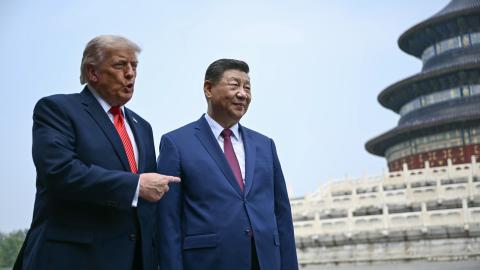
President Donald Trump and President Xi Jinping both recognize that unchecked confrontation would carry enormous economic and security risks. Trump’s mid-May summit meeting with Xi helped stabilize relations and reduce immediate tensions, but it did not alter the underlying drivers of strategic rivalry or narrow the wide gap between the two countries’ visions. What has emerged is neither détente nor reconciliation, but a form of competitive coexistence in which both sides seek to avoid conflict while continuing a long-term geopolitical, military, technological, and economic contest.
This approach reflects an important reality: the United States should focus on managing competition with China rather than attempting to resolve it. Strategic stability is valuable not because rivalry is ending, but because it creates space to deter aggression, reduce the risk of miscalculation, and preserve a favorable balance of power while competition persists. The challenge for Washington is to avoid confusing stability with convergence. Beijing continues to pursue military modernization that threatens regional allies and challenges the ability of the United States to project power within the First Island Chain. At the same time, China is advancing technological self-sufficiency and expanding its regional influence, including by “telling China’s story well” as part of Xi’s broader project of national rejuvenation.
The United States must continue to combine deterrence with diplomacy. Washington should maintain open channels of communication and reduce the risk of conflict while preserving the military, technological, and economic advantages necessary to compete effectively. As China’s support for North Korea or near-constant naval presence around Taiwan has grown from one to 48 combatants over the past five years, stability should be viewed as a means of managing competition, not transcending it.
A Pragmatic Approach to North Korea
The prospect of renewed diplomacy with North Korea has increased, but expectations should remain modest. The strategic environment differs dramatically from that which produced the Singapore Summit in 2018, and Pyongyang's incentives have changed accordingly.
North Korea has abandoned peaceful reunification, designated South Korea as its principal enemy, deepened security cooperation with Russia, and further institutionalized its identity as a permanent nuclear-armed state. Under these conditions, the growing consensus that denuclearization is unattainable except over the long term, and that insisting upon it as a near-term prerequisite would impede diplomacy, does not make it a secondary objective for Washington or Seoul. Rather, it reflects a recognition of political reality.
Any renewed engagement with Pyongyang is likely to yield little more than broad political understandings aimed at reducing tensions, improving strategic communication, and lowering the risk of crisis escalation. If diplomacy gains traction, more meaningful risk-reduction and arms-control measures could eventually be explored. But expectations should remain limited and we must deal with North Korea “as it is.”
Indeed, not all objectives are equally attainable. Strengthening deterrence rests largely in the hands of policymakers in Seoul, Washington, and Tokyo through alliance modernization, military preparedness, and extended deterrence. By contrast, meaningful progress on risk reduction, military transparency, confidence-building measures, and diplomatic engagement ultimately depends on choices made in Pyongyang.
The goal of diplomacy should therefore be practical rather than transformational. Policymakers should focus on managing risks, preventing miscalculation, preserving opportunities for future progress, and limiting further expansion of North Korea’s nuclear and missile capabilities while simultaneously strengthening deterrence. Diplomacy may help reduce danger at the margins, but it cannot substitute for a credible deterrent posture.
The US–ROK Alliance as a Foundation for Regional Security
The US–ROK alliance remains the cornerstone of security on the Korean Peninsula, but its future relevance depends on its ability to evolve beyond its traditional focus on deterring North Korean aggression. As strategic competition intensifies across the Indo-Pacific, the alliance must become a broader bulwark for deterrence, advanced technology cooperation, resilient supply chains, sustainable economic growth, and regional security.
This evolution is already underway. The alliance increasingly contributes not only to deterrence on the peninsula but also to maritime security, defense industrial cooperation, energy security, critical technologies, and the resilience of regional supply chains. Cooperation in shipbuilding, semiconductors, artificial intelligence, advanced manufacturing, and energy can strengthen both economic competitiveness and national security.
Achieving these goals, however, will require wise leadership and sustained political coordination on both sides. Progress will often be complicated by differing threat perceptions, sensitivities surrounding sovereignty and operational control, competing policy priorities, and the protectionist pressures that increasingly shape domestic politics worldwide. Managing these differences and keeping strategies aligned is becoming as important as deterring common threats.
Modernization should therefore remain a priority. Continued progress toward conditions-based operational control transition, deeper integration of missile defense capabilities, expanded combined exercises, greater cooperation in defense production, and stronger trilateral coordination with Japan can reinforce deterrence while enhancing the alliance’s broader strategic value. A modern alliance must be capable not only of deterring war but also of sustaining long-term economic and technological competition in an increasingly contested region.
Most importantly, alliance cohesion provides the foundation from which diplomacy with North Korea can proceed. Diplomatic engagement is most effective when backed by credible military strength, political unity, and economic resilience.
Conclusion
The emerging Asian security environment is defined by stability without trust and competition without resolution. The United States must simultaneously manage strategic competition with China, pursue pragmatic diplomacy with North Korea, and modernize the US–ROK alliance.
These objectives are mutually reinforcing. Competitive coexistence with China can reduce the risk of great-power conflict. Pragmatic engagement with North Korea can help manage nuclear risks even if denuclearization remains distant. A modernized US–ROK alliance can strengthen deterrence and regional resilience.
The objective is not to eliminate rivalry or resolve every dispute. Rather, it is to preserve a favorable balance of power, prevent war, and maintain conditions under which diplomacy, deterrence, and economic prosperity can endure. In an era of increasing geopolitical competition, successful policy will depend less on solving strategic problems than on managing them effectively.