





Introduction
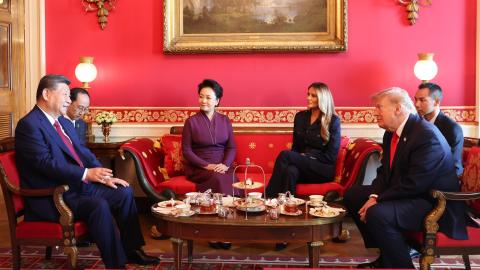
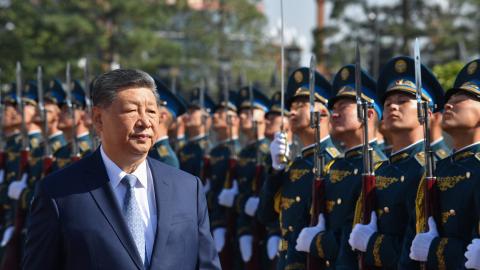
President Donald Trump and Xi Jinping are scheduled to meet in Beijing on May 14–15.[1] With the summit on the horizon, negotiations over a potential trade deal are underway. Economic priorities, however, should not be the only issues the United States raises. As the two leaders prepare to meet, securing the release of political prisoners should be a top priority.
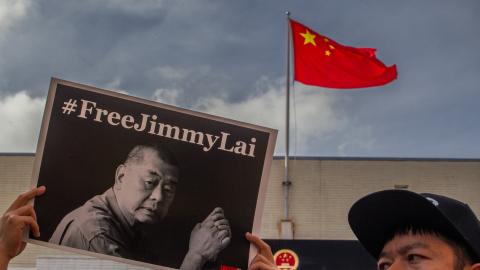
At their most recent meeting on the sidelines of the Asia-Pacific Economic Cooperation (APEC) summit in October 2025, Trump raised the case of Jimmy Lai, the founder of Apple Daily and a prominent Catholic political prisoner from Hong Kong.[2] More recently, Trump reiterated his continued desire to see Lai released.[3]
Family members of political prisoners across China, including Lai’s daughter Claire Lai and Ziba Murat, the daughter of detained Uyghur doctor Gulshan Abbas, also featured prominently at the State of the Union, where they attended as guests of Speaker of the House Mike Johnson.[4] Since then, Congress has issued a bipartisan, bicameral letter urging the president to negotiate for the release of imprisoned Chinese Christian pastor Ezra Jin.[5] The House Select Committee on the Chinese Communist Party (CCP) has likewise sent letters to President Trump and Secretary of State Marco Rubio calling for greater prioritization of the release of several prisoners of conscience, including urging sanctions on Hong Kong officials involved in Jimmy Lai’s imprisonment.[6]
The US Senate also adopted a bipartisan resolution urging President Trump to secure the release of political prisoners in negotiations with the CCP.[7] Taken together, this sustained attention from the executive and legislative branches signals the importance of these cases and demonstrates political will to press for their release.
The May summit and three subsequent meetings that President Trump and Xi are planning for later this year present multiple opportunities to secure the release of high-profile political prisoners across China.[8] Top-priority cases, including Jimmy Lai, Gulshan Abbas, and detained Christian pastor Ezra Jin Mingri, should feature prominently in US-China negotiations. These cases are not internal affairs, as the CCP so often falsely claims, but matters of high priority to the United States. This is especially true of Gulshan Abbas and Pastor Jin—both of whom have several American family members who long to be reunited with their loved ones.
No meeting between US and Chinese counterparts should take place without raising the issue of political prisoners by name. Nor should US officials limit themselves to naming cases: senior leaders, including the president, should demand the immediate and unequivocal release of these individuals and their safe return to their families. Congress also has a critical role to play, through issuing additional resolutions and public statements of support, holding hearings, and advocating through public and private means on behalf of political prisoners and their families.
Securing the release of political prisoners is not only a moral imperative but also a strategic one. There is nothing the CCP fears more than its own people. By advocating forcefully for their release, the US can help shift the balance of power away from the Party and toward the Chinese people at a critical moment.
Why Now Is the Right Time To Prioritize Political Prisoners
As President Trump and Xi prepare to meet several times over the course of this year, there will be multiple opportunities to press for the release of high-priority political prisoners across China. Critically, the US has leverage.
In the lead-up to the APEC summit, the CCP made a significant misstep. Before the meeting, Beijing threatened to restrict global exports of rare-earth minerals as part of its negotiation strategy.[9] The threat was later abandoned during talks last October, but at no significant cost to China.
That threat put the CCP on its back foot. It appeared like a bluff, and when the United States called them on it, Beijing retreated. China should not be able to recover from such a miscalculation; merely walking back the threat is not enough.
The CCP’s blunder presents a clear opportunity for President Trump to make a concrete request: that Xi, as a gesture of good faith, release several of China’s high-priority political prisoners, including Jimmy Lai, Gulshan Abbas, and Pastor Jin. Every summit, every bilateral meeting between US and Chinese officials—particularly at the leader level—is an opportunity to secure the freedom of additional prisoners.
Trump has made the release of political prisoners a notable priority of his second-term foreign policy. Recent examples include the first lady’s role in securing the return of Ukrainian children from Russia,[10] Trump’s efforts to obtain the release of Venezuelan and Belarusian political prisoners,[11] and negotiations that resulted in the release of the remaining living Israeli hostages held in Gaza.[12]
Given this track record, the president risks appearing weak if he travels to China without raising these cases and ideally bringing several of them home. In contrast, securing their release—especially those with American citizen family members—would underscore American strength and leadership.
A Spotlight on Political Prisoners
Every political prisoner merits sustained efforts to secure their release and ensure a safe return to family members, wherever they may be. Extrajudicial detention is antithetical to freedom and liberty. Securing the freedom of even one political prisoner is a broader win for all political prisoners: it sharpens US tools of statecraft, strengthens US resolve to bring captives home, and signals clearly to those still behind bars that they have not been forgotten.
As the US government considers elevating political-prisoner release ahead of the Trump-Xi summits, the following three cases are emblematic of the severe plight facing all detainees across China. Together, they demonstrate that the CCP does not merely target a single people group but rather anyone it perceives as a threat to the Party’s power. To that end, the US government should therefore press for their release, and that of others, to the fullest extent possible.
Jimmy Lai. A 78-year-old billionaire and founder of the well-known news outlet, Apple Daily, Lai is of high importance to the US government. He has become both an icon of the pro-democracy movement and a symbol of the precipitous decline in human rights and freedom in Hong Kong since the implementation of the National Security Law (NSL) in 2020.
Lai is one of nearly 2,000[13] political prisoners detained since the NSL went into effect, alongside Gwyneth Ho,[14] Joshua Wong,[15] and Kwok Yin-Sang, the father of well-known US-based Hong Kong pro-democracy advocate Anna Kwok.[16] Recently, Lai was sentenced to 20 years in prison on two counts of “collusion with foreign forces” and one count of publishing “seditious” material.[17]
He has spent approximately 23 hours a day in solitary confinement despite his advanced age and deteriorating health.[18] Under the United Nations’ Mandela Rules, holding prisoners in solitary confinement for more than 15 consecutive days constitutes cruel, inhuman, or degrading treatment. Yet the CCP has confined Lai in prolonged isolation for most of the past five years.[19] Unless the US secures his release, his 20-year sentence is effectively a death sentence.[20]
Pastor Ezra Jin Mingri. In October 2025, the CCP detained Pastor Jin, the lead pastor of Zion Church, along with 28 other pastors and associates. The arrests marked the largest crackdown on a single unregistered church in more than 40 years.[21] Chinese authorities have charged Pastor Jin and 17 church associates with illegally disseminating information online, though none have yet to be sentenced.[22]
Since their detention, Pastor Jin and other defendants have been granted access to legal counsel. Their lawyers, however, have faced persecution for defending them, including nighttime home raids, threats of license revocation, and actual loss of their licenses to practice law altogether.[23]
The Zion Church arrests have taken place amid a broader national crackdown on the Christian church across China. In January 2026, the CCP launched a renewed crackdown on Early Rain Covenant Church, detaining dozens of members, including current lead pastor Li Yingqiang.[24] The church’s previous lead pastor, Wang Yi, has been imprisoned for the past seven years.[25]
Pastor Jin has numerous health issues, including diabetes.[26] Since his detention, authorities have denied him access to prescribed medication and proper medical care, despite his relatively poor health. He and other male detainees, surprisingly, have been permitted access to a Bible while in prison. Pastor Jin is the father of three US-citizen children, and his entire nuclear family lives in the United States.
Gulshan Abbas. Gulshan Abbas is a 63-year-old Uyghur mother, sister, and grandmother who has been extrajudicially detained for the last eight years. She was taken into custody within days of her sister publicly speaking about the ongoing genocide and crimes against humanity facing Uyghurs during an event at Hudson Institute.[27] Her detention is yet another act of the CCP’s transnational repression.
A retired medical doctor with no history of political activism, Abbas was nevertheless sentenced to 20 years in prison on fabricated charges of “participating in a terrorist organization,” “aiding terrorist activities,” and “gathering a crowd to disrupt social order.”[28] She is among the nearly 1.8 million Uyghurs the CCP has detained in a system of camps and prisons across China.[29] Other prominent Uyghur detainees include Ilham Tohti, Ekpar Asat, and Renagul Gheni.
Abbas remains in poor health. She suffers from high blood pressure, osteoporosis, and an eye condition that requires annual monitoring to prevent blindness. She has 24 family members who are US citizens—all of whom want her home.
Many political prisoners merit the United States strongest efforts to secure their release. The CCP has imprisoned countless Uyghurs, Hong Kongers, Tibetans, Christians, Falun Gong adherents, human rights activists, political dissidents, and many others.[30] Securing their freedom will require sustained effort over many years. Excluding political-prisoner advocacy from US strategy and diplomacy toward China in the year ahead would represent an enormous missed opportunity.
Why Freeing Political Prisoners Is a Priority for the US Government
Political prisoner advocacy has been, and will remain, a feature of US foreign policy as authoritarian governments continue to arbitrarily detain individuals, including American citizens and their family members. It is essential, however, to understand why political-prisoner advocacy is a vital and strategic component of US foreign policy:
- It is a practical way to alleviate suffering in China and counter the CCP. When the United States is unable to change the system of governance that results in arbitrary detention, securing the release of political prisoners remains the most tangible and immediate way to alleviate suffering. Freeing detainees and, where possible, offering them safe haven in the United States mitigates harm while denying the CCP one of its most coercive tools.[31]
- It is an opportunity to reunite US citizens with their detained loved ones. Many American citizens become victims of transnational repression when the Chinese government detains family members vindictively in an effort to silence criticism of the Party. The CCP falsely claims that hostage-taking and political imprisonment constitute internal matters when, in reality, these practices carry international consequences. The US government has a duty to protect the rights of its citizens, and the detention of relatives across China inflicts pain on Americans, placing these cases squarely in the US government’s interest to remedy this harm and injustice.
- It demonstrates US strength in defending freedom and human rights. When the US advances and protects human rights, it reveals our adversaries’ weakness and demonstrates American strength. The defense of universal human rights is not secondary to national security and economic priorities but an essential component of US foreign policy. Each successful effort to secure the release of a political prisoner restores the agency and dignity of the detained person and demonstrates US strength and vitality. Ronald Reagan famously described the US as a “shining city on a hill.” Maintaining that reputation requires clearly signaling to the CCP that defending human rights remains a core US commitment.
Next Steps Amid Trump-Xi Trade Negotiations
As Trump and Xi prepare to meet, both leaders should understand that trade will not be the only item on the agenda. The US government should make clear that securing the release of political prisoners is among its top priorities, not only to deliver justice for American family members desperately seeking reunion with their extrajudicially detained loved ones, but also because it is the right thing to do.
To that end, the US government should take the following steps.
1. Call for the release of high-priority political prisoners in every meeting between US and Chinese counterparts.
President Trump himself has multiple opportunities to secure the release of political prisoners in his meetings with Xi. No meeting should occur in which the president and other US leaders fail to request the release—by name—of political prisoners and their safe return to their families, including high-profile individuals like Jimmy Lai, Gulshan Abbas, and Pastor Jin. Working-level meetings likewise present additional opportunities to raise individual cases and press for their release as part of diplomatic negotiations.
2. Identify and use points of leverage to secure political prisoners’ release.
At root, the CCP is at the negotiating table because the Party wants something, continued US-China economic cooperation among its central objectives. US leaders should fully consider mutual dependencies between the two countries when negotiating. The CCP desires, perhaps even needs, access to the US market, credibility, and a range of other advantages to achieve one of its core foreign policy goals: maintaining internal stability. If the Party wants something badly enough, it will also be willing to give something in return. The US government should therefore consider a range of leverage points, including financial and visa sanctions (both the threat of additional sanctions and the potential for targeted relief), tariffs, and prisoner swaps.
- Sanctions and visa restrictions. The use of US economic and diplomatic tools of statecraft to advance human rights is not unprecedented. Global Magnitsky sanctions enable the United States to impose financial penalties on individuals and entities responsible for gross human rights violations and corruption. Washington can draw on existing documentation of human rights abuses by CCP officials and impose additional financial sanctions on key perpetrators if the Chinese government refuses to release political prisoners during negotiations. The US should also make full use of Section 7031(c) visa restrictions to bar perpetrators of gross human rights violations and corruption from entering the country. These restrictions can extend to family members, making it more difficult for children of sanctioned individuals to study and travel in the United States or other dollar-denominated jurisdictions.[32]
- Tariffs. Since the CCP seeks tariff relief, the United States could consider offering limited and conditional relief in exchange for the release of a substantial number of high-profile political prisoners.
- Prisoner swaps. The United States could explore offering the return of former spies and nonviolent criminals in exchange for political prisoners.
No matter what tools are employed, the United States should identify points of leverage, communicate them clearly, and be prepared to escalate pressure and press for the release of political prisoners at key diplomatic moments.
3. Request wellness visits for political prisoners by the US embassy or consulates and/or humanitarian organizations like the International Committee of the Red Cross (ICRC), Catholic Charities, and others.
The administration could also issue an intermediary request while political prisoners remain detained in the form of a wellness check. These checks could be conducted by a consular officer from the US embassy in Beijing or consulates throughout China. It could also be carried out by a neutral third party like the ICRC, Catholic Charities, or another humanitarian organization with a track record of making these types of visits. This is especially vital for political prisoners like Jimmy Lai, Pastor Jin, and Gulshan Abbas, who have ongoing health challenges that could threaten both their livelihood and even their lives.
4. Ramp up efforts to prioritize the release of political prisoners through both public and private advocacy.
Members of Congress should adopt political prisoners through the Defending Freedoms Project and commit to advocating on their behalf through all public and private means available to them.[33] This should include holding press conferences focused on prominent political prisoners, issuing additional resolutions advocating that their cases be raised during ongoing diplomacy, sending additional letters to the administration urging their continued championing of the issue, and holding hearings at which family members of political prisoners can testify. Congress could also call administration officials to testify about their ongoing efforts to secure the release of political prisoners amid negotiations.
5. Mobilize allies and partners to coordinate political prisoner advocacy.
Many US allies and partners have a vested interest in seeing political prisoners freed. The US should coordinate closely with allies like the UK, given that Jimmy Lai is a British National, with regional allies like Australia, Japan, and Korea for intelligence-sharing purposes, and in cases like Pastor Jin’s, where he is of Korean-Chinese descent, and with religious organizations like the Vatican, which may have a vested interest in seeing Catholics and Protestants freed. Activating these networks will help ensure sustained and diversified advocacy and burden-sharing on a matter of diplomatic importance.
6. Establish an Office of Political Prisoner Advocacy.
At present, the US executive branch has no centralized office responsible for prioritizing the release of political prisoners. As such, the United States should consider establishing an Office of Political Prisoner Advocacy, led by a Senate-confirmed special envoy of ambassadorial rank, responsible for ensuring that political prisoner advocacy is fully integrated into broader US diplomatic efforts. The Special Envoy for Political Prisoner Advocacy would work to ensure the prioritization of political prisoner release in diplomacy with adversaries as well as continued action and political momentum within the executive branch. The office would also liaise with family members of political prisoners, coordinate efforts across the executive and legislative branches, and ensure cooperation vis-à-vis political prisoners, and more.[34]
Conclusion
The United States has an unprecedented opportunity in the year ahead to advance the cause of political prisoners across China. President Trump and other senior US officials will have multiple moments to press for their release. Securing freedom for political prisoners would signal American strength and a commitment to defending those most vulnerable at the hands of the CCP.
Endnotes
- Kate Sullivan and Annmarie Hordern, “Trump-Xi Summit on Track Even as Iran War Drags On, Greer Says,” Bloomberg, March 31, 2026, https://www.bloomberg.com/news/articles/2026-03-31/trump-xi-summit-on-track-even-as-iran-war-drags-on-greer-says. ↑
- Koh Ewe, “Trump Urges Xi to Free Hong Kong's Jimmy Lai,” BBC, December 15, 2025, https://www.bbc.com/news/articles/cgr1z48rvxro. ↑
- Agence France-Presse, “Trump Urges Xi Jinping to Free HK Pro-Democracy Media Tycoon Jimmy Lai,” The Guardian, December 15, 2025, https://www.theguardian.com/world/2025/dec/16/trump-urges-xi-jinping-to-free-hk-pro-democracy-media-tycoon-jimmy-lai. ↑
- “Speaker Johnson Announces State of the Union Guests,” press release, Office of US Congressman Mike Johnson, February 24, 2026, https://mikejohnson.house.gov/news/documentsingle.aspx?DocumentID=2849. ↑
- “Budd, Kaine Lead Bipartisan Letter Urging President Trump to Advocate for Pastor Ezra Jin’s Release Ahead of U.S.-China Summit,” press release, Office of US Senator Ted Budd, March 25, 2026, https://www.budd.senate.gov/2026/03/25/budd-kaine-lead-bipartisan-letter-urging-president-trump-to-advocate-for-pastor-ezra-jins-release. ↑
- “Moolenaar Sends Letters to President Trump, Secretary Rubio on Prisoners of Conscience and Hong Kong Officials,” press release, US House Select Committee on China, March 24, 2026, https://chinaselectcommittee.house.gov/media/press-releases/moolenaar-sends-letters-to-president-trump-secretary-rubio-on-prisoners-of-conscience-and-hong-kong-officials. ↑
- https://www.durbin.senate.gov/imo/media/doc/resolution_urging_the_relea… ↑
- Victoria Guida, “Bessent: China’s Xi, Trump Could Meet Four Times This Year,” Politico, January 22, 2026, https://www.politico.com/news/2026/01/22/bessent-trump-china-00740654. ↑
- “China Expands Rare Earths Restrictions, Targets Defense and Chips Users,” Reuters, October 10, 2025, https://www.reuters.com/world/china/china-tightens-rare-earth-export-controls-2025-10-09. ↑
- “World Relief Applauds Release of First Wave of Detained Ukrainian Children, Urges Swift Return of Remaining Estimated 35,000,” press release, World Relief, October 15, 2025, https://worldrelief.org/world-relief-applauds-release-of-first-wave-of-detained-ukrainian-children-urges-swift-return-of-remaining-estimated-35000; Office of the First Lady, “First Lady Melania Trump Secures Another Russian – Ukrainian Child Reunification,” White House, February 12, 2026, https://www.whitehouse.gov/briefings-statements/2026/02/first-lady-melania-trump-secures-another-russian-ukrainian-child-reunification. ↑
- Regina Garcia Cano, Megan Janetsky, and Matías Delacroix, “Venezuela Releases Imprisoned Political Figures and Activists, Which Trump Says U.S. Requested,” PBS News, January 9, 2026, https://www.pbs.org/newshour/politics/venezuela-releases-imprisoned-political-figures-and-activists-which-trump-says-u-s-requested; Mercedes Sapuppo, “US Secures New Belarus Prisoner Release in Exchange for Sanctions Relief,” Atlantic Council, March 24, 2026, https://www.atlanticcouncil.org/blogs/ukrainealert/us-secures-new-belarus-prisoner-release-in-exchange-for-sanctions-relief. ↑
- “Who Are the Released Hostages?,” BBC, December 4, 2025, https://www.bbc.com/news/articles/cpvl9k4mw8no. ↑
- Kern, Brian, et al. (2022). Hong Kong Political Prisoners Database. Washington, DC: Hong Kong Democracy Council. ↑
- “Gwyneth Ho 何桂藍,” Committee for Freedom in Hong Kong Foundation, accessed April 10, 2026, https://thecfhk.org/prisoner/gwyneth-ho-何桂藍. ↑
- Hong Kong: New Charges Against Joshua Wong Designed to Prolong His Stay Behind Bars,” Amnesty International, June 6, 2025, https://www.amnesty.org/en/latest/news/2025/06/hong-kong-new-charges-against-joshua-wong-designed-to-prolong-his-stay-behind-bars. ↑
- David Pierson, “Hong Kong Convicts a Political Exile’s Father, a First for the City,” New York Times, February 10, 2026, https://www.nytimes.com/2026/02/10/world/asia/hong-kong-anna-kwok-father.html. ↑
- “Hong Kong: Jimmy Lai Jail Sentence a Cold-Blooded Attack on Freedom of Expression,” Amnesty International, February 9, 2026, https://www.amnesty.org/en/latest/news/2026/02/hong-kong-jimmy-lai-jail-sentence-a-cold-blooded-attack-on-freedom-of-expression. ↑
- Beh Lih Yi, “Jimmy Lai’s Hong Kong jail Is ‘Breaking His Body,’ Says His Son,” Committee to Protect Journalists, November 18, 2024, https://cpj.org/2024/11/jimmy-lais-hong-kong-jail-is-breaking-his-body-says-his-son. ↑
- Frances Hui and Samuel Bickett, “We Were Made to Suffer”: Systemic Abuse and Political Control Inside Hong Kong’s Prisons (Committee for Freedom in Hong Kong Foundation, 2025), https://thecfhk.org/research/we-were-made-to-suffer-systemic-abuse-and-political-control-inside-hong-kongs-prisons. ↑
- Clifford D. May, “Free Jimmy Lai!,” Washington Times, February 17, 2026, https://www.washingtontimes.com/news/2026/feb/17/free-jimmy-lai. ↑
- “Mingri (Ezra) Jin and Zion Church,” Luke Alliance, accessed April 10, 2026, https://www.lukealliance.org/mingri-jin-zion-church; “List of People Detained During Crackdown on Zion Church,” Luke Alliance, November 11, 2025, https://www.lukealliance.org/zion-detainee-list. ↑
- Detention Warrant for Mingri (Ezra) Jin,” Luke Alliance, October 12, 2025, https://www.lukealliance.org/jin-mingri-detention-warrant. ↑
- Brian Spegele, “China Targets Lawyers Defending Jailed Christian Leaders,” Wall Street Journal, March 20, 2026, https://www.wsj.com/world/china/china-targets-lawyers-defending-jailed-christian-leaders-6d0d72c8. ↑
- “China: New Arrests at Underground Protestant Churches,” Human Rights Watch, January 6, 2026, https://www.hrw.org/news/2026/01/06/china-new-arrests-at-underground-protestant-churches. ↑
- Olivia Enos, “Why the U.S. Government Should Prioritize the Release of Christian Pastor Wang Yi,” Heritage Foundation, February 18, 2020, https://www.heritage.org/asia/report/why-the-us-government-should-prioritize-the-release-christian-pastor-wang-yi. ↑
- “Statement by ‘Anna,’ wife of Pastor ‘Ezra’ Mingri Jin of Zion Church in China,” US Commission on International Religious Freedom, October 16, 2025, https://www.uscirf.gov/sites/default/files/Jin%20Family%20USCIRF%20Statement.pdf. ↑
- Michael Clarke, Louisa Greve, Andrew Small, Rushan Abbas, Sean Roberts, and Eric Brown, “China's ‘War on Terrorism’ and the Xinjiang Emergency,” panel discussion, Hudson Institute, September 5, 2018, https://www.hudson.org/events/1591-china-s-war-on-terrorism-and-the-xinjiang-emergency92018. ↑
- “Dr. Gulshan Abbas Spends Sixth Consecutive Birthday in Chinese Prison,” press release, Campaign for Uyghurs, June 12, 2024, https://campaignforuyghurs.org/dr-gulshan-abbas-spends-sixth-consecutive-birthday-in-chinese-prison ↑
- Joshua Lipes, “Expert Says 1.8 Million Uyghurs, Muslim Minorities Held in Xinjiang’s Internment Camps,” Radio Free Asia, November 24, 2019, https://www.rfa.org/english/news/uyghur/detainees-11232019223242.html. ↑
- Prisoner Database, Congressional-Executive Commission on China, https://www.ppdcecc.gov/ppd; Olivia Enos, A Strategy to Free Political Prisoners in China (Hudson Institute, 2024), https://www.hudson.org/human-rights/strategy-free-political-prisoners-china-olivia-enos. ↑
- Enos, Strategy to Free Political Prisoners. ↑
- Further Consolidated Appropriations Act, Pub. L. 116-94, 133 Stat. 2865–66 (2020). ↑
- Defending Freedoms Project, Tom Lantos Human Rights Commission, US Congress, https://humanrightscommission.house.gov/DFP. ↑
- Enos, Strategy to Free Political Prisoners. ↑