Caption
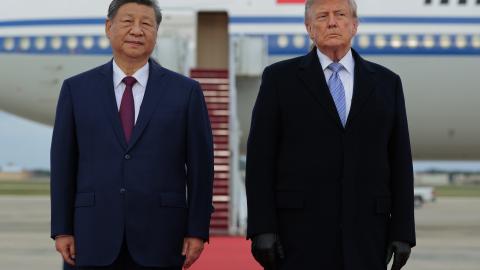
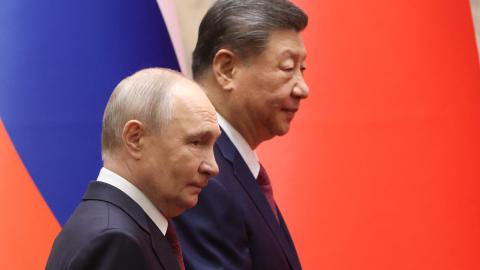
Russian President Vladimir Putin and Chinese President Xi Jinping enter the hall during a signing ceremony on May 20, 2026, in Beijing, China. (Getty Images)







Artificial intelligence and other technologies have emerged as defining factors in the US-China relationship. As innovation advances rapidly, US national security and export control policy must be tailored to protect America's military and technological advantages. Congress plays a key role in developing export control policy which prevents adversaries from accessing US innovations, driving military success abroad and economic gains at home.
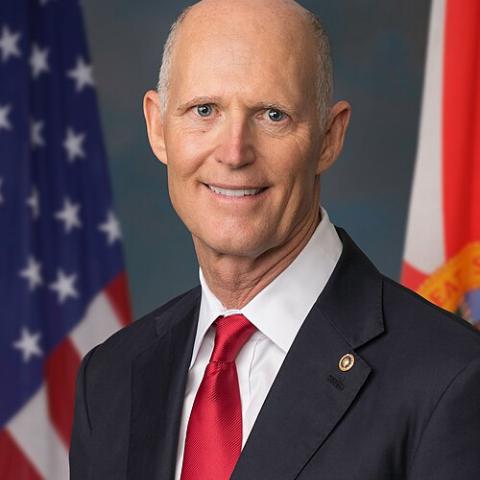
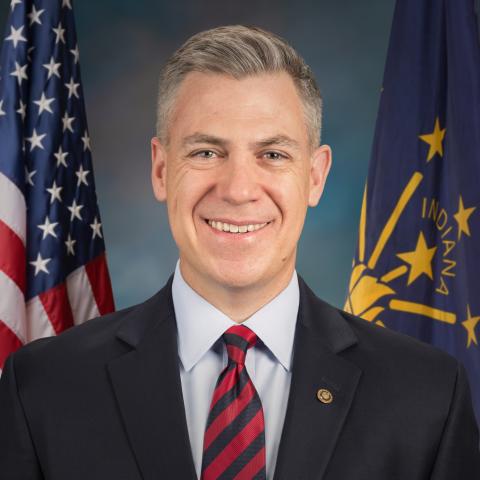
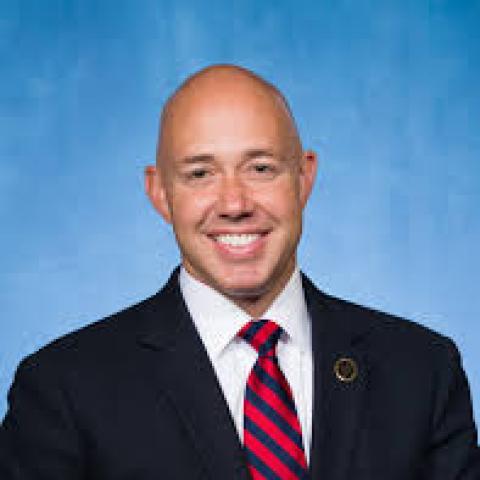
Join House Foreign Affairs Committee Chairman Brian Mast and Senator Jim Banks for a fireside chat on Congress's role in US export control strategy to outcompete China in technology and AI development. The conversation will examine ways to close loopholes, guard America's most critical technologies, and prevent Beijing from leveraging American innovation against American interests.
Listen on Spotify and Apple Podcasts.
Transcript
This transcription is automatically generated and edited lightly for accuracy. Please excuse any errors.
Joel Scanlon:
Good morning, everybody. Welcome to Hudson Institute. My name is Joel Scanlon, Executive Vice President here at Hudson. It's great to have you with us this morning. We're really privileged to be able to host today's discussion. It is by now practically cliche to say that we are living through one of the most consequential technological transitions in history. That does not make it any less true. Artificial intelligence promises to reshape economies, militaries, and potentially the global balance of power. And at the center of that change is a competition between the United States and the People's Republic of China.
The question of which technologies we share with whom and on what terms are not just questions of trade policy but matters of national security with profound implications. Getting the policy framework correct has obviously been a matter of intense debate in Washington because it is so essential. There are few better positioned to speak to these questions than our guests today: Senator Jim Banks of Indiana and Congressman Brian Mast of Florida, Chairman of the House Foreign Affairs Committee. Both have thought deeply about AI competition with China and made it central to their legislative priorities.
Senator Banks was elected to the United States Senate in 2024, having previously served in the House of Representatives for eight years, and currently serves on the Senate Armed Services Committee and Banking Committee, among others, and as a Navy veteran.
Chairman Mast served more than 12 years in the US Army, heroically working as a bomb disposal expert under the Joint Special Operations Command in Afghanistan. He earned the Bronze Star, Purple Heart, and other recognitions for his actions.
For all the talk of how divisive Washington is today, we've managed to bring together an Army man and a Navy man, a House and the Senate. We're honored to welcome both of them back to Hudson. They'll be in discussion with my colleague, Hudson senior fellow, Michael Sobolik. Thank you so much. Michael, over to you.
Chairman Brian Mast:
Well, we were classmates, so we came into the House together.
Michael Sobolik:
And y'all still like each other, too.
Chairman Brian Mast:
We do.
Michael Sobolik:
Impressive. Thank you so much for joining us at Hudson today.
Let's dive in. As Joel referenced, there are a lot of clichés when we talk about AI, and there are also a lot of analogies that we use when we talk about AI. The Industrial Revolution is often invoked interconnectedness and economic dynamism. A lot of folks will talk about the nuclear revolution as well, transformation and warfare, strategy, space race, and zero-sum competition that fuels innovation.
And I've also routinely heard the printing press referenced as well with social changes, literacy implications, and the like. How do the two of you think about what this actually is when we talk about an AI race? How do you think about it and what's at stake? Senator, we'll start with you.
Senator Jim Banks:
Brian just mentioned we came to Congress together in the election of 2016. So, we came to Washington with President Trump January of 2017. At that point, we had no idea that these issues would dominate everything that we care about on Capitol Hill and for the future of our country today. How much has changed over the last 10 years in this landscape? The AI race is not just an economic race, a national security race, but I think it’s a moral race for our country between us and the CCP. And what I mean by that is we can’t afford to lose this race to our biggest adversary, who is explicit. The CCP is explicit. They want to rule America under their thumb. They want their laws to apply globally, and the way that they can accomplish that is through winning this race and dominating our artificial intelligence.
If we care about the future that our kids and our grandkids are going to have in this great country as we celebrate this milestone next week, America 250, it’s really a question of which path do we take? Do we allow them to dominate, or do we control our own future? And the AI race, I think, will determine that. By the way, Brian is a real American hero, and I consider it one of the great privileges of my life to serve in Congress with him. We were freshman classmates 10 years ago. He’s not just a real American hero on the battlefield; he’s a hero in the Congress, what he’s doing. In 10 years, I’ve been in Washington, nobody’s done as much as he has as chairman of the Foreign Affairs Committee in the House to focus on real issues that matter, and he’s doing it.
But as we focus on these issues, export controls and the AI race and all of that that matters in the Congress, you see what matters, you see how bipartisan these issues are, and it’s really us versus them and who’s going to control the future. And I’m proud to stand with Brian and work on a lot of issues that I think will really determine whether we win, and not just win as a country, but win in a way that protects freedom and democracy around the globe or whether they win. It all comes down to some of these policies that we’re working on.
Michael Sobolik:
Chairman, I’d love to hear your thoughts on that same question.
Chairman Brian Mast:
One, thanks for those compliments. I appreciate it. I’m proud to work with you. I’m proud to work with you and the House. He’s a good enough senator. Didn’t you run unopposed?
Senator Jim Banks:
Almost.
Chairman Brian Mast:
Man, must be nice. I don’t even get to do that in the House. I’ll give you a different analogy. I don’t know if this is DC or Marvel, I think this would be Marvel, it’s like the spider that bit Peter Parker. It’s like the gamma rays that hit Bruce Banner, The Incredible Hulk, for those of you that don’t track comic heroes. I think your AI has the ability to create superpowers. Whether it creates a supervillain or whether it creates a superhero, that depends on the actions that are taken, but it creates superpowers for individuals or for nations.
It supercharges their military. It supercharges their ability to model different things in different ways, whether it’s what’s frequently spoken about but outdated at this point, a Mythos model that can go out there and circumvent security, whether in our financial industry or something else, or whether it creates something that can help circumvent our missile defense or all points in between, superheroes or super villains, and that’s the analogy that I would give to you on that. For us, America is the superhero in this fight, and China is the supervillain. They are coercive. They are the Chinese Communist Party and there’s nothing that I want to see done to enable the gamma rays onto the CCP.
Michael Sobolik:
Let’s talk about China a little bit. It’s a matter of record from a number of outlets that have reported PLA-connected companies in China with purchase orders of American highly advanced AI chips. What is China doing with their AI build-out? How is it impacting the way they’re planning to fight the next war, how they approach political warfare? What’s happening inside of China with artificial intelligence that we should be concerned about? Chairman, we’ll start with you.
Chairman Brian Mast:
I would look at AI chips in China like water supply, every bit of it goes to both the civilians that need it and the military that needs it. It’s the same thing. They don’t differentiate between the two. Military and civil fusion is literally rule of law for China. So, everything that goes to China for civil use, I jump to the conclusion that it also goes there for military use as well.
If there’s compute that is going into China for civil use, that is the same compute that goes into China for military use, whether it’s located directly within the borders of China, whether it’s used as a means by remote access or anything else, it’s used for one and the same and it will be used for nefarious purposes against their adversaries, which is us chief among them in this great power competition. I boil it down to that simply.
Michael Sobolik:
How we respond to what is the civil-military fusion, I know that both of you have spent a lot of time highlighting China’s approach to defense political warfare, and both of you have been really energetic in recent months with how you have been looking to blunt the People’s Republic of China’s advance with AI. We’ll start maybe with one example, then go from there.
The AI OVERWATCH Act has this really interesting core argument that the United States government should treat these highly advanced chips the same way we treat weapons in the sense that Congress should have the ability to review export licenses and have a say in policies for what we are or are not selling or sharing with China.
And there’s been considerable ink spilled in the city about not just the bill specifically, but about that argument. And both of you have been engaged in this. Senator, I’d love to turn this to you first. What would you say to the argument that for every national security action that we take in the AI space, there’s the potential to harm revenue that goes into R&D that actually keeps American companies ahead? We’ve heard this argument quite a bit. How do you think of those trade-offs with national security and economic competitiveness?
Senator Jim Banks:
Well, these companies are doing quite well. Brian and I were looking at stock prices over the last year for most of these companies, and they’re doing quite well. Going back to Brian and I’s military service, we both served in Afghanistan. We’ve both been in a war, and when you’re in a war, you don’t give your enemy your best weapons and technologies unless you’re Joe Biden and you give the Taliban the night vision goggles and all the weapons and leave town.
In a real war, you don’t help your enemy. That’s why AI OVERWATCH and GAIN AI before that were such important and, I think, groundbreaking pieces of legislation in this town, because what Brian and I were arguing is that these companies have to serve American interests first. Before you ever sell chips to China or an adversarial company, you have to meet the market demand in the United States first, which gets to your question.
If the demand is there, and it is there, and we all understand in this room, and Hudson Institute understands this and writes about it more than anybody, economic security is national security. If we allow our economy to be dominated by our enemy by giving them the best chips so that they can build the best robots and overtake the American economy, then the stock prices of these American companies aren’t going to matter because the Chinese companies are going to dominate and the jobs are going to be created there.
The jobs won’t be here for our kids and our grandkids. That’s why GAIN AI and OVERWATCH, which, by the way, codifies Trump policies on Blackwells and the higher-end chips and says that we can’t send them there to our adversary and GAIN AI said you can’t give better prices to Chinese customers than you give to American customers.
This is in America’s best economic and national security interests, and I would argue is the most America-first legislation that you’ve seen introduced in this Congress that Brian and I have advocated for in the House and the Senate, maybe ever that will determine the future of America’s superiority and dominance in our ability to create good jobs for our kids.
Michael Sobolik:
Chairman, there’s a part of the bill, AI OVERWATCH, that has, I think, gotten lost in the shuffle because a lot of that focus has been on the Congressional Review. I was struck by this simultaneous effort to not only prevent technology that’s sensitive in advance to getting to America’s adversaries, but also boosting the sharing of the US tech stack with trusted partners and removing questions on the front end to help American companies not only know where the US government thinks it’s dangerous to engage with economically, but also to make it very clear what the rules of the road are to help the stack get out quickly to trusted allies and partners.
What I want to ask you right now is, in this AI race, how do you think about what makes a trusted partner with something as sensitive as a data center in another country where a lot of these countries that we need partnerships with sit at the intersection of geopolitics where they have interest not just with us but with other countries too and China is equally trying to diffuse whether it’s robotics or biotechnology applications into those exact same sectors. How do you think about, on the one hand, making it easy for American companies to send their stuff to safekeep markets while also recognizing that China is courting those same governments as well? How do you think through that?
Chairman Brian Mast:
I think that’s interesting that you tie that to AI OVERWATCH because this is a part of my job as foreign affairs chairman that I wouldn’t have exactly predicted prior to being chairman, that a day-to-day part of my work is actually valuation of trust with take your pick of nations, right? Is our relationship with the king, the queen? Is our relationship with the prime minister? Is it with the coalition party? Is our relationship with the people that may not be a part of the same monarchy? Where is that trust? Who do we have that relationship with and what do we see in the longevity of our US influence and US relationship with those that are in power in that government?
And that’s the evaluation of trust that I couldn’t have exactly predicted would be a daily part of my work. Some of this is more black and white. When you look at China, they don’t make it a secret of where they’re looking to be coercive against other allies of ours or against the United States of America. That is very easy. Some of the other places are not as black and white because maybe they have historical ties with China, but they recognize the threat of China and they’re looking to move away from that. Or they have historic ties with China, Russia, Iran, North Korea, but we wrapped up Nicholas Maduro and his wife and put them in a cell in New York, and so you see things changing in that. So, it’s a day-to-day evaluation of that.
But to tie this to the onset of your question as well, we have to balance looking at those relationships and we have to balance as policymakers, doing everything that we can to enable American industry, which we want to do. We have a true desire to do that. We want to see great American stories. And NVIDIA is a great American story right there.
Engineers, developers, Jensen, that’s a great American story. I want to enable them, right up to the point that we enable our adversaries, that has to be the line, and you have to be able to make two things true at once.
And so, to use NVIDIA as a specific example, I believe that Jensen Huang can go into China and win. He believes that he can do that. He believes if he’s allowed to compete there, he can go in there and defeat Huawei and make his tech the tech of choice there. Good for him. To me, that doesn’t equal that the United States of America wins. Why?
Because China needs America’s compute. And if they win there, then China got all the compute that they need to make whatever the next thing is that people are talking about after Mythos, or whatever it is that they need to circumvent missile defense of the United States of America, or you name it. So yeah, that’s what we have to balance. We want them to win, but we can’t allow it to make America lose.
I’ll give just maybe one other analogous point to this. Let’s take General Atomics or Lockheed Martin or take your pick of American defense contractors. We don’t sell F-35s into China. It would give them more market share.
It would create more dollars coming in for Lockheed to have R&D, but we don’t sell F-35s into China because there is a line somewhere that has to be drawn about where you’re giving them that market share, where you’re letting them sell into, and where it’s actually coming back to be counterproductive to the United States of America winning.
Michael Sobolik:
Let’s step away from chips and talk about the machines that make the chips. One of the most important government decisions made in the past, gosh, seven years, seven, eight years was President Trump’s decision in his first administration to slap controls on the export of these very highly advanced EUV lithography machines to China, which effectively put the ability of companies like Huawei and SMIC, cut off their access to TSMC in Taiwan, and made it such that they could produce chips but they’re not competitive or as advanced as the ones in NVIDIA, AMD and others can make.
One of the biggest reasons we have this compute advantage that we have right now, there’s this interesting turn and focus to not just the cutting-edge chips, but even the legacy chips. And how even if it’s not an EUV machine, chips that aren’t as advanced but still important that are made by these DUV lithography devices still have national security implications that more people are starting to talk about and discuss in the China context right now.
Chairman, I know we were just chatting, but I actually want to turn this back over to you. Number one, unpack for us some jargon that we hear a lot with EUV and DUV lithography. What does that mean? And number two, why should we be concerned about legacy chips when we’re looking at China?
Chairman Brian Mast:
Maybe the most simple way to unpack it, EUV, sub seven nanometer production, DUV, seven nanometer production and greater, would be just the blue collar, rudimentary, whatever way it is that I’m boiling it down right now to make it as simple as I can.
To go beyond that, the importance of it, whether it’s the United States of America and our tools that go into those often Dutch machines like ASML and our parts that go into that, we need to find this parity with our allies to say, “Everybody says they want the Chinese market, we want those inputs, but,” there’s a but at the end of that sentence, right?
“We understand all the risks, but,” and that’s the difference between policymakers and CEOs, is we have to deal with the but at the end of it. And the but at the end of it is, they’re using the DUV now to get as close as they can to parity, to getting the compute that they need to advancing their full stack of AI, their modeling, their everything.
And so, it’s another place in this game of cat and mouse that we have to deal with it to say, “We’re going to help American companies as much as we can to run faster than Chinese companies, but we’re also going to do everything that we can to throw a stick between their legs and trip them up as well,” and that’s what this is.
And we need allies whether in the Netherlands, whether in Japan, whether in other places, when they’re working with the tools that go into all of these to say, “We’re in no way, shape or form, given the importance of all of this, are we going to help China run faster.”
And that includes in the highest tech, what would create let’s say a Blackwell, and that includes in something that’s going to make an H200 or something that predates that. We’re not going to help them in that, because the truth is, there is an effort to dominate the market in the lower tech as well, which affects a host of different things from what we might consider. . . There’s still tech, but what we might consider more rudimentary communications at a basic level in the military that uses older chips. It’s not using the latest and greatest. So yeah, it still affects it at a high level and we don’t want them to dominate that.
Senator Jim Banks:
It does prove that export controls work, right? And there are mixed messages from, I think, President Trump, he’s so good at surrounding himself with different voice. He did this in the first term; he’s done this in the second term too, different voices from Lutnik to Marco, with different points of view, and oftentimes competing points of view. And we have some notable CEOs who despise our export control laws. Brian’s leading the way on these issues.
The reason that I went from the House to the Senate, I served eight years in the Armed Services Committee in the House because that’s what I care about, but I recognize the whole eight years I was in the House that it was the financial services committee and the House that was blocking a lot of the good things that we were trying to do on the national security front. So, I wanted to be on the Senate banking committee because of these export control issues. And Brian’s leading the way in the House on foreign relations and a lot of us, McCormick and me and Ricketts and a growing group in the Senate is trying to lead the way on the banking committee on this front too.
And that’s why Overwatch is the. . . There are three or four bills that are hot that Brian is passing on his side that we’re trying to get through on our side, get into the NDAA, and a window of opportunity to modernize and strengthen these export control laws, because history shows us how valuable they are and how much they work.
Michael Sobolik:
I think we could probably spend the whole time just talking about the legislation, but let’s divert to another core function of Congress, which is Oversight. Senator, I was intrigued by some letters that you sent recently to the CEOs of some of these frontier labs, warning not just about China broadly but insider threats, specifically. From what you’re able to share in this venue, was there something that you were briefed on or acquainted with that alarmed you and gave you specific cause to reach out in this way?
Senator Jim Banks:
Well, I mean, the short answer is yes, but this isn’t a surprise to anyone in the room. I mean, look at what the CCP has done on college campuses all over the country over the last several decades. I mean, they’re very talented in their approach, and a lot of these AI companies rely on Chinese nationals as engineers, and they’re deeply embedded in their companies.
So my oversight letter and some of the language that I was successful getting into the NDAA markup would empower the Department of War to have a better view of some of these insider threats within these companies. I mean, obviously, the Anthropic DOW dust-up, and I’m glad there’s been some progress in the last couple of weeks. I’ve met with both of them, with both sides on that front, and there are some important conversations going on. But the Department of War deserves to know, especially as they rely more and more on these companies, deserve to understand what the insider threats are that have potentially infiltrated some of these companies.
So yes, there’s more, but it’s an obvious area of concern when you see what the CCP has gotten away with for way too long and how they operate.
Michael Sobolik:
Again, generally, how has the response been from industry so far? And I ask because as you say, we are very familiar with insider threats from China and other domains, and I find it remarkable that we were talking about Confucius Institutes in 2018, and here we are in 2016 and we’re still having issues with higher education and CCP Malign Influence that at times can feel intractable. Early on in these conversations, how is it going with the labs? How are they responding?
Senator Jim Banks:
Well, that’s a good question, and that’s why we planted language on this front in the NDAA markup and passed it in the Senate markup that will force it. So, we’ll see how they react to that. We still have to get the NDAA passed, and we’ll see what kind of lobbying effort there is against it. I mean, these companies have, as they grow, as they become larger and as they flex their muscle more on Capitol Hill and weigh into these issues, they’re acquiring influence and political capital in Washington. And some of these companies fight back really hard, especially on the export control issues. So, to answer your question, I think it’s to be determined.
Michael Sobolik:
Okay. We talked about the frontier in one way or another almost exclusively so far, whether it’s insider threats from the CCP trying to get access to frontier companies, whether it’s them getting in our frontier chips. But I think it’s also important to recognize that Beijing appears to have their own theory of victory for how they are thinking about this race with the United States. And it seems that they have a gamble to win, even if they can’t get the latest and greatest chips, and even if their labs aren’t the ones advancing what the frontier is. When you look at adoption and diffusion of AI into key industries, China does have some structural advantages. We’ve had a lot of conversations about industrial policy here in the United States, which I think there’s a lot of good reasons for that, but let’s face it, no one does industrial policy like a communist party, and that comes with pluses and minuses, but they are quite good at it.
And when you look at robotics, for instance, Unitree being a great example, by many metrics, they do appear to be ahead. And I think it’s hard to look at this and not have this nagging question of, is this going to be a 5G Huawei redux, where maybe there’s really good Western tech out there, but if they can get something that’s good enough and get it to market at artificially low prices quickly, they might be able to seize share and set standards in a way that is quite difficult to unravel.
Chairman, let me ask you about this. How do we not just protect our crown jewels of technology at the frontier? How do we compete more effectively at adoption with AI, certainly here in the United States, but even abroad? How do you think about that?
Chairman Brian Mast:
The outputs, the things that come out the other side of all of that AI can give you a superpower for, right? And is what I think you’re asking about. So, is it the robots that come out? Is it the models that come out? Is it the ability to conduct various drone warfare? All of those things, that’s where we tie it to our work. When it touches national defense, we touch it. We want to see the commerce fully enabled.
If it’s just a Jetsons Rosey for the house that’s going to help you do your dishes, we don’t care as much. We want to see the commerce advance. If it’s a Rosey that’s carrying a rifle, and it’s going to go up against US tech, whatever, that’s the other side of it. And I think this is where it becomes really difficult because of that. . . what you pointed to, how inexpensive they make the tech to do it, which means it gets so much more integrated into so much of civil life, whether it’s their construction industry, and they’re using drones to do work in construction industry that we aren’t touching in any way, shape, or form, but then they advance it rapidly. They see its faults and its capabilities. They fix them, and then they send it out to the battlefield.
And I don’t have the solution that I can give you to it, other than to say it’s a big liability for us in the way that they fuse that, and they fuse that very inexpensively. The point that I would say is it’s not a silver bullet, but it’s one thing that we cling to. You pointed in the onset of this question that they have an industrial advantage in this.
I think we have an industrial advantage in our engineers, in our creativity as Americans. They’re constantly having to copy the United States of America to keep up, to use great espionage capabilities, which is very, very real, to keep up, and were it not for that, I think they would be even further behind. But given that that is a part of the world, and it does help them keep up, we have a keystone in this. And the keystone in this archway that we control is those chips, the advantage in those chips.
And with AI, it’s something that the better it gets, the better it gets. The more advanced you get, the more advanced you get. And so there is an ability for us to stay ahead in this race and advance ourselves more ahead if we can hold them back, either a little or a lot. Again, people always talk about Mythos. I think it’s just a good example to use. With Mythos, I don’t care. . . I care. I care, but I’m going to say it this way. Whether we’re six days or six months ahead, it’s a big deal. It matters that we have six days to have a model that identifies holes and then works to plug the holes, versus if they’re six days ahead of us and they have six days to say, “We’re going to exploit something on your side.” Even just that little bit makes a difference.
So if that’s what we have to cling to by the keystone that we have with all the other industrial advantages that they might have, then that puts an even finer point on why we have to hold onto that and hold onto that lead.
Michael Sobolik:
Senator, let me get your thoughts on this, too.
Senator Jim Banks:
By the way, the Chinese are so good at using the Rosey that does your dishes and weaponize it, and hard code it for espionage purposes. Or do we want to live in a world where you post something that’s pro-Taiwan on social media, and Rosey won’t do your dishes anymore? The sinister application of anything that they do, produce, and send here has a significant consequence.
Michael Sobolik:
In that scenario where maybe you’re forced to delete a tweet if you want help around the house from your—
Senator Jim Banks:
Just saying.
Michael Sobolik:
. . . robot, which. . . Yeah, I see how you got there.
What are steps that we can be doing now, not just to blunt Beijing’s access to tech, but to boost competitiveness of, say, robotics industry here, or drone alternatives to DJI, not only to protect our tech, but to promote in the key industries, whether it’s biotech or medicine, robotics, what have you? What does promoting competitiveness in our unique capitalist system look like?
Senator Jim Banks:
Yeah, I think it’s. . . To simplify it, the defense supplemental is a re-industrialization of building munitions, replenishing our munition stockpiles, but also a boost to defense manufacturing in our country. The Big Beautiful Bill did this too, a substantial investment there. So, $1.5 trillion defense budget through supplemental and through the reconciliation process it’s a big shot in the arm to defense production. And then in the NDAA policies that would further invest in American drone manufacturing, it all ties together. So, I think this is an area that President Trump ran on this. He’s been consistent on it. And like everything else, it’s a matter of resources, but that’s what we’re fighting for, and this large defense boost I think will go a long ways to get us there.
Michael Sobolik:
Y’all have colleagues on the Hill who think about these issues quite differently, and they are trying to shape the conversation as well. Somewhat recently, maybe within the past month or two, Senator Sanders held this widely covered big public event on the Capitol about international cooperation with AI. And he had a couple panelists who were from the PRC, and he integrated their perspectives in, and he has been really forward leaning, not just about the need for a moratorium on data centers for safety reasons, but also the need for the United States to cooperate with China, instead of blunting their access, and thinking about this as a race, thinking about this through the lens of cooperative arms control from the Cold War. And he actually referenced, interestingly, the relationship between Ronald Reagan and Mikhail Gorbachev, and how there’s this history of the United States being able to sit down with geopolitical adversaries for a negotiation that is in some way mutually beneficial to the interests of both.
Why can we or can we not do that with China today? And what would it take for the United States to actually have meaningful arms control talks with Beijing?
Senator Jim Banks:
Well, it means that you have to have the upper hand, and Reagan had the upper hand. So that’s what Bernie Sanders will never admit or understand, is American strength and economic power, military power, that’s the essence of peace through strength. So that’s what we’re fighting for, to continue to give America the edge and give us the upper hand. The president’s negotiations with Xi in Beijing a couple of months ago and ongoing. . . I think we have a job on Capitol Hill to empower him with these export control tools to continue to give him the upper hand, and that’s what I’m pushing for.
Michael Sobolik:
How do we know that we’ve won? We talk a lot about winning, and there are metrics that are easy to gauge in the short term to know how we’re doing. What does winning this race actually look like? Will we know in the moment if we’ve won? If we lose it, will we actually know in real time? How do we actually assess not only how we’re doing day in, day out, but the end state outcome that we can clearly define victory by in the AI race? Chairman.
Chairman Brian Mast:
I think that layers well on your last question. That’s some communist shit to say, “We’re America, and we want parity with China.” I’m an American. I want superiority to China and everybody else for our industry, for our tech, for everything, and I think that leads to American national security. I look at every chip like a little Chinese hacker that was trained in the United States of America and is headed over there to go out there and distill some model here or hack into some company. And that’s how I look at it. I’ll use Jensen Huang’s own words. I think he said the AI race is an indefinite race. National security is an indefinite race. It’s not something that, “Okay, we won national security, and we can stop. We won deterrence, and we can stop. We can stop deterring. We won that.” It’s an indefinite race. It doesn’t stop.
And the moment that you give up or you decide that your philosophical viewpoint is, “We just want parity with them,” that will be a defining moment to say that you’ve lost the race, because that will not be the philosophy of China by any means. It might be their outward statements in some public media, but it will not actually be their true philosophy. I wouldn’t believe that for one second of the day. So that’s what I would say about it. It never ends. I think you will be able to very clearly see defining battles that are lost. I wouldn’t say that if I saw us lose a battle, I would define that exactly as losing a race. I would say Mythos, again, I’ve mentioned it three or four times here, just because it’s a good example that so many people are aware of, is a defining moment of victory in that, right?
The race isn’t over. We didn’t, “Oh. Hey, our modelers. . . Anthropic identified holes in our system and then was able to fix them, and they alerted the United States of America ahead of time, so we won that.” We didn’t win. The moment that that happened, it was outdated information, and there were companies working to advance beyond that to include Anthropic, to advance beyond that. So it’s an indefinite race. It keeps going. We have to win as many of those individual battles as we can to ultimately be ahead in the war, a war that doesn’t end.
Senator Jim Banks:
I think there’s the race to super intelligence, and they need our compute to get there. And whoever wins that, I think the turbocharge from that will be apparent to everybody. But then there’s the global market race. And what was President Trump’s first international trip last year was to the Middle East, UAE, Qatar, and Saudi Arabia, and part of those deals that he negotiated with them was for their reliance on American AI instead of China. And I think his administration was. . . They made that their first international priority, and I think it will prove to historically be to our benefit. But it has to be a market race as well, where we. . . and you brought this up earlier, but where we work with our allies to increase markets for American AI instead of Chinese AI in these countries. I think it will be apparent who wins that when we continue to dominate the global market.
Michael Sobolik:
We’ve talked about the Mythos moment a few times throughout this conversation. What keeps me up thinking about where this world is heading, and some of the dark, very dangerous scenarios that could be ahead of us would be a Mythos for biotech. Because if you just look at what China is doing in that domain alone. . . Operation Warp Speed I would argue is one of the greatest successes of Donald Trump’s presidency. The rush to market for life-saving cure for this novel coronavirus that was ravaging the world was a huge testament to American success.
China right now is looking to pull those vaccine supply chains and drug discovery and drug research away from America toward China. And the nightmare scenario that I greatly fear is waking up one morning to a pathogen that didn’t accidentally leak from a lab, but was purposefully leaked, and then China holding the research. Not just that, but the supply chain for the vaccine that could cure it, and that’s bioengineered in a way to target very specific people.
That is a Mythos moment in just one domain that is already being shaped by AI that greatly troubles me. When you think about either a Mythos for biotech or a Mythos for robotics or whatever scenarios that may trouble you or y’all spend time thinking about, what are the threats that we aren’t taking seriously enough? What could China do if they were, to your point, Chairman, to get that kind of high point advantage of, “We got this before the Americans did”? What are some of those threats that we should take more seriously that we’re not thinking enough about right now?
Chairman Brian Mast:
I think you outlined them well. Biotech is something that is on the forefront of conversation, I think, in our lawmaking bodies. People weren’t thinking about that as much as they might have been thinking about humanoids or something like that a year ago, but it’s becoming an increasing part of the conversation in exactly the way that you framed it.
Not to speak for Jim, but I think Jim and I both entirely agree that what the administration put forward is exactly what we are trying to codify through a number of different lawmaking exercises. Secretary Hegseth put it forward, Secretary Rubio put it forward, President Trump put it forward. John Ratcliffe, CIA director, put this forward of what needs to happen with AI to limit those vulnerabilities as much as we can, and that is make sure that there are not Chinese military end users. Which, to go back to the first question, if it goes there for civil use, it’s going there for military use. Make sure that there’s not remote access to the chips and the compute, and make sure that. . .
As Jim has worked intensely on, make sure that if there’s a US company that needs this product, that it’s not going to a Chinese company first. Just common sense things that are at a basic level of industry to make sure that we stay ahead on whether the threat is biotech, whether the threat is a weaponized rosy, whether the threat is something in distillation or circumventing with their guided missiles, our missile defense, you name it, whatever that threat is, that blueprint of not allowing these things to happen is what we do to prevent that from being as much of a liability.
We won’t, in my opinion, fully tame that as a liability. It is cat and mouse, and we will continue to work to make sure that they do not get ahead in that cat and mouse game. But that means that goes back to that other question. It’s an indefinite fight. It’s an infinite fight. It doesn’t end.
Michael Sobolik:
Senator, I know you’ve thought a lot about biotech. What keeps you up at night with AI?
Senator Jim Banks:
I think it’s what we don’t know. I don’t think we can fathom the worst-case scenario, but the policies that we’re working on, I think provide consistent protections. It might not solve everything, but I think we can do so much more to protect our interests and our country, our national security, and protect our kids’ livelihood and futures. But what keeps me awake at night is what. . . All of this is so rapid and the scenarios are day by day are really scary, but I don’t think we can fully fathom what comes next.
Chairman Brian Mast:
Can I touch on that for a moment? I think it’s in part to speak of some of the legislation we’ve worked on like Overwatch, and where you think about Congress is an old dog, and this old dog doesn’t like to learn new tricks. It scares people to have new things put in place. And you have a lot of people in both sides of the Congress that they can spell AI, but beyond that, they couldn’t tell you about anything about the stack. And if you can’t comprehend how we’re at where we are today or anything about that, it is impossible for you to comprehend where we could be in two years or five years. And that is a big liability just in the comprehension, I think, of lawmakers in the House and the Senate. And so you have to have people that get smart on this because if they can’t comprehend it, they can’t comprehend the threats.
Senator Jim Banks:
When I left Brian and went to the Senate, the nursing home, where we serve jello at lunch every day, I’m not kidding. I serve with colleagues who they’re at an age where they just don’t get it, and it’s not a focus of theirs. But that being said, what’s encouraging to me is how broadly bipartisan some of these issues are. The whole eight years I was in the house, and much of my time in the Senate, we have these dogfights between Republicans and Democrats, but when it comes to issues like when you get Elizabeth Warren, and Jim Banks, and Andy Kim, Dave McCormick, and we’re on the same page and working on advancing some of these export control issues. It shows how. . . It’s encouraging, and it shows what’s at stake. And these are areas where we can bring parties together. And there’s nothing partisan about saving our country, about protecting our interests and our jobs and our national securities. I’m greatly encouraged on that front.
Chairman Brian Mast:
I could say it the same way on our side. Every national security chair and ranking member, same thing, looking at it pretty much rowing in the same direction.
Michael Sobolik:
Final question before we open it up to Q&A. If you do have a question, slip your hand up. We’ll have microphone coming around, state your name, affiliation, and please have it actually be a question if you would like to ask a question. My final one before we open it up, both of you had made the observation that a lot of the work you’re doing is already codifying administration policy. What is one thing that the Trump administration has not yet done on AI that they should do?
Chairman Brian Mast:
I’ll start. I think it goes to, again, I’ve said it’s an indefinite race, and it just means keeping up. I think they have the blueprint. I’m not going to give you another thing. I think they have the blueprint. Don’t sell to Chinese military end users or other nefarious end users. That’s a day-to-day operation. That’s an operation that’s going to change with the power of chips because somebody can say, “Well, we just want to do H200s right now or now we want to do Blackwells or we want to move to Reuben or we want. . .” It’s going to be a fluid conversation constantly. Don’t let them have the remote access if we’re not going to put it in their country. Don’t let them have the tools to make it to advance in making these chips. Don’t let them take away from our US industry purchasing what they need, all things that we’ve worked entirely on.
I think that’s a tremendous blueprint that the administration has laid out. It’s working to implement that on a day-to-day basis, which is more easily said than done. And that’s what I think we’re trying to work on very diligently, is the implementation of all of that in a flexible way, because again, it’s technology that’s morphing on a day-to-day basis, and relationships are morphing on a day-to-day basis.
And if you make it so rigid that you just black and white can’t do something at all, I think you’re doing damage. If you make it where it is subjective in the way that we can look at things, then you’re giving a flexibility to lawmaking bodies in a system that often doesn’t exist, but it does work in our foreign military sales process and to have flexibility. So I think that’s one example of how we’re looking at this to touch on.
Senator Jim Banks:
Yeah, I agree. The administration policy on Blackwells and high-end chips, to me, it’s not a matter of what they haven’t done yet. There should be no flexibility on it. We see how the Chinese, how they’ve leveraged rare earth minerals against us, and the administration is doing so much to untangle that, what we’ve done in the big, beautiful bill, and over the last year and a half to focus on that in a big way to invest in that here and untangle our reliance on them. I hope as the president negotiates with Xi, just draw a red line and never give up on that front. Never send them our high-end chips, if any chips at all.
Michael Sobolik:
All right. With that, let’s take—I have seven minutes left or so, let’s take some questions. We’ll start right over here.
Audience Member Patrick Wilson:
Good morning, gentlemen. Thanks. I appreciated your talk about particularly the emphasis on getting on offense. I would say as a . . . I’m sorry, Patrick Wilson from Semiconductor and Innovation Group. So both of you come from states that have universities that lead in the semiconductor sector and they’re trying to fix a problem.
So, I’m wondering, how do we get a bipartisan consensus to get on offense? As an outsider, I would say maybe 90 percent of the effort in Congress right now is on the defensive side, the work that you guys are doing. But I would note that we have produced the same number of engineers in this country for the last 25 years, the exact same number. China got ahead of us on research and development last year for the first time in 50 years. How do we make more engineers? How do we get more research and development to stay at the forefront?
Senator Jim Banks:
Yeah, tell your kids to go to Purdue. And then find them good jobs at home. To your point, you’re hitting on. . . So as we see more investment in manufacturing and on this front, and places like Indiana, Purdue is pumping out the best of the best, but you have to make sure that there are seats in these classrooms for American kids, for Hozier kids at Purdue and not. . . At one point, Purdue had more, maybe they still do, more Chinese national students in the engineering program than American students, then students from Indiana to state college. So, while I understand the reluctance to ban them from coming to our great universities, we should always make sure that there’s seats in those classrooms for our kids.
Chairman Brian Mast:
For me, you got to be freaking hungry. We got to be hungry as a country across the board, across the community, across the states to be better than our adversaries. I’m just talking about it personally as a father. My kids are in summer school right now, not because they. . . Florida virtual summer school, not because they failed something, but because I make them take an extra math class every summer, so that by the time they graduate high school, they’re four more math classes ahead of what they otherwise would be if they only took the fall and spring semester curriculum. You got to be hungry. We got to be hungry as parents.
When I go out through Silicon Valley and places like that, they talk about the basics that people can’t do. CEOs that will interview every person that’s coming into their country, and they’ll say, “You know what? I’ll ask a basic question.” And you can’t believe how many people can’t do high school algebra as somebody that’s coming in with an advanced degree.
I came from a special operations background. What we said was special about special operations was being able to do the basic things at the highest possible level. And we have people that are not able to do the basic things at a mediocre level. We have to be hungry to fix that, and that goes to all levels of school, whether it’s Purdue or whether it’s UF, Miami, FSU, FAU, whatever. We got more than one school in Florida. So we got a lot of them. It takes me longer to talk about, but we got to be hungry.
Michael Sobolik:
Other questions here, here in the front.
Audience member Tsiporah Fried:
Thank you. I’m Tsiporah Fried. I’m a senior fellow at Hudson, senior visiting fellow from France. So you mentioned trust with partners in your presentation. And you are certainly aware of the kind of shock wave following the withdrawal of Mitos and Fable that happened in Europe and which reinforces, in fact, the movement for strategic autonomy and blacklisting some American companies like Palantir. We see that in Germany, for example. What do you respond to this and this nightmare of the kill switch? And I have a second question related, which is more focused. What would be the impact on interoperability when we have more and more sophisticated AI-driven C2?
Senator Jim Banks:
President Trump is so good at bringing tough love. He brought some tough love to the Senate Republican lunch yesterday, and he takes a lot of tough love abroad to our allies, and the outcome of that, I think, has been healthy and good in many ways. But as our allies step up and do more and invest more on their national defense, I think American policymakers are noticing and paying attention to that too.
Chairman Brian Mast:
I mean, I would say, look, I want to handshake America. The old idea that your word is your bond, I want that to be the case. And so as we have great American tech companies putting something out there, I’m going to your kill switch part of your question right here. You want to be able to trust across the board that the tech being sold is exactly what you say it is. And I would have no other expectation for the tech companies in the United States of America, but there has to be benchmarks that are met. And again, going to the term cat and mouse, this is the cat and mouse of it. We wouldn’t expect you to misrepresent what is your tech, what its capabilities are, and how it would or would not be observed or looking at somebody else that would be dishonest and that would break that handshake bond.
But absolutely, we have to have on the other side of it the affirmation that something is going where you said it’s going to. Something is being used for what you said it’s going to be licensed for and that has to be both sides of the relationship. That has to be the trust that you’re not allowing diversion of something in a way that is not allowed. You’re not allowing diffusion of something in a way that is not allowed. You’re not allowing examination of something in a way that is not allowed by our adversaries. And if that trust is broken, then the commerce relationship will also be broken as well. But I think that’s the piece on the kill switch. I wouldn’t have that expectation for our industry.
Michael Sobolik:
I know we have more questions, but we’re at time, and I know that both of you have been very generous with your time this morning. Senator Banks, Chairman Mast, thank you for coming to Hudson and for having this conversation.

Join Hudson Institute Senior Fellow Peter Rough for an online conversation with Pancevski about his new book and the broader implications of the Nord Stream affair for European security, transatlantic relations, and the evolution of unconventional warfare.



Hudson welcomes Karel Řehka, former chief of the General Staff of the Czech Armed Forces, to discuss the changing security environment in Europe and its implications for the Czech Republic, the North Atlantic Treaty Organization, and the transatlantic alliance.


Join Hudson Institute Senior Fellow Ludovic Hood for a panel with David Wurmser of the Jerusalem Center for Security and Foreign Affairs; David Makovsky of the Washington Institute; and Senior Fellow and Director of the Center for Peace and Security in the Middle East, Michael Doran, as they discuss the state of the race and potential paths forward for the United States–Israel relationship.