




















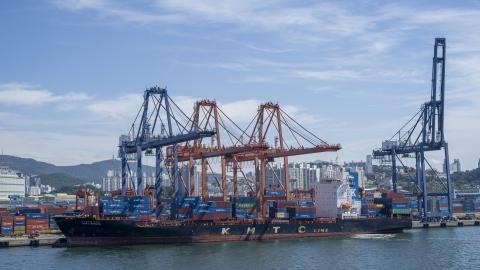
The maritime balance in the Indo-Pacific is no longer calculated by how many ships sail today, but by how many can be built, repaired, and regenerated tomorrow. Platforms matter; industrial endurance matters more. China entered this decade as the pacing naval challenge. It now holds a decisive and widening lead in shipbuilding capacity. The United States cannot close that gap through domestic shipbuilding alone within the timeframe deterrence requires.
The US Shipbuilding Shortfall
The US Navy fields roughly 290 ships, compared with China’s 331. But even that arithmetic understates the imbalance. China’s maritime strength extends beyond the People’s Liberation Army Navy (PLAN) to the China Coast Guard, People’s Armed Forces Maritime Militia, merchant fleet, and dual-use commercial shipping. These maritime forces can be mobilized for logistics, refueling, gray-zone coercion, and surge operations. The United States, by contrast, has limited coast guard presence in the Western Pacific and a modest auxiliary and sealift fleet. The disparity is structural.