















Executive Summary
- Battlefield assessment: Russian forces made tactical gains in several sectors despite no changes at the strategic level, while combat continued across the Kupiansk–Kostiantynivka–Pokrovsk arc.
- Increased drone activity: Russia sustained another record-high Shahed drone campaign in April, and Ukraine continued to expand its unmanned and interceptor drone capabilities.
- Russian combat losses: Ukrainian reporting assessed that Russia’s battlefield losses outpaced its force-generation efforts for a fifth consecutive month.
1. Battlefield Assessment
The battlespace remained highly active over the last week, as Russia and Ukraine fought at a sustained operational tempo across multiple sectors. The Ukrainian General Staff reported intensive combat activity along the Kupiansk, Lyman, Sloviansk, and Kostiantynivka axes, while the Pokrovsk and Huliaipole sectors continued to absorb the bulk of the fighting.
Nevertheless, despite persistent Russian tactical pressure bringing localized gains, the battlefield geometry remained unchanged at the strategic level. Open-source monitoring suggests that Russian forces made tactical gains east of Kupiansk, east of Kostiantynivka, east of Kramatorsk, northwest of Hryshyne, and near Novopavlivka.
Ukraine’s Unmanned Systems Command continued to systematically target Russia’s air-defense systems and radar infrastructure, particularly in occupied Ukrainian territory. Over March and April, Ukraine targeted nearly 80 Russian surface-to-air missile, radar, and electronic warfare systems, an increase of 300 percent over the previous two months. These operations provided observers with brief glimpses of Ukraine’s manned tactical aviation platforms in action, including the MiG-29. The Ukrainian Air Force flew brief combat sorties, executing air-to-ground missions with Western munitions.
Meanwhile, open-source reporting confirmed that Russian Shahed drone activity continued to rise significantly. In April, Moscow launched more than 6,580 drones against Ukraine, another record high over a one-month period. A Ukrainian official reported that roughly 5,800 of these drones, including some 4,800 Shaheds, had been intercepted, for an overall interception rate of approximately 89 percent.
Shahed drones accounted for roughly 74 percent of all systems Russia launched at Ukraine in the month of April. The Kremlin’s median attack package incorporated 158 drones per strike wave. Decoy systems comprised approximately 35 percent of Russia’s launched platforms, underscoring Moscow’s continued emphasis on saturation tactics designed to deplete Ukraine’s air defenses.
Finally, Russian maritime assets evinced new adaptations designed to protect against Ukraine’s increasingly successful naval drone campaign. For the first time, open-source imagery revealed a Russian Project 21980 Grachonok-class patrol boat equipped with large anti-drone protective structures. This new protective effort comes in the wake of a reported Ukrainian naval kamikaze drone attack in the Kerch Strait less than two weeks ago. The attack, which targeted a Grachonok-class vessel, reportedly resulted in fatalities among the craft’s crew.
Russia’s new defensive measures reflect the Kremlin’s growing concerns about the survivability of its small naval platforms operating in contested littoral zones increasingly saturated with unmanned maritime threats.
2. Russia’s Combat Losses Outpace Its Force-Generation Capabilities
According to official Ukrainian reporting, Russian forces suffered 35,203 personnel killed or seriously wounded in April. This marks the fifth consecutive month in which Moscow’s battlefield losses exceeded its estimated force-generation and mobilization rates.
Ukrainian officials, including Defense Minister Mykhailo Fedorov, continue to frame this trend as evidence of a widening attritional imbalance driven by Ukraine’s expanding drone warfare architecture. Fedorov has set a strategic objective to eliminate or severely incapacitate 50,000 Russian personnel a month.
Robert Brovdi, the commander of Ukraine’s Unmanned Systems Forces (USF), the unit responsible for the country’s military drones, sees the conflict through a similar lens. He increasingly frames the drone war using the language of industrialized attrition and battlefield mathematics, or the systematic calculation of losses and replacements.
Citing verified loss data from Delta, a situational awareness and battlefield management system developed by the Ukrainian military for use in its war against Russia, Brovdi has confirmed that Ukrainian drones eliminated a large number of Russian personnel in both March and April. These losses exceed the threshold of 29,500 troops that the Kremlin can replace each month. According to Brovdi, Russia’s mounting casualties now outpace its mobilization efforts.
Brovdi has emphasized that some of Ukraine’s most effective drone formations, including the 414th Separate Strike Unmanned Aerial Vehicle Brigade, are achieving more than 30 confirmed strikes per crew per month, while the broader force averages approximately 15.2 strikes per crew per month. He views the “Standard-10” benchmark, a minimum goal of 10 confirmed strikes on enemy personnel per crew per month, as the threshold necessary to sustain attritional pressure beyond Russia’s regeneration capacity. The drone commander’s remarks reflect Kyiv’s growing conception of unmanned systems warfare not as a mere supporting capability, but as a scalable force-generation and force-destruction mechanism designed to systematically offset Russia’s manpower advantages.
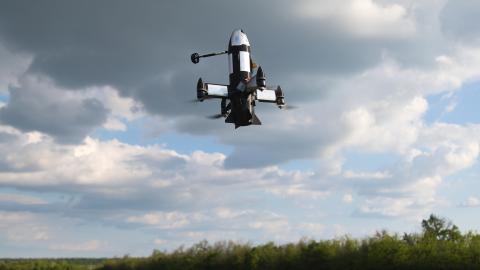
At the same time, Ukraine’s drone-hunting drone units continue to accumulate battlefield experience and operational maturity. Recent combat footage from Ukrainian airspace shows multiple instances of Ukrainian interceptor drones successfully neutralizing jet-powered Russian Shahed variants. This capability appears to be proliferating beyond specialized units into broader force structures across the Ukrainian military. Ukrainian official sources report that 194 different units have recorded interceptions to date.
3. What to Monitor in the Coming Weeks:
1. If current drone warfare trends persist alongside a sustained high operational tempo, Russian forces could incur monthly losses of up to 40,000 personnel by summer 2026.