








American policy toward Russia rests on a dangerous mistake: confusing Vladimir Putin’s capacity for destruction with strategic strength. His war against Ukraine has weakened Russia and undermined his own ambitions. Treating him as indispensable to peace risks prolonging the very aggression the West seeks to end.
After more than a quarter-century in power, Putin has constructed a personal dictatorship by repression, militarization, corruption, and increasingly dangerous international aggression. He has ravaged Ukraine, sacrificed enormous numbers of Russian soldiers, weakened Russia’s institutions, and brought Europe its gravest security crisis in generations.
Yet Putin faces strategic failure. He intended to subjugate Ukraine, weaken the North Atlantic Treaty Organization, and divide Europe. Instead, he strengthened Ukrainian national identity, brought Finland and Sweden into NATO, and accelerated European rearmament.
Ukraine’s extraordinary resilience, military innovation, drones, and long-range capabilities have imposed enormous costs on Russian forces. Neither additional territorial gains nor intensified terror bombing is likely to produce Ukrainian submission. Even replacing President Volodymyr Zelenskyy would not fundamentally change the strategic reality. Ukraine’s military and potential successors, including General Valerii Zaluzhnyi, will not accept surrender any more than Zelenskyy.
While Putin cannot conquer Ukraine, he is likely to escalate attacks on Europe and Ukraine. This imitates the Soviet doctrine of escalate to de-escalate. The West needs to face this threat—the escalation of a loser—and defeat it.
Russian-linked sabotage, cyberattacks, intimidation, disinformation, and suspected assassinations threaten Western nations. These are acts of war: systematic assaults on sovereignty, critical infrastructure, and national security, preparing the ground for further escalation. Putin’s repeated nuclear threats compound the danger.
Yet the destruction inside Russia is even worse. Military casualties, labor shortages, technological isolation, inflation, and the departure of skilled citizens threaten long-term prosperity. Russia’s economy has demonstrated resilience, but resilience is not prosperity. Resources consumed by war cannot simultaneously strengthen education, infrastructure, innovation, and living standards. New, stronger American economic sanctions are now on the books and ready to go.
Putin has systematically dismantled the institutions necessary for responsible government. He has suppressed a free press, independent courts, and credible elections. Political opponents face imprisonment, exile, and death. Alexei Navalny’s murder in Russian custody was a brutal Putin lesson on the consequences of challenging his power.
As a result, however, mistakes are almost impossible to correct. Officials learn that loyalty matters more than truth, while corruption displaces genuine public service. Putin relies on his post-Soviet KGB, the Federal Security Service (FSB), for the coercion and political repression required to preserve his rule.
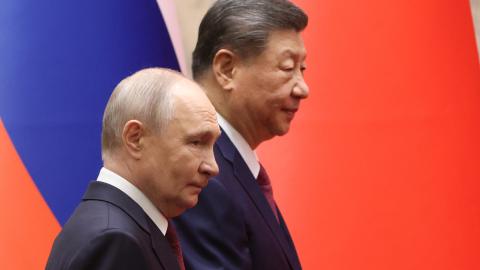
Moreover, Putin’s growing dependence on Communist China risks reducing Russia to a subordinate partner of Chinese President Xi Jinping. Maintaining Putin, not his fall, makes Xi Jinping a bigger threat to America.
The West needs a strategy that recognizes both the dangers of Putin’s strategic weakness and the opportunity created by those weaknesses.
A cornerstone of such a strategy should be to strengthen Ukraine decisively. Provide the military, economic, and diplomatic assistance necessary to defend Ukrainian sovereignty and demonstrate, in an undeniable fashion, that continued Russian aggression in Ukraine and Europe cannot succeed. This should include repositioning nuclear-capable forces to reinforce deterrence. Indecisiveness encourages further escalation.
The strategy should also recognize that it is a mistake to believe Putin will agree to accept defeat. His rule depends on keeping Russia at war. Short of victory, he cannot end the attacks, return all abducted Ukrainian children, and accept credible, monitored withdrawals and security guarantees. In short, no negotiated peace is possible while Putin is in power.
Peace requires containing and looking beyond Putin. Expand channels to Russians capable of advancing change (even some current oligarchs who do not want to fall with Putin). Western officials, military and intelligence leaders, business executives, and influential private citizens should strengthen communication with Russian counterparts. Those willing to help Russia escape Putin’s strategic failure need credible relationships, encouragement, and a path toward national recovery.
To those who argue the Russian people are unalterably supportive of Putin, ask why the FSB remains so large and brutal. Ask why government officials regularly “fall out of windows.” And ask why Putin must fight his war with North Koreans and other non-Russian troops.
America and its allies need a policy toward Putin and Russia that rests on an accurate understanding of the strategic realities.
Putin has to go because he will not stop Russian aggression and further alignment with Xi Jinping against the West. Russia also deserves a future greater than Vladimir Putin and the last vestiges of the Soviet Union.