














Executive Summary
- Battlefield assessment: High-intensity combat persisted at scale, with Kyiv and Moscow waging 150–200 daily engagements concentrated around Kostiantynivka and Pokrovsk. Russia also pressed its offensive efforts in Ukraine’s Sumy Oblast.
- Strikes on infrastructure: Russia widened its campaign against Ukraine’s strategic backbone, targeting the country’s rail networks, while Kyiv countered with strikes on Russian energy infrastructure.
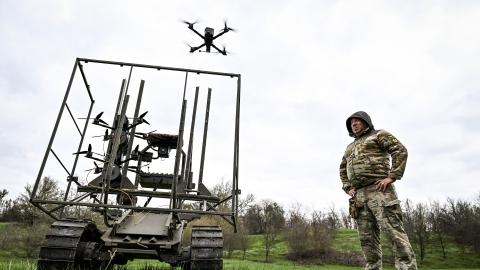
- Drone innovations: Ukraine intercepted a Shahed loitering munition using a drone-hunting drone launched from a robotic naval platform, marking a new milestone in the conflict.
- Rumblings in Chechnya: Reports of declining health for Chechen strongman Ramzan Kadyrov resurfaced, drawing attention to a volatile region of Russia.
1. Battlefield Assessment
The battlespace in Ukraine saw increased combat activity last week, with many days seeing 150 to 200 tactical engagements. Kostiantynivka and Pokrovsk continued to absorb the bulk of the fighting, accounting for 30 to 40 percent of the overall military action.
Kupiansk, Lyman, Huliaipole, and Sloviansk also remained significant flashpoints. In Ukraine’s Sumy Oblast, Russian forces continued a persistent offensive push, as they have for the last several weeks. This effort brought tactical territorial losses for Ukraine.
Ukraine’s deep-strike campaign continued to apply pressure across Russia’s rear area, with no perceptible slowdown in tempo. Logistics hubs along Russia’s back line again came under attack. Ukraine targeted ammunition depots, fuel facilities, and transit hubs to disrupt the flow of materiel before it reached the front.
The military effects of these strikes are likely to unfold gradually. Each successful Ukrainian strike adds friction to Russia’s war effort, contributing to resupply delays, reduced artillery fire rates, and growing strains on already extended logistical lines.
Russia, meanwhile, intensified strikes on Ukraine’s rail network in an effort to constrain the country’s strategic mobility. Overnight strikes last week on a rail yard in southern Zaporizhzhia, one of which killed a railway engineer, were not isolated acts of violence but part of a deliberate campaign to erode the connective tissue of the Ukrainian state.
As prior Hudson Institute fieldwork in the country has documented, railways function as the arteries of Ukraine’s war effort. They move troops to the front, evacuate civilians from danger zones, and sustain the economy by transporting grain, fuel, and industrial goods. By targeting the rail infrastructure, Moscow is not merely striking physical assets but attempting to erode Ukraine’s endurance.
Russia’s energy sector has also begun to experience new effects from the war. According to press reporting, Ukrainian drone strikes on Russian ports and refineries, combined with disruptions along the Kremlin’s last functioning pipeline routes to Europe, have forced a measurable contraction in Russia’s oil output.
The reported drop—estimated from 300,000 to 400,000 barrels a day—marks the sharpest monthly decline in Russia’s oil production since the pandemic. Oil remains the fiscal backbone of Russia’s war economy, and even temporary reductions place immediate pressure on state revenues and export flows. Ongoing instability in the Middle East is also likely contributing to fluctuations in Russia’s hydrocarbon earnings.
Finally, Ukrainian intelligence reporting indicates a severe deterioration in the health of Chechnya’s pro-Kremlin strongman, Ramzan Kadyrov. Claims that Kadyrov has fallen into a coma remain unconfirmed by independent sources but continue to circulate widely.
Kadyrov is not a peripheral figure but the linchpin of the Kremlin’s control over Chechnya, a historically restive, semi-independent autonomous republic. Throughout his tenure, Kadyrov has constructed a system of rule rooted in personal authority and sustained by coercive security forces and direct ties to the Kremlin. His health, therefore, is not just a medical concern, but a significant political-military variable.
As previous Hudson Institute reporting has detailed, a succession contest will likely ensue if Kadyrov falls from power. Competing power centers within Russia will back their own candidates, and the outcome—whether a managed transition or open infighting—could carry consequences for Russia’s internal stability.
2. Robotics in Combat: Ukraine Scales the Drone War While Russian Strikes Intensify
March 2026 marked a new high in Shahed drone strikes. During that month, more than 6,400 Russian–Iranian loitering munitions, or unmanned aerial vehicles designed to hover over before striking targets, were launched on Ukraine’s population centers and critical infrastructure. This volume represents an increase of roughly 25 percent over the previous month, when 5,059 Shahed drones fell on Ukraine.
The previous peak in Russian Shahed usage occurred in July 2025, when more than 6,000 of the loitering munitions struck the battlespace. According to the Ukrainian Air Force, the median launch rate in March 2026 reached 149 drones per day. Decoys, fake or expendable drones meant to draw out enemy defenses, accounted for 39 percent of these launches.
Ukraine, for its part, also crossed a new threshold in drone warfare. On April 19, Ukraine’s Unmanned Systems Forces intercepted a Russian Shahed-type drone using an interceptor launched from an unmanned surface vessel (USV). The engagement was carried out by a naval drone unit of the 412th Nemesis Brigade, which destroyed the target using a naval robotic warfare platform.
This engagement represented more than a tactical success. It reflected a deeper integration of Ukraine’s naval and aerial drone operational architectures. While the specific USV used in the interception has not been publicly disclosed, a March report indicated that Ukraine had modified a Magura-class naval drone to launch drone-hunting drones.
Finally, Ukraine’s tech-savvy minister of defense, Mykhailo Fedorov, announced plans to deploy robotic systems across almost all of the frontline logistics efforts. The Ministry of Defense plans to procure 25,000 unmanned ground vehicles (UGV) in the first half of 2026, more than the total acquired in all of 2025. The Ukrainian Defense Procurement Agency has already signed 19 contracts worth 11 billion Ukrainian hryvnias, or more than $250 million. In March alone, Ukrainian units conducted more than 9,000 missions using UGVs.
3. What to Monitor in the Coming Weeks:
1. Kyiv-Gulf cooperation. Cooperation between Ukraine and the Gulf Arab states is likely to deepen, particularly around joint operational concepts that integrate drone-hunting drones and USVs recently combat-tested by Ukraine. This cooperation could lead to lucrative arms sales and defense deals between Ukraine and US partners in the Gulf.
2. Chechnya. Thehealth of Chechen strongman Ramzan Kadyrov’s bears continued monitoring. Past speculations have obfuscated more than they have clarified, and recent reports of his deteriorating condition may continue this trend. Nonetheless, the possibility of a major political change in the Caucasus is rising. This report will continue to closely monitor events in Chechnya.