

















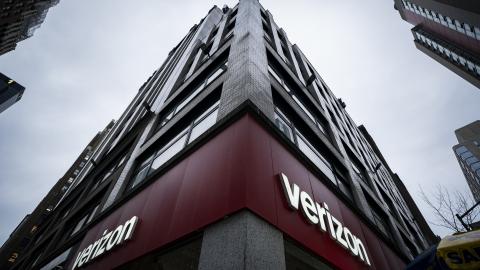
In FCC v. AT&T, the Supreme Court recently decided that Federal Communications Commission orders are not binding for the collection of forfeitures under Sections 503 and 504 of the Communications Act. The FCC had previously issued forfeiture orders of $57 million against AT&T and $47 million against Verizon and demanded payment within 30 days. Chairman Brendan Carr, then a commissioner on the FCC, properly dissented from the forfeiture order. The companies paid the forfeiture amounts under protest and went to court to reclaim what they viewed as illegal forfeitures.
AT&T and Verizon challenged the Commission’s forfeiture order partly on the basis of SEC v. Jarkesy, a 2004 Supreme Court decision that restricted the ability of the Securities and Exchange Commission to impose monetary penalties that, under the Seventh Amendment, should be reserved for jury trials in Article III courts.
Oddly, the Supreme Court now says that the FCC, unlike the SEC, can issue forfeiture notices, but simply cannot collect them. The Commission must instead request that the Department of Justice go to federal district court to collect the forfeitures in de novo proceedings.
In Jarkesy, Justices Gorsuch and Thomas explained in vivid detail the perversities of administrative agencies that write rules and then appoint administrative judges to adjudicate disputes under them. Justices Gorsuch and Thomas found that such a combination of powers violates Article 3 as well as the Fifth and Seventh Amendments of the Constitution. Justice Thomas reemphasizes these points in FCC v AT&T; sadly, none of his colleagues joined him.
One interpretation of the court majority in FCC v AT&T is that AT&T and Verizon were fools to pay the forfeiture amounts before the FCC had asked the Department of Justice to collect in court. If only they had waited, they could have literally had their day in court. But that interpretation is incorrect for at least four reasons.
First, the Seventh Amendment establishes a right to a jury trial for both liability and damages. The Fifth Circuit in the preceding case AT&T v FCC vacated the entire FCC order, both liability and damages. The Supreme Court on appeal focuses narrowly on just damages. The Supreme Court in FCC v AT&T is implicitly saying that the FCC may find liability on its own, but only an Article III court can compel payment of damages.
But that result makes no sense if the finding by the FCC of liability is in error. For the FCC to impose damages under its own rules, the FCC had to find that AT&T and Verizon “willfully or repeatedly failed to comply” with Commission rules. Those are serious allegations that put AT&T and Verizon at risk of a range of other punishments by the FCC in addition to forfeiture of money. AT&T and Verizon sought relief from the Commission’s finding of liability for violating commission rules, and worse for a finding of having violated Commission rules that were imposed retroactively.
For this FCC abuse of power, the Supreme Court is silent. The Supreme Court focuses instead on Section 504 of the Communications Act, which provides a path for the federal government to collect forfeitures in federal court, but does not provide a means for parties to challenge findings of liability for alleged violations of Commission rules.
Second, AT&T and Verizon likely timely paid the forfeitures to cure the allegations of wrongdoings against them. To leave those allegations uncured would sully the reputations of those companies.
Third, for companies that are not as financially robust as AT&T or Verizon, an FCC forfeiture order can lead to financial harms whether forfeiture is paid or not. A heavily leveraged company that receives an FCC forfeiture order faces the risk of lenders recalling loans and the difficulty of raising new funds. The federal government need not prove its case in court to harm or even to destroy a financially weak firm.
Fourth, and perhaps most important, AT&T, Verizon, and scores of other companies have businesses that are dependent on the good will of the FCC. That good will would be eroded without timely payment.
As an independent agency with the autocratic combination of powers to write rules, to enforce those rules, and to adjudicate disputes under those rules, the FCC has the arbitrary power to enable certain businesses to thrive while crushing the aspirations of others. Regardless of the outcome of the Supreme Court proceeding, as I wrote 20 years ago, businesses of all sorts remain fearful of the FCC precisely because it combines all of the powers of government.
President Trump has often said that his is a unified Executive Branch with independent agencies that report directly and only to him. If only it were true.
If the FCC were actually part of a unified executive branch, its rules could be challenged in district court, and its enforcement decisions could be challenged in district court. It would have little if any adjudicatory authority.
As an independent agency, the FCC is much more powerful. Practically all of the Commission’s decisions across all of its combination of powers go straight to federal circuit court bypassing district courts. In FCC v AT&T, the Supreme Court provides no recourse for adjudicatory findings of liability by the FCC. Instead, it clarifies that the FCC may collect forfeiture orders by asking DOJ to collect forfeitures in district court. Don’t expect the powerful FCC to need such assistance very often.