










There are great political expectations for the combined $1.4 trillion in direct investment and credit commitments that Japan, South Korea and Taiwan have made as a part of their investment deals with the administration of President Donald Trump. Recent updates on these deals should come as no surprise as the U.S. quickly approaches its midterm elections.
But progress toward each deal's total investment value has been seen over the last year, with some moving faster than others. The terms of each deal differ and, now ,tightening credit conditions in the U.S. are putting additional pressure on all three as investors expect to see interest rates rise and stay elevated for longer.
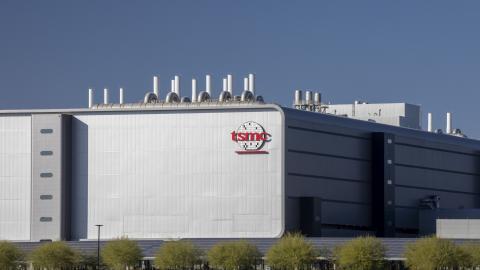
Taiwan has made the greatest progress toward its direct investment goal of $250 billion thanks to Taiwan Semiconductor Manufacturing Co. exceeding that amount with its own commitments of $265 billion. Taiwan's companies are paramount for America's insatiable demand for artificial intelligence.
Taiwan still has an additional goal of $250 billion in credit commitments to make. Recent announcements of $55 billion in technology-related projects, and $4.4 billion in Alaskan liquefied natural gas (LNG), are positive developments but bridging the remaining $190 billion gap will become harder.
Finance for these projects is expected to be denominated in U.S. dollars and using U.S. interest rates. Of the three Asian economies, Taiwan is more vulnerable to a currency shock. U.S. tariffs on semiconductor imports could further weaken the Taiwan dollar at a moment's notice. When President Donald Trump announced his global tariffs in April 2025, the Taiwan dollar depreciated 7% against the U.S. dollar, while the Japanese yen and South Korean won both fell just 3%. Meanwhile, U.S. rates are already roughly double what's offered in Taiwan. This difference could widen further as U.S. rates are expected to move closer to 5% over the next year.
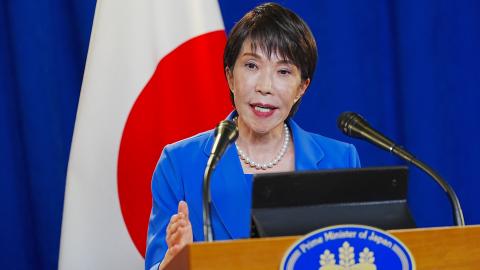
Meanwhile, Japan is about one-quarter of its way toward satisfying its $550 billion investment in strategic sectors, with approximately $130 billion announced toward nuclear and gas-powered energy projects and an investment into Global Foundries for semiconductor manufacturing. Like Taiwan, Japan's investments are heavily influenced by short-term U.S. interest rates as its investment deal links to a six-month Secured Overnight Financing Rate. Given the remaining $420 billion will likely be spread across different projects over the next two years, and not all announced overnight, this will affect the profitability of future projects.
Finally, it was recently announced that South Korea will put upwards of $142 billion toward eight nuclear projects and a natural gas power plant, with an additional $54 billion potentially going to the same Alaska LNG project. Combined, these would nearly satisfy the $200 billion in direct investments it has previously agreed to, with only an additional $150 billion for shipbuilding remaining.
The problem for South Korea, and another reason why securing these deals sooner than later has been important, is that the terms of their investment deal link the base rate for their projects to the U.S.'s 20-year Constant Maturity Treasury (CMT) rate. The yield for 20-year Treasury securities, and subsequently the CMT, is quickly approaching a 25-year-high of 6%.
Announcing multi-billion-dollar investments and successfully financing them are two different challenges. It's safe to assume that the projects that have been announced so far, most of which are in the energy sector, have the largest sticker value with the greatest project lifespan. Future projects will likely be smaller in total value with greater short-term exposure to issues such as technology developments and capital upgrades.
As a part of their respective deals, both Japan and South Korea have agreed to a profit-sharing mechanism with the U.S. South Korea's agreement includes more specific language that deals need to be commercially viable. This is why there has been some hesitancy on its part to commit to the Alaska LNG project. But also why Trump announced the new Taiwan investment will include a 20-year off-take agreement from that project worth $70 billion to $80 billion.
Higher rates and yields will ultimately slow the rate of returns for future investments. South Korea's deal allows it to at least discuss with U.S. officials alternative solutions if they believe a project won't recoup its investments within 20 years. But all deals also maintain that the U.S. can still impose tariffs if countries refuse to fully or partially fund a project.
The U.S. is seeing an investment boom unlike ever before with equity and portfolio flows at record highs. As U.S. credit conditions tighten, investors will become more selective, increasing competition among projects seeking financing. Finding investors for these government-linked projects has already been difficult. And higher rates will raise the expected returns investors want from new projects.
At the end of the day, the Trump administration will get the $1.4 trillion worth of new investments it's been promised. The question now is whether these governments can secure their deals under attractive enough terms that allow them to recover their investments sooner rather than later.