










Last month’s drone attack on Saudi Arabia’s oil pipeline highlights how quickly aging infrastructure is becoming the Achilles’ heel of energy security, both because of age and vulnerability. The United States, once a leader in funding and building, now struggles to do so within reasonable timelines. Taken together, these issues require immediate attention from policymakers.
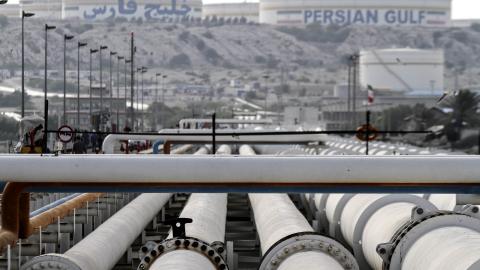
Built in 1981 during the Iran-Iraq War, the 750-mile East–West Crude Oil Pipeline can carry up to 7 million barrels a day to the Red Sea, bypassing the Strait of Hormuz. Iran-backed militia drones launched from Iraq damaged three pump stations, which forced the line to shut down. Brent crude quickly spiked above $107 a barrel. The pipeline has since restarted at reduced capacity, but full repairs could take up to six weeks. The International Energy Agency reports that more than 10 million barrels a day of Gulf production remained offline throughout August, and since February, world oil inventories have fallen by more than half a billion barrels. The global oil cushion is thinning.
The uncomfortable fact is that governments worldwide are now spending down their remaining reserves. On October 2, the Group of Seven agreed to release up to 100 million barrels of oil over four months, starting with diesel. Three days later, President Donald Trump opened tax-deferred, red-dyed diesel to any buyer and told the Agriculture Department to ensure that farmers can still get it. These are the right tools for truckers and farmers through harvest, but these actions keep drawing down the cushion instead of rebuilding it.
Until recently, operators of American pipelines, power lines, and refineries planned mainly for hurricanes and ice storms, but that has changed. A ransomware attack that shut down Colonial Pipeline in May 2021, cutting off a line that carries 45 percent of the East Coast’s fuel, showed a keyboard can do what a hurricane does. Since then, federal agencies have warned that Chinese state hackers have positioned themselves inside US energy and water systems.
This is not to say that more American pipelines would prevent energy spikes caused by a war in the Gulf, because oil is priced globally. Pipelines serve as energy highways, moving American supplies to where they are needed. But Pennsylvania gas can't reach New England, where a lack of pipelines still leaves the region importing liquefied natural gas in winter, or reach allies who have lost their Gulf supply, unless we complete them urgently.
Building infrastructure has become the hard part. New York regulators blocked the Constitution Pipeline in 2016 by denying a water quality certificate, and its developer abandoned the project in 2020. The Mountain Valley Pipeline required an act of Congress to finish six years late in 2024, costing $7.85 billion, more than double its original estimate. President Barack Obama rejected Keystone XL in 2015 because he said it was not in the national interest. President Trump approved it in 2017, and President Joseph Biden revoked it on his first day in office in 2021.
Even the Enbridge Line 5 tunnel beneath the Straits of Mackinac, which would enclose twin pipelines that have run along the lakebed since 1953, waited more than six years for its federal permit. Twelve days before that permit arrived, the Michigan Supreme Court invalidated the state’s own approval.
This is not only a fight on the left. In August 2025, the Interior Department halted Revolution Wind, an offshore wind farm that was fully permitted and 80 percent complete, until a federal judge lifted the order. A permit that the next administration or the next lawsuit can pull is only an option, and investors price it accordingly.
The campaign’s high-water mark came in 2016 with the Dakota Access Pipeline, when protesters, buoyed by the Keystone XL fight, flew in from across the country to stop an oil pipeline. I visited the site during the protests. A few months later, crews hauled out hundreds of dumpsters’ worth of debris, and a rescue group took in two dogs and six puppies left behind in the cold. Some had gone further, and one activist was later sentenced to eight years in federal prison for conspiring to damage the pipeline.
Rather than fold, the pipeline developer Energy Transfer sued, and in 2025 a North Dakota jury found Greenpeace liable, including for defamation. A judge later reduced the award to $345 million, and Greenpeace has vowed to appeal. Greenpeace International then asked a Dutch court to rule on conduct an American jury had already judged. In May, the North Dakota Supreme Court barred the parts of that case that would relitigate the verdict.
Opponents have a fair point: In 2020, a federal judge found that the Army Corps of Engineers had approved the pipeline’s Lake Oahe crossing without the full environmental review the law requires, and in 2021 an appeals court agreed. That said, the remedy for a flawed review is a faster and better review, not a new easement more than eight years after oil began to flow.
Both parties have tried to fix permitting flaws, and despite early successes, efforts have stalled. The FAST Act of 2015, signed by President Obama, set coordinated schedules for major projects, and the Fiscal Responsibility Act of 2023, signed by President Biden, set two-year deadlines and page limits for environmental reviews. In 2024, the Manchin–Barrasso permitting bill cleared the Senate energy committee 15 to 4 and went no further. Last December, the House passed the Standardizing Permitting and Expediting Economic Development Act, led by Republican Bruce Westerman and Democrat Jared Golden, but it remains stalled in the Senate.
The Senate should consider the House bill and complete the legislative process quickly for federal permits. This includes setting time limits for courts and agencies, restricting states from using Clean Water Act Section 401 to block interstate projects over unrelated water issues, and protecting permits after issuance for pipelines or wind farms. Saudi Arabia built backup infrastructure long before it needed the security, and the Senate should give America the same chance before a crisis arises.