Caption
Russian President Vladimir Putin and Chinese President Xi Jinping enter the hall during a signing ceremony on May 20, 2026, in Beijing, China. (Getty Images)






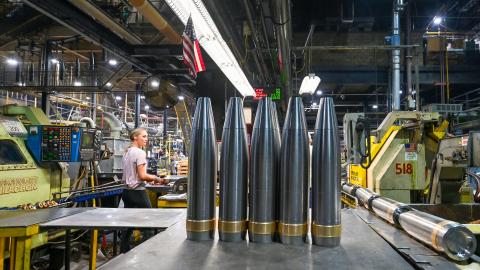
Revitalizing and expanding the US defense industrial base (DIB) is a top priority for the Trump administration. The need for a robust domestic manufacturing base is critical to warfighting readiness, supply chain resilience, and the nation’s ability to rapidly scale defense production in response to emerging global threats.
To advance these efforts, the Department of War’s Office of Industrial Base Growth is leading initiatives focused on strengthening and expanding the defense industrial base through vendor growth and supplier maturity. The office works to increase competition, build capacity, and create clearer pathways for businesses of all sizes to enter and succeed in the defense marketplace.
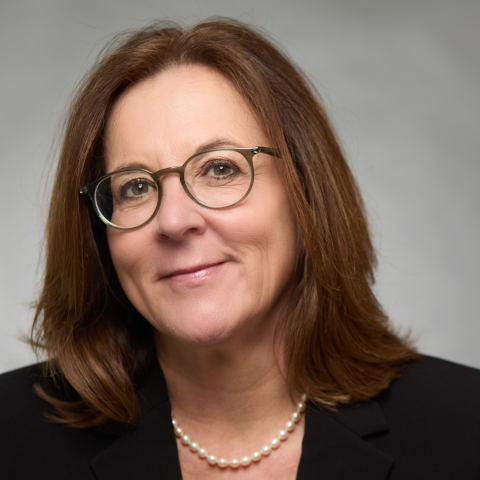
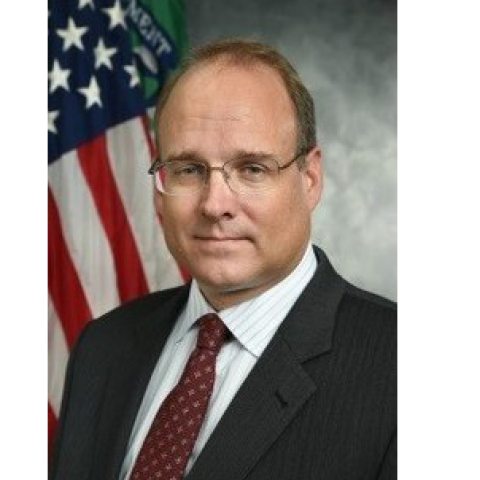
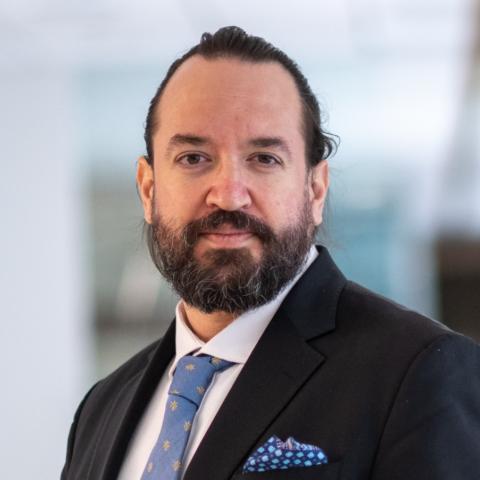
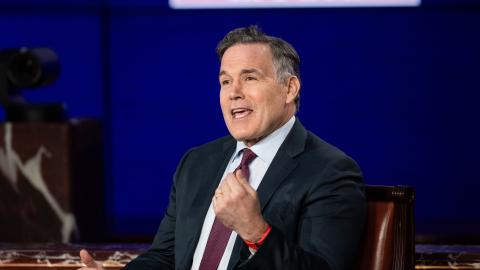
Please join Hudson Institute for a fireside chat between Hudson Senior Fellow Nadia Schadlow and Deputy Assistant Secretary for Industrial Base Growth and Director of the Office of Small Business Programs James Mismash. The discussion will explore current efforts to strengthen the defense industrial base, expand industrial capacity, and foster greater participation and competition across the national security ecosystem.
Listen on Spotify and Apple Podcasts.
Transcript
This transcription is automatically generated and edited lightly for accuracy. Please excuse any errors.
Joel Scanlon:
Well, good morning everyone. Welcome to Hudson Institute. I’m Joel Scanlon, Executive Vice President here at Hudson. Welcome. This morning’s event is part of a series of conversations and part of a broader research effort led by my colleague, Senior Fellow Nadia Schadlow, to help shape and highlight the reforms and policies needed to strengthen, expand, reimagine our defense industrial base, or really as Palantir Sham Sankar has pointed out, the American industrial base.
It is, in my opinion, some of the most important work going on at Hudson and in our government today. We couldn’t ask for a better guest to explore this topic than James Mismash, Deputy Assistant Secretary of War for Industrial Base Growth and Director of Small Business Programs. He brings extensive experience in defense policy and acquisition reform to his role advising senior department leadership on strengthening the defense industrial base, including as a former national security advisor on Capitol Hill, an acquisition policy advisor, and the Space Development Agency.
His work at the department centers on expanding the role of new entrants, non-traditional businesses, small businesses, in meeting the war fighting needs, advancing innovation, accelerating capability delivery, and building a more resilient and competitive industrial base. Welcome to Hudson. Thanks for being here. Nadia, Deputy Assistant Secretary, over to you.
Nadia Schadlow:
Okay. Well, thank you everyone for coming and it’s a pleasure to be here this morning. Joel gave a formal title of James’ formal title, but I would like to say that I’ve known James for many years and I’m really lucky to host him today. James is one of those people in Washington who actually stays centered and grounded no matter how wonderful the deserved advancements are in his career. And he’s the same James that many of us in this audience have always appreciated.
And he’s perfect for this job because he’s had such a . . . His Capitol Hill experience, his experience doing space related issues, his experience in the think tank world have given him the depth of knowledge. He’s the right guy for the job and we’re lucky as a country. So let’s jump in a little bit. I’m excited about this topic because it gives us an opportunity to really go deeper into some of the very real acquisition reform efforts that are now underway.
We’re not just talking about them. They are actually being implemented. We’re shifting to valuing capability in the hands of war fighters, capabilities at speed and at scale. We’re changing the way the department is using capital and that’s really meaningful for the companies that we’re going to talk about today.
Shifting away from grants to loans, and that’s a good thing for the American taxpayer because that offers more transparency into where your money is going. And the department is also making sure that new entrants are getting into the department and that’s where James comes in. So, I hope this morning to get into that. I am expecting questions and hope you all start to think about questions now, but let’s go. Let’s start, James, right now with the shift in the title of your office. What does that mean? The new title to the Office of Industrial Based Growth shifting from a small business, used to be a small business, SIBR, right?
James Mismash:
Yeah.
Nadia Schadlow:
So, tell us about the meaning of that shift because I think it does have meaning.
James Mismash:
Well, want to start by saying thank you for having me and for the really kind words. It means a lot coming from you and I’m very humbled to share the stage with you and be here with a bunch of great colleagues and friends out in the audience, too. One quick story before I answer that is while we are driving over here, I realized we were passing the Paul where in 2019 I was like very young and you offered to have a call with me just to talk to me about a national security career.
It was like the first time I’d ever talked to anyone about whether I wanted to come into the defense space or not. And I was in a very crowded coffee shop at the Paul here on K Street and you took 30 minutes or more of your time to talk to me and I really credit you and others like that for me wanting to even be in this role. And it’s cool now to be back here with you actually talking about it.
Nadia Schadlow:
Thanks James. I of course forget because I’m old now and I forget.
James Mismash:
Thank you. Yeah. I mean the shift in our office has been a great opportunity for us. I’ll say the rationale behind it was I came into the job when it was Office of Small Business Programs back in October or early November and I took a look at the mission of what we were doing, aligning that with the work that Honorable Duffy and Honorable Ketnazi with an ANS and industrial based policy were doing. And I really realized a bulk of our programs have a size agnostic approach to how we’re expanding the DIB.
Take our APEX Accelerator program, for example, which is one of our marquee programs, 300 offices around the country that are dedicated to bringing companies into the defense industrial base. They’re not doing it only for small businesses or only for people that meet certain certificates or stamps across the federal government. It’s about bringing companies who are ready to deliver capability of the war fighter into the DIB.
And I was like, “Oh, that’s really an interesting approach.” It’s also the approach that when Honorable Ketnazi offered me the job. He said, “I want you to retool this organization to make sure that it’s delivering war fighting needs and that it’s focused on industrial priority sectors that we have for our office since it lives in industrial based policy.”
And so we took like a long look at our office and realized A, the size agnostic approach already existed in a few of the programs. And B, what the department requires, what the president requires of the Pentagon and of acquisition sustainment is to bring those new entrants into the space and there wasn’t that capacity or capability that was built in an organizational fashion within ANS when we got there.
And so it was how do we make sure to provide Honorable Duffy with that kind of ammunition within A&S to be a representative to the new market, especially given that our research and engineering colleagues who own the SIBR program too are doing such a great job of bringing in new entrants, especially those at the early stage tech.
But when we think about mature manufacturers or those that are actively building things, where’s the space for them to come in if they’re way beyond TRL one through four to come into the department and have an entry point for active procurement. And that’s really how we thought changing from small business programs to growing the DIB, both from a growth in the number of companies, but the growth of companies that are already in the DIB and maturing those small businesses into mediums and larges, there was an active space that needed to be filled and that’s really why we designed the office in that way.
Nadia Schadlow:
So, what would be an example of a company that would benefit from this expansion, a company that now that you’re opening the door to?
James Mismash:
Yeah. I think to name actually one specific example that I visited a few weeks ago, there’s a company called Starfish Space out in Seattle that is building out satellites actually for the space development agency, which is fun because that’s where I came from. And they came in through an APEX accelerator as a small business with a few certifications. They’re looking for active other transaction authorities. They were looking for contracts that are quick and easy because they were already building for those that don’t have the same barriers or the same uncompetitive requirements. So, they come through our office seeking how do I do more business with the government outside of just the silver sitter lane or just prototyping and they get access to a bunch of customers and clients, they get connected, they find these contracts. Now they just close their series B of $150 million in private capital because of the results that have been driven from finding those contracts and getting access to production contracts.
So, I think it’s companies like that that say, “I know I can produce something. I have these NAICS and CAGE codes and capabilities, and now I just need to know what direction I can take those in.” And then to really leverage that both for their own capital, but also for identifying customers across the rest of the federal government too.
Nadia Schadlow:
So, your office is very sensitive to the other parts of the department that need to provide the contracts, the grants, the shifting toward the production capability.
James Mismash:
Absolutely.
Nadia Schadlow:
It sounds like that because that’s probably the key part. Otherwise, you sort of get stuck in the front door for a long time, right? It’s like you want to shift away. So tell me also a little bit about, so how are you making it easier? Some specific examples for companies to work with the department, because it’s often not easy. I was reading a little bit about helping them, for instance, come up to cyber compliance and to kind of get through some of the technical obstacles, which for a small company really matter, right? They’re not the Lockheeds, the Raytheons.
James Mismash:
Yeah. I mean, I flag the APEX accelerator program. I really think that’s like physical entry point number one. We have 300 offices around the country, 93 headquarter locations and they’re embedded in local communities, both, and I can talk about this a little bit later. For us as scout out companies, we need to come into the DIB, especially deeper in the supply chain. But for companies that think I have something based on what the war department is messaging that could serve the war fighter, that’s a great place for them to start because it provides them with one-on-one advisory counseling for free on, as simple as how to register for sam.gov, what is another transaction—
Nadia Schadlow:
Which I basically can’t even do anymore. I tried many years ago, couldn’t do it.
James Mismash:
Honestly, me neither, without the help of APEX Accelerators, of course. But yeah, I mean, registering for SAM, it’s getting cyber compliant, it’s providing them with the resources like we have in our office. So the Cyber Peace, we operate Project Spectrum, which is a no-cost cyber advisory services for companies.
Nadia Schadlow:
Yeah, I heard about that.
James Mismash:
And so it’s connections to those, and then it’s direct connection, especially those with the local that are providing services to say bases and other local requirements, that the connectivity we have through our APEX Accelerators to what say Colorado Springs needs in the space community, that we’re providing them with local and direct connections to customers. And then at the national level, they feed us up those companies, 26,000 of them last year, to say, “Hey, I think this company is really a rockstar in castings and forgings, and we know that you need that for X, Y, Z requirement. How do we plug them into the right place across the department?” Or, “This company’s building one-way tax systems over here in Nacodoches, Texas. How do I make sure that they’re connected to the drone forces or the dog within OSW?” And then we play that connectivity role. And I’ll say just lastly is one of our points I think we should talk about a little bit more too is our LINX platform.
Nadia Schadlow:
Yeah, I was going to ask about that because that has a supply chain component.
James Mismash:
Exactly.
Nadia Schadlow:
Tell us about that.
James Mismash:
So, kind of like Apex, everything I feel like is a front door and we always say like, “Oh, there are many front doors of the office. Every service has a front door, every agency.” We’re the OSW front door to working with the war department, particularly for the new entrants, but LINX we launched in February as the digital supplier readiness portal for the department. And what that means is a company comes in, it can be as early as day one, like I have an idea, build out a capability statement. It also helps you build out a capability statement if you’re unfamiliar with how the department reads those or how they can be utilized both for DOW customers, but also for like business to business supplier customers too as a sub-tier supplier, but then it AI matches you to solicitations across the department and not just, “Oh, I have a manufacturing capability.”
These are all of the solicitations across the department that require or that need that capability, but does it on a scale of how ready are you to compete for that so that you’re not just spending 40 million hours applying for contracts you’re probably never going to get as a new entrant or somebody that doesn’t have all the requirements. So, it’s saying, are you cyber certified for this level of contract? If this contract requires cost accounting, are you CAS compliant? Do you have section 832 certification requirements? And as you build out your profile and gain those and LINX provides a pathway to getting certified for all of those different systems or requirements, you become AI match for those different solicitations.
Nadia Schadlow:
So, it doesn’t just shut you out. If the answer to the questions is no, you don’t have to turn around.
James Mismash:
It’s like if no, let me reroute you to how to get to yes. Exactly. And then more than FOCI mitigation, it helps companies identify where there’s FOCI concerns on their supply chain, where a couple tiers of their supply chain are, and how they can help maybe make more strategic supplier decisions. And then we also are launching new pathways every day for how they can engage across the department in new avenues. And so, I just try to emphasize to everyone it is not static at all. It’s like every day we’re putting out a new opportunity for companies, not just contracting opportunities, but if there’s a big requirement coming out from the department, we’re going to make sure that companies in that system are armed to compete.
Nadia Schadlow:
So, you’re encouraging companies in the LINX system to compete for them, but that’s sort of different than the companies themselves, need to know about the LINX system and get themselves in it.
James Mismash:
Yeah.
Nadia Schadlow:
Just explain a little bit more about how, so again, an example of a company and how it might work in the system, and how it might. . .
James Mismash:
Yeah, and we have a little over 5,000 companies since February who have joined. We’ve been partnering with some great prime contractors who are pushing it down into their supply chains because there are some benefits to them for the many benefits to them to have them in there. But I’ll say I was chatting with a company last week at the Veterans Conference for veteran-owned small businesses who had mentioned they had signed up for LINX and that A, it pointed them to APEX Accelerators for a plug to them. B, it helped them get CMMC level one self-certification through the platform and then they applied for their first DOW contract because once they met those two milestones and connected with their APEX team through the LINX portal, they identified a construction contract that they were able and eligible to compete for based on the certification requirements.
That was a small business specific contract, but otherwise he was like, I would’ve spent hours on sam.gov trying to figure out where I could have a contract and then we’ll see in the next 60 days whether or not they’re victorious. But I think that’s a good example of like they both A, met the requirements that they didn’t know about because the system flagged that for them and their capability build out. They built their capability statement and then were able to actively apply for a solicitation.
Nadia Schadlow:
And my understanding of the program just from reading about it is that it also helps companies communicate with each other that a part of it is to say, okay, if you’re building a particular component but need other components that you don’t make, that part of it’s designed to help you see the ecosystem that could be helpful to your business. Is that true?
James Mismash:
It is. Yeah. In two functions too, which is one, market research for the company, because a lot of companies are interested in working with the department but don’t know where the future one and a half trillion dollars is flowing to. And so it allows them to see if I’m in this NICS code or if I’m in this line of business or certain capability area, where are the majority of those contracts going through? Can I follow the money over the last five years to see where I would have the best opportunity to compete? And then to the business-to-business perspective that you’re mentioning, we’re launching a, and of course it’s only for companies to opt in. So it’s like if you don’t want your company information known on the platform, it’s not like, “Hey, I can start searching for anyone on the platform.”
But for companies that want to help identify new sub-suppliers for themselves or they’re seeking new suppliers, they will be able to opt into that section of LINX and they’ll be able to do basically matchmaking, we call it manufacturing matchmaking, but it goes much beyond that, matchmaking for suppliers across the industrial base. And that’s a focus and a partnership, actually with SBA who launched the Make Onshoring Great Again portal this year that has over a million suppliers in it to help companies, especially larger companies that have foreign sources, identify domestic manufacturers.
Nadia Schadlow:
So maybe this is a little bit more of a LINX 3.0 down the line, but is there a future in which the department can use LINX to inform some of its decisions and kind of some of its priorities and kind of its approach to understanding the defense industrial base better, almost intelligence about the defense industrial base so that it can go in and say, “Okay, well, if we have no suppliers for a whole set of components, we might want to take different decisions on the acquisition side.” Or is that too much to ask or how do you like—
James Mismash:
No, I mean, LINX 3.0 is coming out at the end of this month.
Nadia Schadlow:
Oh, okay.
James Mismash:
So no, no, no, that is LINX 3.0. So, thank you.
Nadia Schadlow:
I really didn’t know that.
James Mismash:
Anticipating need and then we’re delivering a great partnership. That’s fantastic. Yeah. So the LINX that’s focused on industry is called LINX Expanse, like internal department. For us, that’s called LINX Launchpoint. And what we’re driving from an A&S perspective is how to increase market research across all of our contracting and acquisition workforce across the services, across the agencies, across OSW to better inform contract decisions and also supply chain awareness. And so absolutely 100 percent to your question, every company or all the companies that opt into LINX, there’ll be back in from the government side that what I’m pitching to companies is A, it allows us to say, we have this critical supply chain gap, let’s go into LINX and identify a supplier who can fill that gap and they can go direct to supplier, which is a huge opportunity for the companies that are in the platform that the department can now just go directly to you to help get you onboarded for that specific need at the point of need.
But also for program offices, particularly PAEs that are managing massive portfolios of capabilities as they need to identify new supply chain requirements or they’re putting out the requirements for solicitations rather than. . . And this is an unfortunate scenario, but a true one that I saw is you have occasional contract officer Googling, is there a woman owned dredger in Seattle or Tacoma area? And then if they see one on one of a hundred pages on Google, that becomes a requirement and a solicitation for maybe a small business set aside contract. And instead of doing that, we’re putting backed by AI and informed by every single company that comes in, every company builds up that data system for us.
We’re now able to say, “Does that capability really exist in the way that we’re describing it? And then if so, or if not, how do we build the solicitation, the contract, the acquisition plan for the life cycle of that program to be demonstrative of the actual industrial bases that exist?” So yes, it provides us supply chain security and resilience by having a platform with thousands of American producers, but also it helps the producers by us being able to put out and respond to more accurate solicitations that are indicative of that supply chain environment.
Nadia Schadlow:
I’ll just ask one or two more questions and then we’ll shift from this topic. But so fundamentally it’s a supply chain transparency tool that’s in one sense.
James Mismash:
I think absolutely.
Nadia Schadlow:
But it works in a complementary way to the other tools that are out there or to their external companies that are in this space. Are they competitors to LINX or no?
James Mismash:
I don’t think so. For us, it’s just access to the broader environment. I think a lot of the amazing tools that the department absolutely leverages to eliminate the supply chain is really based around like, how do I map tier one to end for a specific program or for a company helping them match the full depth of their tier where ours is a little bit more maybe horizontal that it’s like we’re getting the top line for all of these companies and we’re not getting necessarily all the relationships for their lower supply chains. And so for us, it’s access to supplier and then supply chain from a broader like what is in the market rather than like what exists under the tier two or three.
Nadia Schadlow:
Yeah, I take it back. It’s actually more than a supply chain transparency tool. It actually provides a way to enter the supply chain and reduce the obstacles to doing so. And then last question on this, how do the primes fit into this? Because so many of the sub-tier suppliers often enter through the primes and is this something that I would think they would be happy about?
James Mismash:
Yeah. I’ve been really encouraged. Honorable Katnazi, when we put out LINX in February, very quickly said, let’s get on with all of the major prime supply chain and small business directors. We need to push this out into the supply chain, A, because they have the knowledge on who are the most active participants in the DIB supply chain and that would be very beneficial for those companies to help strengthen their overall posturing in responding to our, say perhaps our domestic production requirements and help onshore their own individual supply chains so they can better serve the prime.
But also in all the conversations we’ve had, whether it’s GD, Lockheed, others, they’ve been super forward leaning on A, blasting it out to their supply chains, but B, super hungry about how do we access those companies so that we can bring more America made into our supply chain, which has been encouraging to me and that’s why we’re really bringing left the business to business opportunities within LINX as we prioritize what is 4.0, what does 5.0 look like so that they can start accessing companies within that supply chain because the appetite from the sub-tier supplier we always know it’s going to be high, right?
They want to get in with the primes, they want to start getting those contracts, but to see that the primes are seeking to diversify their supply chain, particularly with domestic made manufacturing is very, very encouraging for us.
Nadia Schadlow:
Great. Now we wouldn’t have a conversation with DOW without our next acronym, CRMN.
James Mismash:
Lovely.
Nadia Schadlow:
Tell us about CRMN. What it stands for and-
James Mismash:
So, the Civil Reserve Manufacturing Network for those that aren’t familiar passed in the National Defense Authorization Act in December of last year and we’re super excited about it. I think we actually have talked about this quite a bit actually when I was in Congress on DPA.
Nadia Schadlow:
Right, because it’s part of the voluntary agreement. Right. So I’m actually interested in the relationship, and so your office does CRMN.
James Mismash:
So industrial-based policy is executing CRMN. For us in industrial-based growth as the outreach to industry and how do we get those companies in our job is really an enabling function for setting up the offering and getting those manufacturers into CMRN the and then the execution of that from a mobilization perspective would happen in our broader industrial-based policy shop, but we’re really the industry facing piece of that. But CRMN, for those that are unfamiliar, Civil Reserve Manufacturing Network, like I said, we call CRMN in the building is basically a catalog of commercial manufacturers and companies that are interested in transitioning their production into defense applications in the event of a conflict or a mobilization. And so take Civil Reserve air fleet, which I think most people are familiar with where we have United Delta American plans on a reserve that in the event of a conflict, they can help us with logistics.
This is that, but for commercial manufacturing. In the event of a conflict or when we need to mobilize the economy to support the war fighter, where are those businesses that say, “I have a complete and secure commercial market, but if that happens, I will produce for the war fighter.” And so that’s what CRMN is actually within LINX. Last Friday, Secretary Katnazi with Administrator Loeffler from the SBA announced the first access point for CRMN through the LINX platform. And so now companies, domestic manufacturers of all kind, we were with 1,200 manufacturers in Michigan on Friday can go in and say, “I’m interested in participating in this registry.”
Nadia Schadlow:
Oh, that’s interesting. We have excess capacity. Keep us in mind.
James Mismash:
Exactly. And what we’re broadcasting out for them and what I want to use every speaking opportunity to highlight is we’re not saying join the CRMNs so that we can make sure that you are up to snuff on every DFAR and Forest requirement under the sun, or you need to have CMC certification or you need to have X, Y, and Z DOW requirement. It’s really saying, “I’m a company who has these machine tools in my shop. Let me know if you need me.” There’s a lot more behind that on the testing and the mobilizing piece, but at this intro point, at this entry point within LINX, it’s really about just a patriotic business saying, “I’m willing to sign up for this, and I will maintain my commercial production and keep doing my commercial business until you call on me.”
Nadia Schadlow:
And it also seems to LINX, I mean, at least it’s connected to the broader shift that we’re seeing at DOW, and many people at my colleagues here at Hudson are really working on this, Bryan Clark, and how we can use commercial manufacturing facilities to allow for the adaptability and the scale and to shift production and to use advanced manufacturing. And so, there’s that, I think it’s part of that ecosystem of looking at the commercial sector in a different way.
James Mismash:
Absolutely. Yeah. I mean, I was talking about not a small business. On Friday, I was at General Motors in their huge electric vehicle production facility, and one, it’s remarkable in size. I just don’t think I’ve seen manufacturing at that scale before, but I’d certainly never seen automation at that scale before. Like you have TAC welding robots that are building up cars, very minimal human touch and the whole time I’m thinking, they’re talking about 1,200 semiconductors, 1,500 batteries, all these different components and critical kind of technologies that are built within the system.
And I’m thinking, yes, there’s payloads and there’s energetics and there are things that a company like this wouldn’t have maybe the facility or the know how to do, but you think base body and other piece of munitions, it’s not really that much more complex for the production and the adaptability of these systems for the welding, for the construction, for the metal bending could happen at a much more efficient and cost-effective scale, particularly as the department is scaling up, that we really want to adopt some commercial best practices on manufacturing and partner through things like CRMN or voluntary agreements or otherwise with those types of companies to bring them in large, medium, small to help do that kind of work for us.
Nadia Schadlow:
And it’s sort of a forcing function to get the department to think about its requirements process differently, because for it to actually take advantage of these opportunities, that still has to change. People are working on it, but it’s a nice added pressure point it seems.
James Mismash:
Totally. And the more and more we bring these businesses in to take us an SDA example, you bring in these new entrants and create the opportunities for them to show off their great commercial technology and how much quicker they can deliver. It also hopefully pressures the primes into delivering faster and adopting those same practices, and lowers the cost long term. The more competition, the lower the cost for the department is the idea. I think we’ve seen that in many cases, take the drone dominance program, for example. And so if we’re putting more commercial companies into competition with bigger, more traditional companies, it’s improving both sides of that ecosystem and is resulting in more that are capable of doing it and more that are capable of doing it cheaper and faster.
Nadia Schadlow:
And without getting too wonky, is there a relationship between the DPA, Defense Production Act, and the voluntary agreements that it allows? Does that come into play, or can they be just distinct?
James Mismash:
From CRMN specifically?
Nadia Schadlow:
Yeah.
James Mismash:
They can certainly be distinct.
Nadia Schadlow:
Okay, that’s good.
James Mismash:
And so, I would say just from the little bit I know is that the volunteer agreements are typically very focused on a particular sector like the ones that exist today. And so take like if you did a munitions one or an energy one where CRMN is just so broadly production and it’s just trying to get an understanding of what machines and manufacturing capacity exists of what kinds so that perhaps in support of one of those voluntary agreements we could leverage their capabilities, but it’s connected, but I think distinct in that it’s not siloed out only into one sector.
Nadia Schadlow:
Right. It’s not dependent on what happens.
James Mismash:
Exactly.
Nadia Schadlow:
That’s good.
James Mismash:
But I think because we’re building CRMN into our industrial-based resilience team who manages the industrial-based fund through IBAS, our industrial-based analysis and sustainment fund, our $12 billion fund, and DPA, which has Title III authority for investment and also Title VII for voluntary agreements, then natural connectivity is already there and they’re really all one mobilization and manufacturing capacity enterprise.
Nadia Schadlow:
Okay, great. Any more about the program that I missed or that you’d like the audience to know more about?
James Mismash:
I mean, just push it out into the supply chain. So that’s what we’re trying to broadcast now, is we want to get thousands of companies into the system by the end of the year, and we’ve had good success. We launched it on Friday.
We have dozens of companies that have already joined as a result of one event, and now it’s really on us as a department as hopefully, I know I see a few folks who come from big companies in the audience, it’s like push this down into your supply chain, and it doesn’t just have to be defense-specific companies. It shouldn’t be. It should be commercial companies. And so just talking to associations and getting the word out.
Nadia Schadlow:
An idea for the administration as a whole would be to use this in the pharma industry, right? APIs, because you have excess capacity in drug companies, and it could be applied to that sector too.
James Mismash:
Yeah, that’s a great point.
Nadia Schadlow:
Okay. Separately, section 805, can you tell us a little bit about that, about what it is about, 1260 H list Chinese companies, and how your office is involved in that?
James Mismash:
Absolutely. How man folks have heard of the 1260 H list before? That is the most in one singular audience that I’ve experienced in the past month on the road, which is a great thing and extremely indicative of the fact that we’re sitting on Pennsylvania Avenue. I can see the building where they designed the list and I came from the building one where we build it, but the 1260 H list is a list of Chinese military-affiliated companies that have a direct or indirect presence in the United States. It was 138 entities a week ago. It’s 188 entities as of today on the public registry. It’s an unclassified list. You can check it out online and just Google 1260 H or hotel NDAA or defense or DOW, and that list will come up and you can take a look at the companies. It’s 180 very, in many cases, popular companies. Take DGI drones, for example, is on that list or Alibaba.
You have that list that historically has been a here are probably some not some great companies, but no kind of teeth behind it. Starting as a result of section 805 from the National Defense Authorization Act and FY24, actually when I was up on the hill, the department is barred as of January 30th of this month from doing any business with any of the companies on that list. Starting next June 30th, 2027, businesses that do business with the Department of War cannot sell us those products. And so we see it and the reason you’re probably like, oh, why are you industrial-based growth doing anything with this intelligence produced list that’s increasing procurement regulations or restrictions is twofold. One, we’re trying to broadcast out to industry as the industry-focused sector within industrial-based policy to say, get these companies out of your supply chain sooner rather than later.
And we don’t want you to end up next June 30th unable to offer your services and products to the war department. And then for those new companies so that they go ahead and just bake that in from the get go. But two, and I think really even more importantly for us is that creates real immediate demand for products that can be onshored in the United States. So how do we, and my colleague Melanie here has basically tracked out all of these different companies, 188 by NAICS codes, CAGE codes, and like what they’re producing. We’re creating a roadmap that we’re hoping to publish out and push out to industry that says, if you can make any of these products or offerings, we want to connect you to X, Y, Z company that we’ve identified that’s in their supply chain and really build that relationship between Prime vendor or new entrant who might have them in their supply chain with a company in the US who can fill that critical gap.
Nadia Schadlow:
And that’s where LINX comes in, right?
James Mismash:
Absolutely.
Nadia Schadlow:
It actually, you have a solution. You’re not just saying, “Don’t do this. You can’t do this anymore,” you’re saying, but you can shift.
James Mismash:
100 percent. Yeah. You’re explaining the huge whiteboard I have in my office, where I’ve tried to draw out. It looks like a crazy person’s map, but it’s like, no, it all goes back to LINX.
Nadia Schadlow:
Can use a Google graphics or something.
James Mismash:
Yeah, I need to use Gemini. Gen AI, I mean.
Nadia Schadlow:
So, it seems, and I’ll open it up to questions soon, so start to think, but it seems that we’ll be in a position in a year to begin to assess actual improvements in our understanding of the DIB, in sections of the DIB, in supply chain transparency. Will there be opportunities for you to make those assessments to actually show how improvements have been made? Because sometimes my impressions of past reports are that they’re just a litany of the problems we face, and it’s harder to find assessments of actual progress that we’ve made in many of these areas. And I guess I would offer that as a . . . I think taking all of these changes and starting to solidify the actual differences they’re making, I think could be important, so that even tracking companies that become part of programs of record, right, those are success stories.
James Mismash:
Absolutely.
Nadia Schadlow:
And I would assume that would be an example of why length is important and . . .
James Mismash:
Yeah, so absolutely. One is since coming into this office, taking our APEX Accelerator program, I know I’ve mentioned it 150 times, but 26,000 businesses came through last year through APEX Accelerators. Those companies yielded $64 billion in contract value. And so there’s great potential there, but our team has done a fantastic job of trying to really break that out and measure it.
But I think under Honorable Katnazi and Honorable Duffy’s leadership, it’s how do we make sure that the businesses that are coming into the department or want to do business with us or the ones that we’re scouting out are serving the most critical industrial needs for the department. There’s the critical technology areas which we’re measuring our programs against currently to make sure that we’re starting to scout out and bring in those technologies that we believe will be critical for the fight today and in the future.
But now industrial focus areas, to your point, it’s like, okay, we’ve identified the problem, but how do we make sure that over the course of this year that in the 26,000 businesses or 30 or 40 that we bring in this year that we’re targeting and bringing in the right kinds.
And so we have our 10 industrial focus areas that includes everything from one way tax systems, batteries, energy infrastructure, even workforce as like a broader category, kinetic capabilities, and that we design and measure all of our programs around those 10 key capabilities for us so that at the end of the year we’re able to say, how do we move the needle on each of these categories? Where did we plug them in with the department? Did they become members of the DBC and benefit from the industrial base analysis and sustained and fund and have like a real path?
And you’re right, we get to measure that through LINX. When a company comes in, we can track what of those 10 they’re bringing in. There’s also a whole portal just for the companies that are coming in through Apex, but we’ll just take LINX, which is and then see their success along the solicitation journey. And then we track them for basically five years after they come into us from the first time to say, did we just bring in another small business on an uncompetitive contract and then keep them a small business or were their profits continuing to grow?
Because I did bring one stat that I saw last night that I thought was really interesting, which is over the last 20 years we’ve put 1.4 trillion dollars into small business specific set aside contracts and that was, what was it? One million small businesses. 316 billion of that went just to 8A sole-source contracts. How many of those could we name today as being prime contractors?
Nadia Schadlow:
Right. Are they still in play, almost like a durability index sense of like the durability of it?
James Mismash:
100 percent. We had $21 billion and I think it was 21,000 new companies come in the last five years, but we know the Castilians and the Andros, but there have to be more under that tier. I want to see we call them, I think the actual term is like 8A graduates, right or small business certificate graduates. I want to make those, they should be primes. If they’re manufacturing and they’re building something the department needs, they shouldn’t the minute they graduate have to kind of latch on to another as a subcontractor to another 8A. They should be competing and winning for their own contracts.
Nadia Schadlow:
Part of programs of record.
James Mismash:
Exactly. So I think for us it’s measuring those 10 key industrial focus areas since we live in industrial based policy and then really taking a look at how do we measure company success and growth, not just have we brought in 21,000 companies, how we brought in 21,000 companies that have been able to personally grow and find their own programs of record.
Nadia Schadlow:
Great. Well, I’d love to open it up to the audience and I think do we have a microphone? We do. We do have a microphone. Okay, we’ll go to this woman here and then the gentleman in the back. And if you’re able to identify yourself, that’d be great organization or. . .
Audience Member Theresa Moore:
Hi, Theresa Moore, Inside Defense. I had a question about the economic defense unit if you can talk about it. It seems to be kind of growing with the FY budget requests, having it as a FIDEP and having it funded discretionary as opposed to last year and then there’s a legislative proposal specifically to staff EDU. Can you give us an idea of how the office has matured up to now and can you also give us just a better idea of what it is? Because it’s a lot of the description is like using financial tools to help the industrial base, but OSD kind of does that too. Can you kind of explain the difference?
James Mismash:
Yeah. I’ll speak to it a little briefly, which is just that it’s obviously been like a maturing capability across the department, and we’re extremely excited about it, and it’s been a great partnership, but I think to your great point, which is OSC is doing a little bit of that as the loan provider, right? An industrial-based fund is doing that, like a grant and equity account, and this is really tying it all together to have one central strategic vision on how we execute industrial policy for the department and really shore up the critical supply chains and build out contracts for the future that are solidifying demand signal and making sure the industry is responding to the needs of the warfighter. And so you’ll see more to come on that, I’m sure, and I’ll leave the EDU team to make sure and speak about kind of the structure of it, but I’d say they’re really just like this centralized place where we’re making sure that all of the different elements are aligned to drive out the same outcomes rather than having 40 different teams across the department that are doing things nobody knows about.
It’s like, if we’re going to drive structural change in the way that we contract and work with industry, let’s make sure we have a centralized approach to that. Yeah.
Nadia Schadlow:
And presumably they could use some of the data offered by your office, right?
James Mismash:
Oh, 100 percent. Yeah.
Nadia Schadlow:
The insights to understand, to get ahead of the vulnerabilities.
James Mismash:
Yeah. Whether it’s IMAS or if it’s OSC or EDU or the deal team, all those, we’re feeding companies through industrial-based policy up to them for potential deals and infusing the data, particularly from our supply chain experts who we have through industrial-based resilience, a team of like over 300 amazing professionals that are building out the supply chain maps on critical areas like critical minerals and materials and it’s like EDUs and others, OSEs are using that as the map for where do we target those investments. And so like I said earlier, the partnership is just like exquisite to see in the department because I feel like that hasn’t existed before.
Nadia Schadlow:
Great. The gentleman in the back in the blue and then Rachel and then. . . Well, actually I’ll go to you because it’s just easier with the microphone and then Rachel.
Audience Member Jason Colleen:
Okay. Hi, I’m Jason Colleen with Emergent. You were interestingly mentioned APIs earlier and part of what our company does is develop and manufacture vaccines and therapeutics that kind of hope you don’t have to press that button, strategic national stockpile stuff, but also for DOW and others.
One of the things I’m interested in, and just in terms of LINX is a company like ours, which is a large company, we’re having tons of internal discussion about exactly why I’m here today and what you’re talking about, it sounds like could be the answer to some of our struggles, which is trying to find new suppliers onshoring capabilities.
We have CDMO facilities and they have modularity and we have capability. In fact, some representatives of BARTA are at one of our facilities today looking through, but I just want to attack this kind of from every angle because a lot of the trouble we have being a medical company is obviously the dependence on China and other places.
So trying to really onshore all of that in places like Lansing, Michigan and Canton, Massachusetts and other places is kind of our priority right now. If I make that effort and push my team on, “Hey, get into LINX, figure this out,” is there a feedback from that immediate or is this just like you’re putting your information in there and as we see something we may reach out to you. How does a company kind of monitor that and work the LINX system?
James Mismash:
Yeah, thanks for the question. I would say it’s not just like feed in and wait, it’s super active. It’s pushing out and alerting you on solicitations that might be of interest for you. It’ll let you know when we launched the CRMN Pathway, the 5,000 companies got a notification like, “Hey, are you interested in participating in this?” We are reaching out to you, not from a like, “Hey, sit here and wait until we say, Hey, I need API type material. Can you help me?” It is like at the same time that we’re able to find that on the back end. For you, it’s constantly refreshing everything that the federal government is procuring in that sector and making you aware of those capabilities.
And you can set your settings on whether or not you want every notification on every contract related to any word like pharmaceutical, but it also, and I didn’t fully mention this, but take FARS and DFARS requirements or new things like 1260H or 805, it’s making companies aware like, “Hey, this requirement’s starting up in 30 days.
If you’re not tracking, here’s all the detail on it and here’s some individual training opportunities or video modules for you to get up to speed so your supply chain is secure enough to continue to do business with us as a government.” So not static at all. I recommend it. It’s also I have signed up for LINX using not a real company and they’ve deleted it, but it’s not that difficult. It’s super easy.
Nadia Schadlow:
Which matters.
Audience Meber Shani:
Hi, I’m Shani from Lewisburg Associates. I think we met a couple months ago.
James Mismash:
Absolutely. Hey.
Audience Member Shani:
Hi. So, we are a government relations firm. We represent a lot of science and tech companies and performers in general. A lot of the people that we work with are developing technologies and they want to work with the department, but some of them are already at TRL7, some of them are at TRL four to six. And one of the things that we want to do for them is have them as. . . They already have a concept, they’re already designing it. How do they make sure that it ends up tailored for having DOW as a customer? And so is that something that your office is also thinking about? Is that really just the APEX Accelerators? How would you characterize where in the department somebody could plug into that?
Nadia Schadlow:
So, matching, how do you match them to DOD needs?
Audience Member Shani:
Yeah, so that from design, they’re already able to address a need.
James Mismash:
Yeah. I mean APEX Plug, and I’m glad you mentioned it, I think that’s really like the great starting point for them because we are trained. . . And this is an evolution since President Trump took over and Secretary Hegseth in the Pentagon, it’s like training our APEX accelerators to be aware of those capability needs. And so we have such an active relationship with our program managers and our counselors now on here are these 10 critical industrial areas, here are the capabilities that the department is procuring on X, Y, and Z basis. And with their access to the LINX LaunchPoint side, they’re also tracking where the money is flowing. And so it helps them craft the company capability statement and for them to understand how to build up their supplier readiness day one. So I think that’s really the entry point for them to help initially design the way they’re pitching their program around the war department's needs.
And then as bespoke as it sounds. Like reaching out to our office, right? I am always like, “Hey, I take every industry meeting that’s physically possible in my 80-hour work week, but I’m more than happy in my team.” I have a whole team of industry-focused and engagement-focused folks who are doing actual matchmaking, which is really fun. And I’ve been really surprised at how productive it is, but like pairing prime with sub or sub to sub to build that relationship, but also to help counsel companies on here’s something that we’re hearing from the army, or let me plug you in with our army kind of attaché of sorts for this program, and they’ll help you build it out day one too.
Nadia Schadlow:
Rachel?
James Mismash:
If you could please introduce yourself, that would be super helpful.
Audience Member Rachel Hoff:
Thanks. I’m Rachel Hoff with the Ronald Reagan Institute.
James Mismash:
My first boss, everyone.
Audience Member Rachel Hoff:
Wonderful to watch your career, James, and thanks for putting in those 80-hour work weeks to implement all of the new and innovative approaches that the department is taking to a really important problem set. Thanks for the great conversation so far. One thing that I haven’t heard as much about in terms of what the office is doing is something that has emerged in recent years in some research as one of the greatest barriers that small businesses and other new entrants face when trying to get into work with the department, which is access to classified environments. I know there’s been some legislative work around this recently, basically to bid on a contract companies sometimes have to already have built their own SCIF or access to a SCIF. There’s certainly on the execution of the contracts, a lot of needs in that way. Like I said, there’s been some legislative efforts around kind of shared commercial classified infrastructure. Is that something that your office has been seized with that you guys are helping get after?
James Mismash:
Absolutely. Thanks, Rachel. One, y’all have done great work on highlighting that need to Congress through the national security kind of innovation and the Reagan industrial work that y’all have done, and the reports you’ve put out. So thanks for informing Congress and us about that need and working with industry to help broadcast that out because it’s so important and we owe it to you and other industry leaders who are highlighting that.
The answer to your question is yes. So, within our office, we actually received 47. . . I almost said billion. I wish I had 47 billion dollars. We’d have so many new entrants, not yet, you have no idea, but everyone in here could have a company. $47 million for classified infrastructure as a service program. We’re partnering with our defense innovation unit colleagues who are also leading the way in that effort or really have been a pioneer and how do we get companies access?
Our priorities over the next couple of months as we obligate and execute that money is one, broader access across the country, not just Boston, Austin, San Francisco hubs and El Segundo, but how do we make sure that there’s access to classified infrastructure in Michigan, in Kansas, in Texas, outside of Austin, in other locations pairing that with APEX accelerator locations or with manufacturing institutes to make sure that as companies are building out their prototypes and now reach the point of needing classified infrastructure:
A, that exists in their community not 10 hours away and B, that they have free access to that capability, at least for the initial prototyping and demonstration phases. So 100 percent we’re excited to launch that program this summer in partnership with DIU. We’re in lockstep to make sure that locations are aligned, that the priority sectors are aligned for us. I know I keep going back to those 10, but that’s really what we’re measuring everything again.
So how do we make sure that those mobile or in place skiffs are in the right locations to enable it? But the answer to the question is yes, because you’re right, that is a huge burden for them, not just to get their own facility clearances, but to even just get their own security clearances personally. So we’re working kind of both angles there to make sure that they have the facility they can use if they don’t have one personally, but B, that their personnel are cleared to do that activity.
Nadia Schadlow:
Great. Great question. Shirley and then Tibora.
Audience Member Shirley Harkis:
Thank you for coming. I’m Shirley Harkis. I’m the AI policy governance and risk lead at US CyberComm, focusing on AI, now JTF6 Emerging Technologies. My question for you, I really appreciated the talk because I architect-
Nadia Schadlow:
Can you speak into the mic?
Shirley Harkis:
Excuse me. I architected the AI governance board at US CyberComm, and I’m thinking about what you’re saying about these databases. What would this look like in application for a combatant command? Are they aware of how vast these options are? Because I could see this being brought to a board meeting. And so that’s my specific question because I’m a traditionally trained China expert and so I appreciate what you’re saying about these supply chains, how you’re trying to address these gaps that I see a lot at work. And so, could you explain to me what the application to combat and command, what a GO’s looking for, looks like?
James Mismash:
Yeah, that’s awesome. One, I think in acquisition, and it’s the same for me, I have the bias toward how do I make sure that our acquisition professionals have access and are using this for building out the contracts and solicitations and being able to find suppliers for them. I think you’re absolutely on the nose on this, that we should be thinking about how can combat and commands utilize that. I honestly haven’t yet. I think we should. I can think of a million use cases, whether it’s identifying often the combat commands are headquartered in domestic locations. So there are companies that can help support them locally, but also take the America First Arms transfer strategy, for example, where we’re modernizing and really pushing out selling American products, particularly non-programs of record out to foreign customers. We’re going to launch within LINX a portal for companies that have an interest in selling their products to foreign governments within the categories we’re selling to be able to go there.
And so it’d be a great opportunity for combatant commands who know what a foreign country needs, what one of our allies or partners needs to say, “Hey, we have backend access also this program. We know there are these companies that can produce these capabilities. They’re live on the arms transfer catalog or let me plug you into an American company who can help the ally or partner.” So I think there are multiple nodes. I’d love to work with you Shirley on that and see if there are specific applications that we could help with on the CyberComc front. And then last thing I’ll mention just on a personal note is I’m halfway through Magnifica Humanitas, the new AI doctrine from Holy Father. So we should also talk about that because I’d love your perspective.
Nadia Schadlow:
But actually related to Shirley’s question, I think it’s also applicable to how are the new program acquisition executives using LINX, like just being aware because it’s directly related to their thinking about to what they’re supposed to be doing now and how the restructure is working. And in addition, the services, right? They should all see this as a resource.
James Mismash:
100 percent. And Honorable Duffy, our undersecretary for acquisition and sustainment, he hosts the industrial based council across the department, which I know there are 1,400 tiger teams and councils. I will say in my experience in the building and on Capitol Hill, this has been the most productive venue for like real conversation that has maximized impact, whether it’s bringing in requirements on specific supply chain challenges and actually tackling a problem at the table, which we’ve now seen multiple times in this forum. But I bring up the IBC to say all the SAEs are there, all the service acquisition executives, their PAE leaders are often in the room, all the supply chain experts for the services, many of the COCOMs are represented in all the unders and teams across OSW and LINX has been brought up in that forum multiple times so that they’re aware of that capability and we’ll be demoing for them this capability so that as we launch Launchpoint, the government backend at the end of this month, day one they’re ready to use and that they’ve promoted it with the contracting workforce themselves.
Nadia Schadlow:
Great. Tsiporah, my colleague at Hudson.
Audience Member Tsiporah Fried:
Thank you. I’m Tsiporah Frie. I’m a senior visiting fellow from France at the Hudson Institute. So you have described a very ambitious and extremely interesting system and reform and effort, I would say, to map industrial capacities and to mobilize domestic industries. In the meantime, some of the critical supply chains or production lines are transatlantic or overseas. So my question is, how do you integrate allies and partners in your framework?
Nadia Schadlow:
Good question.
James Mismash:
Yeah. I mean, the line right is America first does not mean America alone, which I know we live and breathe by in the department. I’ll say our number one priority is obviously getting adversaries out of our supply chain, which does not apply to France and America 250, right? We remember our French compatriots, but allies and partners are welcome to join the system. I’ll say our bias within my office is onshoring. So saying, “Hey, French or transatlantic partner who wants to participate in this program, how can we get you into the United States as well?” Not saying that you have to pivot your whole entire foreign company away from production in a foreign country, but how do we get a line of business here in the United States and how do we incentivize and offer real incentives and tactical kind of opportunities for companies to build here?
But you take a look at things like our FCC determination in December where all foreign made drones and components were kind of barred from new licenses. We take that and say, “How do we partner with those companies that are building great products abroad to come do that here to the onshoring point? Or B, where those exist, we’re really leveraging LINX to find the domestic alternative to that, but they’re welcome to join.” We have many companies that have started in Europe or many other places across the country that have partnered with industrial based growth and small businesses because not only do they want to work here, but they want to leverage the capabilities we have here. And so we’re also trying to fuse from both in a non-program of record kind of sale and partnership, but also to the same way we’re trying to bring in American sources for Boeing, Lockheed and Raytheon.
We want to do that for Leonardo, DRS, BAE, not American or others that are seeking innovative small or medium suppliers in their own ecosystems too.
Nadia Schadlow:
I have Marcus over and then this gentleman, thanks.
Audience member Marcus Jones:
Hi, Marcus Jones from ETC. Technical qualification, particularly material qualifications often the graveyard for small business providers, perspective or otherwise to the department. What steps has your office been able to take to improve the process of qualifying new entrants to particularly critical sectors? You mentioned castings and forgings earlier, castings and forgings for the submarine industrial base, for example, have to meet extraordinarily rigorous technical qualifications before they can be incorporated into the supply chain, similarly for energetic materials and things like that. Are there specific things to which those kinds of firms can turn as a resource in your office for that kind of support?
James Mismash:
Admittedly, I would say our role in that is like connectivity and so we help kind of push those companies into the right qualification and certification offices across the department. There isn’t a go to resource for like if I have CL20 and I want to get it qualified somewhere, where do I go for that? So we try to fuse the connection to the PAE or the certifying body, but I will say ANS is leading the way across OSW and the whole department for how do we reform qualification and certification for companies across the board, but particularly for new entrants to bring speed to that, whether it’s extending and expanding the range capacity that we have for live munitions, which is one of our number one priorities, but also we’re investing record sums in critical materials and certainly critical minerals and how do we make sure that once that facility is in place and actually producing that we’re ready to take a three year. . . The way we think about it at least is a three-year process to build up the facility and actually refine the material.
Well, we can’t afford another three years of sitting in the backlog for that material to actually certified for end use application. And so in tandem with all of these investments, which I think we haven’t seen before, is how do we from day one at the idea of building out a solicitation or procuring that product, do we make sure that qual cert is baked into the equation from our perspective so it’s already mapped or the day we get the product we can start certifying.
Nadia Schadlow:
And then you can actually almost create a mini system to help, to Marcus’s point to help those companies understand how the paperwork involved in that, right?
James Mismash:
Exactly.
Nadia Schadlow:
Actually nuts and bolts of what they have to do. You can kind of take the lessons from LINX and apply it to that smaller. . . Yeah, interesting. Oh, okay. And then after. . . Well, that’s fine. And then after. . . Sorry.
Audience Member Todd Palmer:
Steal the mic there.
Nadia Schadlow:
Sorry.
Audience Member Todd Palmer:
I’m Todd Palmer. I’m an AAAS fellow in SAPIEN. My day job is as a professor of metallurgy at Penn State. So wanted to ask you, the National Academies just released a very thorough report on the Manufacturing USA Institutes, and small business development was a big part of that. So, how’s your office interacting with the manufacturing institutes to try to help with workforce development? Because much to what Marcus was talking about, most of the time, the certification and having worked in URCs and at national labs for about 20 years before I went over to academia is most of those small businesses lack the expertise to actually get through a certification, especially a material certification or welding and joining certification. So, I guess, how are you interacting with the Manufacturing USA Institutes on that?
James Mismash:
Yeah. Well, we have a great relationship with our partners in research and engineering that manage the MIIs across the federal government. And then I think you’re probably familiar with Matt Draper over on our team, our metallurgy expert in industrial-based analysis and sustainment. And so, we have a great relationship with them, especially when we think about our . . . Maybe this is less on the Qualsert side for the material, but when we think about where do we push small businesses who want to learn how to scale or medium-sized business or how to scale and get their materials ready for the department, we’re partnering with manufacturing institutes to say, “Hey, can you give them the technical know how on how to achieve scale on this particular type of production?” And then when we think about classified infrastructure, one of our key partnerships is with the MIIs on where we place those. I would love to have a following conversation on more specifics if that’s helpful.
Audience Member Matt Marigi:
Hi, Matt Marigi, across both systems. Obviously, I know energetics is a topic that’s close to y’all’s heart, although I hate to ask an energetics question after ETC. I was just curious since you’re both at the nexus of new suppliers coming in but also expanding capacity for existing suppliers and deepening the supply place that way. It seems interesting that energetics used to be sort of a topic that’s off to the side, but now there’s even startups going into warhead manufacturing, which I never thought I’d see in my life. So I’m just curious, since you’re sitting at that nexus, how are you thinking about that element of kinetic effects and are you seeing any differences in say the new supplier bases stepping up to do solid rocket motor propellant or RDX, but there’s a gap in CL20? How are you seeing that kind of diversification, and are there certain areas that you think the more traditional suppliers are going to have to step in because there’s certain energetics that are really esoteric that you don’t think the commercial industry, the dual use industry is going to step into solve on its own?
James Mismash:
Yep. Thanks. Great visit with Crossbows earlier this year. Thanks for being there. I’ll say a few things. One, it’s very fun because I feel like energetics was one of our little combination efforts at one point, where it was EDC had put out a report. At the time the Defense Department put out a report. Nadia and her team put out an amazing report on energetics. And then in Congress, when I was with Mike Gallagher, it was like, let’s take all this amazing knowledge and build something that established a joint energetics transition office in the department, which will get me to my question in just a moment. But the fun thing is the joint energetics transition office lives in an industrial-based policy. So actually, when I came in on day one of my time in the administration, they were like, “We have this thing called the Jetto that is like landed here, and we have to implement it now.
And now you look at the budget requests at $100 million. We got first congressional money last year. It is underway. So I’ll say one, we have a whole organization at the OSW acquisition and sustainment level that’s partnered with the Munitions Acceleration Council, that’s partnered with us in industrial based growth and the economic defense unit and is like, how do we take the component by component breakdown on these systems and create an opportunity to kind of bring in the innovative technologies like CL20 or others as we mature the capabilities of these new systems, both the new systems and the old ones. The beauty of the acquisition transformation strategy or one of the many beauties of it is modular open systems architecture. How do we open up these weapons like we never have before and bring in new commercial capability to help modernize our fleet? To your point, there are some capabilities that the commercial market is not going to support the production of either because of the cost or the fact that there’s one market and it’s a five-sided building across the street.
For us, I think what the beauty of Jetto is, what our industrial based analysis and sustainment does, what our equity and grant purchases do is basically facilitate and facilitate the investment and scale up of that technology. And so to your point, we are seeing new entrants in warheads in component-level materials for energetics that do only exist in one five-sided market. And now it’s just like incumbent on us to make sure that the demand is sustained and that through organizations like Jetto, which the point of it, I’m not a whole advocate for putting everything in OSW because then it just fills up the fourth estate. But the beauty of Jetto being in the fourth estate is that it has connectivity to every program across the building. And that as we look at the top priority munitions, we can say, “Here are the shortfalls and here’s where we need commercial industry to step in, or here’s where we’re going to have to ask commercial or traditional companies that are building to expand production and we’re going to have to find them a partner to do that. “
So there’s a lot of different, I think hubs and spokes on that point, but we’re bringing in the new entrants, great companies visited like when we’re seeing y’all Crossbows, CMG, others that are doing really interesting raw material work. And then to ETC and Marcus’s point, the next step is how do we make sure that Qualcert is baked in at the beginning of that process and that we’re facilitating the relationship between those new entrants and the primes that as a raw material provider you’re often supplying.
Nadia Schadlow:
I think we have room for one more question and then I think James, you might have time to mingle for 15 minutes because we’ll still be ending on time. So, I just put them on the spot. Okay, Bob.
Audience Member Bob Kuvetsky:
Thank you. Bob Kuvetsky from Energetics Technology Center and I do want to make a comment first. I want to thank Hudson and James when he was on the Hill for learning more about energetics than they probably wanted to learn and actually advocating for energetics. I think we’re in a much better place now in the what we call the molecule ammunitions business.
Somebody mentioned either you or not even mentioned workforce as one of your pieces and we’re actually starting to do a little bit of shipbuilding work now. We’ve visited two shipyards recently and we wanted to talk to them about advanced technology and all they wanted to talk about was workforces used they have. And so I’m wondering what the workforce play is in your office. Is it with the small businesses or is this supporting the big outfits that are hungry for all kinds of workers, both blue collar and white collar? I mean, these shipyards are literally crying for thousands of workers and that’s what they really wanted to talk to us about to see how we could help them. So I’m asking, you said, I think, or not even mentioned, that’s one element of your portfolio.
James Mismash:
Absolutely. Yeah. I mean, it’s twofold. One is we’re trying to support the small business, non-traditionals, new entrants and bringing their workforce up to speed and making sure that they’re able to produce and if they have specific workforce needs that they’re having challenges with, that the department can support them on that. But secondarily, in the broader industrial based policy and acquisition and sustainment context, there’s a national workforce campaign that’s somewhat underway that already exists within the industrial based analysis and sustainment team or industrial based resilience. We have like 41 workforce development programs that are focused everywhere from K through five education, like having kids play around with modeling chocolate in the classroom in fourth grade to get an idea for castings and forgings because really the way that we’ve been tagging it is like the folks who are building the Trump class battleship are in fifth grade today.
And so how do we hook them and more importantly, how do we hook. . . And this is where it gets into the pseudoscience I totally have no actual technical expertise in, but it’s like not only do you have to get the kid interested, you have to get their parents on board because they were raised by folks who said you have to go get a college degree and now their expectation is the same. And then often more than that, you have to get their grandparents on board because you have. . . I’ll take my grandparents World War II vet that didn’t go to college, extremely proud that his kids and everyone gets to go to college and then now you’re saying, no, no, no, we want your grandchild to actually not go to college anymore and come into this trade. And so it’s on us as a nation and as a department and federal government to bring the much needed and much deserved praise for the trades that are supplying our weapon systems and supplying all the things that we’re onshoring.
And so as we do that, like I said, it’s education at the early stage level that we’re funding and instituting as a department that’s kind of industry agnostic in many ways because we just need skilled trades, but also doing focused efforts like our partnerships near HII or in Camden, Arkansas, where we have schools that are partnered with the primes to bring them in with world-class education to do six weeks, six month major training with childcare, with living accommodations, with incentives to get them in the door and job guarantees by the time they’re out of it. And then lastly, and this was a crazy thing for me is we’re producing TV shows. We have active shows online like Cast and Steel is a great one where people are like doing competitions like, what is that show where I’m sitting on a chair and it’s cake or something.
It’s like they’re doing competitions—
Nadia Schadlow:
Chopped.
James Mismash:
Yeah. Where it’s like, let’s see how good you are, Chopped. We’re doing that for manufacturing and skilled trades particularly around the DIB and all of it kind of tying those together at the early age, the interest in broader media and then actually doing tactical education and training is all about facilitating exactly what you’re talking about, which is we’re going to have like 1.4 million jobs that are needed over the next 10 years for the defense industrial base alone and we can’t just rely on industry to seek those out. We have to as a department and as a federal government, lead the way. And we have a great, great. . . Thanks for the really long answer or for staying with me for the long answer, great partnership with our small business administration colleagues. Administrator Loeffler has been such an amazing pioneer on workforce and particularly Workforce for National Security because 99 percent of businesses in America are small and they’re facing the workforce challenges at the local level every day in a bunch of different sectors.
And so we have a good partnership on how do we leverage their programs like one of their manufacturing loan program that was originally 75 percent guarantee for a much broader sector of things is now 90 percent guaranteed by the federal government for manufacturing and the companies can apply all of those loans to workforce development, which is huge. And so we’re trying to tailor a lot of federal programs around what historically may have been only for end item production. Well, what enables end item production is workforce. And so utilizing those grants and loans, whether it’s through us or through them to support workforce development.
Nadia Schadlow:
Thanks, James. So I think we should all thank James for a really informative discussion that we could all understand.
James Mismash:
Thanks, Nadia. Thank you.

Please join Hudson Institute for a special address on the current state-of-play by Ukrainian President Volodymyr Zelenskyy, who will join remotely, followed by a question-and-answer session on the war with Hudson Institute President and CEO John Walters.

Join Hudson Institute Senior Fellow Ken Moriyasu for a panel with Chaim Martin, Israel’s minister of economic affairs to the United States; Aslı Aydıntaşbaş of the Brookings Institution; Soner Cagaptay of the Washington Institute; and Director of the Center for Peace and Security in the Middle East Michael Doran as they examine the logic behind each framework and what their rivalry means for US policy.


Bill Frauenhofer, executive director for semiconductor investment and innovation at the US Department of Commerce, will join Hudson Institute Senior Fellow David Feith for an invitation-only fireside chat on semiconductor onshoring and the role of government capital in strengthening America’s technological and industrial leadership.


Hudson welcomes Karel Řehka, former chief of the General Staff of the Czech Armed Forces, to discuss the changing security environment in Europe and its implications for the Czech Republic, the North Atlantic Treaty Organization, and the transatlantic alliance.