

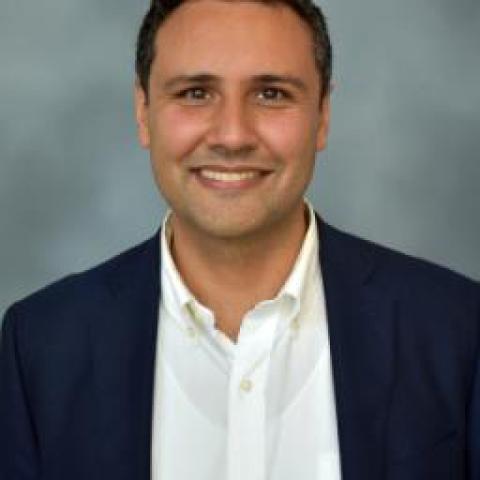
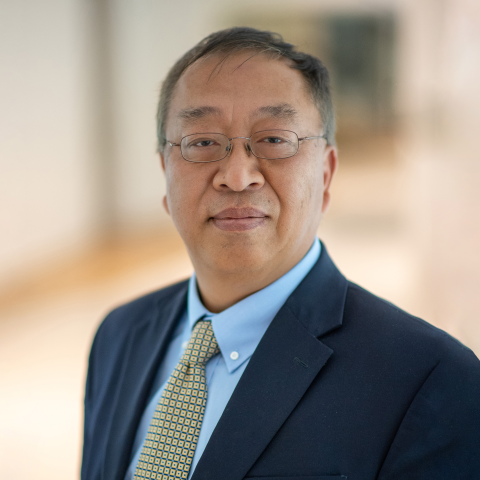
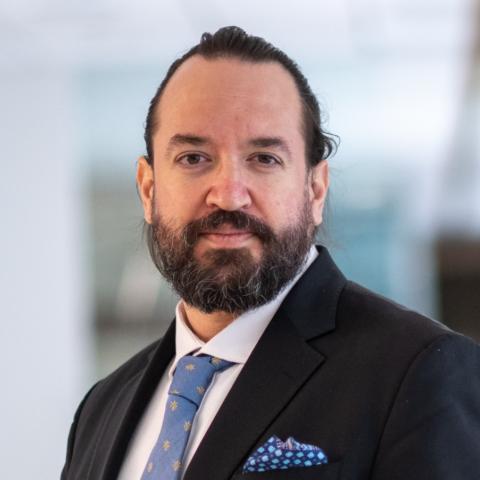




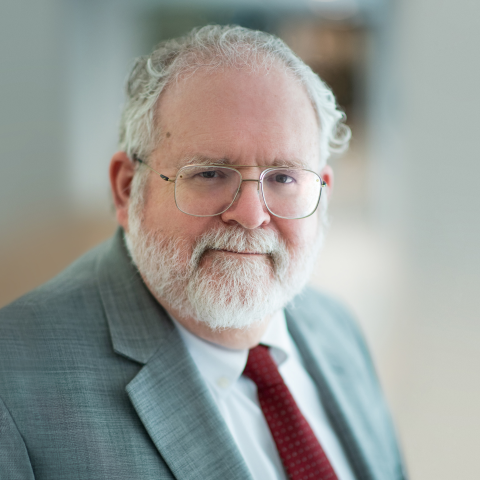

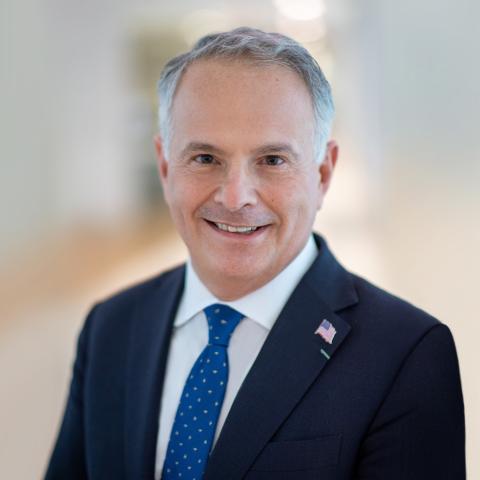
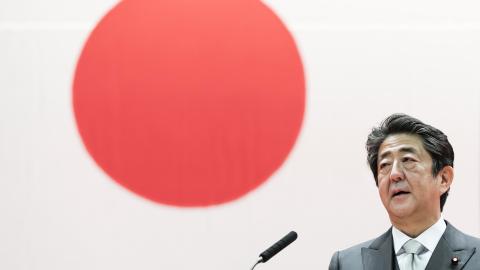
Ken Weinstein gave a keynote speech at the First Annual Shinzo Abe and Contemporary Japanese Studies Conference in Tokyo, Japan.
Written Speech
I am deeply honored to be a keynoter of the First Annual International Forum on Shinzo Abe and Contemporary Japanese Studies.
I would like to begin by expressing my gratitude to the organizers, the diplomats, the distinguished scholars and public servants gathered here, and, most, especially to Mrs. Akie Abe, whose presence honors us all.
My remarks today are not intended as a comprehensive assessment of Shinzo Abe’s career. Others are better equipped to discuss Abe’s unique policy outlook, his extraordinary streak of electoral victories, or his remarkable legislative achievements.
Instead, I would like to offer a more personal reflection on what I see as his enduring legacy.
I first met Shinzo Abe in January 2003. Over the next two decades, I had the privilege of working closely with him and observing him at some of the most important moments of his political life. I watched him rise, fall, return, and ultimately become the longest-serving prime minister in modern Japanese history.
Like many people in this room, I still find it difficult to speak about July 8, 2022. There were many beautiful tributes to Shinzo Abe from around the world on that awful day, including a very touching one from Queen Elizabeth who came to know the PM personally. But none was more moving than seeing Taipei 101 lit up in memory of the Prime Minister and in the colors of the Japanese flag.
Taiwan had a special place in Shinzo Abe’s heart – and he has a special place in the hearts and minds of the Taiwanese people as evidenced by this conference. His loss was not only a tragedy for Japan. It was a tragedy for all who knew him personally and for countless people around the world who admired him, most especially the Taiwanese.
As historians, policymakers, and friends continue to evaluate his life, I believe it is worth asking a simple question:
What was Shinzo Abe’s greatest legacy?
Many answers immediately come to mind.Abenomics. The creation of the National Security Secretariat. Japan’s first National Security Strategy. The revitalization of the alliance with the United States. The revitalization of the Quad. The first leader to develop a focus on economic security. The CPTPP. The Free and Open Indo-Pacific.
Each of these were important, if not signature, achievements. For any other politician, there is an expression in the Jewish tradition: Dayenu, meaning that any of these accomplishments would have been enough – enough to leave a footprint in history.
But the more time passes, the more I believe Abe’s legacy transcends any particular policy. His greatest legacy was restoring confidence.
He restored confidence in Japan’s ability to shape events rather than merely be shaped by them. And perhaps most importantly, by doing so, he restored confidence in Japan itself.
To understand this achievement, one must understand the world that shaped him. Abe often spoke of his grandfather, Nobusuke Kishi, who played an enormous role in forming his political outlook.
From Kishi primarily, but also from his father, the former Foreign Minister Shintaro Abe, Prime Minister Abe received the rarest of educations these days: a princely one.
This was not the Mirror of Princes common to continental Europe, which placed a paradoxical emphasis on both military sciences and Christian theology. Nor was the contemporary UK version which emphasizes British history and constitutional issues.
Instead, Prime Minister Kishi bequeathed to the young Shinzo Abe a strategic understanding of politics and international affairs. He developed an appreciation for history and national purpose -- as embodied in grand strategy, and the importance of leadership. This understanding was so imbued by Kishi that it became almost a matter of instinct for Abe.
But what distinguished Abe was not merely that he inherited ideas, such as Kishi’s view that Japan had to return to its traditional pre-war role as a great diplomatic power, one that had historically close ties to India, in particular. It was that Shinzo Abe transformed these ideas and his strategic instincts into practical statecraft.
In the US, the most visible politicians think in terms of the next news cycle and try to ride that. Less visible officials in Washington think primarily in terms of winning their next election.
Very few think in terms of decades. Over the years, I have had the opportunity to meet presidents, prime ministers, ministers, members of parliament from around the world, senators, representatives and senior officials from around the world.
Some were gifted communicators. Some were highly effective managers. Some possessed tremendous political courage.
What made Shinzo Abe unique was his instinctive ability to act strategically over the long term. He often saw developments years before others recognized their significance.
While most policymakers focused on immediate problems, Abe’s strategic foresight led him to develop concepts promoting economic security and shaping the future of the Indo-Pacific.
While others viewed economics and security as separate domains, Abe understood, long before it became conventional wisdom, that technology, supply chains, energy, finance, trade, and national defense would increasingly become interconnected.
Today these observations seem obvious.
Two decades ago, they were not.
But there was more to Abe than a deeply strategic mind or the ability to craft policy ideas based on his strategic insights: he worked tirelessly to implement these policies with extraordinary resolve.
One of the most remarkable aspects of Abe’s career was his ability to learn from adversity.
His first premiership ended in disappointment.
He left office in 2007, humiliated -- humiliated for his country, his family and himself -- facing serious health challenges and intense criticism. Many assumed his political career was over. He was subject to repeated scorn and ridicule.
Most political leaders never receive a second chance. Few world leaders return stronger after such a setback.
Yet those years out of office became a period of reflection and preparation. When Abe returned to office in 2012, he returned as a different man and a different leader.
More patient.
More disciplined.
More strategic.
More determined to build institutions that would endure.
Looking back, I increasingly believe that the defining phase of Abe’s career was neither his first election as Prime Minister nor his unthinkable return to office in December 2012. It was what he learned between those two moments. His experience taught him that leadership is not measured by avoiding failure.
Leadership is measured by what one does after failure. That lesson shaped everything that followed. The clearest expression of Abe’s unique ability to shape a strategic horizon based on his strategic vision was the Free and Open Indo-Pacific.
Today, the phrase is so commonplace that it is easy to forget how revolutionary a concept it was.
The intellectual origins of the concept can be traced to PM Kishi’s influence that led to Abe’s famous “Confluence of the Two Seas” speech before the Indian Parliament in 2007. Long before most policymakers appreciated the need to redraw the map of Asia so that China would no longer be at the center and dominant, Abe understood that the Indian and Pacific Oceans formed a single strategic space.
He recognized, moreover, that the future of international order would increasingly be determined there. And he comprehended that military power alone would not decide the outcome.
Infrastructure, investment, technology, energy, trade, diplomacy, and development would all deeply affect the future of the region and, therefore, the world.
The genius of the Free and Open Indo-Pacific was it provided a framework capable of bringing these disparate elements together – while offering an implicit counterweight to the Belt and Road Strategy.
The concept was so compelling that President Trump fully embraced it within the first few weeks of his presidency, in early February 2017 – the first time in US history that a somewhat obscure concept developed by an ally became central to redefining US grand strategy.
Perhaps the greatest testament to Abe’s foresight is that the concept outlived him.
It survived changes of government in Tokyo.
It survived changes of administration in Washington.
It survived shifts in political leadership throughout the region.
It has become the framework by which what was once Asia is now understood – in the US, in Europe, in Africa and the Indo-Pacific itself. Abe, far more than his teachers, came to shape the strategic policy horizon other leaders would operate within.
Ideas survive only when they capture something true about the world. The endurance of the Free and Open Indo-Pacific demonstrates that Abe understood a fundamental reality of the twenty-first century before others did.
Henry Kissinger is neither beloved in Taiwan nor at the Japan Institute for National Fundamentals. That caveat notwithstanding, no recent American official thought longer or with deeper insight about the characteristics required for leadership than
Kissinger – from his days as a Harvard undergraduate studying Metternich and Napoleon to his days at the White House, the State Department and beyond Kissinger sees the great statesman as a leader of rare creative genius, an individual with a deep strategic sense, who takes his nation from a challenging if not prosaic present and conceives of a better future.
In the face of immense obstacles -- including the need to communicate with those with more feeble strategic understanding – the great statesman brings about a better tomorrow, a better global order.
This is Shinzo Abe – the man who freed Japan from a process-oriented, multilateral foreign policy that ignored national interest and security challenges, while restoring Japan’s rightful place as a major diplomatic player.
His historic achievements notwithstanding, I do not believe people admired Shinzo Abe primarily because of policy.
People admired him because of his character. He possessed uncommon grace. He listened carefully and had extraordinary emotional intelligence – the kind that allowed him to read people, thereby enabling him to develop relations of deep trust with some of the world’s most challenging leaders.
At home, he treated people with respect regardless of rank or status. Though undoubtedly “well born” in a society that continues to value hierarchy, Abe never treated others with disdain.
After his death, scores of stories emerged of his graciousness to young staffers, diplomats and others who felt they had let him down. His concern for friends was legendary – in my case, I was deeply disappointed after my nomination to be Ambassador to Japan ended with the 2020 election. Abe asked former Ambassador Ichiro Fujisaki, then one of the rare Japanese visitors to Washington, DC in the time of COVID, to check in on me. I was profoundly touched.
Abe combined conviction and resolve with patience. He could be firm without being harsh.
He could disagree without becoming disagreeable. Perhaps most importantly, he never lost sight of the larger purpose behind politics.
Politics was not simply about power.
It was about service.
It was about strengthening Japan.
It was about leaving his country better for future generations.
Historians will continue to debate individual aspects of his record. ,That is both inevitable and healthy. But I suspect that fifty years from now, Shinzo Abe will be remembered not primarily for any single reform, election, or diplomatic initiative.
He will be remembered because he helped Japan rediscover a sense of national confidence and strategic purpose. He will be remembered because he taught Japan to think strategically again. It was his mind that molded the framework that his successors think in – and reshaped the strategic competition with China, thereby strengthening Taiwan.
Abe he will be remembered because he provided a vision—the Free and Open Indo-Pacific—that continues to shape how democratic nations think about the future.
The greatest leaders leave behind more than policies.
They leave behind a way of understanding the world that points the way to a better future, as Henry Kissinger framed it. They leave behind a strategic roadmap for those of us less gifted to follow.
That, in my view, is Shinzo Abe’s greatest legacy.
Thank you very much.