


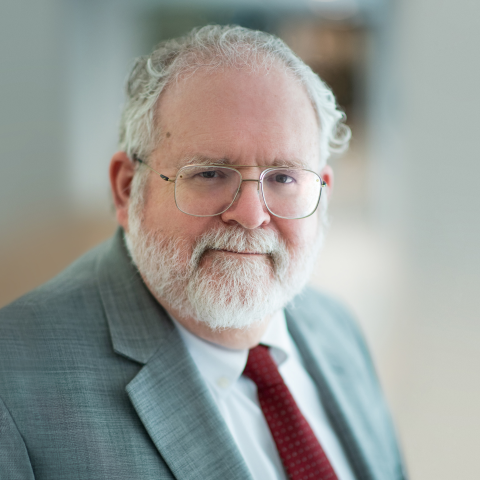








In this week’s episode of China Insider, Miles Yu covers updates from the recent Group of Twenty meeting and looks into the emerging clash between the new coalition of 19 against China’s overcapacity and strategic industrial policy. Next, he looks ahead to the Donald Trump–Xi Jinping meeting in Washington, DC, and examines the Chinese Communist Party’s key narratives leading up to the second round of bilateral dialogue between the two leaders this year. Finally, Miles reviews the latest announcement of CCP purges, including a planned mass-dismissal of Central Committee members and officials at the party’s Fifth Plenary session next month.
China Insider is a weekly podcast project from Hudson Institute’s China Center, hosted by China Center Director and Senior Fellow, Dr. Miles Yu, who provides weekly news that mainstream American outlets often miss, as well as in-depth commentary and analysis on the China challenge and the free world’s future.
Episode Transcript
This transcription is automatically generated and edited lightly for accuracy. Please excuse any errors.
Miles Yu:
Welcome to China Insider, a podcast from the Hudson Institute's China Center. I am Miles Yu, senior fellow and director of the China Center. Join me each week for our analysis of the major events concerning China, China threat, and their implications to the US and beyond.
Colin Tessier-Kay:
It's Wednesday, September 9th, and we have three topics this week. First, we cover updates from the G20 meeting between participating finance ministers and look into the clash between the emerging coalition of 19 against China's recent economic practices and industrial policy. Next, we look ahead to the upcoming Trump Xi meeting later this month in DC and examine the CCP's preliminary narratives and strategy heading into the second round of bilateral dialogue between the two leaders this year. Finally, we wrap up today with the latest round of CCP purges, including a massive dismissal of central committee members ahead of the fifth plenary session next month. Miles, great to be with you again. I know we're a day late for our listeners after observing the Labor Day weekend, but how was your holiday weekend?
Miles Yu:
It's pretty good and busy, but joyful.
Colin Tessier-Kay
Awesome. Good to hear. So up first today, we have finance ministers from the world's group of 20 met in Asheville, North Carolina to continue discussions on global economic issues and address ongoing concerns with global trade and market policies in areas such as rare earths. However, this meeting largely dealt with the issue of overcapacity in China's economic strategy. 19 of the 20 members joined in a statement implicitly criticizing Beijing for its overreliance on exports for growth, marking a new stage in the international pressure. China, of course, was the sole country in disagreement, which prevented a formal statement from being issued. So, Miles, we've talked about the global concerns around China's over capacity in recent weeks on China Insider. Why was it such a focus of this particular summit? And based on the statement itself, what can we expect from the 19 Nation Coalition to address the issue?
Miles Yu:
I'm not sure I can call it coalition, but there is a common understanding. Common understanding, there is some kind of concordial. They basically identify correctly the major problem of global economic stress, which is China's overcapacity. And further, the conference participants, minus China of course, agree over capacity of China comes at the China's over excessive reliance on export and most importantly is because China carries out to something called the non-market policies. So that is very important. Let me just before we go even further, let me just read what are the G20 countries. United States obviously this year holds a presidency. This is just the warmup to the end of this year in December in Miami, the real G20 leaders, the presidents, the prime minister over there. This is a finance minister. Now the G20 countries currently include the following bodies, Argentina, Australia, Brazil, Canada, China, France, Germany, India, Indonesia, Italy, Japan, Mexico, Russia, Saudi Arabia, South Africa, South Korea, Turkey, United Kingdom, United States, African Union, and European Union.
So, you can see this is pretty much like China versus the rest of the world. So, this language actually is pretty stark used by Secretary Bessent, who I think probably the second-best treasury secretary since Alexander Hamilton. He knows the global system. He knows what American interests are. He also particularly point out this is just not America's problem. This is a global problem. China is extraordinarily isolated. China can go to the BRICS, can go to the SEO, go to other United Nations to lambast the United States as if U.S. is isolated. But China is actually pretty isolated. Even most telling of all is that Russia, China's the sole strategic partner, it didn't go along with Beijing. Russia sided with the United States, the description of China's problem. So, this is very, very extraordinary. The Japanese Minister Satsuki Katayama even specifically is pointing out the significance of Russia's position saying that everyone's feelings have crossed a threshold.
This is from Japan. Indonesia also is very important. Indonesia is the largest country in ASEAN Alliance. Indonesia in terms of population is the fourth largest in the world after India, China and the United States. So, Indonesia is a very important country. Indonesia didn't go along with China. Indonesia, of course, has been very close to China on geopolitical issues, but Indonesia agrees China exports cheap goods, subsidize overcapacity. The net result is destruction of Indonesia's indigenous industrial base. So, that is very significant. So, the underlying sort of a shift of global dialogue is that this problem is no longer China versus the United States. China can blame United States on everything, but it's increasingly it become China versus the global markets and the rest of the world. So, this is very interesting. Now for the United States, however, there is also another angle that is United States under Donald Trump has levied heavy tariffs on China.
This actually intensified the second problem. If China's products face greater barrier in the United States, Chinese products and producers have additional incentive to redirect automobiles, steel, machinery, battery, electronics and other goods toward Europe, Southeast Asia, Latin America and elsewhere. So, this is why Secretary Bessent specifically told his G20 counterparts that America's tariffs would redirect the Chinese expert toward your countries, your economies, and that's why he urged everybody to act together. It seems to me that other countries responded to Secretary Bessent’s call for action pretty positively. That's why this is a very important narrative. 19 versus one, including China's best allies. I mean, look at Africa, Russia, India, all the country BRIC members, Brazil as well. So even the Brazil members is like what, five versus one. And so, Argentina also is against Chinese, this overcapacity. Now the Chinese delegates really hate the word non-market, so they fought really hard.
But non-market is not just a calculation of how many Chinese exports go to certain country. Non-market means that there is an institutional structure behind overcapacity. China's dumping its cheap goods to the world is primarily caused by state owned enterprises, directed credit. Chinese banks give a lot of credit to certain strategic industries without even any merit of those industries. State subsidies, local government assistance and the larger party state industrial system. So, this is a structure. This is basically non-market mechanism at work. That's why the problem is not just how many Chinese exports going abroad is what caused it. So, this is a very. I think China spent decades worrying about China shock in America, but it may not confront the worldwide backlash against China shock 2.0.
Colin Tessier-Kay:
Yeah, they're increasingly finding themselves on an island here with stacked odds against them. So, to summarize here, Western nations are particularly concerned with China's over capacity and production of cheap goods flooding the global markets, primarily with EVs and solar panels because local buyers are simply not spending enough. And to better understand this, US treasury officials, including Secretary Bessent, argued that China's massive trade surplus harms domestic factory workers and businesses and suggests that nations should consider new trade barriers to handle the flood of cheap imports and further increase pressure on Beijing to stop giving such large subsidies to its domestic manufacturing sectors. In response, China's ministry of commerce denied any unfair economic imbalance and stated that using global forums to criticize Chinese manufacturing is a form of protectionism designed to hold its economy back. So, Miles, based on what we know, if Beijing does not change course in its economic strategy to address these issues of overcapacity, what would be the long-term impact on the global economy? And, given that China's trade surplus is reaching a breaking point in it of itself, how long can they realistically hold out here?
Miles Yu:
Well, we'll see. I mean, I think China's trade surplus in 2025, according to G20 figure, reached $1.2 trillion. That's a staggering. It's all because Chinese government has spent enormous investments and manufacturing capability when the skyrocket. But in end, household consumption in China is abysmal. Nobody's buying anything. So, this is kind of a state credit, the local government support, industrial policy, intense domestic competition encourages enormous overcapacity, right? When domestic demand cannot absorb that production, companies seek foreign markets and destroy other countries' economy and industrial basis. So, I think this is a sort of a rallying call for global response. I think only when China's export market were sealed off from Chinese dumping can this strategy really work. So, we'll see. I think for their own interest, if you have another 19 countries sign up to this kind of language against China, they definitely have a common understanding. Common understanding is a prelude common action. I hope that common action will come soon.
Colin Tessier-Kay:
Let's take a look forward to later this year because the G20 leader summit will be taking place this December in Miami. And to compare and contrast to this recent round, while this past round was held by finance ministers, which typically yields more of a detailed policy discussion base, the leader summit will almost certainly have an agenda of its own but look to continue on a lot of these key issues and topics. So, looking ahead, Miles, what can we expect in December following this past meeting between the finance ministers? What will China's position be like by then and how might the world leaders approach the existing dynamic?
Miles Yu:
Well, China will of course try to redirect the discussion toward the United States. Say everything's caused by the United States containment, trade barriers, anti-China. It's all sort of old gobbledygook has been going on for decades. None of it works. China has tried to build up some kind of a global south movement against the United States led coalition is gone to the drain. And you can see most of the people in the south, global south from the G20 list, they're sided with the United States. If you look at the other sort of original alliances, they were pretty isolated. I think China's going to fight for the impossible. That is, they want the international community to recognize China is a market economy, which obviously is nonsense. China kick out all the due diligence companies inside China so nobody from outside can monitor the real economic reality of China.
But then facts speak louder than words. And if China continue this kind of dumping to the global markets and this issue will be the number one talking point in Miami. And secondly, of course, is the war in Ukraine and war in the Middle East and China is all behind it. So that's why China is not only a big problem, global problem in terms of trade. China is a problem in geopolitics too, which we're going to talk about in a few minutes.
Colin Tessier-Kay:
Yeah, it's a perfect segue into our next topic today as we stay with the summit circuit. Round two of the Trump-Xi bilateral dialogue will take place in just two weeks here in DC. And while the formal itineraries have yet to be confirmed, the two leaders are slated to meet on September 23rd and 24th as a continuation of their talks earlier this year in Beijing. Leading up to the meeting, China is sparing no effort in building from their prior engagement and attempting to control the foundation of the upcoming discussion. While Chinese ministries haven't issued any formal redlines or teasers, CCP rhetoric has revolved around the phrase constructive strategic stability. So, Miles, what does China mean here by constructive strategic stability and how does this fit into their key narratives leading into the upcoming summit?
Miles Yu:
Well, their key narrative number one is American produces chaos, China produces stability. Strategic stability means the United States is not very sort of cooperative in producing global stability. This is basically their top propaganda line. It's been going on for a long time. The implicit contrast is that they said that America is a country that impose tariffs, sanctions, wars, alliances, military intervention, political polarization, unpredictable policy. China, of course, is portrayed as the country that focus on trade, development, infrastructure, sovereignty, non-interference and dialogue and win-win competition. Those are all nonsense. The world is becoming increasingly chaotic. All the troubled spots in the world, including Ukraine, including the military Iran, including Venezuela, could have been solved by China. If China had not supported the Russia, Russia's war in Ukraine would have been over many years ago. So, China is a culprit for all those troubles in the world.
United States tried to pacify all the problems and China say, "Hey, you are basically the source of instability." China's been conducting proxy wars since 1949, since the beginning. Korean War, Vietnam War, it's all proxies. Use other people's war against the United States. Whoever, whichever country is the most anti-American, China is always behind it. Iran, China's buddy-buddy. China has been sort of fervently supporting Iran in a very significant way. In 2021 alone, China pledged $400 billion for Iran. So, with that kind of money, Iranian of course can arm and bankroll Hamas and Hezbollah and build its defense industrial base. So, China is a problem. Without China, there will be no Nicholas Maduro. Without China, there will be no Cuba making trouble for the region. So, China's trade, of course, is predatory. Sovereignty, China non-interference, what about Taiwan? What about the fight with India, with the Philippines, with Japan? Of course, China wants to have Taiwan. So, China is a number one source of global instability, not the United States.
United States basically want to maintain peace through strength. So, we are the country of action. China is a country of troublemaking. So that’s basically my read of this. So, this is basically a Chinese community party narrative. It can fool some people some of the time, but it's not going to work. So of course, there's also another narrative which is really run rampant in China in the weeks leading up to the Xi's visit to Washington, D.C. later this month. That is the idea of Dongsheng Xijiang- the east rises, the west declines. This is many people, most of my think tank colleagues here in D.C. regard this as a recent relative decline in the United States, they'll name China's advances in defense technology, in economic arena and trade, list the United States as country as going socially chaotic and polarization of politics and the loss of industrial basis.
This is all very myopic in my view because to constantly predicting capitalism terminal crisis has been the hallmark of communist movement since the time of Karl Marx. Marx expected capitalism's contradictions eventually would destroy it. Vladmir Lenin famously interpreted imperialism as capitalism's highest and terminal stage. Stalin expected contradictions within the capital system will weaken the capitalist world. Mao repeatedly said that the decline of American imperialism is inevitable. I mean those who live through Mao era like myself knew this from the childhood. So, to constantly predicting American's decline has been a hallmark of communism. Are we all declining? Well, we're chaotic, but we're not necessarily weak. So, this is a propaganda that has an enormous appeal in a polarized country like the United States right now. Hopefully many of my colleagues will not fall into that kind of play.
If United States is really in decline, China's behavior constantly demonstrated otherwise, that China fear a strong America, China fear American's real power. If China's leadership genuinely believe American decline were inevitable and advanced, why devote extraordinary resources to circumventing American semiconductor controls, acquiring Western technology, weakening American alliances, separating Europe from the United States, displacing the dollar, reducing dependency on Western supply chains, developing anti-access weapons specifically designed around the US military capabilities, penetrating American technological and research networks and persuading Washington to reduce its commitment in Asia. So those were all signs of American strength, not in decline. On the other hand, as we said in the first segment of this podcast, China is isolated even by its own partners. So that doesn't say much. I think the Chinese government is trying to convince its captive audience at home to hide the CCP's strategic anxiety. So, it basically tried to bamboozle the people inside China.
I don't know that it's going to work anymore nowadays. Of course, there is also the one that Xi said, but his underlying entire Chinese machine globally will say this false narrative as follows that they exaggerated American's decline. America has problems, but there is a recurring tendency in America. I mean, since when United States is not divided, I ask a question. There are times when United States were more united than others, but disunity, argument, polarization has been a hallmark of this new country since the time of George Washington. It's been 250 years, yet we argue with polarizing and then we become stronger and stronger. So that's basically do not confuse American disorder with American weakness. That's my point.
Colin Tessier-Kay:
I like that term, strategic anxiety. I think it fits a lot of what's going on. And certainly, when you relate these key narratives to what we think are at least the core objectives for Beijing going into these talks, it's likely in general that Xi still seeks stability in bilateral relations and would prefer more predictability and of course the US tariff policies and is open to economic agreements. And I think this is highlighted a bit in the reports that Xi Jinping plans to lead a major Chinese business delegation to the U.S., akin to that of Trump's that he took to Beijing to secure trade and investment deals. Miles, do you expect any formal economic agreements or even MOUs to emerge from this round of talks? And if so, what areas might they focus on?
Miles Yu:
This is even comical for Xi Jinping to be contemplating this. The Chinese non-state enterprises have been wiped out almost entirely by Xi Jinping. The party took over a lot of very profitable, good companies. Alibaba is a very good example. So why Xi Jinping will take this to Washington D.C. if this becomes the reality will be the chief executives, the party apparatus that run the state-owned enterprises, the party sanctions that going to further this trouble to the United States for everybody else. So, we don't allow, for example, the Chinese Yangjiang memory chips company, that's a competitor to Anthropic, to ChatGPT, to OpenAI. Those are people who steal Americans high tech innovations. So, I don't think Xi Jinping's charade of taking a lot of so-called business executives with him will result in any further Chinese investment in the United States because first of all, will be extremely harmful to the American national security and also definitely is going to further devastate American's industrial and defense industrial base.
Colin Tessier-Kay:
So, looping back to the G20 piece of things here, because both Trump and Xi are slated to meet again on the sidelines of the G20 summit in December. So perhaps the need for formal agreements really isn't as high this time. There might be some MOUs around continued discussions on certain topics, but looking more broadly at Xi's calendar, Xi Jinping's calendar of bilateral summits this year, he'll likely look to advance his charm offensive, that seems to be the phrase that's emerged and cultivated vision for multilateralism and mutual respect in Chinese foreign affairs, nonetheless. So, before we move on here, Miles, I'd like to get your assessment of Xi Jinping's diplomatic strategy over the course of this year with bilateral relations with US, Russia, even North Korea summits. Do you think he's achieved any key footholds in any of these bilateral relations, including those with the EU countries and Canada? And how does this fit into his long-term strategy and diplomat strategy for China?
Miles Yu:
You have to understand, we're dealing with a communist dictator with a primary school, sometimes a middle school education. He's a communist party leader. He knows something really, really well that is a communist theory. He has a lot of theories. His head is full of those things. Other than that, I mean, I don't think he's a diplomat. I mean, look how awkward he is. He doesn't speak the lingua franca of the international politics, English, French, you name it. And he's always very awkward in these international settings. I think that's one reason he's kind of reluctant to come to DC, even to Miami in December. So, we'll see what happened. However, you mentioned about China's bilateral relationship with Russia, with North Korea. They look very, very superficial to me. I mean, I think in the end, Russia and North Korea would go their own way. China has been presumed as a country of opportunism.
It can be body-buddy with you one day and based on common interests, one-time West sentiment, the other day it can betray you. I mean, look at China's recognition of South Korea back in 1990s. North Koreans have never forgiven that, right? And look at China-Russia relationship in the last 70, 80 years. God has been go through the swing to the extreme. One day it's comminating arms, another day is arch enemy. So, Putin harbors no illusion about China's ambition in global dominance. So, I mean, he even said openly to many of the American commentators, and he said Russia is not really enemy of the West. The real enemy of the West is China. He said that about four years ago. So, to American audience, unfortunately, nobody picks up that. I think that President Trump has listened to these comments pretty clearly. I think the narrative that somehow America is conducting single-handedly a contaminant against China is just bunk. I mean, it's China versus the rest of the world. He will feel the heat in Miami, Miami heat. I'm not talking about the basketball.
Colin Tessier-Kay:
Yeah. I can only imagine what that's going to look like. And we'll certainly loop back, of course, after this upcoming summit and then again ahead of the G20 in December to see where things stand. But we turn to our final topic today where we are back on the purge train as reports from a Chinese national security official indicated that more than 40 Chinese Communist Party Central Committee members are expected to be purged at the party's upcoming fifth plenary session next month. China has removed and investigated at least 11 officials at the ministerial level this year, which is a record high, in addition to other key military officials, including of course, Zhang Youxia and Liu Zhanli, including within this latest round is Zhong Xiao Jun, a longtime Xi loyalist who served as director of the Central Military Commission General Office for, I believe, 11 years and former strategic support force commander Ju Chong Xin, who are all expected to be formally expelled from the CCP at the upcoming session.
So, Miles, what's to know about the latest purge developments and planned dismissals? Any other names to be aware of here?
Miles Yu:
Yeah. I mean, this purging has become sort of the routine in China. What happened is most of the guys' name in this new way of purge have been in trouble since last year, but that was basically Chinese Communist Party decision. So, this time, China runs this fake rubber stamp called the state system, right? So, they have this kind of National People's Congress. So now the rubber stamp is basically put an official stamp on those purges-plus several more. What's really important is not just the generals, admirals who are taken out. And of course, those guys will become non-person. Many of them will be sentenced to usually either life-term imprisonment or death with two years retrieved. Basically, it's pretty much like life-term imprisonment in Chinese system of law. So, what's really important is the purges are associated with the people that's related to nuclear weapons, nuclear propulsion, missiles, aviation, fighter design, electronics, and advanced weapons research.
So, we're talking about top civilian weapons experts. I mean, the names are very chilling. For example, Liu Zhanli is a former president of China Academy of Engineering Physics. He's one of the top China's nuclear weapons researchers. This is very big. If you reach to the presidency of China's Academy of Engineering Physics, and you are really, really sort of top nuclear engineers in China. The other guy's Luoqi. Luoqi is a senior nuclear expert and the chief engineer associated with China National Nuclear Corporation, the CNNC. So, this guy is purged last week. And then you got Zhou Xinmi, he's a former chairman of AVIC. AVIC is a giant state aviation conglomerate. It's like we said this before on this program. It's like you put Northrop Grumman, Lockheed Martin, General Dynamics, Boeing, all of them, and also Raytheon together into one, and then you get the equivalent of AVIC.
This guy was charged with corruption. He was sentenced to death with two years. So those guys were basically. They were removed from National Peace Congress early this year, but this time it's confirmed. And then there's a guy we mentioned is Yaowei. Yaowei is not an obscure bureaucrat. He was the chief designer of the J20, fifth generation stealth fighter, which is one of the crown jewels of PLA modernization. And so, he disappeared from Chinese official website means that he's been purged. So, there's no official explanation. And there is also another wave, heard of Chinese experts in high tech. For example, Liu Guozi, he's China's top expert in high power microwave weapons. So, he used to be the head of the Chinese Central Military Science and Technology Commission. So, he's at the top of defense science in that country. So, they have scores of others whose name that I don't want to bore our audience listeners with their very difficult names, Chinese names.
But the scientist purge matter more than another general because a general can be replaced relatively quickly through the Chinese system. A scientist has spent decades mastering their expertise in nuclear physics, missile guidance, aircraft design and propulsion system. It's much, much harder to replace. So military modernization depends upon this kind of experts, and they are now the target of the massive purge of Xi Jinping. A purge, a wave of purge, I would call it a biggest purge that has not seen since the age of Mao in terms of scale and the breadth. So, the breadth and scale. So, this is really, really, really serious. I mean, this also further deepen China's trouble in defense science and weapons engineering. That is, they encourage people to lie. They sort of make more hesitant to take risk. And also, don't contradict with the civil leader. And if there's something bad, well, don't report it. Otherwise, you're going to be in trouble yourself. So, this is all very bad. China does not have the open exchange of idea system. China does not encourage failure. And in the United States, you fail once, you learn from your failure and keep going until you succeed. And that's how our system works.
I do not really want to exclude; the corruption is a problem. There is a systemic procurement corruption. There's no question about that. But there's also readiness and the weapons reliability problem. So, they tested and they probably failed. And so that is basically. And also, of course there is also patronage if guy on the top has been purged and all the people he promoted will be affected as well. All in all, I think it shows the Chinese system that is very brutal and that is very averse to transparency. And most importantly, basically it's created own hotbed for corruption. So, this is basically why we're talking about China on a weekly basis. We have to realize the weakness and vulnerability of the system. It has strength, it has formidable capabilities, but ultimately, it's declined and its demise seem to be inevitable to me.
Colin Tessier-Kay:
I know we're getting close to our time for today, but I kind of want to stick with that last thought there for a moment because an interesting dynamic that's emerged, there was some great reporting done by the Taipei Times with relation to connecting with the Chinese national security official. They reported that the Chinese state media apparatus overall has reversed a traditional phrase, "The party manages and governs into manage and govern the party," meaning the priority is to get the party itself under control, adding that further personnel changes within the CCP are expected to cause considerable turbulence. The national security official who spoke to the Times indicated that Xi's campaign is to achieve full and strict party governance and targets three forms of impurity, thought referring to disloyalty, organization referring to CCP cadres and factions and conduct referring to being pro-US of harboring illusions about peaceful evolution.
I found this exchange rather revealing and concerning, wondering whether Xi first truly believes that he can eradicate party factions that have always been a core feature of the party since really Yan’an, and the notion of illusions about peaceful evolution. Miles, I'd love to get your thoughts here on the shift in rhetoric and what it might reveal to you. How does this align with the established CCP party doctrine in your assessment?
Miles Yu:
I mean, all this pipe dream, this crazy idea of reforming the communist party is just nonsense. The party is absolutely committed to one-party dictatorship. You have to rule by one supreme leader. As long as the power of the supreme leader, as long as the power of the party is monopolized, is not separately checked and balanced, there's no way any true reform can be achieved in China. In China today, if you say, "I don't like a Xi Jinping's accent," and then you are basically considered as disloyal. If you say, "I don't like a Xi Jinping's color over hair," I mean they get in trouble. So, this is just absolutely crazy. If you say something openly nice about America and then you'll be in trouble too. So, they have built up this massive surveillance system, the worst, the most comprehensive, the most advanced in the history of mankind to monitor every single word uttered by the citizens.
So those kind of systems does not change. Any reform is going to fail. So that's why you have to really dismantle the system itself. Gorbachev in mid 1980s realized the problem. The Soviet Union would be unreformable if you don't change two things. One is openness. You allow open ideas to freely flow. That's glossinas. Secondly, you got to change the communist party monopoly structure. That's why he instituted something called Perestroika, which means that basically restructuring. So, what he did was he allowed the people at the local level to have a free election. The result is that all the communist bureaucrats were elected out and that's the beginning of the demise of communist system. So, the Chinese Communist Party learned this lesson. So, they would never allow openness. They will never allow election because that will basically lay the foundation for its own demise. And this is basically we're allowing the vicious cycle.
Regime change should not be the goal of the United States, but regime change is the popular demand of the Chinese people. United States should really support that aspiration. So, it is very interesting because one man can rule China with iron fists and we are talking about how strong, how formidable, and we are going to cooperate with our system. If we're not careful, that system will actually going to be the routine of the world and that's something we're fighting for. And people ask me all the time, Miles, what is endgame for the US-China rivalry? That's it. We want to prevent the Chinese model of governance from becoming a global norm, period.
Colin Tessier-Kay:
I think that's a perfect place to leave it for this week's conversation. Thank you as always to our listeners and thank you Miles for your insight and expertise in this week's discussion. We'll check back in with you again next week.
Miles Yu:
All right. See you next week.