












Two million dead and wounded. That is the staggering human toll as the Ukraine War grinds on for a fifth year, with no end in sight.
The geopolitical picture is also grim. In the face of a battlefield stalemate lasting longer than Russia’s Great Patriotic War of 1941–1945, Russian President Vladimir Putin is increasingly putting Russia on a war footing. The signs of hybrid warfare against our European allies emerge almost daily.
Putting a stop to the “senseless killing” in Ukraine was, appropriately, President Donald Trump’s foremost foreign policy priority when he returned to the White House 19 months ago—but progress proved elusive throughout 2025 and 2026. Trump is fortunate that a conflict he labeled “Biden’s war” didn’t become “Trump’s war,” as the death toll surged and his envoys came away empty-handed time and again.
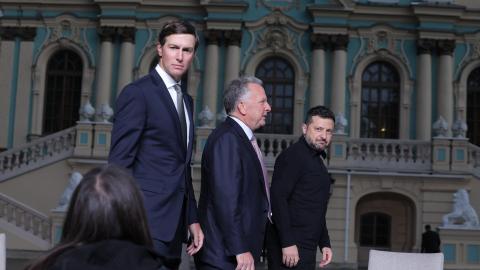
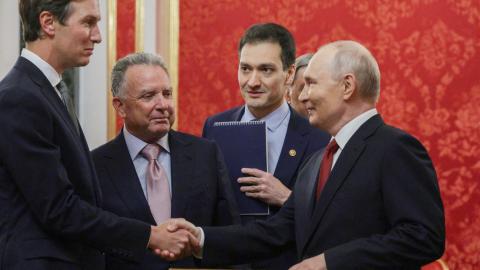
This Labor Day weekend coincided with a flurry of diplomatic activity as Trump emissaries Steven Witkoff and Jared Kushner met with Putin in the Kremlin and made their first visit to Kyiv, where they met Ukrainian President Volodymyr Zelensky. It is a relief to see Washington newly engaged after months of inactivity. Still, one must question the utility of shuttle diplomacy if the approach remains a charm offensive aimed at Vladimir Putin.
Presumably, some in the Trump administration recognize shortcomings in the approach taken throughout 2025. Despite what appears to be mutual respect between the two leaders, Putin rebuffed proposals from Trump and his emissaries time and again, including the allure of joint economic opportunities. Incentive-based diplomacy delivered meager returns.
It is not too late for Trump to rewrite the narrative and engineer a cessation of hostilities that ends the slaughter in Ukraine and Russia. Indeed, Ukraine could be the Trump administration’s most consequential foreign policy win—if the president and his national security team change course now.
The frontlines in eastern Ukraine have hardly moved since late 2022. Against the odds, Ukraine has not only held off a superior military foe but mustered the ingenuity to bring the war to Russia’s cities and oblasts through drone attacks on military and energy sites. Ukraine endures brutal missile salvos, mostly targeting civilian sites—a situation made worse by a shortage of interceptors.
With the conflict in a futile fifth year, few would disagree that it is time to find a way out of the carnage, and few would disagree that only the United States can bring the two governments to the negotiating table.
Trump’s success in Venezuela and his commitment to securing a positive strategic outcome in Iran—tightening the screws on its shattered economy, putting pressure on supporters like China, and keeping a significant military presence in the region—are both setbacks for Russia, long a major supporter of ousted Venezuelan leader Nicolas Maduro and the regime in Tehran.
The Trump administration should leverage these gains and engage the Kremlin from a position of strength.
The United States already maintains a web of sanctions on Russian entities, which would be reinforced if the House and Senate pass the Lindsey Graham Sanctioning Russia and Iran Act. Taking a page from the Iran pressure campaign, Trump should give Treasury Secretary Scott Bessent carte blanche to target other energy and banking entities and, equally importantly, vigorously enforce existing sanctions, including third-country facilitators, whether Chinese, Indian, or Turkish.
Bessent may need to calibrate these actions with Secretary of State Marco Rubio to mitigate diplomatic—and potentially economic—fallout, but projecting resolve is vital to increasing overall pressure on the Kremlin. In addition, the White House’s diplomacy should tackle the serious problem of North Korean munitions and soldiers on the battlefield.
The Ukraine War entered a new phase over the summer: Ukraine’s UAV ingenuity has allowed Kyiv to take the fight directly to Mother Russia. Ukrainian drones have repeatedly hit energy targets and other infrastructure deep inside Russia, including in Moscow—potentially changing the deterrence equation by debasing Russia’s strategic depth.
The Trump administration should recognize this new dynamic and publicly signal willingness to provide or sell Ukraine additional long-strike capabilities, eg, JASSM, ATACMS, and Tomahawk missiles. Trump should also lean on German Chancellor Friedrich Merz to finally send Taurus missiles to Ukraine.
The core point is not to escalate the conflict, but rather to make clear to Putin that continuing the war will considerably increase the costs for Russia, ie, with Ukraine capable of disrupting Russian supply lines (including, for example, the Kerch Bridge) and inflicting even more damage on Russian critical infrastructure.
The Department of Defense should also increase cooperation with, and support for, Ukraine’s impressive deep-strike drone ecosystem and counter-drone technology—with clear benefits to US unmanned weapons systems development.
Trump could also call the Europeans’ bluff, in a manner of speaking, and offer limited support—drawing on existing US forces in Europe—for the Franco-British proposal for a deterrence or stabilization force in the vicinity of Ukraine. This could lead London and Paris to begin mustering a joint force posture somewhat commensurate with their rhetorical support for Ukraine—a signal to the Kremlin that the Western alliance is demonstrably ramping up support for Ukraine’s cause.
For Trump to succeed in Ukraine, America’s diplomacy needs to be reordered. Intermittent and impromptu engagements between high-level envoys in 2025, as well as a Trump-Putin summit last summer, yielded scant progress.
The three countries (Ukraine, Russia, and the United States) need to establish a standing, mid-level negotiation process, including US shuttle diplomacy between Kyiv and Moscow and regularly scheduled talks in Switzerland or another suitable venue. Rubio will need to make a case to Trump to trust him to form a negotiation team led by an experienced Republican national security figure. Even when stalemate defines the battlefield, it’s imperative to keep making progress on ceasefire proposals and modalities.
Success in Ukraine is not out of the question. Both sides need a way out; no one disputes that only America can manage the process. The Trump administration can reengage by projecting strength and resolve through renewed economic pressure on Russia and targeted military support for Ukraine.
Bipartisan support exists for increasing pressure on the Kremlin. Making a serious push for peace is low risk with significant political upside—and a potential boon for Trump’s legacy.