
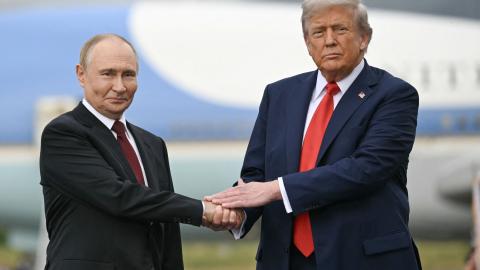
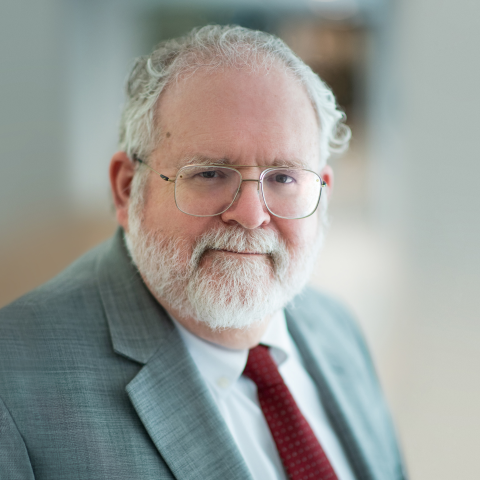


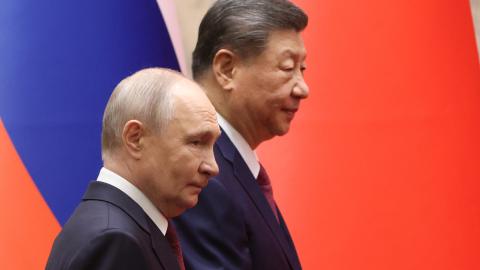



In this week’s episode of China Insider, Miles Yu discusses three seemingly unrelated stories from Xi Jinping’s recent visit to Washington: the guest list at the White House state dinner, Xi’s invitation for 100,000 young Americans to study in China, and the arrival of two giant pandas at the Atlanta Zoo. First, Miles notes how chief executive officers of major Chinese corporations and other Chinese business elites were notably absent at the White House state dinner in stark contrast to America’s star-studded business delegation to Beijing in May. He highlights what this tells us about the lack of political independence of entrepreneurs and all other citizens in China. Miles then analyzes Xi’s invitation for young Americans to study in China and the accompanying Chinese state narrative on the issue, including the fact that existing and proposed future student exchanges lack reciprocity and academic freedom for Americans in China. Finally, he looks beneath the cute veneer of China’s delivery of two giant pandas to the Atlanta Zoo, discussing how this is part of an effort by Beijing to help rebuild its foothold in the American South after the 2020 closure of the Houston consulate, as well as how the lovable panda bears themselves have been weaponized by Beijing in global diplomacy for decades.
China Insider is a weekly podcast project from Hudson Institute’s China Center, hosted by China Center Director and Senior Fellow, Dr. Miles Yu, who provides weekly news that mainstream American outlets often miss, as well as in-depth commentary and analysis on the China challenge and the free world’s future.
Episode Transcript
This transcription is automatically generated and edited lightly for accuracy. Please excuse any errors.
Miles Yu:
Welcome to China Insider, a podcast from the Hudson Institute's China Center. I am Miles Yu, senior fellow and director of the China Center. Join me each week for our analysis of the major events concerning China, China threat, and their implications to the US and beyond.
Welcome back to China Insider. I'm the host, Miles Yu. You probably noticed something unique about today's podcast because our co-host Colin has moved on to another adventure and is no longer with us on this show. I'd like to thank Colin for his great contribution to this podcast over the past year, and I wish him all the best for him as he embarks on his new adventure. Before we find his replacement for this podcast, I'm going solo for this week. I'm going to continue to do my best to bring quality analysis of the events that matter to the U.S. and to you, our faithful listeners. Thank you for your attention.
Well, today, I'd like to talk about three things that might look completely unrelated. First, something very strange about Xi Jinping's state dinner at the White House last week. Namely, there were no Chinese CEOs at the table. Second, Xi Jinping's invitation to 100,000 young Americans to go to China. And third, believe it or not, Pandas. What connects CEOs, college students, and pandas? Actually, quite a lot. All three tell us something about how the Chinese Communist Party thinks about power, control, and influence.
Let's start with the White House dinner. I was looking at the guest list and something jumped out at me immediately. Look at the American side. You have this extraordinary collection of America's corporate elites, Elon Musk, Jensen Huang, Lisa Su, Mark Zuckerberg, Jeff Bezos, Sundar Pichai, Satya Nadella, Jamie Dimon, Michael Dell, Mary Barra, Jane Fraser, Tim Cook, something like 19 CEOs from major American companies.
Then look at the Chinese side. Where are the Chinese business tycoons? None of them were there. There were no Chinese equivalents of Musk, Huang, Bezos, Zuckerberg and Diamond. None. I don't think that's accidental at all. I think it tells you something fundamental about the Chinese communist system. In America, when the president invites the CEOs to the White House, they are his guests. They are not his subordinates. The president of the United States is not Elon Musk's boss. He's not Jamie Dimon’s boss. He's not Jensen Huang's boss. Yes, the president is a very powerful figure, but these CEOs can agree with him. They can disagree with him. Actually, they can support his opponents. They can sue his administration. They can go on television tomorrow morning and say the president is wrong. And that's normal in America. Now compare that with China. In China, ultimately the party is the boss.
The CCP itself says very clearly: “party, government, military, society, education, east, west, north, south, and center. The party leads everything.” This is a very familiar Chinese saying and every school kid knows it. It simply is like this: Dang zheng jun min xue, dong xi nan bei zhong, Dang shi lingdao yiqie (黨政軍民學,東西南北中,黨是領導一切的).
And that's basically what it is. That includes business. You can become very rich in China. You may build a huge corporation. You may become internationally famous, but you cannot be politically independent of the Chinese Communist Party. And universally, to be rich and to be politically independent is virtually impossible, which is why every major Chinese businessman is in a perpetual cycle of fear and imminent punishment by the Chinese Communist Party. And to me, Alibaba's Jack Ma is the classic example. Now, people usually tell the Jack Ma story this way. He gave that famous speech in Shanghai in 2020, criticizing China's banking and regulatory system. He was getting too ambitious with the Ant Group IPO. Regulators became worried, and then Beijing cracked down. I think that explanation misses the deeper political issue. Go back to January 2017. Jack Ma of Alibaba, the largest Chinese e-commerce platform, went to Trump Tower in New York City and met Donald Trump, the then-president-elect of the United States.
And afterward, the two men came downstairs together before the cameras. Trump praised him. Ma talked about American jobs and American small businesses. Here was probably the most famous private businessman in China conducting what looked almost like his own economic diplomacy with the incoming president of the United States. I think that episode mattered enormously and that meeting was the real reason for Jack Ma's downfall. Put yourself inside the logic of a Leninist dictatorship. Who is Jack Ma to conduct high-level diplomacy with the incoming president of the United States? Imagine the political problem that creates in Beijing. The supreme leader of the Chinese Communist Party cannot be put in the position where he has to ask a private businessman, "So Jack, what did you and the American president talk about?" That reverses the political hierarchy. In the CCP system, businessmen report upward to political power. Political power does not report downward to businessmen.
So, my view is that Jack Ma crossed an invisible political line long before his Shanghai speech. His later criticism of the financial system and the enormous Ant IPO gave the authorities the opportunity and the justification to bring him back down to earth, and they did. So then look at what happened to other prominent Chinese business figures. Ren Zhiqiang (任志強) received 18 years in prison. Sun Dawu (孙大午), the famous Chinese agriculture business tycoon, received 18 years. Xiao Jianhua (肖建華) was kidnapped in Hong Kong and [brought] back to China and received 13 years’ imprisonment. Bao Fan (包凡), the Chinese... sort of a very famous high-tech financier, disappeared into detention for more than two years. And you can go down the list. If you're a Chinese entrepreneur watching this, what do you learn? What you learn is to keep your head down; you learn not to become an independent political personality.
And above all, you don't upstage the supreme leader. So, when Xi Jinping comes to Washington, who comes with him? The party, government officials, political officials, the state apparatus. Not one independent Chinese businessman was inside. Meanwhile, Trump fills the White House with America's most powerful CEOs. That contrast tells you a great deal about the two systems without anybody having to give a speech about capitalism versus communism.
So, let me talk about the second story, which is Xi Jinping's invitation to Americans to go to China. And a lot of Americans... he has invited 100,000 young Americans to go to China over the next five years for study and exchange. Sounds terrific, right? Well, let me say something immediately. I want Americans to go to China to study the Chinese language, to understand China, to mingle with Chinese people, ordinary Chinese people. So, the issue is not whether Americans should see China or go to China. The issue is: what China are they being invited to see, or are they allowed to see? We've already had a trial run. Xi Jinping announced in San Francisco in 2023 that China would invite 50,000 young Americans over the five years. Well, now Beijing says it has already reached that number. That is a bald-faced lie. The reality is that while there were more than 270,000 Chinese nationals studying in American colleges and universities today, 2026, there were about just [about one thousand] Americans in China studying full-time.
And that's one American student in China for roughly 300 Chinese students in the United States; extremely unbalanced and non-reciprocal in my view. That's because very few Americans feel safe studying in China today. China is a country where Chinese security agents could routinely harass, detain, monitor, or even arrest you, as the American embassy in Beijing constantly warns the public. And China is eager to take 100,000 American young people to China, not necessarily to study, but to live what Xi Jinping calls the China story. Jiang hao Zhong Guo gu shi (講好中國故事, “Tell China's good story), as he puts it.
Suppose they take you to Shenzhen. Wonderful. They show you electric cars, drones, and high-tech factories. Fine. They take you on China's high-speed railway. Very impressive. They show you Shanghai at night, a beautiful city, but then you start asking questions. Can these American students organize a seminar about the Tiananmen massacre in 1989? Can they interview dissidents? Can they invite opponents of the Chinese Communist Party to campus? Can they organize a Taiwan independence club? Can they publish a campus newspaper saying Xi Jinping should resign? Can they investigate the wealth of senior Chinese Communist Party families? Can they form a research group to study the origin of COVID? Can they use the same unrestricted internet they use at Harvard? Well, basically the question goes on and on. That's when the meaning of academic exchange changes, because exchange should mean reciprocity.
A Chinese student comes to Harvard and can say almost anything he wants about the United States. He can criticize President Trump, he can criticize Congress, he can attack American foreign policy, he can praise Xi Jinping, he can defend the Chinese Communist Party, he can organize demonstrations, he can criticize me, and that's fine. That's academic freedom. But where is the American student at Tsinghua University who has the equivalent freedom to organize publicly against Xi Jinping and Chinese communist party rule? That's the question.
And this brings me to something that happened to me personally at Harvard. I recently gave a talk there about American-China policy. The host, Professor Rana Mitter, was an extraordinary gentleman and a fellow historian, and he was a very gracious host. But a gentleman by the name of Wang Xiangwei (王向偉) attended my talk at Harvard too. Wang started his journalism career at China Daily, the official Chinese party propaganda paper published in English. He later became editor-in-chief of the South China Morning Post, and now he's spending time at Harvard as a visiting scholar.
Afterwards, Mr. Wang wrote an article about my talk at Harvard, and this is a textbook example in my view of how CCP-style influence works inside an open American academic environment. In his article, instead of simply taking my arguments apart, Wang tried to explain me psychologically. He suggested there was an undercurrent of personal grievance in my views towards the Chinese Communist Party. Now think about that technique. Don't debate Miles Yu's argument. Explain Miles Yu. Don't ask whether his evidence about the CCP is correct. Ask why Miles Yu feels this way and why he's so emotionally, not rationally, anti-Communist. Maybe he's angry, maybe he's bitter. Maybe he has some personal grievances. That's classic ad hominem propaganda. And in my judgment, this is not innocent. This is precisely the kind of personalized demonization of the CCP's opponents... because the party has used this kind of technique for decades against Chinese dissidents, defectors, and Chinese-born critics overseas.
You don't answer the dissident; you discredit him. You question his motives, you suggest psychological problems, you portray criticism of the Chinese Communist Party as arising from some personal pathology or grievance rather than from evidence and from your patriotic sentiment toward the adopted country that gives you freedom and individual dignity. And what makes this particularly interesting is where Wang can do this. Mr. Wang can do this at Harvard, an American university, and that's the irony. America's openness gives people influenced by operating within the CCP's propaganda habits an extraordinary platform. They can come into our universities and use American academic freedom to promote narratives and [employ] methods that would never permit equivalent criticism of Xi Jinping inside China. I'm not saying silence Wang, absolutely not. Let him speak, let him write, let him attack me, but let's recognize what is happening and let's demand reciprocity. If Wang can sit at Harvard and psychoanalyze a Chinese-born American critic of the Chinese Communist Party, then an American scholar should be able to sit at Tsinghua University and write that Xi Jinping's worldview results from personal insecurity.
Try that experiment; see what happens. And that's why this 100,000-student invitation deserves much more scrutiny than it's getting. The issue isn't whether Americans should visit China. The issue is whether the Chinese Communist Party is trying to indoctrinate them or influence them. Those are not necessarily the same thing.
So let me move on to the final topic of the day, which is on pandas. Well, yes, pandas, because this is actually the same story in a much cuddlier package. Everybody in the West loves pandas. Personally, I love pandas, but I don't really love pandas because I grew up in the panda-infested area of Sichuan Province. It's true: they are rare, they are funny, kids love them, but they are surely unpredictable and wild animals. They will attack you, and they will bite you. So, they're not really that cuddly to me if you live through what I lived through when I grew up, but they may be the greatest public diplomacy invention in modern history: Panda Diplomacy.
China understood this decades ago. Nixon goes to China in 1972. Soon afterwards, America gets Ling-Ling (玲玲) and Hsing-Hsing (興興).
Americans go crazy over them. Millions of visitors instantly feel goodwill toward China, brilliant diplomacy. But here's the part people forget. China doesn't give you the pandas anymore. China rents them to you, and they're expensive. Foreign zoos can pay around a million dollars a year for a pair, officially for conservation and research. Then the zoo pays for everything else, especially facilities, veterinarians, bamboo, transportation, and stuff. And here is a remarkable part. China still owns them. Even the babies born in foreign zoos. A panda can be born in Washington, DC. American veterinarians deliver it. American zoo employees raise it. American children fall in love with it. And legally, under this arrangement, it still belongs to China. Eventually it goes back, and that's quite a business model, and it's also quite a diplomatic model. China controls the supply. China controls who gets pandas. China controls how long they stay, and China owns the offspring and the receiving country pays for the privilege.
George Schaller, decades ago, saw the problem with this system. Mr. Schaller was one of the great wildlife biologists and one of the pioneers of serious field research on giant pandas. What Mr. Schaller found out decades ago has become quite interesting: he became deeply skeptical about what developed around the panda conservation industry. There was bureaucracy, there was institutional competition, there was enormous money. There were foreign organizations desperate for access. There were zoos competing to get pandas. The animal supposedly saved had also become an extraordinarily valuable commodity. And now we have Atlanta. And this one is especially interesting to me, and I'm going to spend a few minutes talking about Atlanta. Why were the two pandas Xi Jinping offered to America during his summit with Trump last week specifically designated for the Atlanta Zoo?
Well, two pandas have arrived in Atlanta under a new long-term arrangement. Why Atlanta? Remember what happened in 2020. The Trump administration shut down the Chinese consulate in Houston, which is the only major Chinese diplomatic establishment in the US South. It was shut down because the Houston Chinese consulate served as a center for espionage and improper influence activities. That was a huge blow to Beijing's presence in the American South. Houston had been China's major consulate platform across the entire South, and now China has only four consulates left in this country, none of them in the South. They have one in New York, one in Chicago, one in San Francisco, and one in Los Angeles; that's it. Leaving the entire US South without Chinese diplomatic representation with which to conduct diaspora control, conduct espionage, and other things that Chinese diplomats usually furtively do.
So, to establish a Chinese foothold after Houston has been very big, urgent, imperative, and a geopolitical necessity for Beijing. Now look at Atlanta. Atlanta has long had a very unusual, friendly political and institutional environment for engagement with China. Jimmy Carter normalized diplomatic relations with the People's Republic of China. The Carter Center in Atlanta developed extensive China-friendly programs. Former mayor of the city and Carter's UN ambassador, Andrew Young, cultivated substantial relationships with the Chinese institutions. Atlanta is one of the great business and political capitals of the American South, even bigger than Houston. And perhaps most alarming to Beijing is the fact, as pointed out to me by one of our faithful listeners of this podcast, that Atlanta has one of the most vibrant Taiwanese presences anywhere in the US. The Taiwanese immigrants in the Atlanta region are large in number and are making a great presentation of Taiwan's soft power.
And that worries the CCP in Beijing, and here come the pandas as a weapon to fight back. So now China has sent two of these most effective goodwill ambassadors right into Atlanta, and I don't regard that as a coincidence. I think it's carefully calculated. If you have lost your principal former diplomatic platform in the South, what better way to rebuild relationships and public goodwill than Atlanta? And what better ambassadors than pandas? Nobody protests pandas. Nobody says that the pandas are arriving at Hartsfield-Jackson Airport and thinks, “here comes Chinese Communist Party influence!” They think, “look how cute!” and that's why it works. A Chinese consulate ultimately and immediately raises questions about diplomats, intelligence, activity, and political influence. A panda raises its paw and its bamboo, but both can create networks, both can create relationships, and both can bring local political leaders, business leaders, cultural institutions, and Chinese officials together. And the panda does it without any of the political baggage, and that's sophisticated soft power in my view.
So, I know I've wasted a lot of your time, but let's just put all three stories together. No major Chinese private CEOs accompany Xi Jinping at the White House dinner. 100,000 American students invited to China and two pandas going to Atlanta. Three completely different stories, except they are not. They're all about control and influence. At home, control. Abroad, influence. The Chinese entrepreneur is allowed to become wealthy, but not independently powerful. The American student is invited to China, but into an intellectual environment whose boundaries the Party controls. And the panda is sent abroad as an adorable symbol of friendship but Beijing owns the animal, controls the arrangement, and receives the diplomatic benefits. And that's the pattern. And that's why understanding the Chinese Communist Party requires looking beyond official statements.
Don't just listen to what the Party says, look at how the system works. Look at who gets invited to dinner, look at who doesn’t, and look at who controls the university exchange, and look at what kind of arguments appear inside American universities, and look at where the pandas go. Sometimes these small details tell you much more than a hundred-page government communiqué. The empty chairs at the state dinner can tell you something. A visiting scholar at Harvard can tell you something. Yes, even a panda eating bamboo in Atlanta can tell you something. You just have to know what you're looking at. That's all for today, and we'll see you next time on China Insider. I’m Miles Yu, and thank you for listening.