













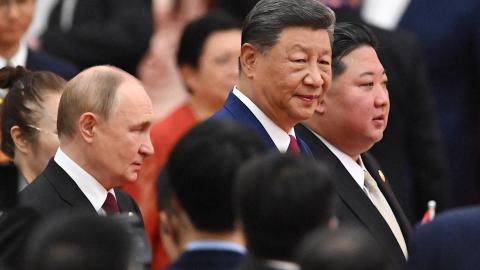
My grandfather was an irritating bridge player. Avoiding dramatic and attention-grabbing high-risk bids, he worked on what he called the creep system, inching toward his goals by winning one boring low-bid hand after another. Lately, America’s adversaries seem to be taking a leaf out of his book. Even as they step up their campaign against American power, the revisionist axis of China, Russia, Iran and North Korea seeks to avoid triggering moments like the Pearl Harbor attack, which roused the American people to the heroic efforts and sacrifices that won World War II.
The strategy has brought them some successes. China, Russia, Iran and North Korea are cooperating with one another more effectively than ever. Even as war materiel and North Korean soldiers flow across Eurasia to support Russia’s war on Ukraine, information and technological breakthroughs flow back, preparing Chinese and North Korean military leaders for the new age of war. Similarly, Iranian drones helped Vladimir Putin’s war on Ukraine, and access to Russian technology and intelligence is helping Iran in its war against the U.S.