













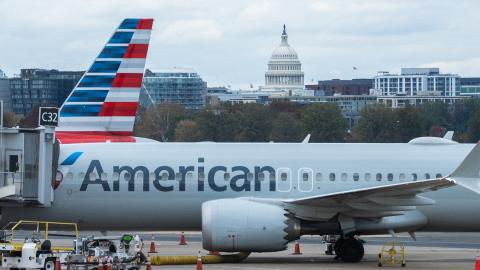
Over the last week, Microsoft Outlook went down for users around the world, the Federal Aviation Administration halted departing flights across the country for more than four hours, and customers at major banks were locked out of their accounts. U.S. intelligence then reportedly found that Iran is developing plans for a possible dirty bomb in Washington. And on Tuesday morning, the National Security Agency’s classified internal network went down.
Officials say there’s no evidence these events are connected, and when President Donald Trump was asked about them this week, he said, “It’s life. When you’re big and powerful, and you have all the money, things like that happen. It’s fine.” Yet many Americans are still uneasy, and online, the outages have been stitched together into a single story: that the country is under attack. We asked a range of voices—experts in cybersecurity, geopolitics, and national defense—whether that’s right. Here’s what they had to say.
H.R. McMaster: America’s Adversaries Are Probing for Weakness
Americans should be concerned about much more than the series of recent infrastructure incidents hitting air travel, banks, and government networks. Despite initial assessments that these events are coincidental, it is plausible that they are shots across the bow from an axis of aggressors composed mainly of the theocratic dictatorship in Iran and two revanchist powers on the Eurasian landmass, China and Russia.
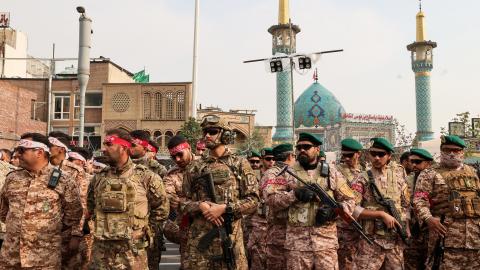
Tehran appears to be taking the lead in threatening the United States, using capabilities provided by Russia and China. The three aid and abet one another and prop up other hostile regimes, from North Korea to Cuba and Nicaragua (and, until recently, Venezuela) in the Western Hemisphere.
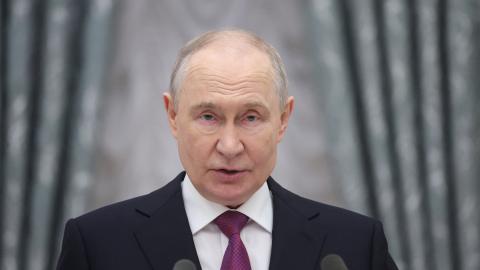
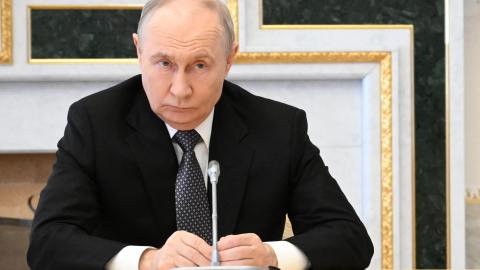
As President Trump meets with Vladimir Putin and Xi Jinping in China this week, Americans should understand that both leaders believe they are in a position of relative strength. The two partners with “no limits” view America and its allies as weak, decadent, and divided. They believe that they can help Iran attack U.S. forces, Israel, and our Gulf allies while arming our enemies with weapons and intelligence. And they probe at the edges of American power—against Japan, Taiwan, the Philippines, and NATO allies from the Baltic to Black Sea—and meet little resistance.
Xi wages economic warfare through industrial espionage, closed markets, and subsidies, with few consequences. Meanwhile, Russia wages cognitive warfare against the United States and an intensifying sabotage campaign against Europe while pressing Washington to accept a ceasefire in Ukraine on its terms.
The danger is that the conflicts in Europe and the Middle East will spread to the Taiwan Strait and South China Sea. And as Iran threatens to assassinate the president and his family and reportedly plans a dirty bomb attack on U.S. soil, it is clear these conflicts have already reached our shores.