




















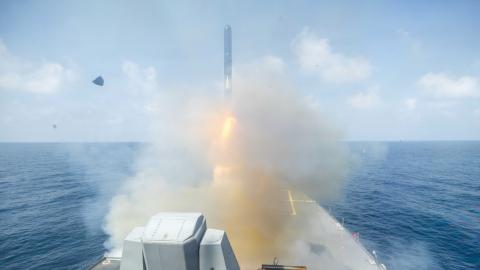
The Pentagon announced on Aug. 17 a seven-year, $22.9 billion contract with Raytheon to increase Tomahawk production from roughly 60 missiles a year to more than 1,000. Washington, it seems, is ready to address the reality that the U.S. has been consuming advanced munitions faster than its industrial system replaces them.
But the munitions shortfall is more complex than industrial failure. It resulted from several interdependent factors: unstable defense budgets, overly optimistic assumptions about how long wars will last, shrinking production capacity, and restrictions on allied manufacturing. Appropriating more money and asking contractors to run production lines harder is the first step, but a long-term fix requires the U.S. to change the system that produced the current shortage.