






The next NATO Summit is now only weeks away. With no end in sight to Russia’s war with Ukraine and instability continuing in the Middle East between the US and Iran, the leaders of the alliance have a full in-tray. Even so, NATO recently turned its attention to another region, one that it often overlooks: the Arctic.
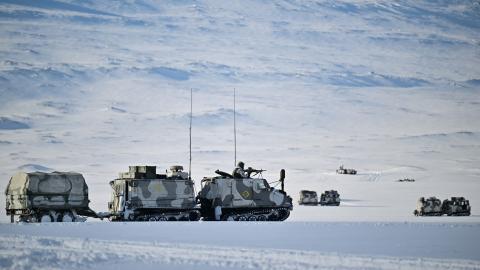
NATO last week activated its Forward Land Forces battlegroup in the Arctic nation of Finland. The Forward Land Forces are battlegroups of a few thousand soldiers that were created to bolster the alliance’s military presence along its eastern flank after Russia’s annexation of Crimea. Originally, NATO’s forward presence was centered on Estonia, Latvia, Lithuania and Poland. Since Russia’s full-scale invasion of Ukraine in 2022, the concept has expanded along the entirety of the alliance’s eastern flank.
After Finland joined NATO in 2023, there was discussion about Helsinki hosting such a battlegroup of its own. This came to fruition only this year. Neighboring Sweden, also a new NATO member and fellow Arctic country, will command the unit. The battlegroup will focus predominantly on warfare in Arctic conditions. Including Finland in the concept marks a major change in NATO’s force posture, not only in the Baltic region but in the Arctic as well.
On the same day that the battlegroup in Finland was activated, NATO announced that an Italian scientific research ship would be sent to the Arctic as part of Task Force X-Arctic. This new task force will operate for 18 months above the Arctic Circle to improve NATO’s situational awareness while testing new technologies. A particular focus will be unmanned systems and how they operate in the Arctic’s harsh environmental conditions.
The fact that the Italian navy will lead this mission is notable. In recent years, there has been an informal divide inside the alliance over where the main threats are coming from. Southern European member states tend to look toward North Africa and the Mediterranean as their primary sources of security concern. Eastern and Northern European members tend to look toward Russia and, increasingly, the Arctic. Having Italy lead this task force shows that a broader consensus is emerging inside NATO about the importance of the High North.
Finally, the US announced the creation of Nordic Bridge, a US-led initiative designed to improve coordination among its combat commands, including US Northern Command, which is primarily responsible for the defense of North America, and US European Command, which oversees US military operations across Europe. The goal is to improve American coordination and response in the Arctic.
For years, the administrative division of the Arctic between NORTHCOM and EUCOM has made it harder for Washington to develop a common and coherent approach to the region. With Nordic Bridge, this should no longer be the case.
The Arctic, rich in energy and critical mineral resources, is growing in strategic importance. NATO’s recent focus on the region reflects a new trend for the alliance. Until recently, it did not formally focus on the Arctic because of internal divisions among member states. Some allies wanted NATO to be more involved there. Others believed the Arctic was primarily a matter of national concern for the countries in the region, not an issue for an intergovernmental security alliance.
These views are changing for three reasons.
First, there is growing concern over Russia’s actions in the Arctic. In recent years, Moscow has reopened, refurbished or built new military bases across the region. A large share of Russia’s naval nuclear strike capability is assigned to the Northern Fleet, headquartered in the Arctic. Russia has also invested heavily in military units specially trained and equipped to fight in Arctic conditions.
Of course, Russia is the world’s largest Arctic country, so it is natural that it would be active there. But when NATO considers Russia’s behavior elsewhere, especially in Ukraine, it has every reason to be concerned about Moscow’s intentions in the Arctic.
Second, Finland and Sweden’s entry into the alliance all but forces NATO to focus more seriously on the Arctic. For decades after NATO’s founding in 1949, both countries remained militarily nonaligned. Russia’s full-scale invasion of Ukraine in 2022 changed attitudes in Helsinki and Stockholm almost overnight. Finland joined NATO in 2023 and Sweden followed in 2024.
Their accession means that seven of the world’s eight Arctic countries are now members of the same security alliance. Only Russia remains outside NATO. This reality inevitably places the Arctic on NATO’s agenda.
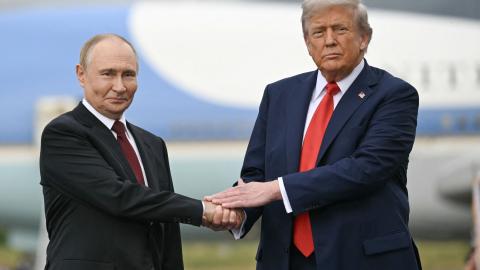
Finally, President Donald Trump has helped spur the Arctic debate inside NATO with his remarks about Greenland. His desire to acquire Greenland has been divisive inside the alliance. But he has also raised legitimate concerns about growing outside influence in the Arctic, particularly around Greenland and the wider North Atlantic.
This has motivated European countries to invest more in Arctic security. It is no coincidence that NATO’s recent Arctic initiatives have come on the heels of renewed American attention on Greenland.
An increased NATO role in the Arctic can help bring stability to the region. The Arctic remains a zone of low tension and it is in everyone’s interest that it stays that way. However, low tension does not mean no competition. Respecting the sovereignty of countries in the region, while maintaining the ability to defend and enforce that sovereignty, is what will ultimately keep the Arctic secure.
For decades, NATO treated the Arctic as a peripheral concern. That is no longer possible. With seven Arctic countries now inside the alliance, Russia becoming more assertive in the region and the strategic value of the High North increasing, NATO has both a responsibility and a role to play. The alliance’s recent moves in Finland, through Task Force X-Arctic, and with Nordic Bridge show that it is beginning to take that role seriously.