



















Executive Summary
- As unmanned systems, combat data, and human command have fused into kill chains that operate at unprecedented speed, drone warfare in the conflict between Russia and Ukraine has evolved from a narrow contest of platforms to a battle fought at machine speed and dictated by algorithms.
- Constant surveillance and precision lethality have altered the traditional military philosophies of maneuver and attrition, while combat drones have enabled lean formations to achieve outsized operational effects relative to their personnel strengths.
- The exponential growth of the internet of battlefield things has turned combat data into a sovereign strategic asset. Ukraine’s corpus of battlefield data constitutes an unparalleled operational dataset, primed for its Western allies’ use in training artificial intelligence–driven battle networks and next-generation autonomous systems.
- Ukraine’s drone revolution is built on expendable systems, modular design, rapid adaptation cycles, and high-volume production capacity. Yet this model remains deeply reliant on Chinese components and materials. China’s dominance in sensors, motors, battery cells, and rare-earth elements could expose the North Atlantic Treaty Organization to a serious wartime vulnerability.
- As Russia’s repeated drone probes against several European countries have demonstrated, sustaining deterrence and escalation dominance will require Western militaries to overcome their traditionally slow rates of adaptation.
Introduction: From Drone Warfare to AI-Augmented Battle Networks
After more than four years of war, Ukraine has become more than a battlefield. The country is now a proving ground for the future of warfare.
While various drone systems—across the air, land, and maritime domains—increasingly dominate the conflict between Russia and Ukraine, describing the conflict as mere drone warfare would oversimplify the true transformations that the war has wrought. The core shifts taking place in the Ukrainian battlespace are in concepts of operations (CONOPS): the rise of smart battle networks, augmented by artificial intelligence, that integrate robotic weapons, combat data, electronic warfare, sensors, software, and human command. For the United States and its allies in NATO, understanding the war in Ukraine is now a prerequisite for sound defense planning and military relevance in future conflicts.
This report addresses two main developments emerging from Ukraine. The first of these is how the conflict there exemplifies the evolving maneuver–attrition calculus of the digital age. The Russia-Ukraine War has accelerated and clarified the role that attrition plays in warfare. Maneuver, the hallmark of conflicts past, remains important but increasingly depends upon attrition—the systematic degradation of enemy sensors, fires, electronic warfare capabilities, logistics, and command networks.
The second development this report explores is the evolution of robotic warfare. A new paradigm for drone warfare is emerging from Ukraine, one that transcends the binary question of whether robotic platforms and weapon systems are to remain supporting capabilities or become primary actors in conflict. Instead, the commanders of Kyiv’s Unmanned Systems Forces increasingly view drone warfare as a scalable mechanism for force generation and destruction of a hostile force.
In this paradigm, unmanned systems do not replace soldiers. Instead, they change the calculus of traditional manpower considerations. Ukraine cannot match Russia in a classic force-on-force ratio. But Kyiv can use robotic military assets, artificial intelligence, and data to generate combat power, extend its battlefield reach, and steadily attrit the Russian war machine. The drone, therefore, is no longer merely one tool in Ukraine’s approach to the conflict, but is quickly becoming a key capability around which a wider defense-technological ecosystem and strategy are being constructed.
These developments are forging a new form of armed conflict: hyperwar, a term formulated in a 2017 article from the US Naval Institute years before Russia’s full-scale invasion of Ukraine. Hyperwar is the combination of artificial intelligence, autonomous systems, sensors, and software that compresses the OODA cycle (observe, orient, decide, act), a four-step decision-making model for military strategy, to machine speed.
Hyperwar recalibrates the role of humans in decision-making. It rapidly coordinates sensor-shooter networks across time and space, and enables forces to detect, decide, strike, assess, and disperse more quickly than an adversary can respond. At the tactical, operational, and strategic levels, hyperwar turns concurrency into combat power. Hyperwar brings the advantage to the side that can process information, command forces, and execute kinetic action at superior velocity and scale.
For the United States and its NATO allies, winning wars in the coming decades will require more than buying or producing drones. Instead, victory will require developing the battle networks, combat data processing systems, industrial capacity, electromagnetic-spectrum resilience, and adaptive institutions and doctrines needed to fight at the OODA rate that the war in Ukraine is normalizing.
This report first delves into the parameters shaping maneuver and attrition in the Russia-Ukraine War. It then discusses the emerging military and mathematical modeling principles of force generation in the age of robotic warfare, and follows with a customized assessment of the role that combat data now plays in warfare. Finally, this report assesses what the West will need to do to keep its technological and military superiority in the era of protracted wars and unforeseen conflicts.
1. Attrition and Maneuver in the Age of Machine Speed
The US Army Large-Scale Combat Operations Series is a set of books published by the Army University Press that explores Cold War great-power competition, post-9/11 asymmetric warfare, and the evolving realities of combat. The books detail how combined-arms maneuver has historically rested on the assumption that if a fighting force concentrates armor, infantry, engineers, artillery, and fires at a decisive time and place, it can surprise an enemy, break its cohesion, and defeat it. This philosophy of warfare has always emphasized the value of achieving superiority over an adversary in rapid attrition and positioning in a short, decisive span of time.
The war in Ukraine has exposed three ways in which this model of warfare is incompatible with the emerging patterns of modern combat. First, unmanned aerial vehicles (UAVs), space-based communications, and digital and electronic sensors have increased battlefield transparency and made surprise much harder to achieve. Maneuvering forces are spotted more quickly, tracked more persistently, and anticipated earlier.
Second, while fighting forces can still physically mass, they risk being destroyed before they reach combat. Improvements in precision at scale mean that support units and command posts are vulnerable to long-range strikes in ways they have never been before.
Third, a maneuvering force faces constant pressure once it commits to a fight. Close combat consumes fuel, ammunition, vehicles, medical resources, and other measures of a force’s depth. Resupply becomes a constant challenge, and defenders often find that attacking supply lines is easier than attacking frontline troops. This dynamic all but kills a unit’s momentum.
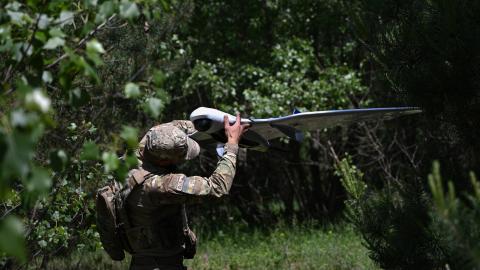
By mid-2025, Russia and Ukraine had adapted to these new patterns in different ways. Russia increasingly uses drones to identify Ukrainian electronic-warfare sites, radars, command posts, UAV pilots, artillery, and fortified positions. Russian forces then strike these assets with artillery, multiple-launch rocket systems, cheap Molniya drones, fiber-optic first-person-view (FPV) drones, and glide bombs.
Russia also commonly infiltrates two-to-five-man groups near Ukrainian positions. These teams then probe, disrupt Ukrainian resupply chains, expose Kyiv’s intelligence, surveillance, and reconnaissance (ISR) assets, and open seams for buggies, motorcycles, infantry, and occasionally armor. Hudson Institute field tours to wartime Ukraine were briefed on and tracked what Ukrainian interlocutors described as “human safaris” behind the front lines: Russian forces training their drone pilots by using Ukrainian civilians in Kherson as live targets.
Ukraine, especially since 2023, has focused on what it could control: drones. In 2024, Kyiv rapidly expanded its use of bomber UAVs, FPV drones, loitering munitions, and unmanned ground vehicles (UGVs). Ukrainian forces then invested further in drone pilot training and frontline command-and-control infrastructure. Kyiv thus switched gears from an army of drones to a wall of drones, imposing an attrition belt of approximately 20 miles along its front lines.
As a result, drone-denied areas have arisen along the line of contact. These grey zones now extend deeper into the battlespace, posing severe risks to main battle tanks, armored vehicles, artillery, logistics platforms, and even small-infantry teams’ movements. Ukrainian reporting and battlefield footage indicate that a de facto no-man’s-land now extends for roughly six miles on either side of the front lines. This grey zone buzzes with drones.
Under near-constant observation and attack, both Russia’s and Ukraine’s armies now use smaller, more dispersed, and more mobile tactics. A trench line still remains, but it has been overlaid by an aerial hunting ground. While this wall of drones has grown to be effective for Ukraine, it also reveals a weakness: for Kyiv, drones make up for shortages in artillery, armor, airpower, and manpower.
Unmanned ground vehicles have also become important in combat operations. Over the past two years, Ukraine has pushed UGVs from battlefield improvisation into mass fielding. What began as intermittent experimentation now involves thousands of platforms moving ammunition, water, fuel, mines, sensors, and wounded soldiers under fire. Some UGVs serve as expendable assault robots, carrying explosive charges into Russian positions.
The Ukrainian General Staff has claimed that robotic ground platforms can reduce human casualties by up to 30 percent. Kyiv’s forces, therefore, use UGVs for three overlapping missions: fire support, engineering, and logistics. The vehicles account for 90 percent of Ukraine’s military activity in heavily contested areas such as Pokrovsk. Kyiv also uses UGVs for evacuation, one of the most dangerous missions on the battlefield.
Across these missions, Ukraine’s leadership believes that UGVs can make up for the country’s manpower shortages. Defense Minister Mykhailo Fedorov aims to delegate 100 percent of Ukraine’s frontline logistics efforts to ground robots. Ukrainian President Volodymyr Zelenskyy has announced that the country’s military will receive 50,000 UGVs in 2026.
These changes in the character of warfare extend to the skies, too. The conflict in Ukraine has exposed the limits of modern ground-based air defense (GBAD) against UAVs. Both Russian and Ukrainian GBAD systems can counter manned aircraft, but struggle with unmanned aerial vehicles. Ukrainian attack drones have repeatedly penetrated Russia’s air defenses, striking sensitive targets in depth, including in Moscow.
In these attacks, Ukraine initially used Soviet-vintage platforms such as the Tu-141 Strizh and the higher-end UJ-26 Bober. Now, Kyiv is using indigenous UAVs and missiles manufactured by the Ukrainian company Fire Point. Moscow’s ongoing difficulties in countering drone and missile threats suggest that Russia’s air defense architecture is deeply vulnerable.
In June 2026, Ukraine appears to have launched one of its largest drone attacks on Russia since the start of the full-scale war. In these strikes, Kyiv hit Russia’s oil refineries, including several in Moscow, and disrupted hundreds of civilian flights in the process. The strikes sent black smoke over Russia’s capital city and triggered reports of so-called black rain in nearby districts. For many Russians in Moscow and St. Petersburg, Ukraine’s long-range strikes are making the conflict visible at home for the first time.
This marks a key development in Ukraine’s political warfare efforts. Since 2022, the Kremlin has tried to shield Russia’s major urban centers from the conflict’s human and material costs. Drone footage spreading across Russian social media is weakening that insulation and exposing the reach of Ukraine’s strike capabilities.
Weapons manufactured by Fire Point formed the backbone of the main strike package Ukraine used in its latest Moscow attacks, supported by decoys and other drone types. The significance of these drones lies not only in their range but also in their scale. Mass launches can saturate Russian air defenses, force the Kremlin to reposition systems toward the capital, and leave other areas more exposed. The reported unit cost of these UAVs—up to $60,000 per principal Fire Point drone variant—also marks a favorable cost-imposition logic for Ukraine’s deep-strike campaign.
In addition to targeting Moscow, drones now play an integral role in the Ukrainian military’s campaign to put pressure on occupied Crimea. Consecutive salvos have already triggered a massive fuel crisis on the peninsula, threatening the occupying Russian forces as the territory faces mounting economic strains. Ukrainian strikes on fuel trucks, depots, and transport nodes have added friction to Russia’s energy logistics efforts in Crimea.
Nonetheless, Russia is also resorting to robotic deep strikes. It has leveraged Iran-designed Shahed-series one-way attack drones, which Moscow has adapted to form its Geran-series drones, to conduct attacks similar to Ukraine’s.
In May 2026, Russia attacked Ukrainian cities with a record high of more than 8,000 drones and decoys of the Shahed-Geran baseline. In contrast, May 2025 saw only half of that volume. Moreover, imagery intelligence suggests that Russia is enhancing its Shahed drone production sites, with new facilities mushrooming across the Russian Federation. North Korean workers have likely played a role in boosting Russia’s Shahed-Geran drone supply chains as well.
Russia uses these Shahed-Geran drones to supplement, and in part to substitute for, traditional cruise and ballistic missile strikes. By launching massed drone salvos at critical Ukrainian infrastructure, Moscow seeks to exhaust Kyiv’s limited supply of Western-supplied air defense interceptors.
The cost calculus favors Russia. A single Shahed-131 or Shahed-136 drone costs only $20,000 to $30,000. In contrast, Western interceptors cost anywhere from $450,000 for the IRIS-T (InfraRed Imaging System Tail/Thrust Vector Controlled) to around $3.7 million for the highest-end PAC-3 (Patriot Advanced Capability-3) missile. Even when considering higher procurement costs, the cost-exchange ratio clearly benefits Moscow. Existing NATO air defenses are much less effective against massed, low-cost, expendable drones when forced by the mathematics of warfare to use only a few expensive interceptors against these new weapons.
Together, Russian Shahed drone salvos and Ukrainian deep strikes have shown how the difference between cruise missiles and one-way attack drones is narrowing. Cruise missiles carry heavier payloads and fly at faster speeds, but drones offer their own strengths: loitering, searching, and striking at a lower cost. As unmanned systems demonstrate a breakthrough in autonomy, payload capacity, endurance, and onboard power, military commanders may see cruise missiles and drones as points on a single continuum, and choose their weapon based on the needs of the mission.
Yet it is in the maritime domain, especially in Black Sea naval warfare, that Ukrainian and Russian innovations have brought the most striking changes to modern combat. Ukrainian unmanned surface vessels (USVs) have showcased how a small, improvised force can reshape maritime fighting. As of 2026, the Ukrainian military, with the help of the nation’s agile and innovative defense technological and industrial base, has destroyed or damaged roughly 30 percent of the naval forces centered around Russia’s Black Sea Fleet.
Ukraine’s achievements in the maritime domain were born not of choice, but of wartime necessity and severe operational constraints. By March 2022, Russia’s onslaught had nearly eliminated Ukraine’s navy. This left Kyiv uniquely vulnerable to two maritime threats: an amphibious ground assault on the Black Sea city of Odesa or a blockade of its seaborne trade. Both vulnerabilities were of great strategic import. Grain exports accounted for 41 percent of Ukraine’s trade revenue in 2021, and most of these shipments transited ports in the Odesa region.
Ukraine’s military and defense industry moved quickly to address these vulnerabilities. Ukraine’s first publicly reported USV attack came on October 29, 2022, only eight months after Russia’s full-scale invasion began. Kyiv then launched a USV-centered sea-denial campaign that forced Russian warships into a defensive posture, limiting their ability to blockade trade or support forces ashore.
The USVs that Ukraine launched were not high-end naval platforms, but small vessels built around a simple combat package including a camera, a satellite link, and an explosive charge in the bow. These USVs’ exact specifications differed, but a clear industrial logic drove their production. These were systems that could be produced in a garage, workshop, or small factory rather than in a major shipyard.
The decisive enabler for these makeshift vessels was not the hull. Instead, communications drove the vehicles’ success. High-bandwidth, two-way satellite links, including systems such as Starlink, allowed Ukrainian operators to steer and target their USVs throughout a mission. This innovation kept humans inside the kill chain and gave Ukraine a practical advantage. Its human operators could now adapt to changing tactical conditions, make judgment calls, and enter combat more quickly than a fully autonomous system could be developed and certified.
Ukraine’s method of meeting its maritime challenges demonstrated further innovations. The country’s decision-makers did not build miniature capital ships, pursue full autonomy, or conduct operational maneuvers against decisive points. Instead, Kyiv used USVs for attrition like a high-tech variant of World War II–era U-boat wolfpacks: strike where possible, impose cumulative damage on the enemy, and use satellite links to keep onshore operators in control. These USVs allowed Ukraine to conduct minimum viable warfare as it fielded imperfect but usable systems quickly and learned in combat rather than at test sites or in program reviews. The strategy prevented strategic failure despite an inability to solve for every countermeasure.
Geography has helped Kyiv attain its maritime ambitions. The Black Sea spans only about 630 nautical miles. A drone can make it from Odesa to the Crimean city of Sevastopol in under 12 hours at 15 knots and in about five hours at 30 knots. A Sea Baby, a multipurpose USV developed for maritime use by the Security Service of Ukraine, can make the journey in under four hours at 50 knots.
But Russia has also taken advantage of the region’s geography. The 4,100-foot average depth of the Black Sea allows Russian Improved Kilo-class submarines armed with Kalibr cruise missiles to operate in its waters. Moscow began its full-scale invasion with a blockade, harassment operations, land-attack cruise missiles, and numerous amphibious advantages over Ukraine.
To counter Russia, Ukraine initially relied on Neptune missiles with a range of some 160 nautical miles that could cover only the northwest quadrant of the sea. But within five months, Kyiv had begun sea denial. Kyiv’s list of high-profile strikes soon began to grow. On October 29, 2022, Ukrainian USVs damaged at least two Russian ships in Sevastopol. On November 18 of that same year, Ukraine struck Novorossiysk, 420 nautical miles from Odesa.
On March 22, 2023, Ukrainian USVs and aerial drones hit Sevastopol again. On May 24 of the same year, Ukrainian USVs hit the Ivan Khurs, a Russian intelligence platform, at sea. Then, in July 2023, two Sea Baby USVs struck the Kerch Bridge connecting Crimea to Russia; each Sea Baby was 20 feet in length, ranged 540 nautical miles, reached 49 knots, and carried a nearly one-ton payload. Today, Ukraine’s robotic naval capabilities have successfully denied freedom of movement to the Russian Navy in the Black Sea.
The war in Ukraine has not sounded the death knell for maneuver, attrition, air defense, or naval power. Instead, the conflict has shown that these traditional components of warfare now operate under new conditions. Drones, artificial intelligence, the proliferation of battlefield data, and advances in algorithmic targeting are compressing the speed of combat. Maneuver and attrition still matter. But both are increasingly conducted at tempos that exceed the traditional human rhythm of planning, movement, detection, and strike.
Humans remain central to the contest for Ukraine, but their role in warfare is changing. In some missions, humans stay inside the kill chain; in others, they supervise, authorize, or intervene only at critical points. This shift is visible across land, air, and sea, and it increasingly depends on space-based communications and cyberspace.
2. Robotic Weapons as Force-Generation and Force-Destruction Actors
The war in Ukraine is in transition due to the proliferation of sensors, precision fires, logistics exposure, and the emergence of a drone-filled battlespace. Gradually, drones have become the primary killer.
Estimates for 2025 suggest that unmanned aerial systems are responsible for 70–80 percent of Russian and Ukrainian personnel casualties, including both killed and wounded. This same trend manifests in equipment losses. In 2024, FPV strikes and drone-dropped munitions accounted for about 40 percent of the war’s combat-damaged vehicles. By early 2025, that figure had reportedly reached 60–70 percent. In April 2026, Ukrainian combat formations reportedly seized a Russian position using only unmanned aerial and ground vehicles. This operation exposed not a single Ukrainian infantryman to the customary perils of combat.
Yet questions that have long animated futurist thinking about war persist. Who will man and hold the line: robots, humans, or human-machine teams? What is the best way to calculate the optimum minimum limits of combat deployment? How can planners make data meaningful when fighting wars, and calculate optimal force-on-force and force-to-space ratios? These questions, now as ever, revolve around efforts to “win the math” before winning the fight.
Grasping the role that drones play in force-generation efforts requires some understanding of the math of military science. A set of principles known as Lanchester’s laws, developed in 1916 by Frederick Lanchester, has long given modern warfare a powerful but narrow set of mathematical formulas to model combat attrition. These guidelines calculate how forces deplete over time based on the number of troops and their relative effectiveness. Lanchester’s laws, though perhaps obscure to the layman, have been foundational to military operations for the last century.
Lanchester’s laws treat attrition as a relationship between two opposing force pools, with each side’s losses driven by the other side’s strength and governed by a fixed effectiveness coefficient. Yet while these principles were long useful for thinking about static engagements, trench warfare, and artillery duels, they rested on assumptions that made attrition largely deterministic: homogeneous forces, fixed effectiveness coefficients, constant rates of fire, continuous engagement, and little allowance for spatial variation such as terrain, dispersion, maneuver, or localized force concentration. Lanchester’s laws allowed little room for contingent variables like suppression, friction, and problems of target acquisition, and took little account of command behavior, morale, adaptation, and other human factors in war.
Andrew Ilachinski’s 1996 study for the Center for Naval Analyses addressed these limitations at the conceptual level. A theoretical physicist specializing in mathematical and computer modeling, Ilchanski argued that Lanchester’s laws and other similar models work only under narrow conditions. Real warfare, in his view, can be more accurately understood as a complex adaptive system: a nonlinear, decentralized contest among semi-autonomous agents adapting to a changing environment.
More than the Lanchester-inspired attrition models of the twentieth century, Ilchanski’s vision fits the Ukrainian battlespace, dominated as it is by drone-driven engagements and hyperwar trends. In Ukraine, a drone’s combat value is not fixed, but varies based on operator skill, the extent of electronic-warfare pressure, and other variables like software, target exposure, sensor density, terrain, communications resilience, and countermeasure cycles. The value of a drone depends on the same local adaptations and interactions that Ilachinski used to describe complex combat.
Another critical parameter is right-sizing the force. Field reports assessing the war in Ukraine suggest that the combat-deployed manpower in the conflict can be extremely thin by historical standards. Ukrainian fighting positions are often spaced 50 meters apart and held by fire teams of two or three personnel, producing roughly 32 fighting positions per mile. With two or three soldiers per position, just 64–96 soldiers per mile can hold an immediate forward line.
Ukraine uses depth to partly offset this low density across the front lines. Rather than concentrating manpower along a single line, Ukrainian units distribute combat power across a deeper defensive system. An infantry company, a core working unit of 60 to 200 soldiers, may be spread across roughly 1.9 miles of depth. A battalion, a larger military unit composed of three to five companies, may occupy roughly 4.3 miles of depth. Depending on a unit’s capabilities, offensive engagements can extend roughly 6.2–9.3 miles beyond that unit’s position. This arrangement prioritizes the attrition of an enemy beyond the line of sight, using dispersed positions, sensors, drones, artillery, and other fires rather than dense infantry concentrations on the forward edge.
Yet Russia is also adapting to these same battlefield dynamics. The war in Ukraine has pushed Moscow away from a slower, more centralized model built around larger and more expensive systems, and has forced Russian planners to employ cheaper attritable platforms, faster development cycles, and a wider use of volunteer and startup networks.
The most important result of these innovations is an enormous change in scale. The drone war in Ukraine is no longer about producing boutique systems but about modifying rapidly, providing battlefield feedback, massing forces, and developing the ability to update one’s systems as one’s adversary adapts. The core drone-warfare lesson of the conflict, therefore, is not that fully robotic combat has arrived, but that inexpensive, updateable, and attritable mass under human command is here to stay.
While the Russia-Ukraine War has showcased how machines at various levels of autonomy can relieve traditional combat formations, militaries have similarly diluted force concentration in previous wars. Since 1800, the force-to-space ratio in defensive warfare has constantly evolved, and has often changed sharply. In the Napoleonic Wars, it was normal for an army to position 20,000 combat troops per mile, including reserves. The Duke of Wellington’s three-mile front at the Battle of Waterloo reflected this ratio. Two days earlier, Wellington’s Prussian counterpart, Marshal Gebhard Leberecht von Blücher, had tried to hold seven miles at Ligny with 12,000 men per mile, and had been defeated by a slightly smaller force.
The Franco-Prussian War of 1870 essentially retained this 12,000-men-per-mile standard, though battles such as Gravelotte showed the rising defensive power of improved firearms. The Second Boer War, waged in South Africa from 1899 to 1902, marked a major drop in the force-to-space ratio. Boer forces, using magazine rifles and strong marksmanship, often held defensive fronts with only 600–800 men per mile. In the Russo-Japanese War of 1904–05, some battles were waged with about 8,000 men per mile.
World War I pushed this ratio lower. In 1915 Germany held the Western Front, which ran about 450 miles, with roughly 90 divisions: one division per five miles, or approximately 3,500 men per mile. The Second World War pushed the force-to-space ratio even lower still. In May 1940, French and British forces defended a 400-mile western front with 111 divisions, or one division per 3.5 miles. By the middle of the Cold War, military planners estimated that a mobile division could cover 25 miles as a tactical minimum. Ten such divisions would have been needed to cover the mountains facing Soviet forces from the Baltic Sea to Bohemia.
In its current fight against Russia, Ukraine faces undeniable manpower problems, despite the historical evolution of the force-to-space ratio in favor of smaller fighting forces. The Ukrainian military’s recent contract, designed to use financial incentives to attract volunteers ages 18 through 24, has not produced enough recruits. Mobilization problems, infantry casualties, absent-without-leave cases, and pressure to transfer soldiers from weaker brigades to elite units continue to widen disparities inside Ukraine’s fighting force.
Because strong units improve and attract better personnel while weak units degrade and expose their sectors, in 2025 Kyiv reorganized its ground forces around 18 army corps with standardized orders of battle, replacing ad hoc command structures that had drawn criticism. Roughly comparable in scale to large NATO divisions, these corps have begun to show results in stronger formations, including the 1st and 2nd Corps of the National Guard and the 3rd Army Corps.
To further address its manpower shortages, Kyiv is leaning harder on machines—and on the personnel that manage them. Ukraine’s Unmanned Systems Forces have grown to an estimated size of 20,000 soldiers. Every Ukrainian maneuver brigade now fields at least one dedicated drone company or battalion, while Ukraine’s battalions often retain platoon-sized drone elements. Dedicated UGV units generated in 2025 now support resupply to the zero-line, casualty evacuation, reconnaissance, and even assault tasks.
Yet while Ukraine’s innovation ecosystem remains strong, scaling remains difficult for Kyiv. Non-governmental organizations still fill the gaps left by insufficient state support. By allowing its indigenous unmanned-systems firms to export their products, Ukraine’s government is trying to diversify its funding sources and turn battlefield innovations into industrial capacity.
As part of Kyiv’s effort to compensate for its manpower shortages, the Ukrainian Ministry of Defense has developed the Drone Line program. This initiative aims to reduce infantry exposure by using unmanned systems and smaller complements of troops to hold terrain. The program is designed to establish a lethal belt, roughly six to nine miles deep from the line of contact, where Russian assault groups, vehicles, logistics elements, and staging areas can be detected and hit before they reach Ukrainian defensive positions.
Ukraine cannot afford to trade infantrymen for every trench, tree line, and ruined settlement at the same rate as Russia. Drone Line, therefore, functions as a manpower-economizing system. Sensors conduct some forward observation tasks. FPV and bomber drones reduce the need for exposed direct-fire engagements. Persistent aerial coverage allows thinner infantry screens to monitor wider sectors.
But Russia is also ramping up its high-tech edge. Analysis of Russia’s Rubicon drone unit shows that Moscow is no longer treating robotic warfare as an improvised wartime adaptation, but is institutionalizing drone combat. Established in August 2024 under Defense Minister Andrey Belousov, Rubicon was designed to centralize unmanned systems research, procurement, training, tactical development, and combat employment. The unit’s detachments have served as elite drone-strike formations, reinforcing priority sectors, shortening the sensor-to-shooter cycle, and spreading new tactics across conventional units. Rubicon has expanded from about 1,450 personnel in 2025 to roughly 5,000 by spring 2026, with an authorized strength of 9,000. That growth has produced combat effects, especially through FPV teams, ISR drones, loitering munitions, electronic warfare, and counter-UAV technologies.
Rubicon’s effect on Russia’s drone warfare efforts has reverberated into the country’s design of new weapon systems. In 2025, Defense Intelligence of Ukraine released technical details on a new Russian strike drone, the V2U, employed along the Sumy axis. The system’s significance lies in its guidance logic rather than its airframe. The V2U appears designed to pick targets using onboard artificial intelligence, moving part of the kill chain—the process of identifying and attacking a target—from a human operator to a machine. The drone’s computing core reportedly relies on a Chinese Leetop A203 minicomputer and an NVIDIA Jetson Orin module that provide the drone with the processing power for autonomous target recognition and navigation.
Despite these advances, the drone war unfolding in Ukraine does not yet involve fully autonomous combat. Artificial intelligence is entering the battlefield, but mostly—for now—via limited functionality, including assisted navigation, target-recognition and target-lock features, terminal guidance, and pre-analyzed information for operators. Notwithstanding exceptions such as the V2U, drone systems are mostly keeping humans in the loop; in most cases a human operator is still flying or supervising a drone, while AI interprets a data feed, identifies objects, or supports a final attack sequence.
The conflict in Ukraine is evolving toward human-directed warfare with increasingly layered machine assistance. The human factor—a term that until recently only appeared in theoretical writings—will most likely stay in military mathematical modeling for decades to come. But the linear character of Lanchester’s laws and their modern derivatives will almost certainly be replaced by more complex and non-linear methodologies.
Finally, NATO nations will have to do more than just manufacture more drones to catch up. Chinese dominance in flight controllers, motors, sensors, thermal optics, battery cells, rare-earth inputs, neodymium magnets, and germanium may lead to a major wartime vulnerability for the alliance.
In many segments, Western drone production depends on Chinese-controlled supply chains. Beijing controls 80–90 percent of the global drone market and leads in critical minerals, raw materials, batteries, sensors, and other components. This poses a strategic risk for the US and Europe. Expert writings even describe drones as “flying smartphones,” built from advanced electronics, and China excels in making and assembling these parts. Drones with American or European parts are much more expensive than those with Chinese components. Ukraine’s conflict shows this reliance. Nearly all unmanned systems use materials or components from Chinese factories. For example, 90 percent of global neodymium-iron-boron magnet production is in China. The country also handles about two-thirds of the global production of lithium and over 70 percent of the production of graphite anode material. Drones rely on complex semiconductors and sensors produced in specialized Chinese facilities that would take years to build elsewhere.
Overall, as the Euro-Atlantic alliance boosts its robotic edge, it will have to secure supply chains that Beijing currently dominates.
3. Capitalizing on the Accumulation of Combat Data in Ukraine
Drone warfare is turning the battlespace into a dense web of sensors, in which every aircraft, loitering munition, ground robot, jammer, and targeting cell produces operational data at scale. Smart battle networks and the emerging internet of battlefield things do not merely connect platforms; they generate, classify, transmit, and exploit combat information while under fire. In Ukraine, this data flow has become a warfighting resource in its own right, and is shaping how forces detect, decide, strike, adapt, and train the next generation of AI-enabled military systems.
The modern battlespace is taking shape in Ukraine through the transformative power of algorithmic warfare. This concept rests on three major driving forces: computing power, data, and the cloud. For example, if a Ukrainian defense company—such as the country’s Wild Hornets firm with its STING interceptor-drone—is developing a robotic system to combat Shahed or Gerbera drones, it does not need generic battlefield imagery. Instead, Ukraine’s defense firms need thousands of labeled real-world examples from multiple angles to ensure that the drones they produce can recognize targets. The datasets that Ukraine is collecting provide exactly this level of granularity.
This data-driven innovation is not confined to drone defense, but also extends to conventional warfare. Target acquisition, artillery adjustment, electronic warfare, and maneuver planning all benefit from continuously updated, combat-validated datasets. Russian military planners routinely modify their platforms with cages, improvised armor, and camouflage. These innovations degrade the performance of Ukrainian models trained on static inputs. Ukraine’s actively updated datasets reflect these iterative Russian modifications, and ensure that Kyiv’s systems are trained on current conditions.
For Ukraine, advances in processing are enabling machine learning, while the country’s vast datasets and scalable cloud infrastructure are compressing decision cycles and expanding warfighting performance. Scale has also been a decisive factor: global data production has surged from roughly 4.4 zettabytes in 2013 to around 180 zettabytes by 2025.[1]
Much of this production remains unstructured and includes video, imagery, and sensor feeds. Modern AI can process both structured and unstructured inputs, and can extract patterns at speed, but benefits from high-quality inputs as much as from large quantities of inputs. Data, therefore, must be cleaned and verified since poor inputs distort a machine’s judgment. The upper hand lies with those who can refine and exploit data more quickly. This is why battlefield inputs harvested from real armed conflicts remain invaluable to building battle networks and algorithmic-warfare CONOPS.
Additionally, in the wars of the twenty-first century, data is no longer merely a supporting input—it is the terrain over which combat is waged. Recent conflicts in the Middle East have made this reality explicit. On March 1, 2026, Iranian Shahed drones struck two Amazon Web Services (AWS) facilities in the United Arab Emirates, while debris from a parallel strike damaged another in Bahrain. The physical damage from these strikes was limited, but the disruption was alarming; financial systems, enterprise networks, and consumer services were affected across the region.
The incident illumines a structural shift now taking root across the world. Cloud infrastructure is no longer insulated from kinetic warfare; modern defense systems run on the cloud, after all. Both the United States’ Maven Smart System, developed by Palantir Technologies, and Ukraine’s Delta battlefield management system rely on cloud architecture. Under the Pentagon’s Joint Warfighting Cloud Capability framework, firms like AWS, Google, Microsoft, and Oracle underpin key military functions.
Ukraine, moreover, now combat-deploys hundreds of various drone types, and deploys hundreds of thousands of drones each month. The country’s Delta system has scaled up with new modules and has now become the integration layer that makes Ukraine’s digital ecosystem governable. Delta supports drone deconfliction, friend-or-foe identification, live video with AI analysis, secure messaging, and feeds from ISR drones.
These developments demonstrate how the boundaries between civilian digital infrastructure and algorithmic military capabilities have blurred rapidly. Iran’s strikes against data centers, therefore, set a precedent that cannot be undone: what has been demonstrated in one theater will likely be studied and replicated in others.
At the same time, the rise of autonomous systems is elevating combat data to a decisive input in drone warfare. Ukraine has accumulated one of the most valuable data clusters in the history of warfare: a large, annotated corpus of real-time battlefield imagery and sensor information. These datasets enable highly specialized model training for recognition, targeting, and adaptation under dynamic conditions. Real-world data flows compress learning curves and expose systems to broad variability.
Ukraine’s defense technology sector is approaching new horizons. In early 2026, Kyiv made a historic decision to share its military-grade data with Ukraine’s strategic partners to train artificial intelligence models. Beyond routine cooperation, Kyiv’s move to share its hard-earned battlefield knowledge reflects years of cumulative combat operations against the Armed Forces of the Russian Federation, from sensor feeds, strike patterns, and electronic warfare signatures to adaptation cycles forged under pressure. NATO should seize the momentum of this historic development and institutionalize the flow of Ukrainian combat data, which is now a strategic asset rather than a mere byproduct of war.
4. Machine-Speed CONOPS and the West’s Challenges in Adaptive Warfare
Drone operations from the war in Ukraine have already spilled over into several of NATO’s European member states, offering a glimpse of the future threat environment the continent may face.
In September 2025, a large strike group of Russian Gerbera-series drones entered Polish airspace. Poland and several of its NATO allies scrambled one of the highest-end defensive packages available to confront the threat. Italian airborne early warning and control aircraft, German Patriot air- and missile-defense systems, Polish F-16s, Dutch fifth-generation F-35s, and a Belgian A330 Multi Role Tanker Transport were all deployed to detect, track, and engage the drones. While the allies could handle the probing incident, it highlighted the economic asymmetry of robotic warfare.
A Gerbera drone does not cost more than $10,000 per unit, less than one F-35 flight hour, and much less than the pricy beyond-visual-range AMRAAM (Advanced Medium-Range Air-to-Air Missile) that aircraft carries. The defense-economics asymmetry between Russia’s probing salvo and NATO’s response demonstrated how kinetic success does not always translate into sustainable air- and missile-defense architectures—or into sustainable kill rates against saturation salvos from expendable kamikaze drones. Ukrainian combat data would further illustrate this imbalance.
Ukrainian drones have also occasionally strayed off their intended path. In May 2026, two suspected Ukrainian drones crossed from Russia into Latvia and crashed there. One drone exploded at an oil storage facility in the Latvian city of Rezekne, damaging four empty tanks about 25 miles from the Russian border. Latvian authorities issued drone alerts, closed schools in several border areas, and called in NATO Baltic Air Policing aircraft.
One year after the Russian incursion into Poland, the incident in Latvia illustrated how the Baltic states are dealing with the effects of the Russia-Ukraine War. Russia is reportedly spoofing the Global Positioning System (GPS) to redirect Ukrainian drones away from their targets and into NATO airspace. This turns Ukraine’s long-range strike campaign into pressure on NATO’s eastern frontier: spoofing does not destroy the drone, but deceives navigation systems by feeding a drone false coordinates and pushing it onto a new route. From Kaliningrad and other Baltic sites, Russian electronic warfare systems can create airspace incidents while keeping questions of attribution unclear.
NATO’s Eastern European members, particularly the Baltic states, now face a serious challenge. Inexpensive, hard-to-detect drones can cross borders, trigger alerts, disrupt civilian life, and force responses, all without major battlefield effects. Scrambling fighter jets may demonstrate allied resolve, but it is a mainly symbolic response. A disposable drone, on the other hand, can consume flight hours, fuel, maintenance, commanders’ attention, and expensive weapons.
Estonia, Latvia, and Lithuania should take concrete steps to address this vulnerability. Expert writings suggest that these countries could lead NATO in developing layered detection, integrating sensors, enhancing passive surveillance and acoustic systems, improving electronic warfare indicators, and advancing intelligence fusion.
Yet the warning signs for the alliance are coming not only from hostile or rogue drones, but also from Ukraine’s performance in NATO’s own military drills. Hedgehog 2025, a major NATO military exercise held in May of that year in Estonia, exposed severe vulnerabilities for allied forces facing modern drone warfare.
The exercise brought together more than 16,000 troops from 12 NATO countries and placed them alongside Ukrainian drone specialists, including operators temporarily drawn from the frontlines. The exercise posed a scenario built around a dense battlespace saturated with various classes of unmanned systems. In that simulated environment, a mechanized force of several thousand troops, including elements linked to a British brigade and an Estonian division, attempted to conduct an attack.
The problem the exercise exposed was not one of courage or mass, but of exposure. The allied force moved as if the battlefield were still partially opaque, while Ukrainian drone operators treated it as transparent. Using Delta, Ukraine’s battlefield-management system, the operators fused real-time intelligence, AI-enabled data analysis, target identification, and strike coordination into a compressed kill chain.
The results of Hedgehog 2025 exposed serious vulnerabilities in NATO’s preparedness to conduct and confront drone warfare. According to accounts of the exercise, in roughly half a day a Ukrainian team of around 10 soldiers was able to notionally destroy 17 armored vehicles and conduct 30 additional strikes. Hedgehog 2025 demonstrated that high-intensity drone combat is not a marginal technical problem but a tactical revolution. Formations that cannot disperse, hide, deceive, move, and strike under persistent aerial observation will be found, fixed, and destroyed before their mass can become combat power.
Drills and tests in the maritime domain have yielded similar results. Ukraine’s robotic warfare deterrent has proven intimidating, and has sent a clear combat-readiness alarm to Kyiv’s NATO partners. Conducted in the littoral waters off Troia and Sesimbra, Portugal, the exercise Robotic Experimentation and Prototyping with Maritime Unmanned Systems (REPMUS) / Dynamic Messenger (DYMS) 2025 highlighted how quickly the maritime battlespace is changing.
The exercise combined REPMUS, the world’s premier event for maritime robotics and unmanned technologies, with DYMS, the latest iteration of NATO’s Operational Experimentation series. The Portuguese Navy hosted and co-organized the exercise with Allied Maritime Command (MARCOM) and Allied Command Transformation. The joint effort combined strategic transformation with operational testing.
The detection and tracking of multi-domain unmanned vehicles and vessels were central to the exercise, and two standing NATO maritime groups played important roles in the drills. Allied naval units rehearsed defensive operations against UAVs and USVs attacking from the air and the sea. The maritime exercise underscored the urgency NATO planners face in bringing unmanned systems into a connected operational environment, and showed that maritime unmanned systems are no longer a mere experimental annex to naval operations.
MARCOM, the Portuguese Navy, and the NATO-Ukraine Joint Analysis, Training, and Education Centre supported this effort. But just as it did in Hedgehog 2025, Ukraine also played a consequential role in the exercise. For the first time in a military exercise in the history of NATO, Ukraine’s navy led and coordinated the Opposing Force (OPFOR) during REPMUS/DYMS 2025. This formalized Ukraine’s growing role in NATO exercises—and also brought Black Sea combat realism into the alliance’s maritime experimentation cycle. The Ukrainian-led OPFOR helped accelerate interoperability, technology adoption, and allied readiness, and reinforced the exercise’s broader purpose.
The lessons of REPMUS/DYMS 2025 were uncomfortable for the NATO alliance. Acting as the Red team, which traditionally plays the role of an adversary in a military exercise, the Ukrainian-led multinational force reportedly included units from the United States, Great Britain, Spain, and other allied nations. The Ukraine-led Red team competed against a Blue team led by NATO allies in scenarios involving port defense and convoy protection.
After the exercise, Ukrainian participants stated that all five scenarios conducted during the proceedings ended in victory for the OPFOR. In one convoy scenario, the Red team reportedly scored enough simulated hits on an allied frigate that the ship would have been destroyed in actual combat. Ukrainian forces in the exercise also reportedly used several versions of the Magura V7 naval drone, born from the Black Sea campaign against Russia’s fleet.
Beyond the lessons of these NATO military exercises, Ukraine’s drone war has foregrounded a less glamorous but equally important question: Can the alliance generate, control, and sustain attritable mass at scale? Most NATO systems are still operated through a one-to-one model: one operator, one platform. Ukraine is already an exception to this modus operandi in both scale and adaptation.
In 2024, the Ukrainian private technology firm Swarmer secured nearly $3 million from a consortium of foreign investors, one of the largest individual transactions in the defense sector since Russia’s full-scale invasion in 2022. In March 2026, Swarmer’s shares surged nearly 1,000 percent across the first three trading sessions following its initial public offering, one of the most striking debut performances in defense technology markets in recent memory.
The stock surge is not the story, however. Swarmer is not a drone manufacturer and is not tied to any single platform, supplier, or hardware cycle. The firm operates, instead, at the interface layer. Swarmer develops software for autonomy, coordination, and decision-making that allows large numbers of low-cost unmanned systems to function as a single, resilient force. More critically, Swarmer’s capabilities are not validated in controlled environments, but are tested under real operational conditions where performance is subject to threats in real time.
As autonomy and swarming become more central to combat operations, modern robotic warfare, as Swarmer’s success illustrates, is increasingly revolving around software. AI-enabled kill chains fuse sensor feeds, support target acquisition, deconflict drones, and help determine when and how to strike. To maintain their decades-long defense-technological superiority, the United States and its NATO allies would be well-served to improve their operator-drone ratio, augment their swarming drone warfare technologies, and heed the lessons in adaptive warfare that the war in Ukraine has revealed.
Conclusion: Learning the Right Lessons from Ukraine’s Drone War
Ukraine had little time to prepare for a massive invasion by one of the world’s largest militaries. It has survived in part because it adapted quickly—with FPV drones, USVs, interceptor drones, new command-and-control methods, new tactics, and technology partners from the private sector. For the United States and its NATO allies, the warning from Ukraine is plain: the next war will punish slow procurement, heavy bureaucracy, and failures of imagination before the first major battle is decided.
At this stage, the West’s adaptation challenges are not only operational but also industrial. NATO-aligned procurement remains too platform-centric and treats innovation as something that happens when a new system is bought, rather than as a continuous process of component-level adaptation.
NATO-aligned systems remain strongest in long-cycle programs where development can stretch over 10 to 20 years, and upgrades often require major program changes. Ukraine, in contrast, shows that battlefield relevance increasingly depends on success in fast-cycle zones: civilian components and military adaptations that can change in weeks. NATO needs fewer closed systems and more open architectures that create room for competition, experimentation, and subsystem-level upgrades that can happen before battlefield innovations grow even more exponentially.
A 2025 article from the Modern War Institute at West Point warns against drawing the wrong lessons from drone warfare in Ukraine. The authors’ central point is not that drones have made maneuver obsolete, but that they have made maneuver more difficult to conduct, more visible, and more dependent on counter-drone adaptations.
The article also emphasizes that militaries do not absorb new technologies in a vacuum, but adopt them through existing doctrine, cultures, training systems, organizational habits, and preferred ways of war. Russia’s use of FPV drones, loitering munitions, and reconnaissance UAVs fits an attrition-centered model by strengthening the link between surveillance and fires. But Moscow’s success does not mean that every military should copy this drone-saturated approach.
Ukraine’s own achievements have shown that drones can slow, expose, and punish enemy maneuver. The task before modern militaries is to adapt quickly enough to make effective maneuver possible once again. Perceptive military assessments, in line with the conclusions from the Modern War Institute article, have warned that NATO must not mistake drones for conventional firepower. The conflict in Ukraine has highlighted the tactical utility of FPV drones, loitering munitions, and one-way attack systems—but has also exposed their limitations.
These limitations are many. Russia has developed a highly capable counter-UAV ecosystem using electronic warfare, short-range air defense, vehicle hardening, netting, jammers, and drone-defense training for infantry units. Ukraine’s increased dependence on drones, moreover, reflects its shortages in manpower, ammunition, and legacy systems, and shows that drones cannot yet fully replace artillery, armor, airpower, or long-range fires.
NATO, therefore, would be at a disadvantage if it prioritized amassing drone quantity over rebuilding its stocks of traditional firepower. Ukraine’s drone revolution rests on cheap systems, modular design, rapid adaptations, and mass consumption, but this model remains heavily dependent on Chinese components and materials.
Simultaneously, the West should strengthen its own counter-drone capacities as a prerequisite for any future action invoking the Article 5 collective-defense clause of the North Atlantic Treaty. Russian forces already deploy drones in certain segments on a larger scale than Ukraine, and are advancing the integration of drones, loitering munitions, UAV-based ISR, electronic warfare, and continuous artillery fire. Russia’s Rubicon drone unit exemplifies this development.
Many NATO member states lack such integration. As such, industrial integration among Washington, European capitals, and Kyiv is paramount. In March 2026, Ukraine conducted roughly 70 percent of its Shahed interceptions with indigenous drone-hunting drones. NATO, for now, cannot match the Ukrainian military in the quantity or quality of its interceptor drones, nor in its UGV-centric frontline logistics, FPV-operator training, or deep-strike drone capabilities.
In 2025, the estimated value of Ukraine’s defense technology market reached roughly $6.8 billion. While this market’s overall growth remains constrained by limited domestic procurement financing, its high-end segments—drone production, unmanned systems, and electronic warfare—are expanding rapidly due to innovations under combat conditions.
But scaling beyond Ukraine will require structural enablers, including sustained capital, NATO-compatible certification, and integration into allied procurement systems. Without these enablers, growth will likely plateau; with them, Ukraine could transition from a wartime innovator to a core node in the transatlantic defense-industrial base.
NATO has already made promising moves in the direction of integration. NATO Allied Command Transformation is working to digest Ukrainian battlefield experience and boost allied capabilities. The NATO Communications and Information Agency, in cooperation with Google Cloud, has invested in secure cloud infrastructure to support analysis, training, and classified workloads at the Joint Analysis, Training, and Education Centre in Bydgoszcz, Poland.
These measures, however, are early steps rather than end moves. The United States and its NATO allies have a long way to go to digest the key insights and correct lessons from the war in Ukraine.
Endnotes
- A zettabyte is a unit of digital storage; one zettabyte is enough space to store approximately 250 billion DVDs. ↑