
















Executive Summary
- Battlefield assessment: The operational tempo of the war intensified once again. Russian forces exerted heavy pressure near the Ukrainian city of Siversk.
- Drone warfare update: Ukraine used a new submersible variant of its Sea Baby naval drone to target a Russian Improved Kilo–class submarine.
- Ukraine’s long-range strike campaign: Ukraine continued to strike Russia’s oil infrastructure, hitting a refinery in Krasnodar Krai some 240 miles from the front lines.
- What to monitor: (1) Increased Russian pressure in Siversk and (2) Ukraine’s counterattack in Kupiansk.
1. Battlefield Assessment
After a brief slowdown, the operational tempo of the war intensified once again. Russian and Ukrainian forces engaged in over 250 tactical engagements per day last week. Yet widespread Russian pressure yielded no operational breakthroughs.
Russian armored columns operated at a tactical scale on multiple fronts, seeking to capitalize on the initial successes of small infantry assault teams. Ukraine’s drone warfare deterrent worked to combat these motorized probing maneuvers in open terrain. Ukrainian forces inflicted consistent losses, while Russia made limited territorial gains.
Siversk, a city in northern Donetsk Oblast, emerged as a critical flashpoint. Russia has renewed its pressure there, triggering what promises to be weeks of street-to-street fighting. Neither side has achieved decisive control, despite Russian claims to the contrary. The primary risk in this engagement is gradual attrition rather than sudden collapse. Ukrainian combatants maintained their positions in contested areas and inflicted sustained losses on Russian forces. The Bakhmutka River provides a natural barrier and may become the final defensive line should the fight for the city intensify. Ukrainian commanders acknowledge that maintaining control of Siversk will require additional reserves and continuous support.
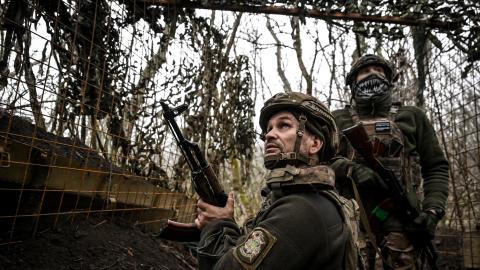
Elsewhere, Russian forces employed massed fires, aerial assaults, Shahed drones, and infiltrations by small assault teams under the cover of harsh winter conditions. Ukraine repelled the brunt of these attacks on the axes leading to Slobozhanske, Kupiansk, and Lyman. While the situation in Kupiansk is tense and favors the invading forces, Ukrainian President Volodymyr Zelenskyy was able to make a surprise visit to the front lines near that embattled city.
The broader Pokrovsk area also continued to host fierce fighting. Russia’s 76th Guards Air Assault Division and Ukraine’s 95th Air Assault Brigade have been combat deployed to this sector. Drones from Ukrainian special forces units preyed on Russian fire support and infantry concentrations in this area. Heightened military activity also raged in the direction of Orikhiv.
Meanwhile, Ukraine continued to strike Russian oil refineries. On December 14, Ukraine’s Unmanned Systems Command struck the Afipsky refinery in Krasnodar Krai, some 240 miles from the front lines. The Afipsky refinery is a major oil processing facility in southern Russia, with a capacity of 6.25 million tons of oil per year. The refinery mainly produces gasoline, diesel, and jet fuel for the Russian military.
2. Ukrainian Underwater Drones Reportedly Hit a Russian Submarine
The Security Service of Ukraine (SBU) said that it executed a successful underwater strike against an Improved Kilo–class diesel-electric attack submarine docked in Novorossiysk. The Russian Ministry of Defense denied any serious damage to this platform.
Ukrainian sources claim they conducted the attack with Sub Sea Baby robotic naval drones, variants of the Sea Baby systems used in previous maritime strikes. Open-source visuals show traces of an explosion near the submarine. While the latest imagery suggests that the Russian submarine has not sunk and has been moved to another area of the port, an attack by an undersea drone would have implications that extend beyond damaging a single platform. Improved Kilo–class submarines are central to Russia’s naval strike capabilities, particularly for their ability to launch Kalibr cruise missiles from the Black Sea.
Many details of the new undersea variant of the Sea Baby baseline remain unknown. Online sources describe the weapon as similar to a smart torpedo, but the details of its guidance system and design features are still a mystery. This report will continue to monitor Ukraine’s naval robotic warfare advances and operations in the Black Sea.
3. What to Monitor in the Coming Weeks
- The fight for Siversk: Russia’s renewed offensive has stressed Ukraine’s defenses in Siversk. Kyiv may opt to rotate troops from other locations to reinforce its defenses in this embattled city.
- A Ukrainian recovery in Kupiansk: A promising Ukrainian counterattack in Kupiansk has begun to deliver results. A shift in momentum could trigger a command reshuffle for the Russian forces fighting in the sector.