Caption
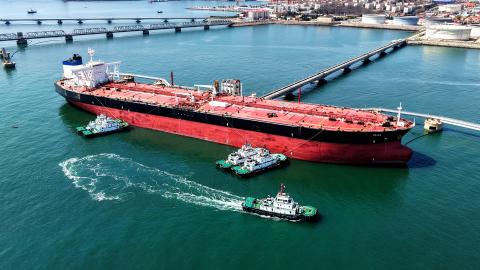
An oil tanker is being unloaded with imported crude oil at the Qingdao Port Oil Terminal in Shandong Province, China on April 7, 2026. (Getty Images)
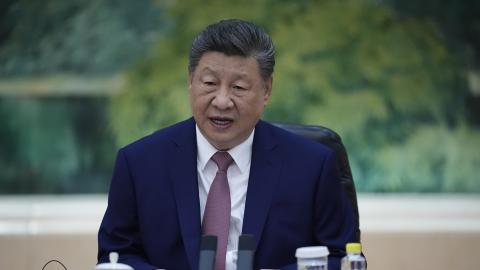

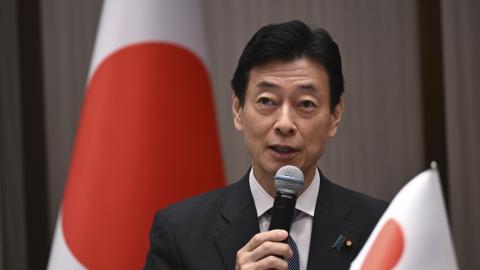
After a landslide electoral victory in February and a successful trip to Washington in March, Japanese Prime Minister Sanae Takaichi is poised to introduce an energetic economic and security policy agenda. Recent developments, such as the conflict with Iran, have created new energy and security challenges, yet the strong US-Japan relationship remains constant.
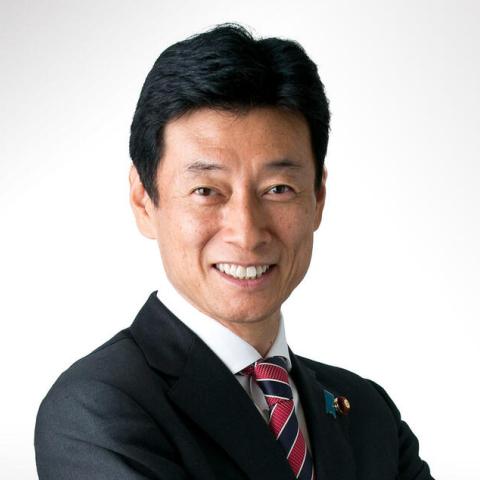
On May 6, Hudson Japan Chair Kenneth R. Weinstein will welcome Yasutoshi Nishimura, former head of Japan’s Ministry of Economy, Trade and Industry (METI) to Hudson. Minister Nishimura will give remarks concerning the prime minister's successful March visit to Washington, her economic and diplomatic policies, and how Japan is responding to energy security challenges stemming from the Middle East. After a fireside chat between Minister Nishimura and Dr. Weinstein, the event will conclude with an audience Q&A.
Transcript
Below is an English version of Yasutoshi Nishimura’s speech
1. Introduction
Dr. Weinstein, thank you very much for your kind introduction. I am sincerely grateful for the invitation to be here today.
To tell the truth, I had been scheduled to deliver a speech here this past January.
However, an election was called on short notice, and regrettably, I had no choice but to cancel.
As a result of that election, we, the Liberal Democratic Party, was entrusted by the people of Japan with the largest number of seats in constitutional history.
In these turbulent times, we devote our utmost efforts—both domestically and diplomatically—to make “the Japanese archipelago stronger and more prosperous.”
After the election, I was appointed the heavy responsibility of Chairperson of the LDP’s Election Strategy Committee. That said, the reason I am here today is not related to election strategy.
I am here at the Hudson Institute to once again convey to you the importance of cooperation between Japan and the United States—our allied nations across the Pacific Ocean—amid an increasingly complex international environment.
Here, the Hudson Institute is a special place for me personally.
In 2013, former Prime Minister Shinzo Abe—my deeply respected mentor in politics—became the first non-American to receive the Herman Kahn Award here.
Prime Minister Abe had only just launched his second administration at the end of previous year, yet the Hudson Institute was quick to recognize his significance. That recognition gave both the Abe administration and Prime Minister Abe himself enormous confidence and became a driving force for subsequent policy implementation.
At the time, not only Prime Minister Abe but I myself was deeply moved when we saw the distinguished list of past recipients, including President Ronald Reagan, Vice President Dick Cheney, and Secretaries of State Henry Kissinger and George Shultz.
Speaking here today, at the Hudson Institute—a place of such personal significance to me—is a joy I am certain I will cherish for the rest of my life.
In September 2013, on the occasion of receiving the Herman Kahn Award, Prime Minister Abe delivered a speech at the Pierre Hotel in New York on rebuilding the Japanese economy through the “three arrows” of Abenomics, as well as on security initiatives based on the principle of Proactive Contribution to Peace.
Thirteen years have already passed since then.
2. Technological Evolution
There is no doubt that the world has changed dramatically over these past thirteen years. A prime example of such change is progress in science and technology, particularly AI.
In 2007, Apple released the first-generation iPhone, and around thirteen years ago, Siri was introduced into iPhone.
In a news article from thirteen years ago, Siri’s new feature—“being able to change screen brightness by giving instructions to Siri”—was described as a groundbreaking innovation.
At that time, few people believed that Siri, which could barely carry on a conversation, would dramatically improve our daily lives.
Yet today, with the debut of generative AI, AI services—including Siri—have greatly increased human productivity and enriched our daily lives. AI have become forces that determine a nation’s industrial competitiveness.
In Japan, various initiatives are underway.
President Morita of NEC has introduced his own “clone AI” within the company. NEC employees can consult with the AI version of the busy president multiple times with ease, without having to catch him in person, resulting in a dramatic improvement in operational efficiency.
At Toyota Motor Corporation, the development of the AI version of Chairman Akio Toyoda is progressing. This AI, trained with approximately seven years of the chairman’s statements, is being utilized by senior executives.
Such initiatives not only improve corporate performance, but they may also help bring about social advancement by unraveling the decision-making mechanisms of leading executives of our era.
Once “AI Nishimura” is completed, I would like to introduce him to all of you gathered today.
Maybe he would be the one on this podium next time…That said, if I myself do not continue to grow, the AI will quickly catch up and surpass me. This could be my renewed motivation for daily work.
Just before coming to Washington, D.C., I visited Silicon Valley—the holy land of innovation. The pace of evolution in the United States is astonishing. In addition to AI software development, I witnessed firsthand the fields of “physical AI”—where AI is applied to real-world applications such as robotics and autonomous driving.
In Silicon Valley, Man, Money, Materials are being intensively invested toward technological advancement. I strongly felt that this dynamism is the driving force behind innovations that astonish the world. However, there is another crucial factor that makes the United States the world’s leading innovation powerhouse.
Politics supports the “dynamism of innovation.”
The One Big Beautiful Bill (OBBB), enacted last year, is a prime example. The OBBB includes incentives such as immediate expensing of capital investments and various tax reductions, greatly enhancing the attractiveness of the U.S. business environment and creating a powerful driving force for companies to locate and invest in the United States.
Through my visit to Silicon Valley, I renewed my determination to implement bold policies that bring this American dynamism to Japan as well.
3. Changes Over These Thirteen Years
Let us return to the changes that have occurred over these past thirteen years.
The many events that have unfolded around the world have made us acutely aware that the free, open, and stable international order—built primarily under U.S. leadership after World War II—now faces new challenges.
An unknown infectious disease swept the globe and claimed five million lives. Who could have imagined tents for vaccination being set up in Times Square?
The supply disruptions triggered by COVID-19 also exposed the vulnerability of supply chains built under the free trade system—namely, the overdependence on specific countries.
I have vivid memories of the struggles Japan faced when I was the Minister in charge of COVID-19 related policies.
Russia’s invasion of Ukraine is a grave challenge to international peace and prosperity.
It has led to renewed recognition of the importance of deterring conflicts and war before they occur.
From this perspective as well, Iran’s development of nuclear weapons cannot be tolerated.
Japan will continue to make every necessary diplomatic effort, in coordination with the international community, to resolve issues surrounding Iran, including the nuclear problem.
As inter-state competition has intensified, grown more complex, and become the norm,
the “free, open, and stable international order” we have long been accustomed to is now wavering.
To safeguard global peace and prosperity, it is no longer enough to merely proclaim the importance of values—we must take proactive action.
4. Toward the Realization of a “Strong Economy”
First and foremost, under the Takaichi administration, Japan will build a “strong economy” and solidify the foundation of national strength, which is crucial for Japan to proactively contribute to global peace and prosperity.
The key to restoring a strong economy lies in three “Rs”: Rapid, R&D, and Resilience. The first R is for Rapid.
In strategic technology fields such as AI, semiconductors, quantum computing, and biotechnology, innovation is advancing at breathtaking speed.
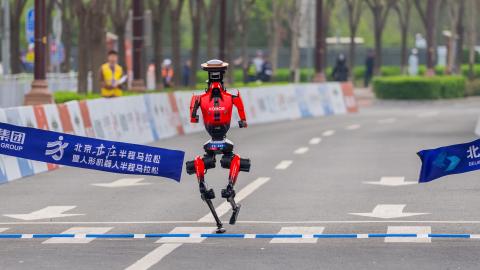
Just before my visit to the United States, I visited Beijing. The progress China has made in autonomous driving and robotics was striking.
Seeing this firsthand reaffirmed my conviction that Japan and the United States must work together to jointly drive global innovation, to ensure we do not fall behind, and continue to take the lead.
Today, I would like to introduce a symbolic example of U.S.–Japan cooperation: a joint project to produce cutting-edge semiconductors.
This project, named “Rapidus,” brings together leading Japanese firms such as Toyota and Sony, while utilizing IBM’s 2-nanometer logic semiconductor technology from the United States.
The goal is for Japan and the United States to “rapidly” capture market share in next-generation semiconductors, for which demand is expected to grow significantly.
In July last year, we have successfully produced a prototype of the 2-nanometer semiconductor. Going forward, the Japanese government will provide support through government investment and debt guarantees for private-sector financing.
To win competition at the global frontier, bold investment on an unmatched scale is necessary. From my position overseeing tax policy within the LDP, I drew on the wisdom of the OBBB to establish robust capital investment incentives in Japan as well.
The second “R” is R&D.
In recent years, thanks to digitalization and the presence of hyperscalers, the time frame from scientific discovery to commercial application has shortened. Continuous R&D is essential to remain winners at the front lines of global competition.
Fields that may become Japan’s future “winning areas,” such as semiconductor materials, robotics, and physical AI, are becoming increasingly competitive worldwide.
Maintaining Japan’s “indispensability” in these fields is crucial to survive in global markets.
In this era, government-led creation of an optimal R&D environment will determine the fate of industrial competitiveness.
The Takaichi administration has fundamentally strengthened the system by establishing higher caps for tax credits—separate from existing frameworks—specifically targeting AI, semiconductors, advanced robotics, and other strategic technologies.
Last but not least, the third “R” is Resilience.
Ensuring resilience is now an urgent imperative.
During the chaos of COVID-19, supply chains from China for essential goods were severely disrupted—a memory that remains vivid for all of us, and especially for me as Minister in charge at the time, as I have mentioned before.
Japan experienced shortages not only of masks and medical gowns but also of automobiles and water heaters due to semiconductor shortages.
The current situation in the Middle East once again underscores the importance of resilience.
The world is being reminded that the fate of oil and petroleum product supplies to entire nations depends on a mere two-mile-wide shipping lane of the Strait of Hormuz.
How can we reduce the risks of excessive dependence on specific countries for materials and technologies indispensable to our industries and daily lives?
I want to overcome this challenge together with you all, the United States.
First, energy. For resource-poor Japan, stable energy supply has always been an enduring challenge.
In that sense, the shale revolution in our sole ally, the United States—and its transition to a net energy exporter in 2020—has been a stroke of extraordinary good fortune.
This is not only fortunate for Japan, but for the world, especially Asia. Asian countries need U.S. crude oil and LNG.
The key difference between the situation today and the two oil shocks of the 1970s is precisely the existence of the United States as a reliable energy supplier.
If China or Russia were to fill Asia’s current energy supply gap, regional instability would be inevitable, as clearly demonstrated by Europe’s chaos lead by the halt of Russian gas supplies following the invasion of Ukraine.
Moreover, amid debates over the cost of U.S. security commitments in Asia, U.S. energy supply can serve as a crucial tool to build healthy interdependence between Asia and the U.S.
While Japan cannot currently supply its strategic petroleum reserves to Asia, Prime Minister Takaichi has recently announced financial cooperation—such as financing for procurement and supply-chain maintenance of crude oil and petroleum products—during an online summit with ASEAN leaders.
Japan itself is also relying on the U.S. as an alternative source to Middle Eastern crude oil. A tanker from Texas recently arrived in Japan, delivering U.S. crude oil for the first time since tensions in the Middle East escalated. In May alone, Japan’s imports of U.S. crude oil are expected to be roughly four times higher than last year.
Today, such U.S. supply supports the peaceful everyday lives of the Japanese people.
Having begun my career 40 years ago in the Petroleum Department of the former Ministry of International Trade and Industry—with the importance of steady oil supply running through my veins, so to speak —
I cannot overstate how vital and invaluable the U.S. is to Japan and the other countries in Asia.
In addition to crude oil, Japan now purchases nearly 20 million tons of LNG annually from the U.S.—about 30% of our total LNG import.
Building on this reliable energy supply from our ally, we will strengthen the Japanese economy.
Securing critical minerals for semiconductors and batteries is also essential for advancing digitalization and decarbonization.
At the Japan–U.S. summit in March, both governments announced development projects within the U.S. and third countries and
agreed to cooperate so that projects can succeed commercially even when certain countries dominate markets.
Domestically, Japan will also stimulate bold investment to secure resilience under the banner of “investment on resilience.”
5. Diplomacy for Japan to “Shine on the World Stage”
Let me now turn to diplomacy and national security.
As noted before, the free, open, and stable international order is under strain, and Japan faces the most severe and complex security environment since World War II.
China is intensifying unilateral attempts to change the status quo either by force or coercion in the East and South China Seas,
while simultaneously expanding and activating military activities around Japan.
Since last year, I have been hearing increasing concerns about Japan-China relations.
Let me be absolutely clear: Japan remains open, and have not closed any door to dialogues with China.
Prime Minister Takaichi has also publicly conveyed the same message during the Japan–U.S. summit in March.
Under this approach, Japan will continue communication with China while responding calmly and appropriately from the standpoint of mutual strategic interests.
As I mentioned earlier, I visited Beijing prior to this U.S. trip. While I did not meet government officials, I conveyed Japan’s stance directly to Chinese business leaders.
This is not the only issue present in the environment surrounding Japan.
North Korea’s nuclear and missile development has become an ever more grave and imminent threat and is utterly unacceptable.
Above all, we must achieve the return of abducted Japanese citizens as soon as possible.
As their families age, we devote our full efforts to an early resolution.
Russia’s invasion of Ukraine continues. North Korea has dispatched soldiers to Russia, raising concerns about the possible transfer of nuclear and missile technologies in return. China is strengthening its military cooperation with Russia.
Precisely in such difficult circumstances, I believe that diplomacy plays a key role.
Japan must project a shining presence globally by leveraging three networks:
Above all, the Japan–U.S. alliance is the foundation of Japan’s diplomacy and security policy.
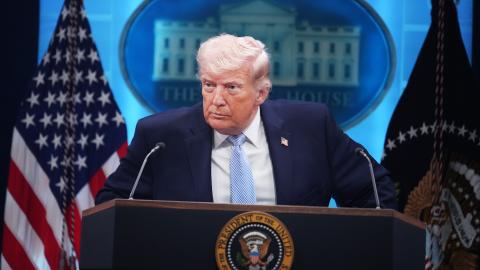
Prime Minister Takaichi and President Trump have held two in-person summits, both in a very positive atmosphere, fostering personal relationships.
Based on this relationships, Japan and the United States must not only deepen bilateral cooperation but also work together to address global challenges.
In particular, I believe President Trump may be the key to the door of resolving North Korea’s issues regarding nuclear and missile, and the abductions.
In the ever-growing presence of the U.S. and China as superpowers, cooperation between Japan and like-minded middle powers—such as the UK, Europe, Canada, and Australia—has become increasingly important.
By combining strengths like British finance, Canadian and Australian energy and resources, we aim to create a resilient network that serves as an “Anchor of stability” for shared values: freedom, democracy, human rights, and the rule of law.
As a former Minister for TPP, I feel that the framework embodies the essence of such a network.
TPP started as a framework for countries around the Pacific Ocean, but with the U.K. joining in 2024 and the EU beginning to move toward cooperation with CPTPP last year, we see its influence growing in real time.
Japan has also recently revised its principles on transfer of defense equipment and technology.
This revision is essential to facilitate joint development with like-minded countries and strengthen deterrence and response capabilities through mutual support.
It is also important to reinforce domestic defense industrial bases amid growing emphasis on sustained operational capacity.
Cooperation among partner countries is advancing in practice.
In April, Japan and Australia concluded a contract worth approximately 7 billion US dollars for the supply of frigates.
Japan–Europe cooperation carries significant deterrent value.
Security in the Euro-Atlantic and Indo-Pacific regions is inseparable.
The Global Combat Air Programme (GCAP), under which Japan, the UK, and Italy jointly develop a next-generation fighter aircraft, entered into force two years ago. We will further strengthen cooperation between governments and industries.
Cooperation with France has also deepened, as reaffirmed at the recent Japan–France “2+2” meeting of defense and foreign ministers.
The importance of Global South cooperation for future global growth is beyond dispute.
While global GDP growth slows, Global South countries continue to grow steadily at over 4%.
Cooperation with these countries need to align with their sustainable growth.
Sustainable cooperation should not mean infrastructure built through opaque development finance that transfers operational control to creditor nations when the debt becomes unmanageable.
Such situations, like Sri Lanka’s Hambantota Port in 2017, must not be repeated.
Japan is using diverse technologies and finance to promote cooperation to advance decarbonization and energy transitions through various and practical pathways.
For example, ammonia-fired power plants using Japanese gas turbines are being built in Malaysia, with Japanese financial support.
Under this flamework called AZEC Asia Zero Emission Community many such projects will bloom—like cherry blossoms along the Potomac in spring.
The Japan–U.S. Alliance, Middle Powers Cooperation, and the Cooperation with the Global South,
these three networks need to be cohesively connected to stabilize the environment of security, ensure international prosperity, and uphold shared values.
Japan will serve as a hub to coordinate cooperations —anchoring on the Japan–U.S. alliance and utilizing platforms such as the G7, Japan–U.S.–ROK, Japan–U.S.–Philippines, and the QUAD.
This must be path by which Japan can “shine on the world stage.”
There is a person who expressed such a vision 10 years ago: former Prime Minister Abe.
He proposed the concept of a Free and Open Indo-Pacific (FOIP) and made it a pillar of Japanese diplomacy.
Today, the importance of FOIP has only grown stronger.
Recently, Prime Minister Takaichi delivered a speech in Vietnam which announces “Updated FOIP”.
She announced launching the three priority areas of initiative for FOIP:
To make the Indo-Pacific “stronger and more prosperous, it is important to expand engagement with Africa and South America, which are the economic growth of the future and holders of vital resources.
It is also vital that Japan possess the capabilities to fulfill its role in shaping a desirable environment- of security.
In 2022, Japan announced raising defense spending to 2% of GDP.
Originally planned for the fiscal year of 2027, this target was reached two years earlier, last year.
This year, Japan will revise its three security documents—the National Security Strategy, National Defense Strategy, and Defense Buildup Program—reflecting lessons from Ukraine, including new modes of warfare and the need for readiness for prolonged conflict.
Of course, Japan remains fully committed to its postwar identity and principles as a peace-loving nation of over 80 years.
6. Conclusion
Finally, I extend my heartfelt congratulations to the 250th anniversary of the independence of the United States.
These 250 years represent a period during which, alongside America’s development, the world built the irreplaceable foundations of peace and prosperity—liberalism, democracy, human rights, and the rule of law.
It is vital that the next 250 years allow the world to continue enjoying peace and prosperity under these foundations.
It is our role to ensure that people feel that “tomorrow will be better than today.”
To do so, we must update our principle values so they respond to the anxieties and frustrations people feel today.
At the core of this effort are our two countries—allies that fully share these fundamental values.
I recall my days studying at the University of Maryland from 1991 to 1992.
Japan’s role was questioned amid the Gulf War. My classmates said some harsh words that I will never forget, “Does Japan only write checks?” and that Japan was “too little, too slow.”
This experience became the root of my political standpoint to face head-on issues for Japan to fulfill its global role, such as limited exercise of collective self-defense, defense spending increases, and strengthening cooperation with like-minded countries.
“The Japan–U.S. alliance has never been stronger.”
This phrase, often heard after recent summits, may sound simple—but to me, it carries profound weight.
It is essential that the two countries lead in building a multilayered network that draws in Middle Powers and the Global South.
To do so, Japan itself must become a strong economy.
The slogan of the Takaichi administration is “JAPAN is BACK”—the very slogan Prime Minister Abe proclaimed thirteen years ago.
Japan is determined to fulfill the great responsibility now resting on our shoulders.
On this memorable year of America’s 250th anniversary, amid a rapidly shifting international environment, I wish to conclude with that message.
Thank you very much.
With Jason Hsu, Freymann will discuss how the United States and its partners can adapt to China’s evolving strategy and develop a coherent plan to prevent conflict while safeguarding Taiwan’s future.
To address these concerns, former senator Sam Brownback, who served as ambassador at large for international religious freedom in the first Trump administration, will join Senior Fellow Nina Shea to propose new policies for the US government and actions for the American public.

To examine this emerging challenge, Senior Fellow Dr. Michael Doran will convene a conversation with Research Fellow Zineb Riboua, Professor Brenda Shaffer—Research Faculty Member at the US Naval Postgraduate School and Senior Fellow at the Atlantic Council—and Sam Cooper, an award-winning investigative journalist focusing on China-Canada relations.

Please join the Hudson Institute for a conversation with Under Secretary of State for Public Diplomacy Sarah B. Rogers and Hudson Research Fellow Zineb Riboua on how the United States is adapting its public diplomacy tools to advance its interests abroad, counter censorship, promote free speech, and leverage artificial intelligence to deliver more effective, targeted messaging.