16
January 2026
Past Event
Why Transportation Matters to Israel’s Regional Strategy

Event will air on this page.


Inquiries: tmagnuson@hudson.org.

Why Transportation Matters to Israel’s Regional Strategy

Past Event
Online Only
January 16, 2026
Getty Images
Caption
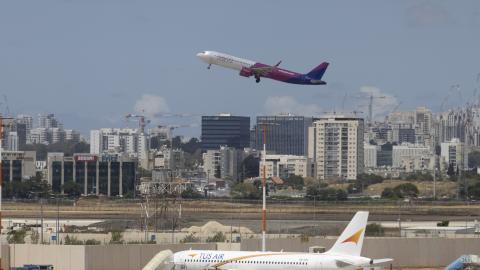
An airplane departs Ben Gurion Airport after a ballistic missile fired from Yemen landed nearby on May 4, 2025, in Tel Aviv, Israel. (Getty Images)

16
January 2026
Past Event

Event will air on this page.


Inquiries: tmagnuson@hudson.org.

Speakers:
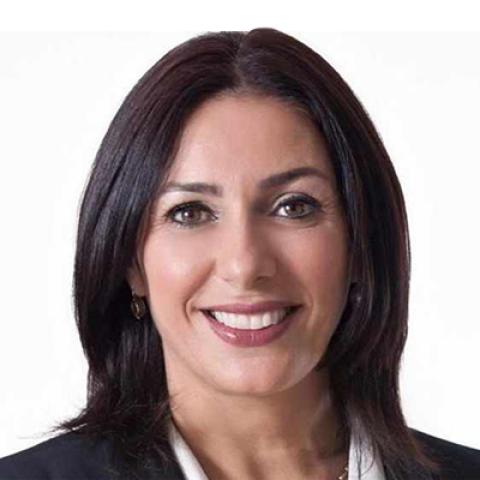
MR
Miri Regev

Minster of Transportation, Israel

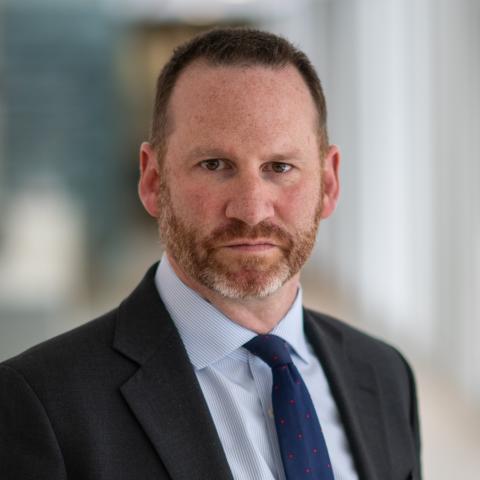
michael_doran
Michael Doran

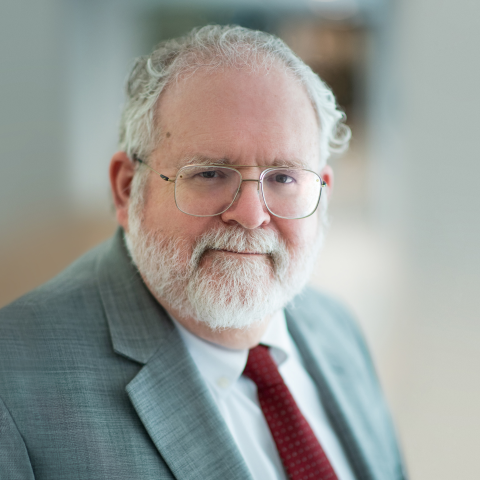
Senior Fellow and Director, Center for Peace and Security in the Middle East

Hudson Senior Fellow and Director of the Center for Peace and Security in the Middle East Mike Doran will sit down with Israeli Minister of Transportation Miri Regev to examine how Israel’s transportation policy has become a frontline arena for its national resilience and global strategy. The conversation will cover lessons the ministry learned while managing Israel’s transportation system in national emergencies, the United States–China strategic competition’s impact on global infrastructure projects, and Israel’s use of artificial intelligence and advanced technologies. Minister Regev will also discuss Israel’s pivotal role in the India–Middle East–Europe Corridor (IMEC) initiative under the Trump administration, the transformation of regional aviation following the Abraham Accords, and the deepening transportation and economic ties between Israel and Morocco.

Michael Doran: 

Welcome, and thank you very much for joining us. We are here to interview the Minister of Transportation and Road Safety of Israel. My name is Mike Doran, and I am the Director of the Middle East Center here at Hudson Institute. My Hebrew is not perfect.

Miri Regev:

No, it’s perfectly fine. I’m completely surprised that you even speak Hebrew like this.

Michael Doran:

I haven’t interviewed someone in Hebrew for a long time.

Miri Regev:

Okay, so let’s start slowly.

Michael Doran:

No, it will be okay. With a little bit of patience . . . it will be okay.

Michael Doran:

So I said, who I am, Madam Minister, greetings, and welcome. It’s a great honor to have you here. You serve as the Minister of Transportation, as I said.

Miri Regev:

I’m also a member of the Security Cabinet.

Michael Doran:

Oh, yeah, absolutely, also in the Security Cabinet.

Michael Doran:

Previously, you served for many years in the IDF.

Miri Regev:

Twenty-five years.

Michael Doran:

You we’re released at the rank of Brigadier General. And among other roles, you were a spokesperson in the IDF during particularly challenging periods. Afterwards, you entered politics. You served as a member of the Knesset and as Minister of Culture and Sports. Thank you very much for joining us. It’s a great honor for me.

Miri Regev:

Thank you, Mike, and thank you to the institute for inviting me to be part of this fascinating conversation between us. I have Mike Doran, a Hebrew Speaker. It’s amazing. . . It will be more difficult for you, not for me. 

Michael Doran:

I’m very happy that you called me a Hebrew speaker. I’m studying Hebrew. And maybe one day we’ll say I speak Hebrew. Maybe I’ll start with a few questions?

Miri Regev:

Yes, so first, maybe just before the questions, I also want to wish you a Happy New Year.

Thank you very much for hosting me here. And we’ll use this opportunity to thank President Trump for his support of the State of Israel. Last week, there was a very good meeting between Prime Minister Netanyahu and President Trump in Miami. A meeting where different decisions were indeed made regarding the Middle East.

And it should be said what is right to say: since President Trump took office and supported Israel, thank God, we returned most of the hostages to their country. One hostage remains, Ran Gvili, whom I hope will return to Israel as soon as possible.

Ran Gvili’s family also met with President Trump last week in Miami. And we all understand that terrorism is not the way. With God’s help, we will also succeed in ensuring that Gaza has a different government, not Hamas. A government that will be disarmed, that will have no weapons, no terrorism. A government that truly wants its public and citizens to live in peace and in good relations with the State of Israel. 

Michael Doran:

We also see that the government in Iran is not in a good state today. This is also because of the cooperation between the US and Israel. 

Miri Regev:

I think President Trump sent a very clear message. Of course, our activity in Iran and our attack in Iran were also coordinated with the US.

First of all, to send a message that Israel knows how to reach anywhere, with both its technology and its capabilities. You saw what we did with the pagers operation in Lebanon. Does anyone remember Assad in Syria?

And also in Tehran, we acted and flew over the skies of Tehran. We have operational capabilities, we have intelligence capabilities. Of course, President Trump supported us greatly. And thanks to the very good cooperation between Prime Minister Netanyahu and President Trump, we achieve very good results in the Middle East.

But there is still instability in Syria. We are still not finished with Iran. And the threats that continue along the Red Sea shipping routes affect not only Israel, but also other countries, including Egypt.

Michael Doran:

You started with the meeting with the President, so maybe we’ll talk a little about that.

What can you tell us about it—you were there . . . 

Miri Regev:

I was with the Prime Minister, not in the meeting with President Trump.

First of all, we spoke together with Elon Musk, who works on technological issues.

Israel is a tech powerhouse, a high-tech power. And we discussed with him the introduction of Tesla vehicles to Israel, and the regulations we need to advance in Israel regarding autonomous vehicles—driverless cars—and it’s just amazing to see this. And Israel is very, very advanced. I also invited him along with the Prime Minister to a very large conference, a Smart Transportation Conference, which will be in March in Israel. And I will also invite you and whoever is watching us; we’ll talk about this at the end of the program.

At the meeting with Trump, there were, I think, three or four meetings between President Trump and Prime Minister Netanyahu over these four days. I don’t think any other Prime Minister has met with President Trump so many times.

Michael Doran:

And he was the first he met. 

Miri Regev:

And it’s really wonderful to see the relationship between them. It also makes the citizens of Israel very happy. And I believe they discussed things, which I certainly won’t detail in the media, but they did discuss things.

Michael Doran:

Maybe you can tell us one secret?

Miri Regev:

You want me to tell you when . . . ? I think the important thing is really, also in the rehabilitation of Gaza, it’s only after we return our last hostage, and after Hamas is disarmed, and Gaza is demilitarized.

The event we called “October for me” cannot happen again. Israel must protect its security interests. They also discussed IMEC, which we will talk about in more detail in this conversation, which will change the entire international trade chain between Western countries and Eastern countries. And other strategic issues, which certainly are not the time or place to discuss.

Michael Doran:

Okay, so let’s talk a little about security. During the war, Israel faced significant pressures in the form of an international siege, including threats along shipping routes by the Houthis, withdrawal of major airlines, and, of course, missile attacks. How did Israel handle these pressures?

Miri Regev:

First of all, you’re right. I don’t think there is any country in the world that is at war and maintained operational continuity by sea, air, and land the way we did during this war. Including during the ten days of strikes against Iran, we managed to bring back 100,000 Israelis from abroad. Everything was executed with proper and organized planning, both at sea, in the air, and, of course, on land.

Initially, most Israeli companies flew from and to Israel. We kept the skies open throughout the war. At no point were our skies closed. Perhaps at the moment we identified a missile heading toward the area, then to protect the aircraft and the passengers, we kept them in the air or redirected them to Ramon airport

Israel, in its crisis management capability—through proper pre-planning and real-time crisis management—managed to ensure that transportation continued, within the country, from place to place.

Whether enabling reservists to travel, allowing people to continue commuting to work, enjoy entertainment, or meet health needs, or other matters. We also maintained our connection with the world. Our four ports were fully operational in Haifa and Ashdod. From an air perspective, we kept the skies open.

We were in contact with all aviation authorities to explain to them what was happening in Israel. We were transparent so they could understand the risks. We explained that there was no danger to planes. And the brilliant thing we also did was move our entire fleet out of Israel, placing it in two hubs, in Athens and Larnaca, and from these hubs, we could bring Israelis and tourists back safely. 

We maintained transportation continuity by sea, air, and land. The shipping routes issue is still not resolved. Eilat port still doesn’t operate. We thought Biden’s coalition could address it, but it did not succeed.

Michael Doran:

Correct. 

Miri Regev:

When President Trump took office, we, the Prime Minister and Trump, decided to take action and carried out our operations against the shipping threats at Hodeidah port, and acted there. Currently, they still threaten the Red Sea region, affecting not only Israel but also Egypt. Yes.

Michael Doran:

Could you please tell us your biggest challenge as the Minister from the beginning of the war?

Miri Regev:

Look, there were several challenges, but first, the main challenge was maintaining transportation continuity. That is, ensuring citizens could move from place to place, reservists could travel, transporting equipment via trains, maintaining civil aviation so people could fly in and out, and keeping ports operational.

One goal was to prevent cyberattacks on those infrastructures.

Michael Doran:

I wanted to ask about it. Let’s talk about cyber attacks on your infrastructure.

Miri Regev:

Look, there’s no doubt there were attempts to damage transport infrastructure—ports, traffic lights, airports, gas platforms. They definitely wanted to harm these . . . but they didn’t succeed.

There were attempts, but they failed. We operate in multiple layers regarding cyberattacks.

It’s no secret that Israel is a high-tech and cyber power. Our approach was primarily preventive; we constantly work to prevent such attacks, separating systems. This means systems aren’t linked; if one system is hit—for example, a pier or a missile—other ports or piers can continue operating.

We separate land, sea, and air transport, and within maritime transport, we allow operational flexibility between ports. This is to prevent disruption to transportation continuity in Israel, so goods keep arriving, and people can travel.

Michael Doran:

I imagine, as you said, Israel is a cyber power, and so there’s a lot of experience here that could help the US or the West.

Miri Regev:

I think the main lesson is that the transportation network is an integral part of national security. When a person feels civilian resilience—able to travel, access groceries, and go to medical care—that civilian resilience contributes greatly to security resilience. It’s clear to everyone that transportation is part of Israel’s security resilience.

Another key point is infrastructure redundancy. That is, ensuring flexible infrastructure—if buses don’t operate, trains do; if trains fail, there’s another solution. Maintaining redundancy by sea, land, and air. Our relationships with neighboring countries are very important, as well as with more distant countries. The fact that we established two hubs during the war, in Athens and Larnaca, greatly helped protect our fleet and allow Israelis, tourists, and Americans to return safely.

Michael Doran:

This was part of your war planning?

Miri Regev:

Yes, all of that. Transportation hubs—you need to understand how classified I kept it. Now you can talk about it. As a cabinet member, I knew when we would carry out operations in Iran. You can’t talk about it, because if you do, it will leak.

Therefore, once I understood what was going to happen, we prepared all operations in advance, without leaks, and managed to protect our fleet and deliver a decisive strike in Iran. They understood Israel can reach anywhere. We also allowed anyone who wanted to return home, despite missiles, to do so. Everything was managed carefully, with the right balance and a lot of responsibility.

Michal Doran:

I remember Neshraela threatened Cyprus—I didn’t understand why. Now I understand.

Miri Regev:

Who is Neshraela?

Michael Doran:

I don’t remember.

Miri Regev:

Another important lesson: drones have become a central factor since the Ukraine-Russia war. Drone threats require completely different management. Low drones threaten in many aspects, so Israel accelerated efforts to address drone threats.

Another step, which some environmentalists may not like, I instructed 30 percent of the Israeli fleet to remain on diesel/fuel rather than electricity, because if energy infrastructure is hit, we can’t move the population. If all our fleet operated on electricity, we couldn’t respond. Therefore, 30 percent of the transportation fleet must remain on diesel.

Michael Doran:

Yes, very interesting. An important lesson.

Miri Regev:

Yes, for every country. Even when I meet other transportation ministers, they say they will adopt this lesson.

Michael Doran:

Let’s move to IMEC. The Trump administration is promoting the IMEC project, in which Israel has a central role. Can you explain Israel’s strategic importance and unique position in this initiative?

Miri Regev:

First, I want to thank President Trump for this vision. It’s an amazing vision of transferring goods from India through Abu Dhabi and Saudi Arabia by sea, then overland through Saudi Arabia, Jordan, and Israel—essentially Israel as the gateway to Europe.

IMEC will transform the entire international trade chain, prioritizing the West over trade from the East, bringing enormous economic benefits to all these countries, and lowering the cost of living for citizens. It’s a win-win economically, strategically, and for national security. The US leads this initiative, with more countries joining.

Credit goes to President Trump. Unfortunately, there are attempts to bypass Israel. Some propose routing IMEC through Iraq, Syria, and Turkey. Respectfully, these countries are far from stable, and their infrastructure cannot handle the volume of goods. Israel already has the infrastructure ready. I hope these attempts fail.

My visit to the US and meetings here are meant to send a clear message: if the US wants a stable initiative, IMEC must go through Israel. Any other route is a boomerang. Syria is far from stable; we had to intervene in order to save the Druze’s. Turkey seeks to revive the Ottoman Empire, Iraq . . . you know what happened in Iraq. I don’t have to tell the Americans . . . The correct path is the one Trump discussed early on with Modi and Prime Minister Netanyahu. We need to move forward with this root as quickly as possible. It will benefit all Western countries greatly.

Michael Doran

What’s the first step here?

Miri Regev:

Several concrete steps immediately: first, formally sign Israel and Jordan into IMEC. Second, include Israel and Jordan in the working groups. Many attempts are made to exclude us. Third, the US should lead a meeting of transportation ministers—Jordan, Saudi Arabia, Emirates—to ensure railway tracks connect. Big ideas start with small things. You can’t have a forest without trees; here, the trees are the railway connections. There are different tracks and systems; they must connect. These are the first three steps that must be taken, otherwise it won’t progress. 

We invite investors from the US to come and invest, as we want to involve US companies and funds. Even during war, the economy strengthened, the currency strengthened, and more foreign investors want to come to Israel.

It’s amazing. The shekel strengthens; the Israeli economy is strong. Netanyahu has led Israel’s economy and security wonderfully. And from here I’m calling more and more investors, including from the US, to invest in the railway connecting Israel and Jordan—from Kiryat Shmona to Eilat—and in two new airports planned north and south, as Ben Gurion’s capacity is full. 

Michael Doran: 

I’m embarrassed to say I hadn’t heard about this.

Miri Regev:

Ben Gurion is one of the busiest airports. More countries want direct flights to Ben Gurion. Daily requests come from transportation ministers to open more slots. We definitely need two more airports. One in the south and one in the north. Now the planning is underway.

Michael Doran:

Can you tell us where?

Miri Regev:

In the south, I hope that it will be between Nevatim and Chiclag. In the north, it will be in Ramat David. But the north will take us some time. We’re starting with the south.

Michael Doran:

Very interesting.

Miri Regev:

Lots of infrastructure investments. I invite investors and US companies to invest in Israel. It’s a shame some don’t due to BDS, which limits free trade. BDS prevents proper intercountry connections. Israel has enormous economic potential. I invite more companies to invest in Israel.

Michael Doran:

In what ways does Israel use AI?

Miri Regev:

In many fields—security, economy, transportation—we use AI in smart traffic control. Traffic lights communicate with each other where congestion occurs. AI helps manage accidents and high-risk areas.

We use it in the maintenance and management of ports and airports. Almost everywhere.

Michael Doran:

I assume you are one of the leaders in that field.

Miri Regev:

Israel is a high-tech, cyber, and tech power. We share our technologies with many countries and invite companies to cooperate with Israel.

Together, with collaboration, we become a rising force, serving public welfare, economy, and security. And you want to do it peacefully, and encourage the peace. We are great partners for all of these.

Michael Doran:

Who is your best partner for technology in those aspects? And specifically in the use of AI for transportation. 

Miri Regev:

We have many partners. But overall, I think we rely on our own technologies.

We rely on our own technologies to also maintain our ability to protect those critical infrastructures for the State of Israel. After all, ports, railways, and aviation are extremely vital infrastructures for Israel, both in everyday life and in emergencies. Therefore, we need to see how we manage these infrastructures. On one hand, to be open to collaborations—we have many collaborations. On the other hand, to also protect those technologies that can defend our interests. 

NVIDIA, for example, is now investing in Israel. And that’s simply amazing. During a war, NVIDIA comes to invest in Israel. Clearly, it wouldn’t come if there weren’t financial gain. In other words, it comes because there’s economic profit for them, and there’s also a gain for us—it’s a win-win situation.

We see that Israel is an economic and technological power. Not for nothing—the Economist is not exactly a paper that praises Israel, but it stated that Israel is the third country in the world in terms of a strong and stable economy.

Michael Doran: 

Yes, that’s impressive. We have a debate here.

Miri Regev:

All of this has been led, really, by Netanyahu for years. For more than a decade, he has been the Prime Minister leading a free economy, economic stability, and our ability during war to also invest in the day after, think about growth for the day after, and provide daily responses during wartime— supporting families evacuated from their homes, rebuilding the north and south, mobilizing reserve forces.

Ultimately, Israel spent a lot of money on this war, but at the same time maintained its economic power and ability to continue developing the economy and Israeli growth.

Michael Doran:

There is a very sharp debate today within the Republican Party about the value of Israel for the US. There is one person, Tucker Carlson, who said two weeks ago that Israel has no value to the US. It’s not an asset—it’s just a drain. 

Miri Regev:

I think the US, which has a great desire and enormous interest in stability in the Middle East . . .  Now, stability in the Middle East without Israel does not exist. It does not exist. The US has recognized this for years, across all its presidents.

They have seen Israel as a strategic asset for the US Israel is a strategic asset to the US because it maintains stability in the Middle East, because Israel is the only true democratic country in the Middle East, because we share values, and because Israel knows how to be an ally where the US needs it.

And, of course, in all matters of technological and cyber cooperation, and the security topics that are not openly discussed. Not everything can be talked about. Israel is a tremendous asset to the US, and the US is a tremendous asset to Israel. But there is no doubt that this small, young country, Israel, with enormous power, has capabilities—tremendous capabilities in security, technology, and economy—and the US recognizes Israel as one of its greatest assets.

If Israel is not stable in the Middle East, there will be no stability in the Middle East.

We all understand the US’s interests in the Middle East, and everyone understands what is happening with the US in the second axis led by China.

So, if the Republicans don’t understand this, who will?

Michael Doran: 

Let’s talk a little about China and the US-China competition. Does this competition affect what happens in Israel’s transportation sector?

Miri Regev:

Israel is a country that operates according to law, issuing contracts in transportation for anyone who meets the criteria, and within these contracts, we protect our security interests. Yes. And from there, everything is clear.

Michael Doran:

I’ll tell you, I’ve heard that sometimes in Israeli contracts, Chinese companies come, and there are no American companies at all.

Miri Regev:

First of all, unfortunately, not enough American companies participate. I’m very happy, for example, about the Indian investment in Israel. The Indians have started investing in Israel. They realized that Israel is a place worth investing in. And there are many such investments from other countries in Israel.

I think American businesses still haven’t fully realized the profit potential of investing in Israel. And I’ll say again, we currently have many investments that will go to tender. Whether it’s railways from Kiryat Shmona to Eilat, the Peace Railway connecting Beit She’an to Jordan, or the metro, in which we’ve invested a lot of money.

Yes. Within the Tel Aviv metropolitan area, for example. So, I think American companies, including American funds, could gain substantial profit if they invest in Israel.

Michael Doran:

So, I . . . I . . .  I heard on the news that there’s an agreement between Syria and Israel under the auspices of Donald Trump, and do you think it will affect transportation and the IMEC?

Miri Regev:

First of all, I’m very happy that more and more countries are joining this type of . . . it’s not explicitly part of the Abraham Accords, but there’s no doubt that an agreement like this—which essentially means there will be no fighting, that Syria will ensure Hezbollah is not operating in its territory, that Syria will not provide shelter, that Syria moves towards prosperity as said. This is certainly welcome, and we thank President Trump, of course, and Prime Minister Netanyahu for their ability to collaborate. I hope it really happens. How will it cooperate? First of all, it will be wonderful that Jews born in Syria can fly, their families can visit the places where they grew up, there will be transportation, and it will encourage tourism.

Tourism that drives growth, joint economy, and peace brings only reconciliation to both countries. I hope it will also influence what happens in Lebanon, and we can end the wars in the northern region. It seems this is indeed happening, so I, of course, welcome this initiative.

Regarding the IMEC, in my opinion, it must go through Israel. It cannot change the IMEC’s route, because to pass through Syria, it must start from Iraq, Syria, and Turkey. I think this axis—Iraq, Syria, Turkey—is not exactly an axis that could be considered stable over time. I think true stability in the Middle East is for the IMEC to go through the Emirates, Saudi Arabia, Israel, Jordan, and from there to the rest of Europe.

Michael Doran:

I’d like to talk to you about the Abraham Accords, but before that, I’d like to speak to you about Morocco.

Miri Regev:

I was there just recently and really enjoyed it.

Michael Doran:

First time?

Miri Regev:

First time!

Michael Doran:

I heard a lot about the relationship between Morocco and Israel, and I know it’s a topic very close to your heart. So maybe you can tell us a bit about what’s on the horizon between Morocco and Israel.

Miri Regev:

First of all, I’m very happy about the Abraham Accords and that Morocco is a part of them. My father was born in Casablanca, in Derbda. I have long roots there, and I traveled for the first time to Morocco a few months ago. It was an amazing visit to see Morocco so developed, and especially to see that the king of Morocco and the royal lineage always protected the Jews in Morocco.

I went to my grandfather’s grave, saw how cemeteries are maintained, saw how in the synagogue they pray for the health and peace of King Mohammed VI, and saw and appreciated the cooperation and that the king protects the Jews.

Once flights between Morocco and Israel began, the economy grew more. Moroccan businessmen come to Israel, Israeli businessmen go to Morocco, there are joint investments, tourism is connected, cultures are connected, and it brings reconciliation. In my opinion, this is wonderful and important. I also know that the US now acknowledges its relationship with Morocco, as Morocco was the first to recognize the US as a country, and we’re marking five years of this agreement now, including with Morocco.

I think the Abraham Accords are very, very welcome. I want to thank President Trump for leading the Abraham Accords and, of course, the Prime Minister, Netanyahu, who works hand in hand with the president to advance the Abraham Accords. I hope Saudi Arabia joins as soon as possible, and I hope this security arrangement with Syria really holds and proves itself.

The more peace we create, the more the Middle East transforms from a place of rivalry and uncertainty into a very stable place. This, working with President Trump, I think, is a tremendous asset for the United States.

Michael Doran:

I have been a lot in Turkey and across the Middle East, and I think the relationship of the Moroccan Israeli community to Morocco is completely different from all other communities.

Miri Regev:

Over the years, the monarchy had great respect for Jews. Jews were doctors of the king, partners in many areas. Morocco is developed, maintains tradition, yet you see modern development, cafes, ports, infrastructure—it’s very developed and continuously developing. I’m very happy Morocco is part of the Abraham Accords and for the connection it has with Israel today.

Michael Doran:

If we finished with that, is there something you want to add?

Miri Regev:

No, I really want to thank you for this interesting meeting.

There are many economic, political, and national issues we could talk about, but there’s no doubt we see a geopolitical change in the Middle East. Since October 7, there has been a huge change in understanding by countries that were Israel’s enemies—they need to shift and reach understanding and peace that serves everyone, and this could not happen if Israel weren’t a strong power.

Israel is a strong, powerful, peace-seeking country, and the cooperation and support of President Trump for Israel is exceptional. The cooperation between Trump and Netanyahu can truly lead to peace across the Middle East and bring pragmatic policies that look to the West more than the East.

Michael Doran:

With that, I want to thank you very much.

Miri Regev:

Thank you as well, and may you have a happy New Year.

Related Events
12
February 2026
In-Person Event | Invite Only
Opportunity and Uncertainty in the Middle East: Next Steps for the Kurdistan Region of Iraq
Featured Speakers:
Rebar Ahmed
Joel Rayburn
Erbil
12
February 2026
In-Person Event | Invite Only
Opportunity and Uncertainty in the Middle East: Next Steps for the Kurdistan Region of Iraq

Join Hudson for a deep dive into these topics with Interior Minister of the Kurdistan Regional Government Rebar Ahmed, one of the region’s most experienced and respected statesmen. 

Erbil
Featured Speakers:
Rebar Ahmed
Joel Rayburn
13
February 2026
In-Person Event | Hudson Institute
A Strategic Response to Sino-Russian Cooperation: Perspectives from Europe and the Indo-Pacific
Featured Speakers:
Greg Brown
Patrick M. Cronin
Justyna Szczudlik
Moderator:
Masashi Murano
Getty Images
13
February 2026
In-Person Event | Hudson Institute
A Strategic Response to Sino-Russian Cooperation: Perspectives from Europe and the Indo-Pacific
Getty Images
Featured Speakers:
Greg Brown
Patrick M. Cronin
Justyna Szczudlik
Moderator:
Masashi Murano
10
February 2026
Past Event
Gen. Pierre Schill on France’s Strategic Vision and Adapting Land Forces for High-Intensity Conflict
Featured Speakers:
General Pierre Schill
Rebeccah L. Heinrichs
Getty Images
10
February 2026
Past Event
Gen. Pierre Schill on France’s Strategic Vision and Adapting Land Forces for High-Intensity Conflict

Hudson welcomes French Army Chief of Staff General Pierre Schill, one of Europe’s most senior military leaders, for a discussion on the evolving strategic environment and the French Army’s transformation in a rapidly changing world.

Getty Images
Featured Speakers:
General Pierre Schill
Rebeccah L. Heinrichs
10
February 2026
Past Event
Year One of Trump’s Foreign Policy: A Discussion with Congressman Pat Fallon
Featured Speakers:
Rebeccah L. Heinrichs
Congressman Pat Fallon
Getty Images
10
February 2026
Past Event
Year One of Trump’s Foreign Policy: A Discussion with Congressman Pat Fallon

Join Senior Fellow Rebeccah Heinrichs and Congressman Pat Fallon (R-TX) for a discussion on the Trump administration’s first year of foreign policy and the risks and opportunities ahead.

Getty Images
Featured Speakers:
Rebeccah L. Heinrichs
Congressman Pat Fallon